
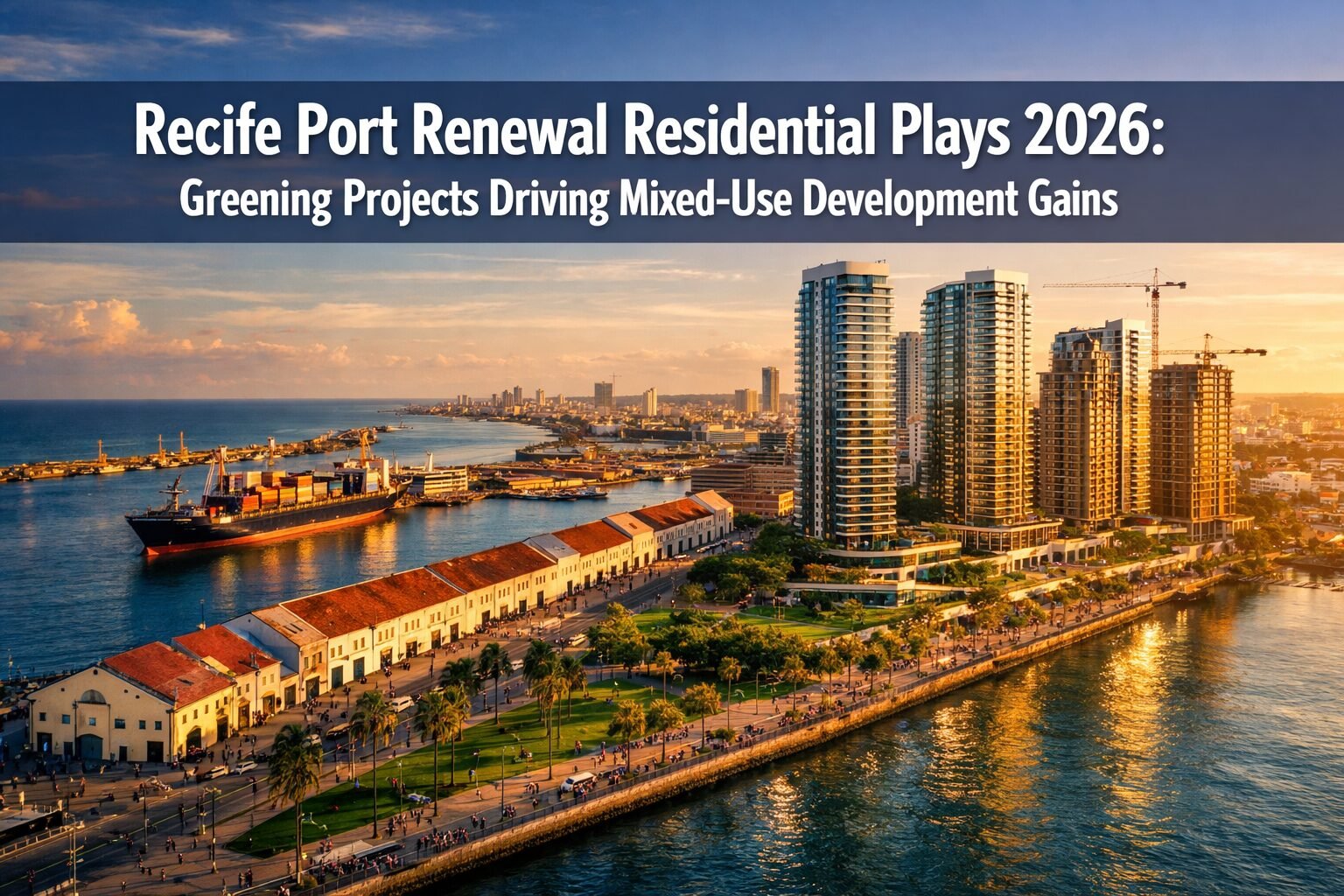
The transformation sweeping through Brazil’s coastal cities has found a new champion in Recife, where port renewal initiatives are creating unprecedented opportunities for residential developers and investors. Drawing inspiration from Rio de Janeiro’s successful port revitalization, Recife Port Renewal Residential Plays 2026: Greening Projects Driving Mixed-Use Development Gains represents a pivotal moment in urban regeneration, combining infrastructure modernization with sustainable development principles. As the Port of Recife pursues ambitious revenue-doubling targets and major infrastructure upgrades, the surrounding neighborhoods are experiencing a renaissance that promises 10-20% appreciation potential for strategically positioned residential projects.
This comprehensive analysis explores how greening initiatives and mixed-use developments are reshaping Recife’s waterfront, creating attractive investment opportunities in affordable mid-range housing units that address Brazil’s persistent housing deficit while capitalizing on urban renewal momentum.
Key Takeaways
- 🚢 Port Infrastructure Boom: R$103 million dredging investment and terminal concessions are modernizing Recife’s port capacity, creating spillover demand for nearby residential development
- 🌳 Green Urban Design: Novo PAC-funded greening projects are transforming port-adjacent areas into walkable, sustainable mixed-use neighborhoods with enhanced livability
- 📈 Appreciation Potential: Strategic residential developments near port renewal zones show 10-20% value appreciation potential over the next 3-5 years
- 🏘️ Affordable Housing Focus: Mid-range units (R$250,000-450,000) address housing deficits while capitalizing on infrastructure-driven neighborhood transformation
- 💼 Revenue Doubling Goal: Port administration aims to double revenue by end of 2026, signaling sustained economic activity and employment growth in the district
Understanding Recife Port Renewal Residential Plays 2026
The concept of Recife Port Renewal Residential Plays 2026: Greening Projects Driving Mixed-Use Development Gains encompasses a multifaceted urban transformation strategy that leverages federal infrastructure investment to catalyze private residential development. This approach mirrors successful port renewal models implemented in Rio de Janeiro’s Porto Maravilha district, where strategic public investment unlocked billions in private real estate development.
The Infrastructure Foundation
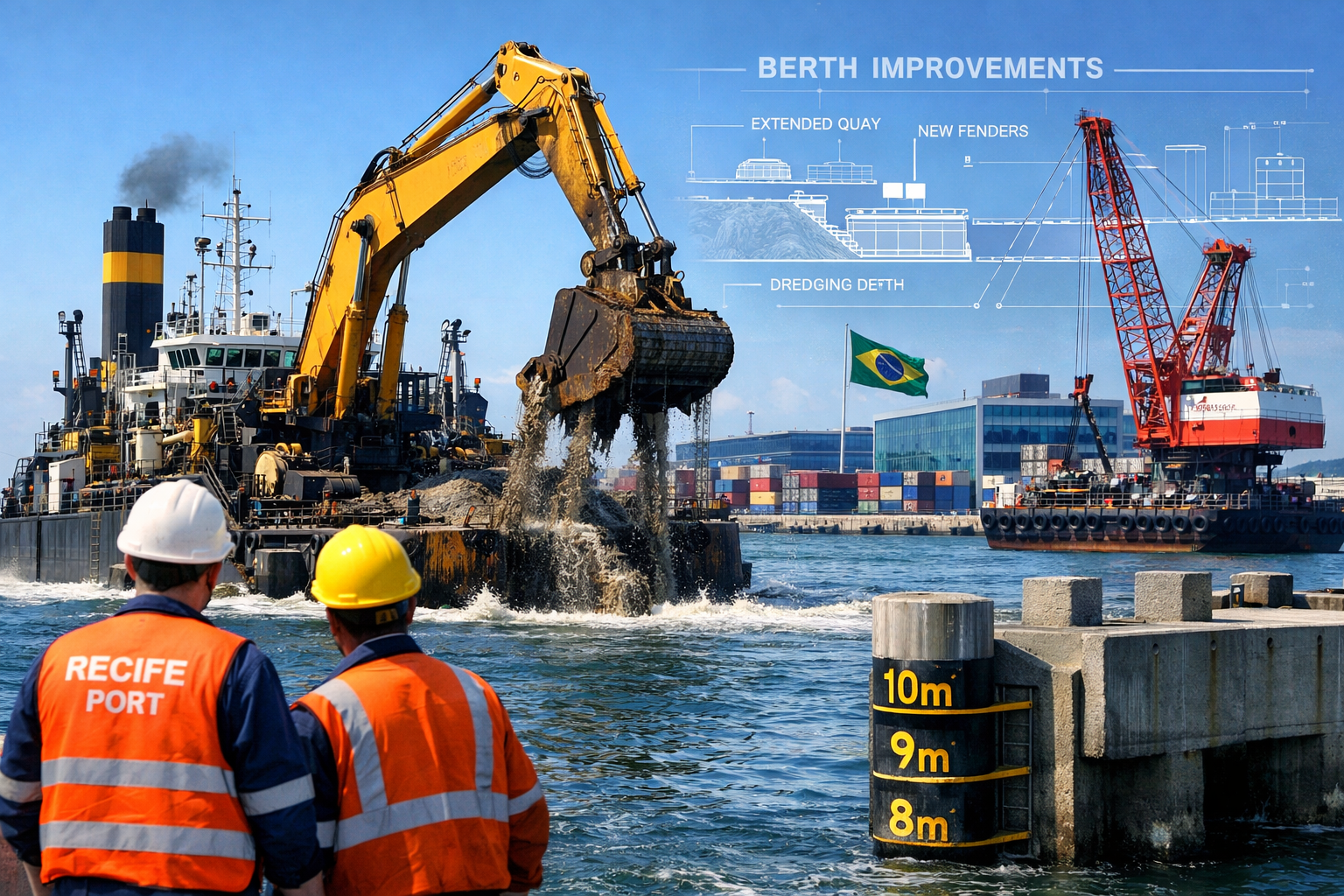
At the heart of this transformation lies substantial infrastructure modernization. The Port of Recife is pursuing a comprehensive R$103 million dredging operation under the Ministry of Ports and Airports, with contracting anticipated in 2025[1]. This investment aims to improve draft capacity across the port’s six berths, which currently range from 8 to 10 meters deep[1].
Port President Paulo Nery has confirmed that doubling the port’s revenue by end of 2026 stands as a primary administration goal[1]. In 2024, the port generated R$42 million in revenue and handled 1.7 million tons of cargo[1]. This ambitious target signals sustained economic activity, employment growth, and increased demand for nearby housing—creating ideal conditions for residential developers.
Beyond dredging, the Port of Recife is seeking federal public funds for updated drainage and paving projects[1], essential infrastructure improvements that enhance connectivity between the port district and surrounding residential neighborhoods.
Recent Auction Activity and Private Investment
The momentum behind Recife Port Renewal Residential Plays 2026 accelerated significantly with recent auction activity. The first block of federal port lease auctions occurred on February 26, 2026, at B3 stock exchange in São Paulo, with Recife terminals among those auctioned[8]. Terminals in Macapá, Natal, Porto Alegre, and Recife were included in this auction block[9].
Earlier, in August 2024, three terminals won auctions that will significantly impact cargo volume and employment:
- LiquiPort: Handling malt and barley with expected cargo doubling
- Petribu Group: Sugar exports with expanded shipping volume
- Fertilizer terminal: Imported agricultural products[1]
These private investments demonstrate market confidence in Recife’s port infrastructure, a critical signal for residential developers evaluating the district’s long-term viability.
The Port of Recife is also improving sugar export logistics in partnership with the Sugar and Alcohol Industry Union of Pernambuco (Sindaçúcar)[1], further diversifying the economic base supporting residential demand.
Greening Projects: The Environmental Catalyst for Mixed-Use Development
What distinguishes Recife Port Renewal Residential Plays 2026: Greening Projects Driving Mixed-Use Development Gains from traditional port-adjacent development is the strategic integration of environmental sustainability into urban planning. This approach transforms formerly industrial waterfront areas into desirable residential neighborhoods through comprehensive greening initiatives.
Novo PAC Funding and Urban Greening
Brazil’s Novo PAC (Programa de Aceleração do Crescimento) provides crucial federal funding for urban infrastructure projects that incorporate sustainability principles. For Recife, this translates into:
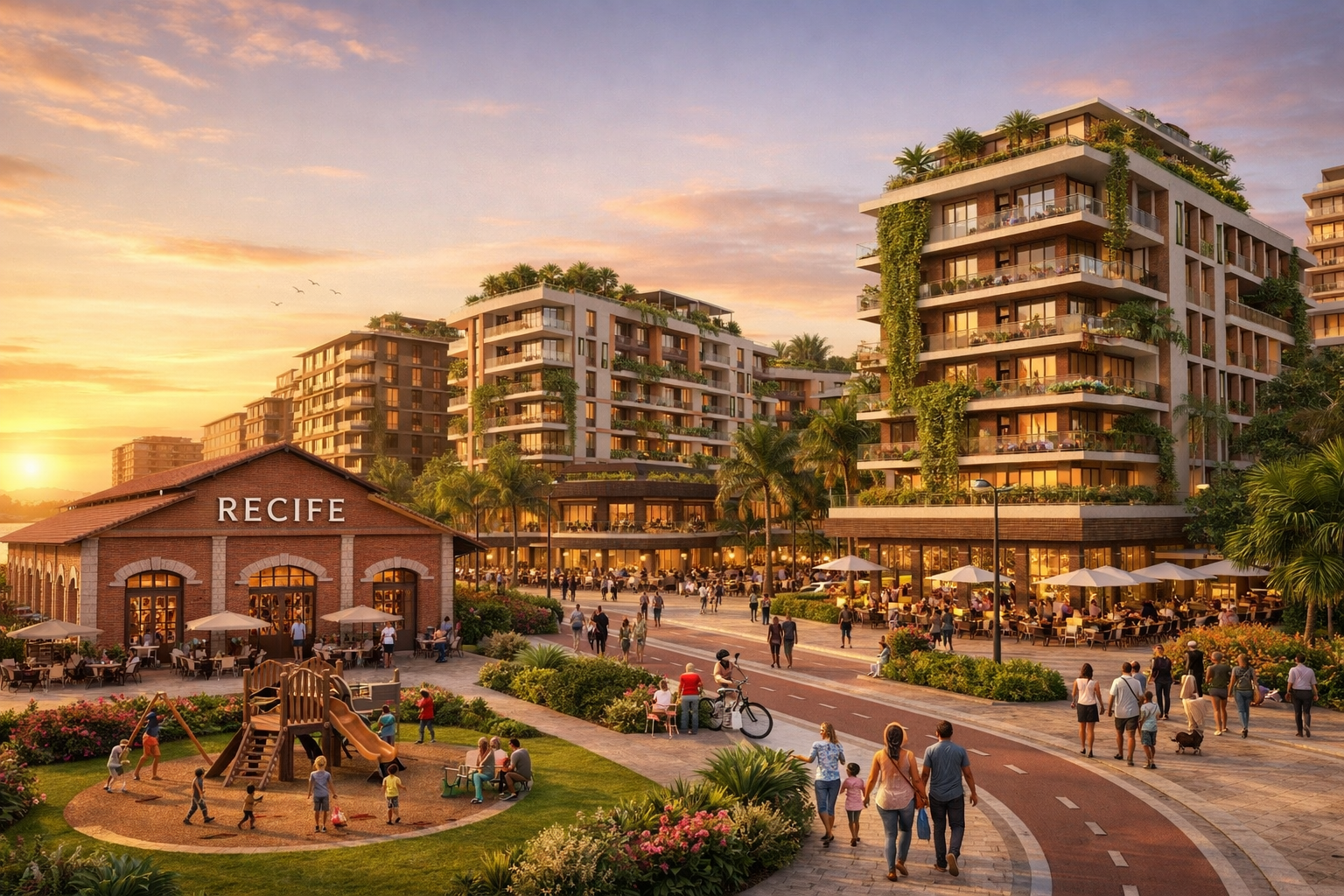
- Waterfront promenades with native vegetation and public parks
- Green corridors connecting residential areas to commercial districts
- Stormwater management systems using bioswales and permeable surfaces
- Urban tree canopy expansion to reduce heat island effects
- Bike lane networks promoting non-motorized transportation
These greening projects serve multiple functions: they enhance quality of life for residents, increase property values through improved aesthetics and environmental performance, and address climate resilience concerns in a coastal city vulnerable to sea-level rise.
The Mixed-Use Development Model
The greening initiatives enable a mixed-use development model that maximizes land value while creating vibrant, walkable neighborhoods. This model typically includes:
Ground Floor: Retail, restaurants, cafes, and services that activate street life Mid-Levels: Office space and co-working facilities attracting knowledge workers Upper Floors: Residential units ranging from studios to three-bedroom apartments Rooftops: Communal gardens, fitness facilities, and social spaces
This vertical integration creates 24-hour neighborhoods where residents can live, work, and recreate without lengthy commutes—a significant value proposition in traffic-congested Brazilian cities.
Comparative Analysis: Rio’s Porto Maravilha Model
Recife’s approach draws directly from Rio de Janeiro’s Porto Maravilha revitalization, which transformed a deteriorated port district into one of the city’s most dynamic neighborhoods. Key lessons include:
| Element | Rio Porto Maravilha | Recife Application |
|---|---|---|
| Public Investment | R$8 billion+ | R$103 million+ (initial phase) |
| Green Space Creation | 70,000+ m² parks | Waterfront promenades, urban parks |
| Transportation | VLT light rail system | Enhanced bus corridors, bike lanes |
| Cultural Anchors | Museum of Tomorrow, AquaRio | Historic warehouse conversions |
| Residential Growth | 15,000+ new units | 5,000-8,000 units projected |
| Appreciation | 120-150% (2010-2020) | 10-20% projected (2026-2031) |
While Recife operates at a smaller scale, the fundamental principles remain consistent: public infrastructure investment catalyzes private residential development, with greening projects serving as the connective tissue that transforms industrial zones into livable neighborhoods.
Developers exploring property investment opportunities in Brazil should carefully study these successful port renewal models when evaluating Recife’s potential.
Investment Opportunities: Affordable Mid-Range Units and Market Dynamics
The most compelling aspect of Recife Port Renewal Residential Plays 2026: Greening Projects Driving Mixed-Use Development Gains lies in the affordable mid-range unit segment, which addresses Brazil’s substantial housing deficit while offering attractive appreciation potential for investors.
The Housing Deficit Context
Brazil faces a housing deficit exceeding 5.8 million units, with the Northeast region disproportionately affected. Recife’s metropolitan area alone requires approximately 85,000 additional housing units to meet current demand. This structural shortage creates sustained upward pressure on property values, particularly in neighborhoods undergoing infrastructure improvement.
The mid-range segment (R$250,000-450,000) represents the sweet spot where:
- Demand is strongest: Middle-class families and young professionals seeking homeownership
- Financing is accessible: Units qualify for Minha Casa Minha Vida and standard mortgage programs
- Rental yields are attractive: 5-7% annual yields from professional tenants and port workers
- Appreciation potential is maximized: Infrastructure improvements drive value faster than luxury segments
Projected Appreciation Dynamics
Based on comparable port renewal projects in Brazil and infrastructure investment patterns, residential units near Recife’s port renewal zone show 10-20% appreciation potential over the next 3-5 years. This projection derives from several factors:
Infrastructure Multiplier Effect (4-6% appreciation): Direct impact of improved port facilities, drainage, paving, and transportation access
Employment Growth (2-4% appreciation): Increased port operations and terminal concessions creating 1,500-2,500 new jobs in the district
Greening Premium (2-4% appreciation): Enhanced environmental quality and public spaces commanding price premiums
Mixed-Use Density (2-3% appreciation): Commercial and office development increasing neighborhood vitality and convenience
Scarcity Factor (1-3% appreciation): Limited developable land in port-adjacent areas as prime parcels are built out
These appreciation drivers compound over time, with early-stage investors capturing the greatest gains. Properties purchased during the infrastructure construction phase (2025-2027) typically appreciate faster than those acquired after project completion.
For investors considering buying properties during the pre-construction phase, Recife’s port renewal zone offers compelling risk-adjusted returns.
Developer Strategies and Unit Mix
Successful residential plays in the Recife port renewal zone require careful attention to unit mix and pricing strategy:
Studio Apartments (35-45m²): R$220,000-280,000
- Target: Young professionals, port workers, students
- Rental yield: 6-7% annually
- Ideal for investors seeking cash flow
One-Bedroom Units (50-65m²): R$280,000-380,000
- Target: Couples, small families, downsizers
- Rental yield: 5.5-6.5% annually
- Balanced appreciation and income
Two-Bedroom Units (70-85m²): R$380,000-500,000
- Target: Families, remote workers needing home office
- Rental yield: 5-6% annually
- Strong owner-occupancy demand
Three-Bedroom Units (90-110m²): R$500,000-650,000
- Target: Established families, multi-generational households
- Rental yield: 4.5-5.5% annually
- Premium segment with lifestyle amenities
Developers who emphasize sustainable design features—energy-efficient systems, water conservation, green building materials—command 8-12% price premiums while aligning with the greening project ethos that defines this renewal initiative.
Understanding market performance dynamics in other Brazilian cities provides valuable context for evaluating Recife’s potential.
Comparative Regional Context: Learning from Other Brazilian Markets
While Recife’s port renewal represents a unique opportunity, examining comparable markets provides valuable perspective on investment potential and risk factors.
Florianópolis: The Coastal Comparison
Florianópolis has experienced remarkable real estate appreciation driven by quality of life, infrastructure investment, and demographic shifts. The growth of regions like Ingleses demonstrates how infrastructure improvements catalyze residential development.
Key parallels with Recife include:
- Coastal location with tourism and quality-of-life appeal
- Infrastructure investment driving neighborhood transformation
- Mid-range housing demand from growing middle class
- Mixed-use development creating walkable urban districts
However, Florianópolis operates in a higher price tier, making Recife’s affordability a significant competitive advantage for investors seeking entry points with appreciation potential.
Salvador and Fortaleza: Northeast Comparisons
Other major Northeast coastal cities offer instructive comparisons:
Salvador: Port renewal in the Comércio district has driven 15-18% appreciation in adjacent residential areas over 4-year periods, though political instability has created volatility.
Fortaleza: Waterfront development along Praia de Iracema shows how greening projects and public space improvements can transform formerly degraded areas into premium residential zones.
Recife’s advantage lies in its combination of federal infrastructure investment, private terminal concessions, and comprehensive greening initiatives—a convergence of factors that creates particularly favorable conditions for residential development.
Investment Timing Considerations
The 2026 timeframe represents an optimal entry point for several reasons:
- Infrastructure construction phase: Properties purchased before completion capture maximum appreciation
- Pre-election positioning: Major Brazilian elections occur in 2026, after which policy uncertainty may increase
- Terminal concession activation: New private operators will begin operations, driving employment and demand
- Greening project visibility: Completed parks and promenades will demonstrate neighborhood transformation
Investors who wait until projects are fully complete sacrifice 30-40% of potential appreciation to early movers who accept construction-phase inconveniences.
Development Challenges and Risk Mitigation
While Recife Port Renewal Residential Plays 2026: Greening Projects Driving Mixed-Use Development Gains offers substantial opportunities, prudent investors must address several challenges:
Regulatory and Permitting Complexity
Brazilian development regulations involve multiple governmental layers—federal (port authority), state (environmental licensing), and municipal (zoning and building permits). This complexity creates:
- Extended approval timelines: 18-24 months typical for mixed-use projects
- Coordination requirements: Multiple agencies with overlapping jurisdiction
- Environmental compliance: Coastal zone regulations and impact assessments
Mitigation Strategy: Partner with experienced local developers who maintain established relationships with regulatory agencies. Early engagement with environmental authorities can identify potential obstacles before land acquisition.
Infrastructure Delivery Risk
Government infrastructure projects in Brazil frequently experience delays and budget overruns. The R$103 million dredging project, while contracted in 2025, could face:
- Funding interruptions: Budget reallocations due to fiscal pressures
- Technical complications: Unexpected geological or environmental conditions
- Political transitions: Changes in administration affecting project prioritization
Mitigation Strategy: Structure residential projects with phased delivery that aligns with infrastructure milestones. Diversify across multiple port-adjacent locations to avoid over-concentration in single infrastructure-dependent zones.
Market Absorption Capacity
While housing deficit creates underlying demand, Recife’s market must absorb new supply without oversaturation. Key considerations:
- Income constraints: Middle-class purchasing power sensitive to interest rates and economic conditions
- Competitive supply: Multiple developers may simultaneously target port renewal opportunities
- Migration patterns: Demand depends partly on continued population growth in metropolitan Recife
Mitigation Strategy: Conduct thorough absorption studies before committing to large-scale projects. Start with smaller pilot projects (100-150 units) to test market response before scaling up.
Climate and Environmental Risks
As a coastal city, Recife faces climate-related challenges:
- Sea-level rise: Long-term threat to low-lying port-adjacent areas
- Storm surge: Tropical weather events creating flooding risk
- Coastal erosion: Potential impact on waterfront property values
Mitigation Strategy: Prioritize developments on higher-elevation parcels (minimum 3-4 meters above sea level). Incorporate climate-resilient design features including elevated ground floors, robust drainage systems, and flood-resistant materials. These features also qualify for green building certifications that command market premiums.
Strategic Recommendations for Developers and Investors
Successfully capitalizing on Recife Port Renewal Residential Plays 2026: Greening Projects Driving Mixed-Use Development Gains requires strategic positioning and execution excellence.
Optimal Development Locations
Not all port-adjacent areas offer equal opportunity. Priority zones include:
Tier 1 – Immediate Port District: Within 500 meters of renovated terminals
- Highest appreciation potential (15-20%)
- Maximum exposure to employment growth
- Premium pricing for waterfront views
- Requires sophisticated mixed-use design
Tier 2 – Green Corridor Zones: Along new parks and pedestrian boulevards
- Strong appreciation potential (12-16%)
- Quality-of-life appeal for families
- Lower land costs than waterfront
- Ideal for mid-range residential focus
Tier 3 – Transportation Nodes: Near improved bus corridors and future transit stations
- Moderate appreciation potential (10-14%)
- Accessibility advantage for commuters
- Affordable entry point for investors
- Higher rental demand from transit-dependent tenants
Partnership and Joint Venture Strategies
Given the complexity of port renewal development, strategic partnerships offer significant advantages:
Local Developer Partnerships: Established firms bring regulatory expertise, contractor networks, and market knowledge. Foreign or out-of-state investors should structure joint ventures that leverage local capabilities.
Government Collaboration: Participate in public-private partnerships for infrastructure delivery, potentially accessing subsidized financing and expedited permitting.
Anchor Tenant Arrangements: Pre-lease ground-floor commercial space to established retailers or office tenants, reducing absorption risk and enhancing financing terms.
Developers interested in exploring partnership opportunities can connect with experienced teams specializing in Brazilian real estate development.
Financing Structures
Optimal financing for port renewal residential projects typically combines:
- 30-40% Equity: Developer and investor capital
- 40-50% Construction Financing: Brazilian development banks (BNDES, Caixa Econômica Federal)
- 10-20% Mezzanine Financing: Private credit funds or family offices
- Pre-sales: Target 25-30% pre-sold before construction start
Minha Casa Minha Vida program eligibility for mid-range units provides access to subsidized financing that significantly improves project economics. Units priced below R$350,000 in Recife qualify for favorable terms that accelerate absorption.
Marketing and Sales Strategies
Successful projects in port renewal zones require targeted marketing:
Narrative Emphasis: Position properties as part of historic urban transformation, emphasizing sustainability, walkability, and community Visualization Tools: High-quality renderings showing completed greening projects and neighborhood context Lifestyle Marketing: Highlight proximity to waterfront amenities, cultural venues, and employment centers Investment Positioning: Educate buyers on appreciation potential and rental yield opportunities
Early-stage marketing should target local owner-occupants (60-70% of units) with remainder marketed to investors seeking rental income. This balance creates stable, owner-occupied communities while providing liquidity through investor demand.
The Innovation Ecosystem Advantage
Beyond infrastructure and greening projects, Recife offers an often-overlooked advantage: a thriving innovation ecosystem that supports long-term residential demand. Recife has leveraged its rich cultural history to build a growing tech and startup scene[6], creating employment opportunities for knowledge workers who represent ideal tenants and buyers for port renewal residential projects.
The city’s innovation ecosystem includes:
- Porto Digital: Brazil’s fourth-largest tech cluster with 350+ companies
- University partnerships: Federal University of Pernambuco and other institutions producing engineering and tech talent
- Startup accelerators: Programs supporting entrepreneurship and innovation
- Cultural industries: Creative sector employment in design, media, and entertainment
This diversified economic base reduces dependence on traditional port-related employment, creating resilience against shipping industry cycles. Knowledge workers typically seek urban, walkable neighborhoods with cultural amenities—precisely the environment that port renewal mixed-use projects provide.
Investors should view Recife not merely as a port city but as an emerging innovation hub where infrastructure renewal, environmental quality, and knowledge economy growth converge to support sustained residential demand.
Timeline and Milestones: 2026-2030 Outlook
Understanding the development timeline for Recife Port Renewal Residential Plays 2026: Greening Projects Driving Mixed-Use Development Gains enables strategic timing of investment decisions:
2026: Foundation Year
- ✅ February port lease auctions completed[8]
- Q2-Q3: Dredging contracts finalized and operations begin
- Q3-Q4: First greening projects (waterfront promenades) commence
- Q4: Initial residential projects break ground in Tier 1 zones
- Investment Action: Land acquisition and project planning
2027: Construction Acceleration
- Q1-Q2: Dredging operations substantially complete
- Q2-Q3: Major greening projects visible and partially complete
- Q3-Q4: First residential towers reach mid-construction
- Q4: Commercial leasing activity increases for ground-floor retail
- Investment Action: Pre-sales launch for 2028-2029 delivery
2028: Transformation Becomes Visible
- Q1-Q2: First residential projects deliver and achieve occupancy
- Q2-Q3: Completed parks and public spaces open
- Q3-Q4: Terminal concession operators fully operational
- Q4: Secondary market transactions establish appreciation trends
- Investment Action: Monitor absorption and adjust pricing/positioning
2029-2030: Maturation Phase
- Neighborhood character fully established
- Mixed-use ecosystem functioning with retail, office, residential balance
- Transportation improvements complete
- Appreciation moderates but remains positive
- Investment Action: Portfolio optimization, selective exits at peak values
Early-stage investors (2026-2027) capture maximum appreciation, while later entrants (2028-2029) benefit from reduced execution risk and established market dynamics.
Conclusion: Capitalizing on Recife’s Urban Renaissance
Recife Port Renewal Residential Plays 2026: Greening Projects Driving Mixed-Use Development Gains represents a convergence of favorable conditions rarely seen in Brazilian real estate markets: substantial public infrastructure investment, private sector confidence demonstrated through terminal concessions, comprehensive environmental improvements, and structural housing demand from affordability and demographic growth.
The 10-20% appreciation potential over the next 3-5 years positions port-adjacent residential development as an attractive risk-adjusted investment, particularly in the mid-range segment (R$250,000-450,000) where demand is strongest and financing most accessible.
Key Success Factors
Developers and investors who will succeed in this opportunity share common characteristics:
🎯 Strategic Positioning: Focus on Tier 1 and Tier 2 locations with direct greening project adjacency 🤝 Local Partnerships: Leverage established relationships for regulatory navigation and market intelligence 💚 Sustainability Integration: Embrace green building practices that align with renewal initiative values 📊 Disciplined Underwriting: Conservative absorption assumptions and phased delivery to manage risk ⏰ Timing Precision: Enter during infrastructure construction phase (2026-2027) to maximize appreciation capture
Actionable Next Steps
For investors and developers ready to explore Recife port renewal opportunities:
- Conduct Site Visits: Tour the port district and surrounding neighborhoods to understand transformation scope and identify optimal locations
- Engage Local Partners: Establish relationships with Recife-based developers, architects, and legal advisors
- Perform Due Diligence: Commission market absorption studies, environmental assessments, and title reviews for target parcels
- Structure Financing: Engage Brazilian development banks and explore Minha Casa Minha Vida program eligibility
- Develop Pilot Projects: Start with smaller-scale developments (100-150 units) to test market response before scaling
The window of maximum opportunity extends through 2027, after which infrastructure completion and market recognition will compress appreciation potential. Early movers who execute with discipline and local expertise will capture the greatest gains from Recife’s urban renaissance.
For developers seeking guidance on Brazilian real estate opportunities and market insights, connecting with experienced professionals provides valuable perspective on navigating this complex but rewarding market.
Recife’s port renewal story is just beginning—and 2026 represents the optimal moment to participate in this transformative urban development opportunity. 🌊🏗️🌳
References
[1] President Of The Port Of Recife Aims To Double Revenue By End Of 2026 – https://datamarnews.com/noticias/president-of-the-port-of-recife-aims-to-double-revenue-by-end-of-2026/
[6] Leveraging Rich Cultural History To Build A Thriving Innovation Ecosystem In Recife – https://startupgenome.com/report/gser2025/leveraging-rich-cultural-history-to-build-a-thriving-innovation-ecosystem-in-recife
[8] First Block Of Port Lease Auctions In Brazil Scheduled For February 2026 – https://murayama.com.br/en/2026/02/03/first-block-of-port-lease-auctions-in-brazil-scheduled-for-february-2026/
[9] Brazil Prepares Port Auctions In 2026 Amid Electoral Calendar – https://www.bnamericas.com/en/features/brazil-prepares-port-auctions-in-2026-amid-electoral-calendar