
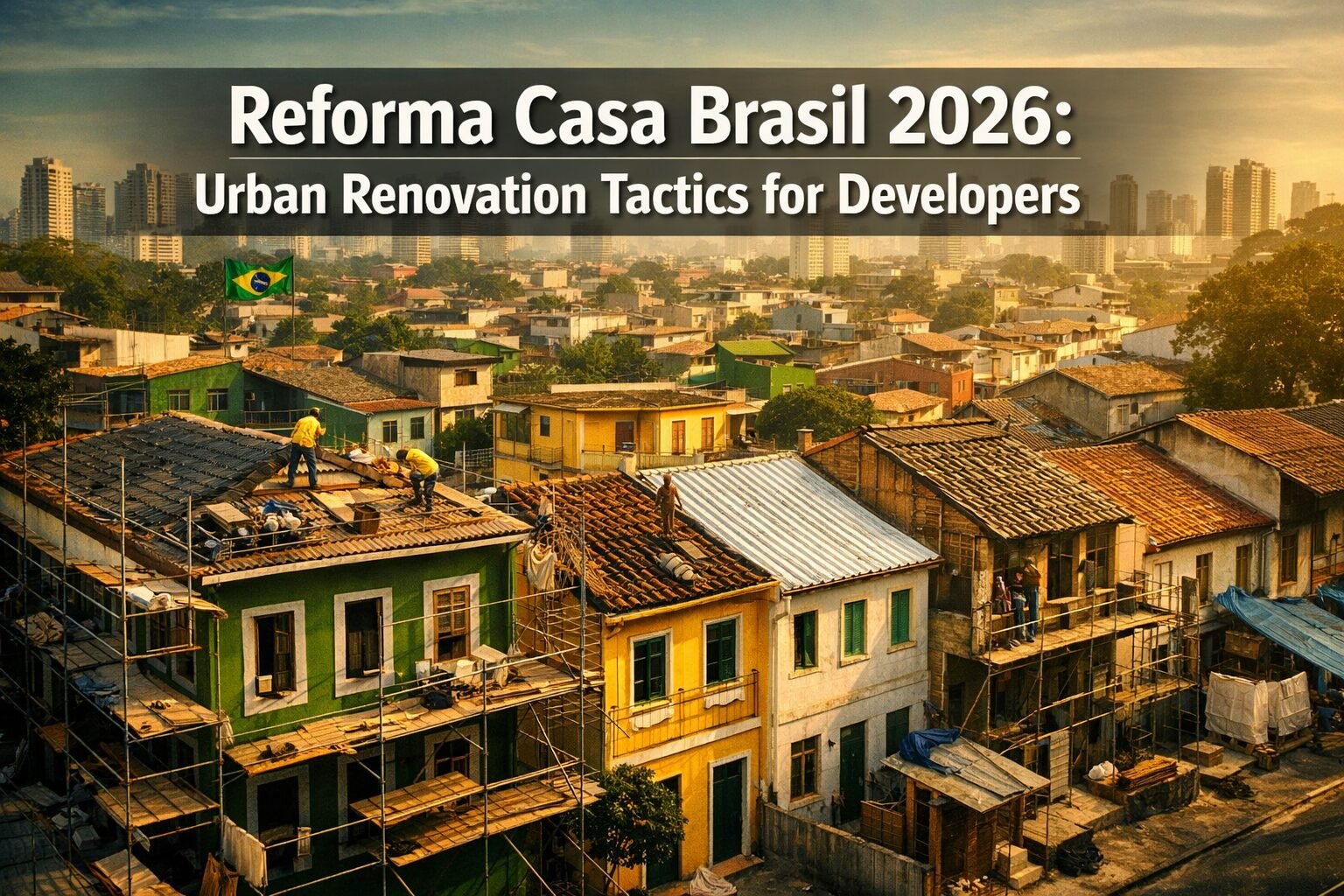
Brazil’s federal government has committed R$ 40 billion — roughly $7.4 billion USD — to the Reforma Casa Brasil program in 2026, making it the largest single-year investment in residential renovation in the country’s history. [1] For developers who understand how to align their operations with this program, the opportunity is substantial. Reforma Casa Brasil 2026: Urban Renovation Tactics for Developers Targeting Election-Year Subsidies is not just a policy story — it is a business roadmap for those ready to move fast.
This article breaks down the program’s funding architecture, eligibility rules, and accreditation pathways, then delivers concrete tactics developers can use to capture subsidy-backed renovation contracts, build supply chain partnerships, and scale operations in secondary cities where competition is lowest and margins are highest.
Key Takeaways 🏗️
- R$ 40 billion is allocated for urban housing upgrades in 2026, split between the Social Fund (R$ 30B) and SBPE (R$ 10B) [1]
- Developers and contractors must become Caixa Econômica Federal-accredited suppliers to receive direct payments — beneficiaries never handle cash [1]
- Two income brackets create two distinct customer segments, each with different interest rates and financing conditions [1]
- The program targets the qualitative housing deficit — existing homes in poor condition — not new construction [1]
- Election-year timing amplifies funding urgency, creating a narrow window for developers to secure high-volume renovation contracts [2]

Understanding the Reforma Casa Brasil 2026 Funding Architecture
Where the Money Comes From
The R$ 40 billion total investment breaks down into two distinct funding streams, each targeting a different income bracket and carrying different financing terms. [1]
| Funding Source | Amount | Target Bracket | Monthly Interest Rate |
|---|---|---|---|
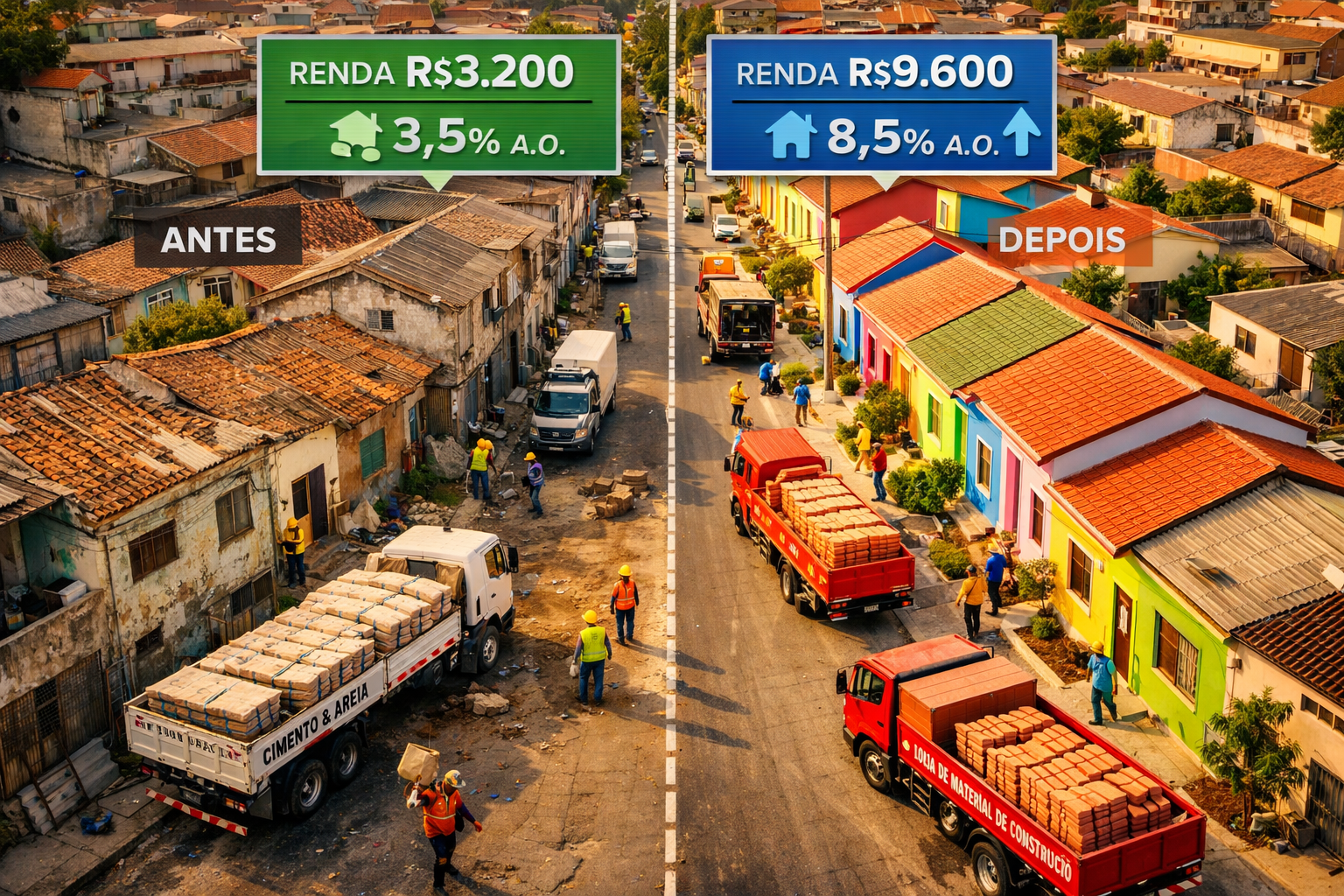
| Social Fund (oil royalties) | R$ 30 billion | Up to R$ 3,200/month income | 1.17% |
| SBPE (Savings & Loan System) | R$ 10 billion | R$ 3,200–R$ 9,600/month income | 1.95% |
“Every R$ 1 million invested in Brazil’s construction sector generates up to 25 new local jobs — making Reforma Casa Brasil as much an employment program as a housing one.” [4]
Understanding this split is critical for developers. The Social Fund bracket (lower-income families) is three times larger in total capital, meaning the volume of available contracts is significantly higher in that segment. However, the SBPE bracket (middle-income families) tends to involve larger, more complex renovations — solar panel installations, full electrical overhauls, structural repairs — which carry higher margins per project.
How Payments Actually Work
One of the most important structural features of Reforma Casa Brasil is its direct payment mechanism. Beneficiaries do not receive cash. Instead, Caixa Econômica Federal pays accredited construction material suppliers and service providers directly. [1]
This design has two major implications for developers:
- Cash flow is more predictable — payments come from a state-owned bank, not individual clients
- Accreditation becomes a competitive moat — only registered suppliers and contractors can participate
The Ministry of Cities coordinates the program, but Caixa Econômica Federal is the operational engine. Developers who build a strong working relationship with their regional Caixa branch will have a significant advantage in processing speed and contract volume.
The CadÚnico Priority Layer
Families enrolled in Brazil’s Cadastro Único (unified social registry) receive prioritized access and more favorable financing conditions. [1] For developers, this means that neighborhoods with high CadÚnico enrollment density are the highest-priority zones for program activity — and therefore the best targets for pre-positioning supply chain and labor resources.
Reforma Casa Brasil 2026: Urban Renovation Tactics for Developers Targeting Election-Year Subsidies in Secondary Cities
Why Secondary Cities Are the Strategic Frontier
Major metropolitan areas like São Paulo and Rio de Janeiro have well-established contractor networks already competing for federal housing contracts. Secondary cities — populations between 100,000 and 500,000 — represent the highest-opportunity zones for developers new to the program for several reasons:
- Lower contractor competition means easier accreditation and faster contract awards
- Higher qualitative housing deficit concentration — these cities have proportionally more homes in precarious condition [1]
- Local government alignment — municipal administrations in election years are highly motivated to show visible renovation progress
- Lower labor and materials costs improve margin per project
Developers already tracking real estate market trends in greater Florianópolis will recognize this pattern: mid-sized coastal and interior cities are seeing accelerating demand for housing upgrades, and federal subsidy programs are amplifying that trend in 2026.
Eligible Renovation Scope: What Developers Can Actually Build
The program covers a wide range of improvements, giving developers flexibility in service packaging: [1] [4]
✅ Structural repairs (leaks, mold, collapse risk) ✅ Roof replacement ✅ Electrical and plumbing upgrades ✅ Painting and facade restoration ✅ Solar panel installation ✅ Construction materials supply ✅ Technical labor services
A key detail that expands the addressable market: families in rented or loaned properties are also eligible for financing in urban areas. [4] This dramatically increases the number of qualifying households beyond just homeowners — a fact many developers overlook when estimating program reach.
Building the Right Service Packages 📦
Smart developers will not approach Reforma Casa Brasil as a one-project-at-a-time opportunity. The scale of the program — targeting over 1 million families — demands a packaged, repeatable service model. [1]
Recommended service tiers:
- Tier 1 — Essential Habitability (R$ 8,000–R$ 15,000): Roof repair, waterproofing, basic electrical safety, painting. Fast execution, high volume.
- Tier 2 — Full Renovation (R$ 15,000–R$ 25,000): Structural repairs, plumbing overhaul, facade restoration, flooring.
- Tier 3 — Upgrade + Energy (R$ 25,000–R$ 30,000): Full renovation plus solar panel installation. Higher margin, longer timeline.
Packaging services into clear tiers makes it easier for Caixa branch officers to process applications and for families to understand what they are requesting — which speeds up the entire pipeline.
Supply Chain Partnerships: The Multiplier Tactic
Because Caixa pays accredited suppliers directly, developers who also control or partner with materials suppliers gain a double advantage: they earn on both the labor contract and the materials supply contract. [1]
Tactical steps for supply chain positioning:
- Identify regional distributors of steel, cement, aluminum, and electrical components already in Caixa’s accredited network
- Negotiate volume agreements before the peak renovation season (typically Q2–Q3 in most Brazilian regions)
- Co-register as a materials supplier if your operation has the capacity — this is a separate accreditation from contractor registration
- Lock in pricing contracts to protect margins against inflation, which remains a risk in Brazil’s construction sector [2]
The construction sector’s demand for steel and aluminum inputs is expected to rise significantly as both Reforma Casa Brasil and the broader Minha Casa, Minha Vida (MCMV) framework scale up simultaneously. [2] Developers who secure materials agreements early will be insulated from the price spikes that will likely hit less-prepared competitors.
Compliance, Accreditation, and Election-Year Tactics for Reforma Casa Brasil 2026
The Accreditation Pathway: Step by Step
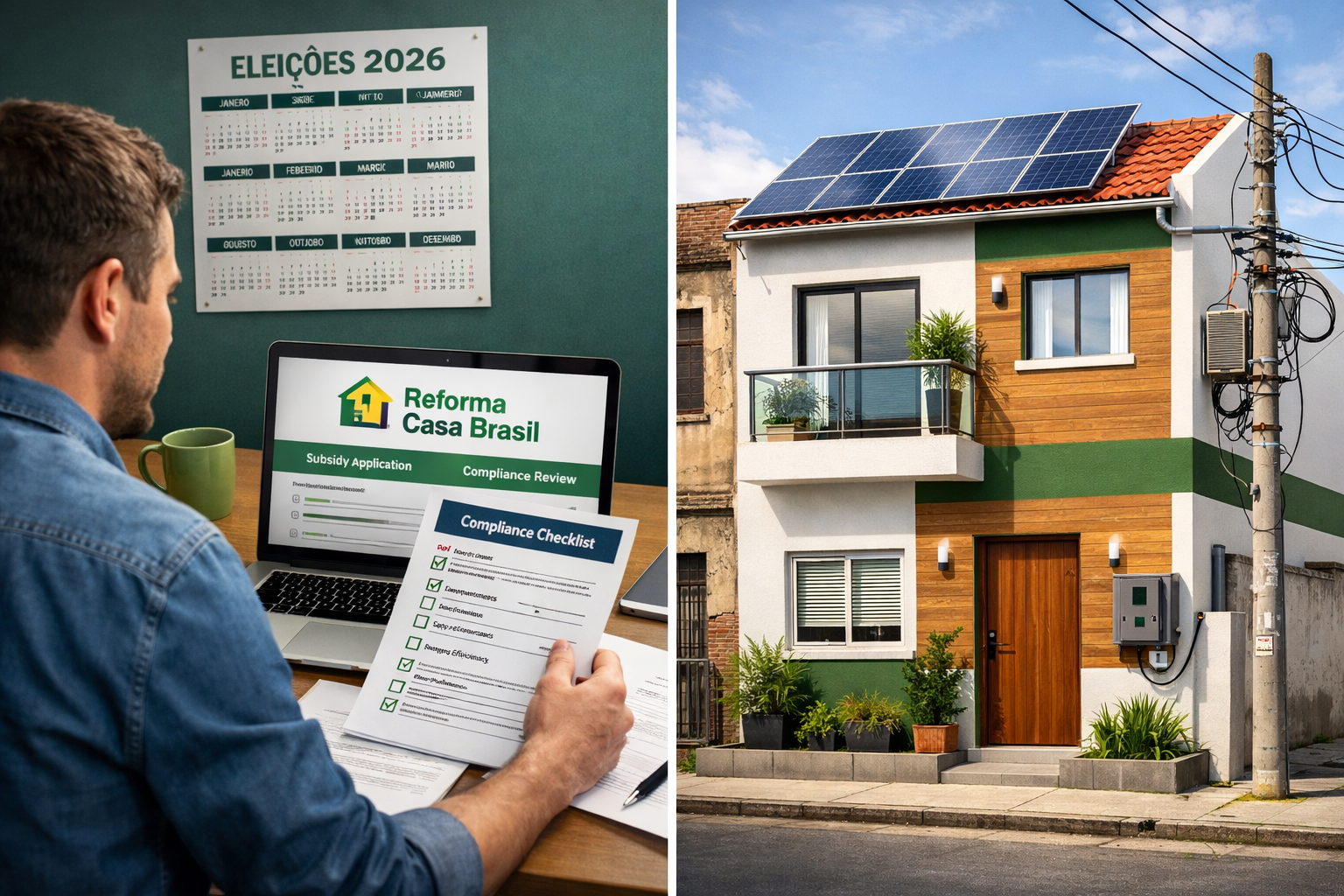
Getting accredited with Caixa Econômica Federal is the non-negotiable first step. Here is a simplified roadmap:
Step 1 — Business Registration Compliance Ensure your CNPJ is active, your tax situation (Certidão Negativa de Débitos) is clear, and your company has no outstanding labor or environmental violations.
Step 2 — Technical Qualification Prepare documentation showing technical capacity: engineer or architect on staff (or contracted), proof of previous renovation projects, and safety compliance records (CREA/CAU registration).
Step 3 — Caixa Supplier Registration Submit your accreditation package to the nearest Caixa Econômica Federal branch handling the Reforma Casa Brasil program. Regional coordinators within the Ministry of Cities can also facilitate introductions.
Step 4 — Municipal Partnership Many municipalities are acting as program intermediaries, helping families identify eligible improvements and connect with accredited contractors. Building a formal partnership with the local housing secretariat puts your company at the top of the referral list.
Step 5 — CadÚnico Neighborhood Mapping Use IBGE data and municipal social assistance records to identify neighborhoods with the highest concentration of CadÚnico-enrolled families. These are your priority marketing zones.
Election-Year Dynamics: Reading the Political Calendar 🗳️
2026 marks the first time Reforma Casa Brasil is active during a Brazilian election year — and that timing is not accidental. [2] Federal and municipal governments have strong political incentives to show visible, tangible housing improvements before October elections.
This creates several tactical opportunities for developers:
- Faster municipal approvals: Local governments will expedite permits and approvals for projects that generate visible neighborhood improvements
- Media visibility: Completed renovation projects in high-visibility areas attract local press coverage, which benefits both the political sponsor and the developer’s brand
- Expanded program budgets: Election years historically see supplementary budget allocations for popular social programs — meaning the R$ 40 billion figure could grow [2]
- Urgency in processing: Caixa branch managers face institutional pressure to show high disbursement numbers, which accelerates payment processing for accredited contractors
“The election-year window is not infinite. Developers who complete accreditation and execute their first contracts before Q2 2026 will be positioned to capture the peak disbursement period.”
Risk Management: What Can Go Wrong
No subsidy program is without risk. Developers should plan for:
⚠️ Compliance audits: Caixa conducts verification visits to confirm work was completed as specified. Documentation of every project phase is essential.
⚠️ Payment delays: While the direct payment model reduces many risks, bureaucratic backlogs at Caixa can delay disbursement. Maintain working capital reserves.
⚠️ Interest rate environment: Brazil’s Selic rate remains elevated, increasing financing costs for developers who use credit to fund operations between contracts. [2]
⚠️ Post-election policy shifts: Programs tied to election-year political priorities can face budget revisions after elections. Diversifying across multiple program lines within the MCMV framework reduces this exposure.
Developers interested in understanding how broader market forces affect real estate investment returns should also review insights on why off-plan property purchases can amplify gains — the same principles of timing and market positioning apply to subsidy-backed renovation plays.
Scaling Beyond Single Projects: The Portfolio Approach
The developers who will extract the most value from Reforma Casa Brasil 2026 are those who treat it as a portfolio strategy, not a one-off contract opportunity.
Portfolio scaling tactics:
- Cluster projects geographically: Concentrate renovations in 2–3 neighborhoods per city to minimize logistics costs and maximize crew efficiency
- Standardize materials lists: Use consistent specifications across projects to negotiate better bulk pricing with suppliers
- Train dedicated crews: Invest in training workers specifically for the most common renovation types (roof replacement, electrical upgrades) to reduce per-unit labor time
- Track disbursement cycles: Learn Caixa’s payment processing rhythms in your region to time project completions for faster cash conversion
For developers already active in markets like Florianópolis, programs like Reforma Casa Brasil complement existing studio apartment investment strategies by creating neighborhood-level value uplift that benefits all nearby properties.
It is also worth noting that innovative financing tools — including cryptocurrency applications in real estate development — are increasingly relevant for developers seeking to diversify their capital structures as they scale renovation operations.
Developers looking to understand the full spectrum of real estate investment opportunities in Brazil will find that secondary cities targeted by Reforma Casa Brasil are increasingly appearing on high-return property investment lists.
For those tracking active development projects that demonstrate strong execution in this market environment, the Tramonto development offers a concrete example of how disciplined project management translates to market performance.
Conclusion: Act Before the Window Closes
Reforma Casa Brasil 2026: Urban Renovation Tactics for Developers Targeting Election-Year Subsidies represents one of the most concrete, accessible subsidy opportunities in Brazil’s real estate sector in a generation. With R$ 40 billion committed, over 1 million families eligible, and a political calendar that creates urgent disbursement pressure, the conditions for developer success are unusually favorable — but only for those who move quickly and strategically. [1] [2]
Actionable Next Steps for Developers 🚀
- Start Caixa accreditation immediately — the process takes time, and every week of delay is a week of missed contracts
- Map your target secondary city using CadÚnico density data and qualitative housing deficit statistics
- Build your service tier menu — standardize your Tier 1, 2, and 3 renovation packages with fixed materials lists and labor estimates
- Establish municipal partnerships — contact the local housing secretariat and position your company as a ready, accredited partner
- Lock in supply chain agreements before Q2 2026 price increases hit construction materials
- Document everything — every project phase, every materials receipt, every inspection — to survive compliance audits and protect payment claims
- Diversify within MCMV — Reforma Casa Brasil is one of five program lines; understanding the full framework protects against post-election budget shifts
The qualitative housing deficit in Brazil is massive, the funding is real, and the political will in 2026 is at its peak. Developers who align their operations with this program now will not just capture short-term contract revenue — they will build the accreditation credentials, supply chain relationships, and municipal partnerships that position them for every subsequent housing cycle.
References
[1] Governo Lanca Reforma Casa Brasil Com Aporte De R 40 Bi Mais De 1 Milhao De Familias Terao Ate R 30 Mil Para Consertar Casas Ctl01 – https://en.clickpetroleoegas.com.br/governo-lanca-reforma-casa-brasil-com-aporte-de-r-40-bi-mais-de-1-milhao-de-familias-terao-ate-r-30-mil-para-consertar-casas-ctl01/
[2] Brazils Construction Sector 2026 Housing Programs Support Rates High Risks Persist – https://www.fastmarkets.com/insights/brazils-construction-sector-2026-housing-programs-support-rates-high-risks-persist/
[4] Reforma Casa Brasil X Outros Programas Habitacionais Qual A Diferenca – https://aceitei.com/en/reforma-casa-brasil-x-outros-programas-habitacionais-qual-a-diferenca/