

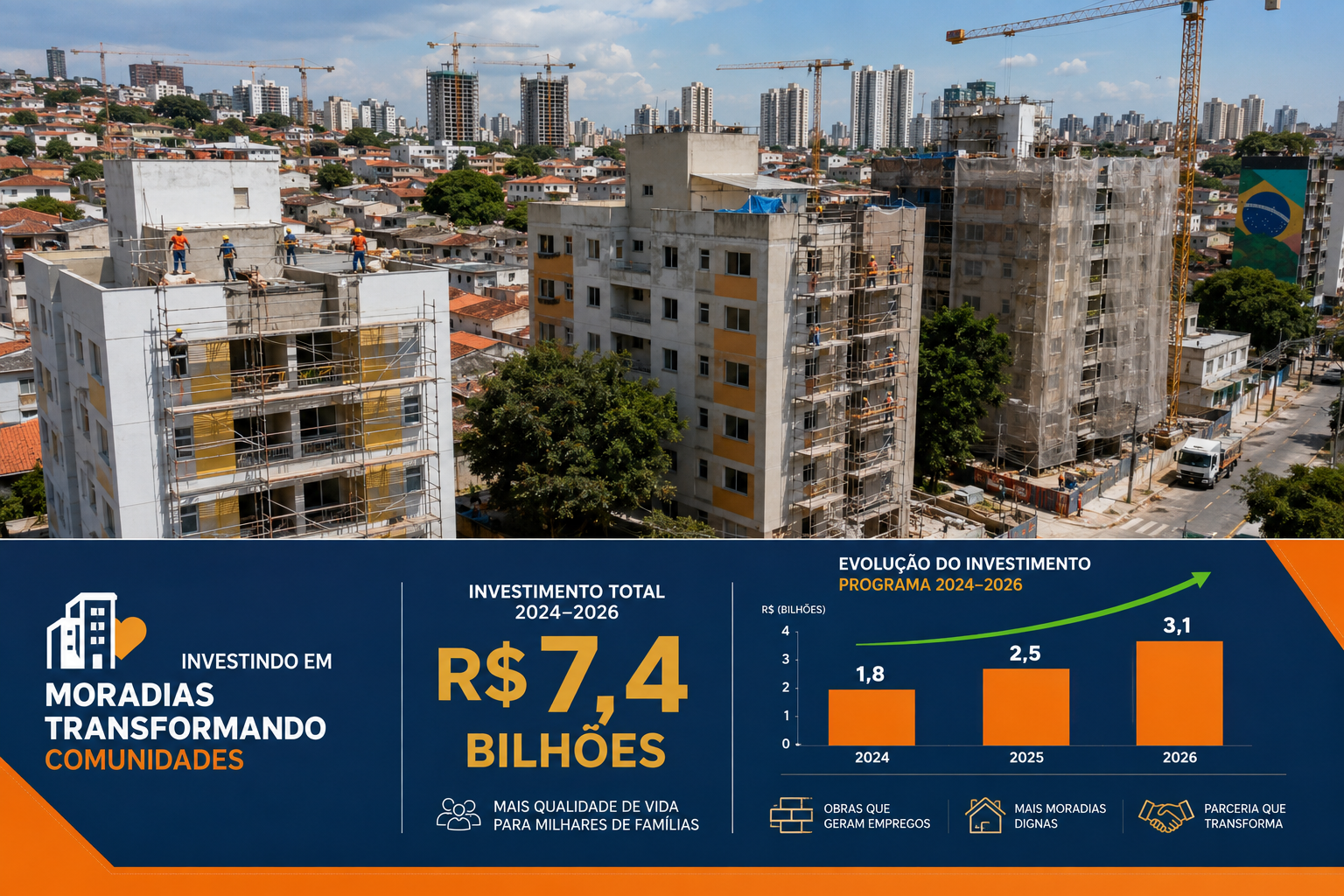
Brazil’s federal government has just unlocked R$ 7.4 billion in dedicated renovation financing — and the construction sector has roughly 18 months to capture the bulk of it before election-cycle momentum fades. The Reforma Casa Brasil $7.4B Boom 2026: Profit Models for Urban Retrofit Projects in Election-Year Demand Surge is not a distant policy promise. New Conselho Monetário Nacional (CMN) rules approved in May 2026 have already dropped interest rates, expanded eligibility, and extended repayment windows, triggering a surge in applications that contractors, developers, and real estate investors cannot afford to ignore. [1]
Key Takeaways 📌
- R$ 7.4 billion in retrofit financing is now active, backed by a total 2026 housing budget of approximately R$ 200 billion. [4]
- Eligible families can borrow up to R$ 50,000 at just 0.82% per month nominal interest, repayable over 72 months. [2]
- Income eligibility has expanded to R$ 13,000/month, opening the mid-tier residential market to program financing. [1]
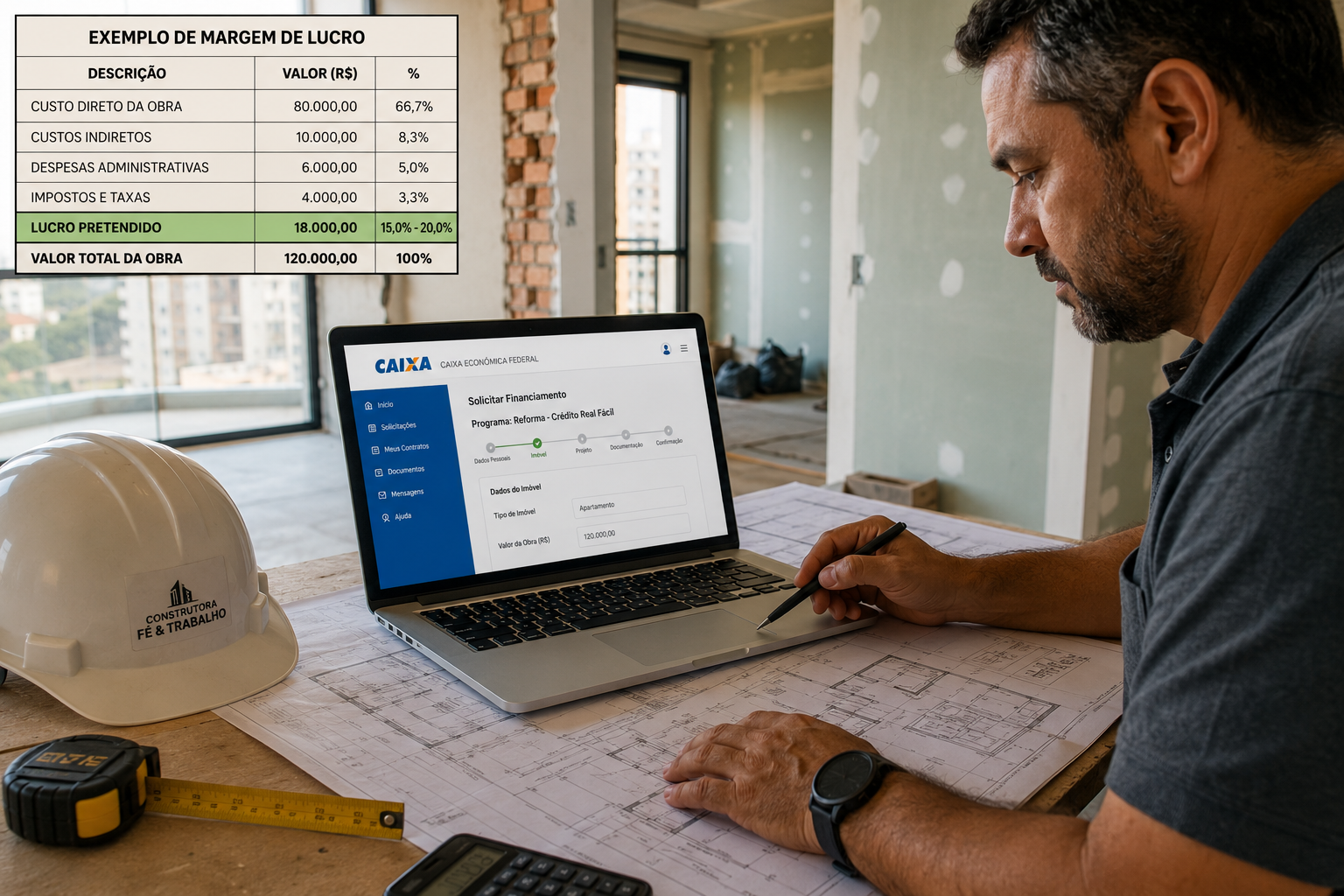
- Contractors operating in urban retrofit can realistically target 15–20% net margins on mid-tier projects by aligning with Caixa Econômica Federal’s approved supplier network.
- Brazil’s first public-private partnership (PPP) for social housing retrofit was awarded in May 2026, signaling a structural shift toward private-sector delivery models. [5]
What Is Reforma Casa Brasil and Why 2026 Is the Inflection Point
Reforma Casa Brasil is a federal home improvement financing program administered by Caixa Econômica Federal under the Ministry of Cities. It provides subsidized loans to low- and middle-income families for repairs, renovations, accessibility upgrades, and energy efficiency improvements on existing residential properties.
The program is not new — but its 2026 configuration is fundamentally different from prior iterations. The CMN approved a sweeping overhaul in early May 2026, with new conditions going live by mid-May. [3] Three changes stand out for anyone building a business model around this opportunity:
| Parameter | Previous Terms | New 2026 Terms |
|---|---|---|
| Monthly Income Cap | R$ 9,600 | R$ 13,000 |
| Maximum Loan Amount | R$ 40,000 | R$ 50,000 |
| Repayment Period | 60 months | 72 months |
| Nominal Interest Rate | ~1.0%/month | 0.82%/month |
| Total Effective Rate | ~1.2%/month | 0.99%/month |
Sources: [1] [2]
The income cap expansion alone is transformative. Brazil’s middle class — households earning between R$ 9,600 and R$ 13,000 — represents millions of families who previously fell into a “no-man’s land”: too affluent for social housing programs, too financially stretched for commercial renovation loans. They are now the program’s primary demand driver.
💬 “The CMN’s decision to reduce rates and expand access is a strategic move to address housing deficits and invigorate urban areas through targeted retrofit projects.” — Industry analysis, Metro Quadrado column [10]
The election-year dimension adds urgency. With Brazil’s 2026 electoral calendar in full swing, infrastructure and housing spending historically accelerates. The Fundo Social has been reinforced with an additional R$ 20 billion, bringing the total 2026 housing budget to approximately R$ 200 billion. [4] Disbursement timelines favor projects that begin in H2 2026.
Understanding the $7.4B Boom: Program Structure and Funding Flows
How the Money Moves
Reforma Casa Brasil financing flows through a clear institutional chain:
- Ministry of Cities sets eligibility and program rules
- CMN approves financial parameters (rates, terms, limits)
- Caixa Econômica Federal originates and disburses loans
- Borrowers (homeowners) access funds digitally and hire contractors
- Contractors receive payment upon verified project milestones
The fully digital application process — available through Caixa’s website and app — has dramatically reduced friction for borrowers. [8] This matters for contractors: faster approvals mean faster project starts and shorter accounts-receivable cycles.
The Retrofit Push: Caixa’s Structural Commitment
In January 2026, Caixa Econômica Federal formally presented its retrofit housing solution to Brazil’s construction sector at an industry event in Porto Alegre. [6] This was not a minor announcement. It signaled that Caixa — the country’s largest public bank — is actively building the institutional infrastructure to fund large-scale urban retrofit at a volume never attempted before.
Retrofit, in this context, means converting underutilized or deteriorating urban buildings into functional, modern residential units. It is distinct from simple repairs. The economic logic is compelling:
- Lower land acquisition costs (building already exists)
- Faster permitting in many municipalities
- Eligible for Reforma Casa Brasil financing when owner-occupied
- Premium pricing potential in gentrifying neighborhoods
The luxury end of this market is already showing what is possible. High-end retrofit projects in upscale Brazilian neighborhoods are reaching values of up to R$ 35 million, demonstrating that the retrofit model scales across income segments. [7]
For those exploring best places to invest in Brazil property, the retrofit wave is creating new value corridors in cities that previously lacked new-build land supply.
Profit Models for Urban Retrofit: Where the 15–20% Margins Live
The Reforma Casa Brasil $7.4B Boom 2026: Profit Models for Urban Retrofit Projects in Election-Year Demand Surge creates three distinct profit pathways for private-sector participants. Each carries different capital requirements, risk profiles, and margin potential.
Model 1: Direct Contractor Execution (Mid-Tier Residential) 🔨
This is the highest-volume opportunity. A contractor registered with Caixa’s approved supplier network can access a pipeline of pre-financed homeowners who have already been approved for up to R$ 50,000 in renovation loans.
Typical project economics (R$ 40,000–50,000 scope):
| Line Item | % of Contract Value |
|---|---|
| Materials | 35–40% |
| Labor | 30–35% |
| Overhead & Admin | 8–10% |
| Net Margin | 15–20% |
Keys to hitting the upper end of that margin range:
- Standardize scope packages (bathroom upgrade, kitchen remodel, roof repair) that fit neatly within the R$ 50,000 cap
- Batch projects in the same building or neighborhood to reduce mobilization costs
- Maintain Caixa compliance documentation to avoid payment delays
- Use pre-approved material suppliers to lock in volume discounts
Model 2: Developer-Led Retrofit (Multi-Unit Urban Buildings) 🏢
This model targets larger urban buildings — typically 4–20 units — where the developer acquires, retrofits, and either sells or rents the units. The PPP model pioneered in Recife, where the Consórcio Habitação Social Recife won Brazil’s first social housing rental PPP, provides a replicable blueprint. [5]
Margin drivers in this model:
- Subsidy arbitrage: Retrofit costs subsidized through program financing reduce the developer’s equity requirement
- Rental yield: Renovated units in central urban locations command 20–40% rental premiums over unrenovated stock
- Capital recycling: Sell renovated units to owner-occupiers who then use Reforma Casa Brasil financing — effectively creating a self-funding pipeline
Developers active in dynamic markets like Florianópolis are already seeing how real estate performance is transforming urban markets, with retrofit adding a new dimension to the value proposition.
Model 3: Real Estate Investor Retrofit-to-Rent 📈
For individual investors, the play is simpler: acquire a deteriorated urban property at a discount, use Reforma Casa Brasil financing (if owner-occupied) or bridge financing for the renovation, then hold for rental income or sell at a premium.
Critical success factors:
- Target properties in neighborhoods with strong rental demand but aging housing stock
- Verify municipal zoning allows the intended use post-renovation
- Budget for a 10–15% contingency on retrofit projects (hidden structural issues are common)
- Understand that buying off-plan can potentialize gains — but retrofit offers a different risk-return profile with immediate cash flow potential
Navigating Subsidies, Eligibility, and Contractor Partnerships
Who Qualifies in 2026?
The expanded eligibility criteria cover a much broader population than before. Key requirements:
- ✅ Monthly household income up to R$ 13,000
- ✅ Property must be owner-occupied residential
- ✅ Applicant must not have active financing with Caixa for the same property
- ✅ Renovation must address habitability, safety, or accessibility
- ✅ Application submitted through Caixa’s digital platform
The government expects these enhancements to stimulate the construction sector, generate employment, and improve living conditions for a significant portion of Brazil’s urban population. [9]
Building a Contractor Partnership Strategy
The most scalable business model combines marketing to homeowners with seamless Caixa integration. Here is a practical framework:
Step 1 — Get Caixa-registered: Contractors must be registered in Caixa’s approved supplier database. This involves CNPJ documentation, technical capacity proof, and compliance with labor regulations.
Step 2 — Create standardized renovation packages: Design 3–4 scope packages (e.g., “Essential Safety Package,” “Full Kitchen + Bathroom Upgrade,” “Energy Efficiency Retrofit”) priced within the R$ 30,000–50,000 range.
Step 3 — Partner with Caixa branch managers: Local branch managers have quotas and incentives tied to program disbursement. A contractor who makes their job easier — by bringing pre-qualified clients and clean documentation — becomes a preferred partner.
Step 4 — Digital lead generation: Use targeted social media advertising to reach homeowners in the R$ 8,000–13,000 income bracket who may not know they qualify. The digital application process means a motivated homeowner can get approved in days. [8]
Step 5 — Build a referral network: Satisfied clients in dense urban neighborhoods generate organic referrals. One retrofitted apartment in a 20-unit building is a showroom for 19 potential future clients.
The Election-Year Demand Surge: Timing Your Market Entry

The Reforma Casa Brasil $7.4B Boom 2026: Profit Models for Urban Retrofit Projects in Election-Year Demand Surge is explicitly time-sensitive. Brazil’s electoral cycle creates predictable patterns in public spending that savvy contractors and investors have learned to front-run.
Why Election Years Accelerate Housing Spend
- Political visibility: Completed renovation projects photograph well and generate positive local press before elections
- Disbursement pressure: Government agencies face end-of-year budget use-it-or-lose-it dynamics
- Regulatory acceleration: Permitting and approvals often move faster when political will is aligned with delivery
The R$ 20 billion boost to the Fundo Social [4] is not coincidental timing. It represents a deliberate policy choice to deploy capital visibly in 2026 — which means the window for contractors and developers to capture that spending is now through Q1 2027.
Regional Opportunity Map 🗺️
Not all urban markets will benefit equally. The highest-opportunity zones share these characteristics:
| Characteristic | Why It Matters |
|---|---|
| High density of aging housing stock (pre-1990) | More properties eligible for retrofit |
| Strong rental demand | Supports investor-led retrofit model |
| Active Caixa branch network | Faster loan processing |
| Municipal support for urban renewal | Easier permitting |
| Growing middle-class population | Larger pool of eligible borrowers |
Cities like Recife (already home to the first PPP retrofit project [5]), São Paulo’s inner suburbs, and rapidly growing coastal cities fit this profile strongly. For those tracking the real estate market in Greater Florianópolis, the combination of population growth, aging urban stock, and strong rental demand makes it a compelling retrofit market.
Risk Factors to Monitor ⚠️
- Post-election policy reversal: Program terms could change after October 2026 elections. Lock in project starts before then.
- Contractor capacity constraints: Demand surge can outpace skilled labor supply, driving up costs. Build labor partnerships now.
- Material price volatility: Steel and cement prices remain sensitive to global supply chains. Use fixed-price supplier contracts where possible.
- Documentation compliance: Caixa’s disbursement process is milestone-based. Incomplete documentation causes payment delays that crush cash flow.
Connecting Retrofit to Broader Real Estate Strategy
The retrofit boom does not exist in isolation. It is reshaping how developers and investors think about the full spectrum of Brazilian real estate opportunity.
For developers already active in new-build projects, retrofit offers a counter-cyclical hedge. When new construction slows due to land costs or credit tightening, retrofit pipelines — fed by government-subsidized demand — remain active. Understanding how cryptocurrency and real estate investment intersect is one frontier; mastering government-backed retrofit financing is another, and arguably more immediately actionable in 2026.
For investors considering studio and compact unit investments, the advantages of investing in studios in Florianópolis are amplified when those units are retrofit-ready properties in high-demand urban cores.
The structural argument is straightforward: Brazil has a housing deficit measured in the millions of units. New construction alone cannot close that gap. Retrofit — converting existing stock into habitable, modern housing — is the only scalable path. The government has recognized this, Caixa has built the financing infrastructure, and the R$ 7.4 billion is sitting ready to deploy. The question is who captures it.
Conclusion: Actionable Next Steps for 2026
The Reforma Casa Brasil $7.4B Boom 2026: Profit Models for Urban Retrofit Projects in Election-Year Demand Surge represents one of the most clearly defined profit opportunities in Brazil’s construction and real estate sector this decade. The subsidy structure is in place, the financing terms are the most favorable in the program’s history, and the election-year political incentive ensures disbursement will be aggressive.
Your Action Plan 🎯
Register with Caixa Econômica Federal as an approved contractor or supplier — this is the non-negotiable first step for any business seeking to participate directly.
Audit your target market for eligible properties: aging urban residential stock in cities with strong Caixa branch networks and growing middle-class populations.
Design standardized retrofit packages priced between R$ 30,000–50,000 to align with program financing limits and maximize per-project efficiency.
Build branch-level relationships at local Caixa offices — disbursement speed is a competitive advantage, and it is won through relationships.
Start projects before Q3 2026 to capture the peak of election-year spending momentum and complete before potential post-election policy reviews.
Explore the PPP model for multi-unit urban buildings, using the Recife consortium as a blueprint for replication in other cities. [5]
Diversify across retrofit segments — mid-tier residential for volume, luxury retrofit for margin, and PPP social housing for long-term contracted revenue.
The window is open. The capital is allocated. The demand is real. Contractors, developers, and investors who move decisively in the next 6–12 months will be positioned to capture a disproportionate share of Brazil’s most significant urban renewal program in a generation.
References
[1] Noticia Mcid N 2168 – https://www.gov.br/cidades/pt-br/assuntos/noticias-1/noticia-mcid-n-2168?utm_source=openai
[2] Cmn Reduz Juros E Amplia Prazo De Pagamento Para Programa Reforma Casa Brasil – https://economia.uol.com.br/noticias/estadao-conteudo/2026/05/05/cmn-reduz-juros-e-amplia-prazo-de-pagamento-para-programa-reforma-casa-brasil.htm?utm_source=openai
[3] Entram Em Vigor As Novas Condicoes Do Reforma Casa Brasil – https://www.gov.br/secom/pt-br/acompanhe-a-secom/noticias/2026/05/entram-em-vigor-as-novas-condicoes-do-reforma-casa-brasil?utm_source=openai
[4] Noticia Mcid N 2100 – https://www.gov.br/cidades/pt-br/assuntos/noticias-1/noticia-mcid-n-2100?utm_source=openai
[5] Consorcio Vence Primeiro Leilao De Ppp De Locacao Social No Pais – https://agenciabrasil.ebc.com.br/economia/noticia/2026-05/consorcio-vence-primeiro-leilao-de-ppp-de-locacao-social-no-pais?utm_source=openai
[6] Caixa Apresenta Solucao Habitacional Retrofit Ao Setor Da Construcao Civil Em Evento Realizado Em Porto Alegre Rs – https://caixanoticias.caixa.gov.br/Paginas/Not%C3%ADcias/2026/01-JANEIRO/CAIXA-apresenta-solucao-habitacional-retrofit-ao-setor-da-construcao-civil-em-evento-realizado-em-Porto-Alegre-RS.aspx?utm_source=openai
[7] Retrofit Luxo Bairros Nobres R 35 Milhoes – https://forbes.com.br/forbes-money/forbes-real-estate/2026/02/retrofit-luxo-bairros-nobres-r-35-milhoes/?utm_source=openai
[8] Governo Reduz Juros De Programa Para Financiar Reformas Da Casa E Amplia Prazo – https://www1.folha.uol.com.br/mercado/2026/05/governo-reduz-juros-de-programa-para-financiar-reformas-da-casa-e-amplia-prazo.shtml?utm_source=openai
[9] Juros Do Programa Reforma Casa Brasil Sao Reduzidos – https://noticias.uol.com.br/ultimas-noticias/agencia-brasil/2026/05/05/juros-do-programa-reforma-casa-brasil-sao-reduzidos.htm?utm_source=openai
[10] Cmn Reduz Juros E Amplia Acesso Ao Programa Reforma Casa Brasil – https://jc.uol.com.br/colunas/metro-quadrado/2026/05/11/cmn-reduz-juros-e-amplia-acesso-ao-programa-reforma-casa-brasil.html?utm_source=openai