

Brazil’s federal government has committed R$7.4 billion to urban housing renovation in 2026 — a figure that rivals the annual construction budgets of several mid-sized nations. The Reforma Casa Brasil Economics 2026: $7.4B Retrofit Opportunities for Urban Developers in Election Year is not simply a social housing initiative. It is a structural market shift that positions retrofit projects as a high-margin alternative at a moment when new-build activity faces rising land costs and tightening credit. For urban developers watching the macroeconomic signals, this program — arriving in a federal election year — represents one of the most significant realignments of Brazilian real estate capital in recent memory.

Key Takeaways
- The Reforma Casa Brasil program received updated financial terms in May 2026, including a reduced interest rate of 0.82% per month and extended repayment terms of up to 72 months, making retrofit credit more accessible than at any prior point.
- Multiple Brazilian cities — including São Paulo, Curitiba, Recife, and Belo Horizonte — launched parallel retrofit incentive programs in 2026, creating a nationwide pipeline of urban requalification projects.
- Retrofitting corporate and residential buildings can increase property valuations by up to 30% per square meter while reducing operational costs, according to Cushman & Wakefield research.
- Legal and technical barriers identified by the Brazilian Chamber of the Construction Industry (CBIC) remain the primary friction point for developers seeking to scale retrofit operations.
- Election-year political dynamics are accelerating program approvals and municipal incentives, creating a narrow but significant window for developers to enter the retrofit market at favorable terms.
The Federal Framework Behind the $7.4B Retrofit Opportunity
The Reforma Casa Brasil program sits at the intersection of housing policy and economic stimulus. In May 2026, Brazil’s National Monetary Council approved a significant expansion of the program’s financial conditions. Interest rates were reduced to 0.82% per month, and repayment terms were extended from 60 to 72 months [1]. These changes are not cosmetic. They directly reduce the monthly debt service burden for homeowners and property managers seeking renovation financing, which in turn expands the addressable market for contractors and developers.
The program was designed to complement Minha Casa Minha Vida (MCMV) — Brazil’s flagship affordable housing initiative — rather than compete with it. Analysts tracking the sector estimate that Reforma Casa Brasil could account for roughly half of all housing-related launches in 2026, a proportion that reflects the government’s strategic pivot toward upgrading existing stock rather than exclusively building new units.
Why retrofit instead of new construction?
- Urban land in major Brazilian metros has appreciated sharply, compressing margins on greenfield projects.
- Existing building stock in city centers offers immediate infrastructure access — roads, utilities, transit — without the carrying costs of raw land.
- Environmental and sustainability regulations are increasingly favoring adaptive reuse over demolition and rebuild.
- Retrofit projects typically reach occupancy faster than new builds, improving cash flow timelines for developers.
For developers already active in markets like Florianópolis, understanding how urban real estate trends are evolving provides essential context for evaluating whether the retrofit model fits their existing pipeline.
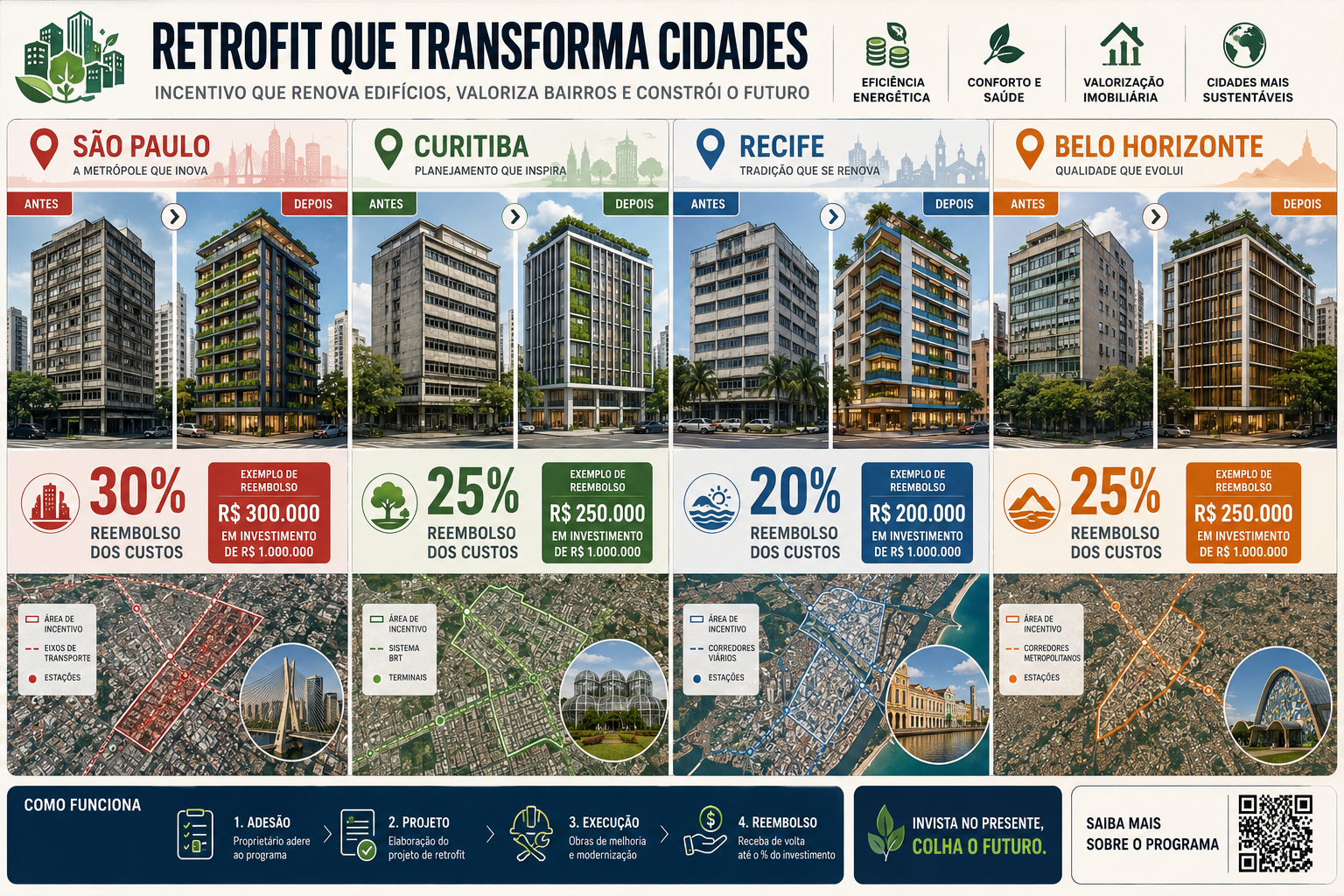
City-by-City Breakdown: Where the Reforma Casa Brasil Economics 2026 Money Is Flowing
The federal program has catalyzed a wave of municipal-level initiatives that are reshaping urban development economics across Brazil. The Reforma Casa Brasil Economics 2026: $7.4B Retrofit Opportunities for Urban Developers in Election Year is playing out differently in each major city, with distinct incentive structures, target zones, and risk profiles.
São Paulo: Scaling the Requalifica Centro Program
São Paulo’s city government updated its Requalifica Centro program in June 2026, extending coverage to the entire central region and simplifying licensing procedures for building retrofits [3]. The administrative streamlining is significant: licensing complexity has historically been one of the primary deterrents for mid-sized developers considering central São Paulo projects.
In May 2026, the city also established the GT Requalifica — a dedicated technical working group tasked with standardizing analyses and accelerating licensing approvals for requalification projects [8]. As of mid-2026, 49 buildings are actively undergoing urban requalification, with 30 projects already approved under the Requalifica Centro framework. For developers with existing relationships in São Paulo’s construction sector, this pipeline represents a measurable near-term opportunity.
Curitiba: Direct Cost Reimbursement as a Developer Incentive
Curitiba’s May 2026 initiative offers some of the most direct financial incentives in the country. The city launched a program with up to R$30 million in available funding, reimbursing up to 25% of construction and requalification costs for buildings and up to 50% for ground-floor commercial spaces with direct street access [4]. This cost-sharing model substantially changes the risk calculus for developers evaluating central Curitiba projects.
| Incentive Type | Reimbursement Rate | Program Budget |
|---|---|---|
| Building requalification | Up to 25% | R$30 million total |
| Ground-floor commercial | Up to 50% | Included in above |
Recife: Brazil’s First Social Housing PPP
Recife entered a different tier of retrofit ambition in February 2026 when it initiated bidding for Brazil’s first Public-Private Partnership specifically focused on social housing. The project plans 1,128 housing units through a combination of building retrofits and new construction, with a contract value estimated at R$664 million over 25 years [5]. CAIXA structured the PPP, signaling institutional confidence in the financial model.
This is a landmark transaction. A 25-year PPP structure provides revenue visibility that is rare in Brazilian real estate, and the retrofit component reduces upfront capital requirements compared to equivalent new-build projects.
Belo Horizonte: Targeting Vacant Properties
Belo Horizonte’s “Operação Urbana Simplificada – Regeneração dos Bairros do Centro,” presented in February 2026, takes a vacancy-first approach [6]. The project targets underutilized and vacant properties in central neighborhoods, aiming to increase affordable housing supply while reducing urban commuting distances. For developers, vacant buildings in established neighborhoods represent lower acquisition costs and faster permitting relative to sites requiring demolition.
CAIXA’s National Retrofit Solution
Complementing city-level programs, CAIXA introduced a dedicated housing retrofit solution in January 2026, presented to the construction sector at an event in Porto Alegre [2]. The solution targets degraded or underutilized properties and is designed to expand social housing options by modernizing existing building stock. CAIXA’s involvement provides financing infrastructure that private developers can access directly, reducing dependence on commercial credit markets.
Financial Returns and Risk Factors for Urban Developers
The Valuation Case for Retrofit
The economic argument for retrofit is increasingly data-driven. According to Cushman & Wakefield, retrofitting corporate buildings can increase property valuations by up to 30% per square meter while delivering significant reductions in operational costs [9]. These figures apply primarily to commercial properties but the underlying logic — that modernized buildings command premium rents and sale prices in established urban locations — translates to residential retrofit projects as well.
“A 30% valuation uplift per square meter, combined with federal subsidies and municipal reimbursements, creates a margin structure that new-build projects in the same urban zones cannot easily replicate.”
For developers evaluating entry points, the combination of federal interest rate reductions, municipal cost reimbursements, and inherent valuation uplifts creates a stacked return profile. The key variables are acquisition cost, renovation scope, and exit timing.
Developers interested in understanding how pre-construction investment strategies can amplify returns should review the dynamics of off-plan property purchases and their valuation advantages, which share structural similarities with early-stage retrofit positioning.
Legal and Technical Barriers: The CBIC Warning
Not all signals are positive. In May 2026, the Brazilian Chamber of the Construction Industry (CBIC) issued a direct warning: technical standards and legal uncertainties are actively hindering urban center revitalization [7]. The specific concerns include:
- Absence of clear regulatory frameworks for adaptive reuse of buildings originally designed for different uses
- Inconsistent municipal licensing requirements across different cities and even different districts within the same city
- Financing gaps for projects that do not fit neatly into either residential or commercial lending categories
- Heritage preservation conflicts in historic central areas where retrofit scope is constrained by preservation orders
These barriers do not negate the opportunity, but they do require developers to invest in legal and technical due diligence before committing capital. The developers best positioned to capture Reforma Casa Brasil Economics 2026 returns are those with existing regulatory expertise or partnerships with firms that specialize in urban requalification permitting.
Election-Year Dynamics and Program Continuity Risk
Brazil’s 2026 federal elections introduce a variable that developers must factor into project timelines. Programs launched or expanded in election years carry continuity risk — a change in federal administration could alter funding priorities, interest rate structures, or program eligibility criteria.
The practical mitigation strategy is to prioritize projects that can reach financial close and begin construction before the election cycle introduces uncertainty. Projects in São Paulo’s GT Requalifica pipeline and Curitiba’s reimbursement program are particularly well-positioned because they operate under municipal authority, which is less exposed to federal election outcomes.
Strategic Positioning for Developers in 2026
Identifying the Right Asset Profile
Not every underutilized building is a viable retrofit target. The strongest candidates share several characteristics:
- Located within designated requalification zones (São Paulo’s central region, Curitiba’s central area, Recife’s PPP footprint, Belo Horizonte’s target neighborhoods)
- Structurally sound enough to avoid full demolition, which would negate the cost advantages of retrofit over new build
- Zoned for the intended post-retrofit use, or eligible for use conversion under simplified licensing frameworks
- Accessible via existing transit infrastructure, which supports both residential demand and commercial viability
For developers operating in coastal growth markets, the contrast between retrofit economics and the dynamics of emerging urban neighborhoods illustrates how different location profiles require different capital strategies.
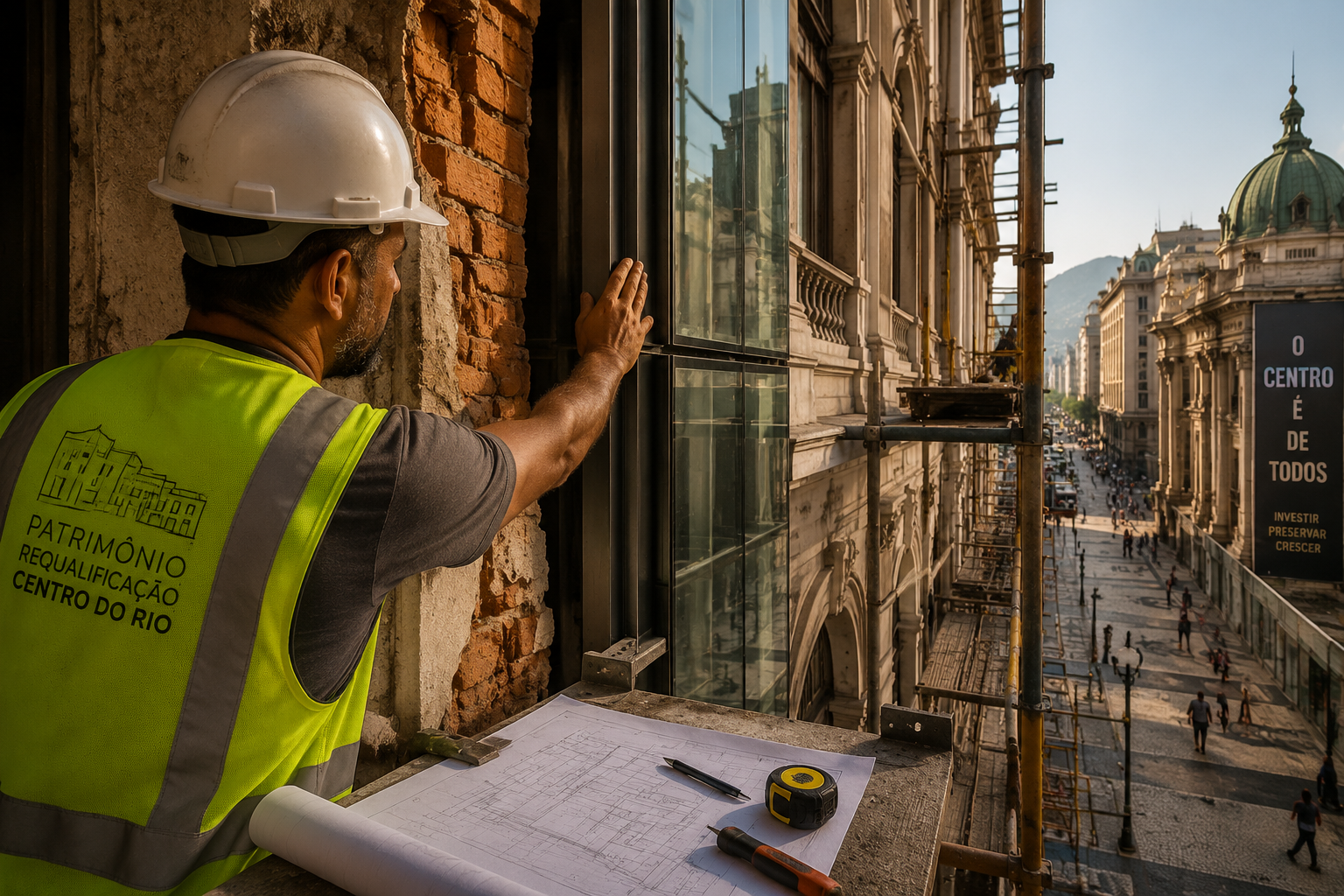
Financing Stack for Retrofit Projects
A well-structured retrofit project in 2026 can access multiple financing layers simultaneously:
- Reforma Casa Brasil credit at 0.82% per month with 72-month terms for eligible residential renovation components
- Municipal reimbursement programs (Curitiba model: up to 50% of commercial fit-out costs)
- CAIXA retrofit solution for social housing components within mixed-use projects
- PPP structures for large-scale projects in cities with active procurement processes (Recife model)
The ability to layer these sources is what separates sophisticated retrofit developers from single-source operators. Projects that combine federal credit, municipal grants, and institutional partnership structures can achieve effective financing costs well below commercial market rates.
Developers exploring alternative capital structures — including digital asset integration — may also find value in reviewing how cryptocurrency is intersecting with real estate development as an emerging financing frontier.
Sustainability as a Value Driver
The Institute for Transportation and Development Policy’s February 2026 study on Brazilian urban mobility highlights the growing importance of integrating nature-based solutions into urban development [10]. Retrofit projects that incorporate green infrastructure — rooftop gardens, permeable surfaces, improved ventilation systems — are increasingly aligned with both regulatory incentives and tenant preferences.
This is not merely an environmental consideration. Buildings with demonstrable sustainability features command measurable rent premiums and are better positioned for institutional sale processes, where ESG criteria are becoming standard due diligence requirements.
For developers tracking how construction progress and project quality translate into market positioning, reviewing active development milestones provides a benchmark for execution standards that apply equally to retrofit and new-build projects.
Conclusion
The Reforma Casa Brasil Economics 2026: $7.4B Retrofit Opportunities for Urban Developers in Election Year represents a convergence of federal policy, municipal incentives, and market fundamentals that is unlikely to repeat at the same scale in the near term. The program’s expanded credit terms, combined with city-level cost reimbursements in Curitiba, São Paulo’s streamlined licensing, Recife’s PPP structure, and Belo Horizonte’s vacancy-targeting initiative, create a multi-city opportunity pipeline with differentiated risk and return profiles.
Actionable next steps for urban developers:
- Conduct immediate asset screening within designated requalification zones in São Paulo, Curitiba, Recife, and Belo Horizonte to identify acquisition targets before election-year uncertainty narrows the window.
- Engage legal counsel with specific expertise in Brazilian urban requalification regulations to navigate the technical and legal barriers identified by CBIC.
- Model financing stacks that combine Reforma Casa Brasil credit, municipal reimbursements, and CAIXA retrofit solutions to optimize effective cost of capital.
- Prioritize projects that can reach financial close before the federal election cycle introduces program continuity risk.
- Integrate sustainability features into retrofit scope to maximize valuation uplift and align with institutional buyer criteria.
Developers who move decisively in the second half of 2026 — with proper due diligence, layered financing, and municipal program alignment — are positioned to capture margin structures that the new-build market in Brazil’s major urban centers cannot currently match. For those exploring the full range of current development opportunities in Brazil’s most dynamic markets, the retrofit pivot deserves serious strategic consideration.
References
[1] Governo Federal Reduz Juros E Amplia Prazo De Pagamento Para Reformas Do Programa Reforma Casa Brasil – https://www.gov.br/fazenda/pt-br/canais_atendimento/imprensa/notas-do-cmn/2026/maio/governo-federal-reduz-juros-e-amplia-prazo-de-pagamento-para-reformas-do-programa-reforma-casa-brasil/?utm_source=openai
[2] Caixa Apresenta Solucao Habitacional Retrofit Ao Setor Da Construcao Civil Em Evento Realizado Em Porto Alegre Rs – https://caixanoticias.caixa.gov.br/Paginas/Not%C3%ADcias/2026/01-JANEIRO/CAIXA-apresenta-solucao-habitacional-retrofit-ao-setor-da-construcao-civil-em-evento-realizado-em-Porto-Alegre-RS.aspx?utm_source=openai
[3] Programa Requalifica Centro E Regulamentado Para Toda A Regiao Central De Sao Paulo – https://gestaourbana.prefeitura.sp.gov.br/noticias/programa-requalifica-centro-e-regulamentado-para-toda-a-regiao-central-de-sao-paulo/?utm_source=openai
[4] Curitiba Lanca Edital Para Custear Retrofit De Imoveis No Centro 202605061321 – https://www.band.com.br/band-parana/noticias/curitiba-lanca-edital-para-custear-retrofit-de-imoveis-no-centro-202605061321?utm_source=openai
[5] Projeto De Ppp Estruturado Pela Caixa Para Habitacao Social Em Recife Pe Entra Na Fase De Licitacao – https://caixanoticias.caixa.gov.br/Paginas/Not%C3%ADcias/2026/02-FEVEREIRO/Projeto-de-PPP-estruturado-pela-CAIXA-para-habitacao-social-em-Recife-PE-entra-na-fase-de-licitacao.aspx?utm_source=openai
[6] Projeto De Requalificacao Pode Impulsionar Habitacao Popular No Centro E Bairros Proximos – https://prefeitura.pbh.gov.br/noticias/projeto-de-requalificacao-pode-impulsionar-habitacao-popular-no-centro-e-bairros-proximos?utm_source=openai
[7] Normas Tecnicas E Inseguranca Juridica Emperram Revitalizacao De Centros Urbanos – https://cbic.org.br/normas-tecnicas-e-inseguranca-juridica-emperram-revitalizacao-de-centros-urbanos/?utm_source=openai
[8] Gt Requalifica Sao Paulo Cria Grupo Tecnico Para Acelerar Retrofit No Centro – https://todospelocentro.prefeitura.sp.gov.br/noticias/gt-requalifica-sao-paulo-cria-grupo-tecnico-para-acelerar-retrofit-no-centro?utm_source=openai
[9] Corporate Retrofitting Increases Property Values – https://www.cushmanwakefield.com/pt-br/brazil/insights/corporate-retrofitting-increases-property-values?utm_source=openai
[10] Nature Based Solutions Are The Future Of Brazils Urban Mobility – https://itdp.org/2026/02/24/nature-based-solutions-are-the-future-of-brazils-urban-mobility/?utm_source=openai