
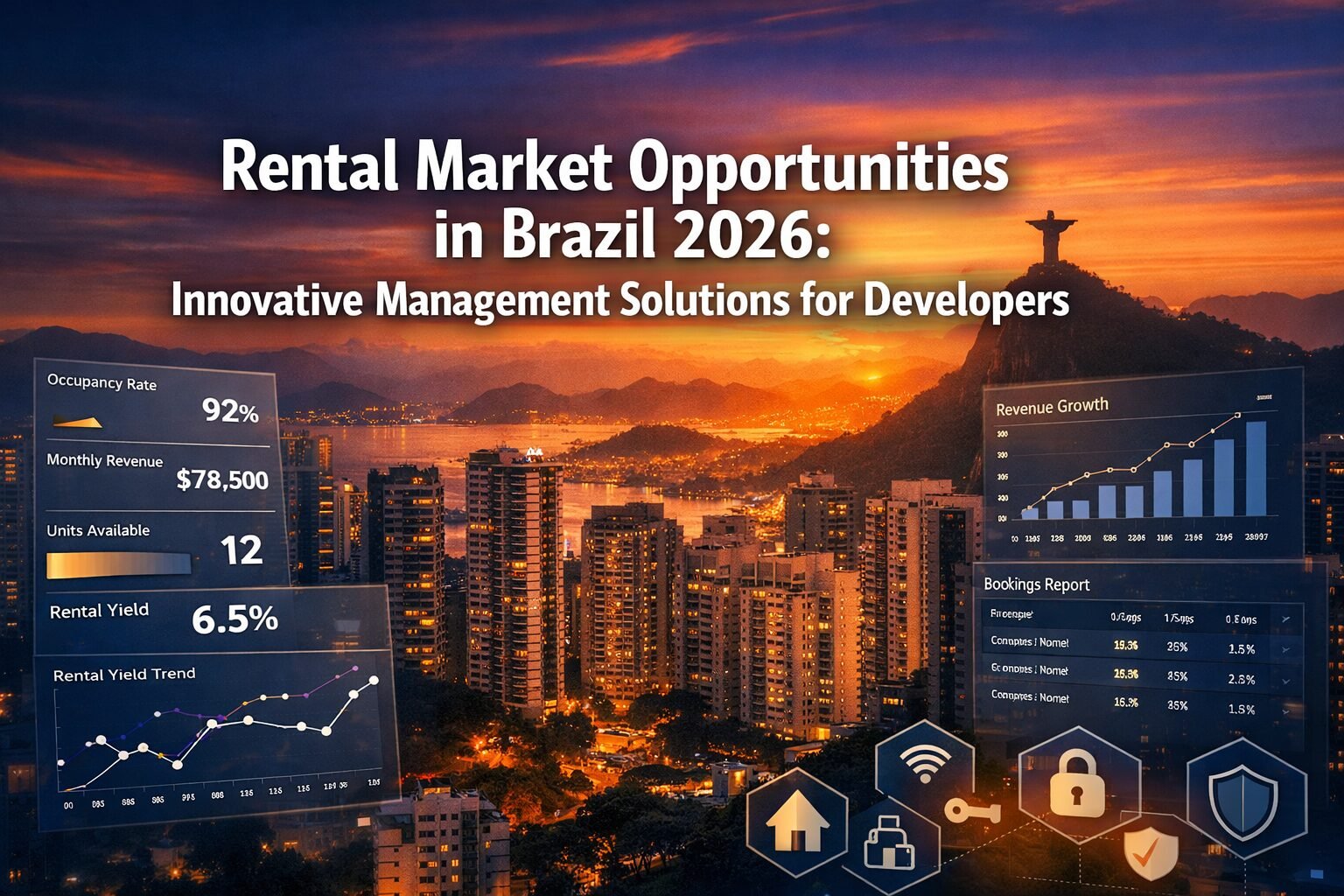
Brazil’s rental market is experiencing a dramatic transformation in 2026, creating unprecedented opportunities for developers willing to embrace innovation. With 9.3 million international visitors arriving in 2025 and active rental listings surging by 27% year-over-year, the landscape has shifted from simple property ownership to sophisticated rental management strategies[1]. As co-living arrangements and rental models gain traction as viable alternatives to traditional ownership, developers now have a strategic opportunity to pivot unsold inventory into high-yield rental assets using cutting-edge PropTech solutions. This comprehensive guide explores the Rental Market Opportunities in Brazil 2026: Innovative Management Solutions for Developers Amid Rising Demand and reveals how developers can achieve 15-20% ROI potential in mid-tier urban projects through smart management approaches.
Key Takeaways
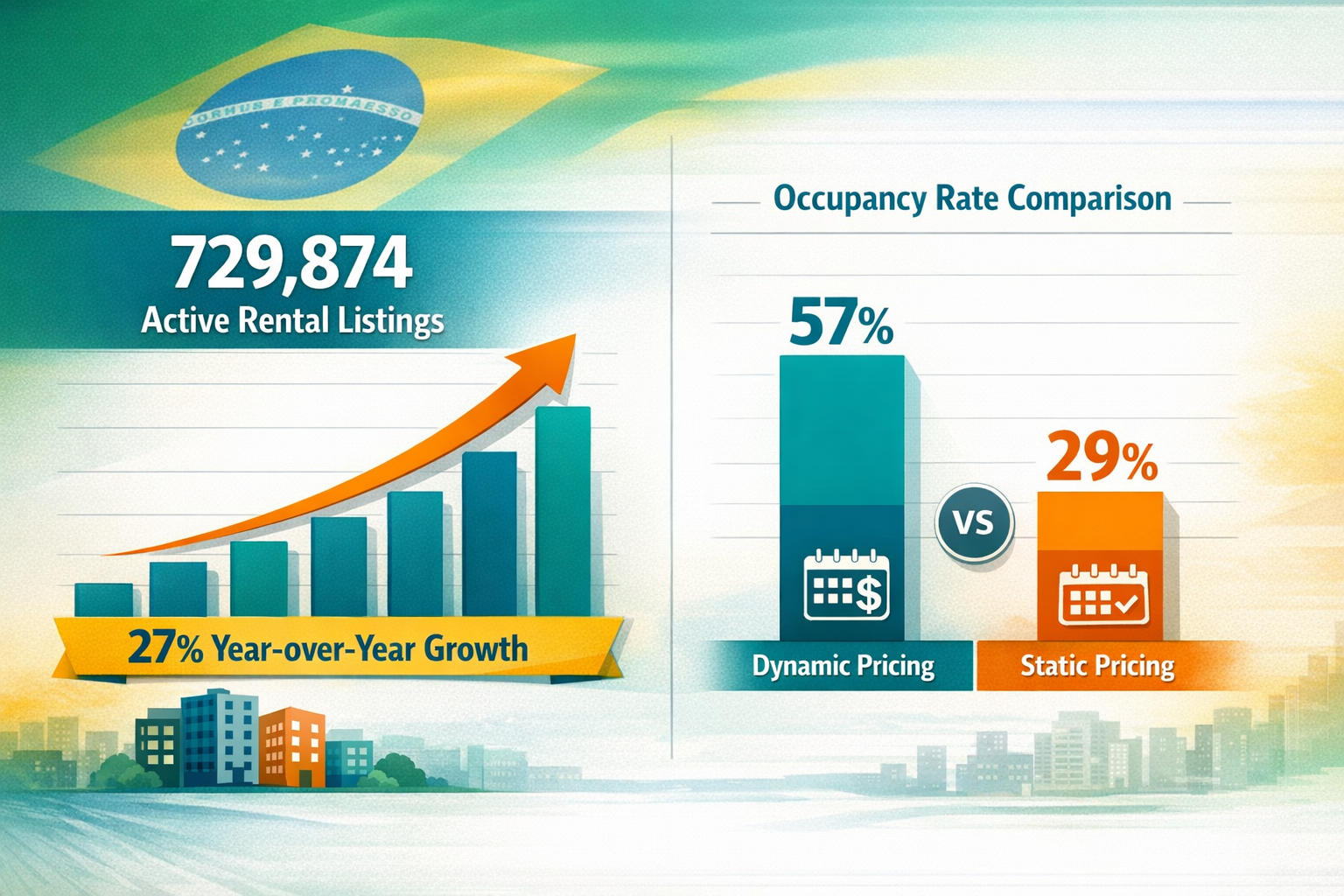
- 🏢 Active rental listings reached 729,874 in January 2026, representing a 27% increase that creates both opportunities and competitive pressures requiring sophisticated management solutions[1]
- 💰 Dynamic pricing technology delivers 119% RevPAR advantage over static pricing strategies, with automated systems achieving BRL 251 versus BRL 115 for manual approaches[1]
- 📈 Long-term rental demand accelerates with 12% annual rent increases driven by expanding labor markets and university populations across Brazilian cities[2]
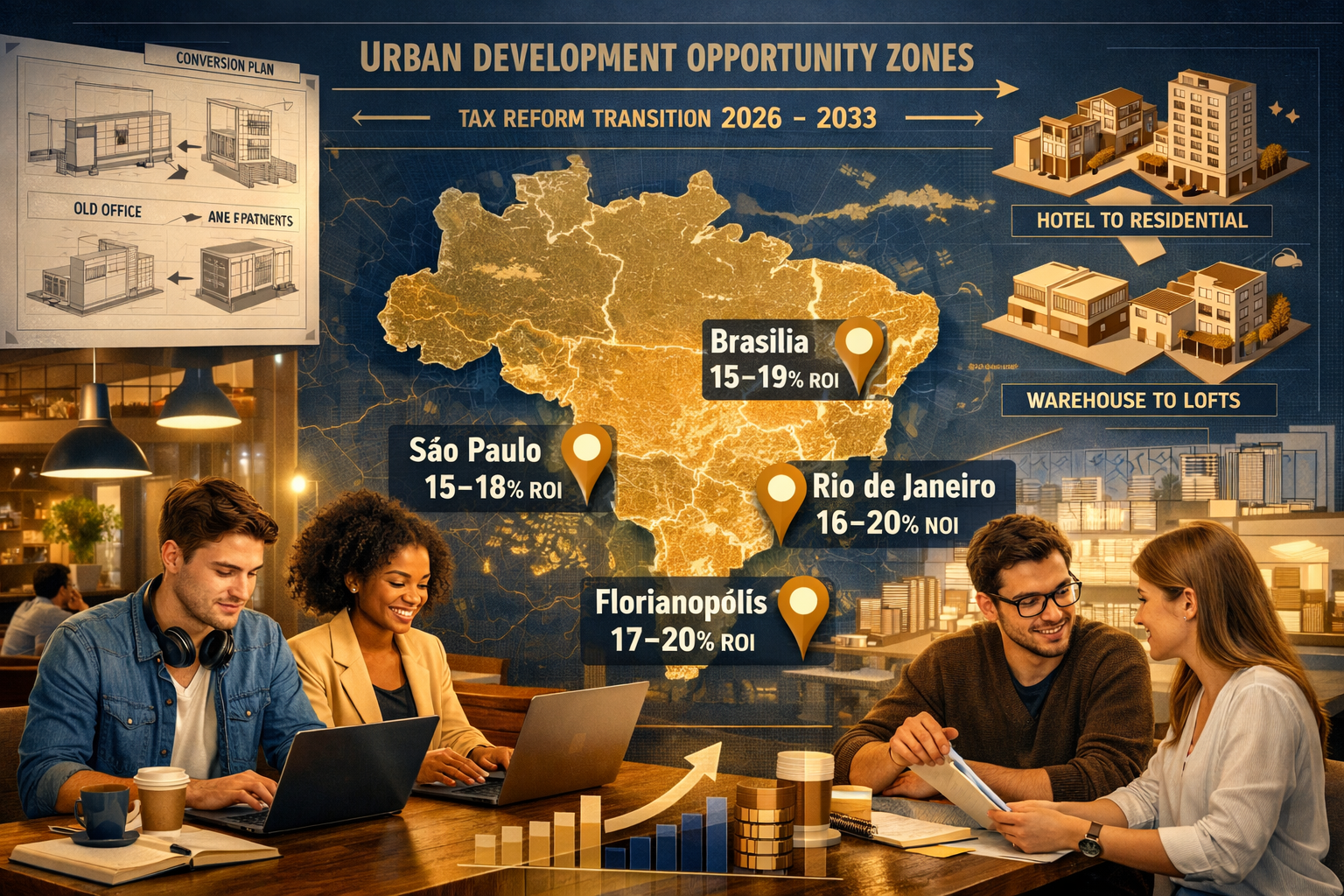
- 🏗️ Developers can convert unsold inventory into rental assets achieving 15-20% ROI potential through PropTech-enabled management in mid-tier urban markets
- ⚖️ New tax reform implementation starting January 2026 requires strategic adaptation of pricing and accounting systems for competitive positioning[1]
Understanding the Brazilian Rental Market Landscape in 2026
Record Tourism Driving Short-Term Rental Demand
Brazil’s tourism sector achieved a historic milestone with 9.3 million international visitors in 2025, establishing a robust foundation for continued rental demand throughout 2026[1]. This influx of travelers has fundamentally reshaped the short-term rental market, creating sustained pressure on available inventory and presenting lucrative opportunities for developers with properly managed properties.
The visitor surge hasn’t just increased demand—it’s transformed guest expectations. International travelers now expect seamless digital booking experiences, smart home amenities, and professional property management that rivals hotel services. Developers who recognize this shift can position their properties to capture premium rates from this sophisticated traveler segment.
Massive Supply Expansion Creates Competitive Dynamics
The Brazilian rental market witnessed explosive growth with active short-term rental listings reaching 729,874 properties in January 2026—a remarkable 27% year-over-year increase[1]. This dramatic supply expansion presents a double-edged sword for developers:
Opportunities:
- Growing market acceptance of rental accommodations
- Increased platform infrastructure and booking channels
- Rising consumer awareness of rental options
- Expanding geographic coverage beyond traditional tourist zones
Challenges:
- Heightened competition requiring differentiation strategies
- Pressure on occupancy rates and pricing power
- Need for professional management to stand out
- Market saturation in certain segments and locations
The data reveals that while monthly booked nights grew by 16% on average, this growth rate trails behind the 27% supply increase[1]. This gap underscores a critical reality: success in 2026 depends not just on having rental inventory, but on managing it with exceptional efficiency and strategic positioning.
Long-Term Rental Market Acceleration
Beyond the short-term rental boom, Brazil’s long-term rental sector is experiencing robust growth. The FipeZAP rent index shows annual rent increases of approximately 12% as of early 2026, driven by several fundamental factors[2]:
- Expanding labor markets in major urban centers attracting domestic migration
- Growing university populations creating sustained demand for affordable housing
- Shifting homeownership preferences among younger demographics favoring flexibility
- Economic uncertainty making rental arrangements more attractive than purchase commitments
For developers with strategic property locations, this dual-market opportunity—serving both short-term and long-term rental segments—provides crucial flexibility in revenue optimization strategies.
The PropTech Revolution: Innovative Management Solutions for Developers

Dynamic Pricing Technology Delivers Unprecedented Returns
Perhaps the most transformative innovation reshaping rental market opportunities in Brazil 2026 is dynamic pricing technology. The data is unequivocal: properties implementing high-intensity dynamic pricing achieved average RevPAR of BRL 251, representing a staggering 119% advantage over static-pricing properties at BRL 115[1].
This isn’t merely a marginal improvement—it’s a fundamental competitive advantage that separates profitable rental operations from struggling ones. The occupancy disparity tells an equally compelling story:
| Pricing Strategy | Average Occupancy | January 2026 Peak Occupancy |
|---|---|---|
| High-Intensity Dynamic Pricing | 57% | 72% |
| Static Manual Pricing | 29% | 40% |
Source: PriceLabs Brazil STR Market Report[1]
The 43 percentage point occupancy gap during peak season demonstrates how automated pricing systems capture demand that manual approaches miss entirely. For developers managing multiple properties, this technology becomes not just beneficial but essential for competitive survival.
Smart Home Integration Expanding Rapidly
Brazil’s smart home technology sector is experiencing explosive growth, with an estimated 9.9 million Brazilian homes with internet access incorporating smart home devices by 2026[2]. The sector generated $2.41 billion in revenue, representing a 91.06% increase from 2022[2].
For rental property developers, this technological shift creates multiple opportunities:
Operational Efficiency:
- Remote property access and keyless entry systems
- Automated climate control reducing energy costs
- Occupancy sensors for maintenance scheduling
- Integrated security monitoring
Guest Experience Enhancement:
- Voice-controlled amenities
- Personalized environmental preferences
- Seamless check-in/check-out processes
- Enhanced safety and security features
Revenue Optimization:
- Premium pricing for tech-enabled properties
- Reduced operational overhead through automation
- Lower maintenance costs through predictive monitoring
- Improved guest satisfaction driving positive reviews
Properties equipped with comprehensive smart home systems command premium nightly rates while simultaneously reducing operational costs—a powerful combination for maximizing returns on rental investments.
Integrated Property Management Platforms
Modern property management platforms have evolved far beyond simple booking calendars. Today’s comprehensive solutions integrate:
✅ Multi-channel distribution across Airbnb, Booking.com, VRBO, and local platforms
✅ Automated guest communication with AI-powered chatbots handling inquiries in Portuguese and English
✅ Dynamic pricing engines adjusting rates based on demand, seasonality, and competitive positioning
✅ Maintenance coordination with automated work order generation and vendor management
✅ Financial reporting with tax-compliant accounting for Brazil’s new regulatory framework
✅ Performance analytics tracking occupancy, RevPAR, and competitive benchmarking
For developers managing portfolios of rental properties, these integrated platforms reduce management overhead by 40-60% while improving guest satisfaction scores and occupancy rates. The technology enables a single property manager to effectively oversee 20-30 properties that would have previously required a much larger team.
Strategic Opportunities: Converting Inventory to High-Yield Rental Assets
Pivoting Unsold Inventory into Rental Revenue Streams
One of the most compelling rental market opportunities in Brazil 2026 involves converting unsold development inventory into professionally managed rental assets. This strategy offers multiple advantages:
Immediate Cash Flow Generation: Rather than holding vacant units awaiting buyers in uncertain markets, developers can generate immediate monthly revenue through rental operations. With proper management, properties can achieve 15-20% annual ROI in mid-tier urban markets—often exceeding returns from eventual sales after accounting for holding costs.
Market Positioning Flexibility: Rental operations allow developers to maintain asking prices during soft sales markets while generating income. Properties can be selectively removed from rental inventory when buyer demand strengthens and pricing improves.
Portfolio Diversification: Mixed portfolios combining sales units and rental inventory provide revenue stability through market cycles. Rental income smooths cash flow volatility inherent in project-based sales models.
Brand Building: Well-managed rental properties serve as living showrooms demonstrating quality construction and amenities to potential buyers. Satisfied rental guests often become purchasers or referral sources.
Targeting Mid-Tier Urban Markets for Optimal Returns
While luxury segments often attract developer attention, mid-tier urban properties present exceptional rental market opportunities in Brazil 2026. These properties typically feature:
- Studio and one-bedroom configurations ideal for both short-term tourists and long-term professionals
- Strategic locations near universities, business districts, and transportation hubs
- Moderate pricing accessible to Brazil’s growing middle class and international budget travelers
- Lower vacancy risk due to broader demand base across multiple renter segments
Cities like Florianópolis demonstrate this opportunity particularly well, combining tourism appeal with university populations and expanding technology sectors. Properties in these markets benefit from dual-season demand: tourist high seasons supplemented by consistent academic-year occupancy.
Co-Living Models Gaining Traction
The co-living trend—shared living spaces with private bedrooms and communal amenities—is rapidly gaining acceptance among Brazilian millennials and Gen Z renters. This model offers developers unique advantages:
Higher Revenue Per Square Meter: Co-living configurations generate 20-35% higher revenue per square meter compared to traditional apartment rentals by maximizing bedroom count while sharing common spaces.
Built-In Community Appeal: Younger renters increasingly value community and social connection over private space, making co-living arrangements highly attractive to target demographics.
Reduced Per-Resident Costs: Shared amenities, utilities, and services distribute costs across more residents, improving operational margins while maintaining competitive per-person pricing.
Flexibility for Developers: Existing properties can often be reconfigured for co-living with modest renovations, providing adaptive reuse opportunities for older inventory.
Navigating Regulatory and Tax Considerations
Understanding the 2026 Tax Reform Implementation
Starting January 1, 2026, Brazil implemented comprehensive tax reform replacing ISS, PIS, and Cofins with two new consumption taxes: IBS (Tax on Goods and Services) and CBS (Contribution on Goods and Services)[1]. This transition, continuing through 2033, requires developers to adapt their strategies:
Pricing Strategy Adjustments: The new tax structure may affect net pricing and competitiveness. Dynamic pricing systems should incorporate tax calculations to maintain target margins while remaining competitive.
Accounting System Updates: Property management platforms must accommodate the new tax framework with compliant reporting and calculation methodologies.
Long-Term Planning: The extended transition period creates uncertainty requiring flexible financial modeling and scenario planning for rental operations.
Developers should consult with Brazilian tax specialists to ensure compliance and optimize tax positioning under the new framework. Proper tax management can represent 2-4% margin improvement in rental operations.
Condominium Regulations and Short-Term Rental Restrictions
Brazil’s Superior Tribunal of Justice confirmed that residential condominiums can legally block short-term rentals if internal conventions don’t explicitly authorize them[1]. This regulatory reality creates both challenges and opportunities:
Due Diligence Requirements: Developers must thoroughly investigate condominium regulations before acquiring properties for rental conversion. Properties with explicit short-term rental authorization command premium valuations.
Development Strategy Implications: New developments should incorporate rental-friendly governance structures from inception, creating competitive advantages in the rental market.
Market Segmentation: Restrictions in some buildings create scarcity value for rental-authorized properties, potentially supporting premium pricing in constrained markets.
Long-Term Rental Alternatives: Properties restricted from short-term rentals may still perform exceptionally well in long-term rental markets with 12% annual rent growth[2].
Understanding and navigating these regulatory complexities separates successful rental operations from problematic investments. Developers should prioritize properties in rental-friendly buildings or create new developments with appropriate governance structures.
Seasonal Dynamics and Revenue Optimization Strategies
Managing Dramatic Seasonal Variations
Brazilian rental markets exhibit extreme seasonal fluctuations that require sophisticated management approaches. January 2026 saw peak occupancy reach 53% with ADRs of BRL 575, while May experienced RevPAR bottoming around BRL 104[1]—representing a 453% seasonal swing in daily rates.
Peak Season Strategies (December-February):
- Implement minimum stay requirements (5-7 nights) to reduce turnover costs
- Premium pricing capturing maximum willingness to pay
- Selective guest screening ensuring property protection during high-demand periods
- Strategic overbooking with backup arrangements managing cancellations
Shoulder Season Strategies (March-May, September-November):
- Flexible cancellation policies attracting bookings
- Discounted weekly and monthly rates improving occupancy
- Targeted marketing to domestic travelers and business segments
- Property maintenance scheduling during lower-demand periods
Low Season Strategies (June-August):
- Long-term rental conversions (1-3 months) providing stable occupancy
- Corporate housing arrangements with local businesses
- Deep discounts for extended stays
- Strategic property rotation allowing maintenance and upgrades
Leveraging Data Analytics for Competitive Positioning
Modern property management platforms provide unprecedented data visibility enabling strategic decision-making:
Competitive Benchmarking: Track competitor pricing, occupancy, and review performance to identify positioning opportunities and market gaps.
Demand Forecasting: Historical booking patterns combined with event calendars and tourism data enable proactive pricing adjustments capturing demand spikes.
Guest Segmentation: Analyze booking sources, guest demographics, and behavior patterns to optimize marketing spend and property amenities.
Performance Attribution: Identify which property features, amenities, and services drive premium pricing and positive reviews, informing renovation and upgrade decisions.
Developers who embrace data-driven management consistently outperform competitors relying on intuition and manual processes. The performance gap continues widening as analytics capabilities become more sophisticated.
Election-Year Policies and Affordability Initiatives
Brazil’s 2026 election year brings potential policy shifts affecting rental market dynamics. Historical patterns suggest governments often introduce affordability initiatives during election cycles:
Potential Policy Impacts:
💼 Rental Subsidy Programs: Government subsidies supporting rental payments for lower-income segments could expand addressable markets for mid-tier properties.
🏦 Financing Incentives: Improved financing terms for rental property acquisition may increase investor demand and property valuations.
📋 Regulatory Simplification: Streamlined permitting and licensing for rental operations could reduce compliance costs and barriers to entry.
🏘️ Urban Development Initiatives: Infrastructure investments in emerging neighborhoods create new high-potential rental markets.
While specific 2026 policies remain uncertain, developers should monitor political developments and maintain operational flexibility to capitalize on emerging opportunities. Properties positioned to serve both market-rate and subsidy-supported renters provide valuable optionality.
Implementing Your Rental Management Strategy: Practical Steps
Step 1: Portfolio Assessment and Property Selection
Begin by evaluating existing inventory against rental market criteria:
Location Analysis:
- Proximity to tourism attractions, business districts, universities, and transportation
- Neighborhood safety, walkability, and amenity access
- Competitive supply and demand dynamics
- Regulatory environment and condominium restrictions
Property Characteristics:
- Unit size and configuration suitability for target renter segments
- Condition and required renovations for rental readiness
- Amenity offerings and differentiation potential
- Smart home technology integration feasibility
Financial Modeling:
- Projected occupancy rates based on comparable properties
- Dynamic pricing potential and seasonal revenue patterns
- Operating costs including management, utilities, maintenance, and taxes
- ROI comparison versus holding costs and eventual sale scenarios
Properties scoring highest across these dimensions become priority candidates for rental conversion.
Step 2: Technology Infrastructure Implementation
Successful rental operations require robust technology foundations:
Essential Technology Stack:
- Property Management System (PMS): Comprehensive platform integrating booking, communication, and operations
- Dynamic Pricing Engine: Automated rate optimization based on demand signals
- Channel Manager: Multi-platform distribution maximizing visibility
- Smart Home Systems: Keyless entry, climate control, and security monitoring
- Financial Management: Tax-compliant accounting and reporting tools
Many developers partner with specialized property management companies providing turnkey technology solutions rather than building internal capabilities. This approach accelerates time-to-market and leverages proven systems.
Step 3: Operational Excellence and Guest Experience
Technology enables efficiency, but exceptional guest experiences drive premium pricing and positive reviews:
Pre-Arrival:
- Automated booking confirmation and pre-stay communication
- Digital guidebooks with property information and local recommendations
- Seamless check-in instructions and access code delivery
During Stay:
- 24/7 guest support through multilingual chatbots and escalation protocols
- Proactive maintenance addressing issues before guest complaints
- Personalized touches creating memorable experiences
Post-Departure:
- Automated review requests and feedback collection
- Guest appreciation messages and return-visit incentives
- Continuous improvement based on feedback analysis
Properties consistently delivering 5-star experiences command premium rates and achieve superior occupancy through repeat bookings and referrals.
Step 4: Financial Monitoring and Optimization
Implement rigorous financial tracking and continuous optimization:
Key Performance Indicators:
- Occupancy Rate: Target 55-65% annual average with seasonal variations
- Average Daily Rate (ADR): Benchmark against comparable properties
- Revenue Per Available Room (RevPAR): Primary profitability metric
- Operating Expense Ratio: Target 35-45% of gross revenue
- Net Operating Income (NOI): Bottom-line profitability measure
Monthly performance reviews should identify optimization opportunities:
- Underperforming properties requiring pricing or marketing adjustments
- Seasonal patterns informing proactive strategy changes
- Maintenance issues affecting guest satisfaction and reviews
- Technology enhancements improving operational efficiency
Developers achieving 15-20% ROI targets maintain disciplined financial monitoring and rapid response to performance variations.
Future Outlook: Rental Market Opportunities Beyond 2026
Emerging Trends Shaping Long-Term Opportunities
Several trends will continue reshaping Brazilian rental markets beyond 2026:
Remote Work Normalization: Distributed work arrangements create demand for flexible rental terms and properties in secondary cities with lower costs and higher quality of life. Developers in emerging markets like Florianópolis benefit from this trend.
Sustainability Expectations: Environmentally conscious travelers increasingly prioritize eco-friendly properties with energy efficiency, renewable energy, and sustainable practices. Green certifications command premium pricing.
Experience-Driven Travel: Guests seek authentic local experiences rather than generic accommodations. Properties offering unique design, cultural connections, and curated local partnerships differentiate effectively.
Blockchain and Cryptocurrency: Emerging payment technologies may streamline international bookings and reduce transaction costs, particularly for cross-border investors and guests.
Building Sustainable Competitive Advantages
Long-term success in rental markets requires sustainable competitive positioning:
🏆 Brand Development: Consistent quality and guest experiences build reputation and direct booking channels reducing platform dependence.
📍 Strategic Location Portfolio: Diversified geographic presence balances seasonal variations and market-specific risks.
🤝 Strategic Partnerships: Relationships with corporate clients, universities, and travel agencies provide stable demand channels.
💡 Continuous Innovation: Ongoing technology adoption and operational improvements maintain competitive edges as markets evolve.
Developers viewing rental operations as strategic long-term businesses rather than temporary inventory solutions position themselves for sustained success through market cycles.
Conclusion: Seizing Rental Market Opportunities in Brazil 2026
The rental market opportunities in Brazil 2026 represent a transformative moment for developers willing to embrace innovative management solutions. With active listings growing 27% year-over-year to 729,874 properties and tourism reaching record levels, the market fundamentals support robust rental demand[1]. However, success requires far more than simply listing properties—it demands sophisticated PropTech implementation, dynamic pricing strategies, and operational excellence.
The data conclusively demonstrates that technology-enabled management delivers extraordinary advantages: 119% RevPAR improvements, 43 percentage point occupancy gains, and the ability to navigate dramatic seasonal variations effectively[1]. For developers with unsold inventory or strategic vision for rental-focused development, the opportunity to achieve 15-20% ROI in mid-tier urban markets is both real and actionable.
Your Next Steps
Ready to capitalize on rental market opportunities in Brazil 2026? Consider these immediate actions:
- Assess your portfolio identifying properties with highest rental potential based on location, configuration, and regulatory environment
- Research technology solutions evaluating property management platforms, dynamic pricing tools, and smart home systems
- Analyze competitive positioning in target markets understanding demand patterns, pricing dynamics, and differentiation opportunities
- Develop financial models projecting rental revenues, operating costs, and ROI scenarios
- Explore partnership opportunities with experienced property management companies offering turnkey solutions
The Brazilian rental market is evolving rapidly, creating advantages for early movers who implement professional management before competition intensifies further. Whether converting existing inventory or planning new developments with rental operations in mind, 2026 offers a unique window of opportunity.
For developers seeking guidance on strategic property investments in Brazil or exploring specific development opportunities, professional consultation can accelerate your path to rental market success. The combination of rising demand, proven technology solutions, and strategic positioning creates a compelling foundation for sustainable rental revenue growth.
The question isn’t whether rental market opportunities exist in Brazil 2026—the data confirms they do. The question is whether you’ll implement the innovative management solutions necessary to capture them. The developers who act decisively today will establish competitive positions that compound advantages for years to come.
Contact our team to explore how rental management strategies can optimize your development portfolio and unlock new revenue streams in Brazil’s dynamic 2026 market.
References
[1] Brazil Str Market Report – https://hello.pricelabs.co/blog/brazil-str-market-report/
[2] Brazil Real Estate Market – https://thelatinvestor.com/blogs/news/brazil-real-estate-market