

The real estate landscape in Rio de Janeiro is experiencing a seismic shift in 2026. At the heart of this transformation lies LICIN 2.0, a comprehensive licensing reform designed to dismantle decades of bureaucratic bottlenecks that have strangled construction approvals. For developers eyeing the sprawling, buildable neighborhoods of Barra da Tijuca and Recreio dos Bandeirantes, the Rio de Janeiro LICIN 2.0 Reforms 2026: Accelerating Approvals and Their Impact on Barra da Tijuca Supply Dynamics represent both unprecedented opportunity and emerging risk. As permits flow faster and construction timelines compress, the market faces a critical question: will accelerated approvals flood these areas with new supply, moderating price growth and reshaping investment strategies?
Understanding how the Rio de Janeiro LICIN 2.0 Reforms 2026: Accelerating Approvals and Their Impact on Barra da Tijuca Supply Dynamics will unfold requires examining the reform’s mechanics, its specific implications for Rio’s most development-friendly zones, and the strategic positioning required for developers and investors to thrive in this evolving environment.
Key Takeaways
- 🏗️ LICIN 2.0 streamlines construction approvals across Rio de Janeiro, reducing permitting complexity that has historically delayed projects by months or years
- 📉 Barra da Tijuca and Recreio face slightly negative price pressure as faster approvals enable increased new supply to enter the market over the next 2-3 years
- ⚖️ Strategic timing matters: Early movers can capitalize on current pricing before oversupply risks materialize, while late entrants may face tougher competition
- 🚧 Bottlenecks persist beyond permitting: High financing costs tied to Brazil’s Selic rate and physical constraints from geography continue to limit development pace
- ✅ Overall market verdict remains favorable: Despite reform-driven supply increases, Rio’s property market as of February 2026 still presents compelling opportunities for strategic buyers[1]
Understanding LICIN 2.0: The Reform Reshaping Rio’s Construction Landscape
What Is LICIN 2.0?
LICIN 2.0 represents Rio de Janeiro’s ambitious effort to modernize and accelerate its construction licensing framework. The reform targets the labyrinthine approval processes that have plagued developers for decades, creating a streamlined pathway from project conception to groundbreaking.[1]
The core objective centers on reducing permitting complexity through:
- Digitalization of approval workflows 📱
- Consolidated review processes across multiple municipal departments
- Standardized documentation requirements
- Transparent timeline commitments for each approval stage
- Automated compliance checks for standard project types
For context, Brazil has been implementing various regulatory reforms in 2026 to modernize business operations and improve efficiency across sectors.[2][4] The LICIN 2.0 initiative aligns with this broader national trend toward reducing bureaucratic friction.
Historical Context: Why Reform Was Necessary
Rio de Janeiro’s construction approval process has long been notorious for:
| Challenge | Impact |
|---|---|
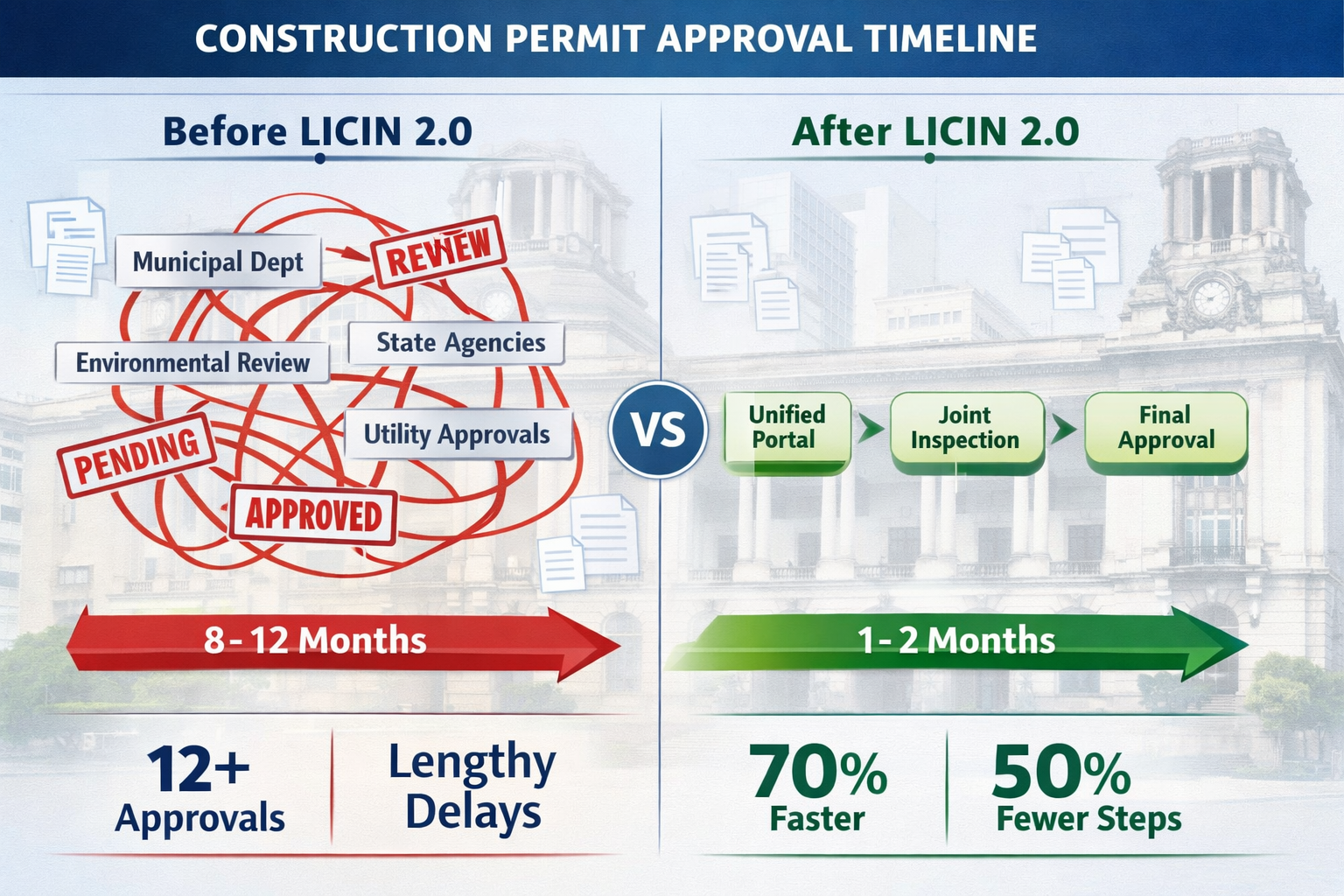
| Multiple overlapping agencies | Projects required 15-20 separate approvals |
| Paper-based documentation | Lost files, duplicated submissions, processing delays |
| Unclear timelines | Developers faced 12-18 month uncertainty periods |
| Inconsistent interpretation | Similar projects received different rulings |
| Political interference | Approvals subject to changing administrations |
These inefficiencies created a significant bottleneck that artificially constrained supply, elevated development costs, and made project financing challenging. Developers often built these delays into their pro forma analyses, accepting them as unavoidable costs of doing business in Rio.
Key Mechanisms of the Rio de Janeiro LICIN 2.0 Reforms 2026
The reform introduces several transformative mechanisms:
Fast-Track Pathways: Standard residential projects meeting predefined criteria can now access expedited review channels, potentially cutting approval times by 40-60%.
Pre-Approval Consultations: Developers can obtain preliminary rulings on project feasibility before investing in detailed architectural plans, reducing wasted design costs.
Digital Integration: The new platform connects municipal databases, automatically verifying compliance with zoning, environmental, and infrastructure requirements.
Accountability Metrics: Government agencies now face published performance standards, with approval timelines tracked and reported publicly.
For developers focused on strategic real estate investments, these changes fundamentally alter project economics and competitive positioning.
Rio de Janeiro LICIN 2.0 Reforms 2026: Accelerating Approvals and Market Implications
The Supply Acceleration Effect
The most significant impact of the Rio de Janeiro LICIN 2.0 Reforms 2026: Accelerating Approvals and Their Impact on Barra da Tijuca Supply Dynamics lies in the velocity of new supply entering the market. When permitting timelines compress from 18 months to 6-9 months, developers can:
✅ Launch projects faster after land acquisition
✅ Respond more quickly to market demand signals
✅ Reduce carrying costs during the approval phase
✅ Bring multiple projects to market in parallel
This acceleration creates a multiplier effect. If 100 projects were in various stages of approval pre-reform, and LICIN 2.0 cuts timelines by 50%, those 100 projects plus new applications will complete approvals in a compressed timeframe, potentially doubling the rate at which construction begins.
Geographic Concentration: Why Barra da Tijuca Faces Maximum Impact
Not all Rio neighborhoods will experience equal supply effects. The reforms’ impact concentrates most heavily in areas with:
- Available buildable land 🏗️
- Favorable zoning for vertical development
- Strong developer interest
- Existing infrastructure capacity
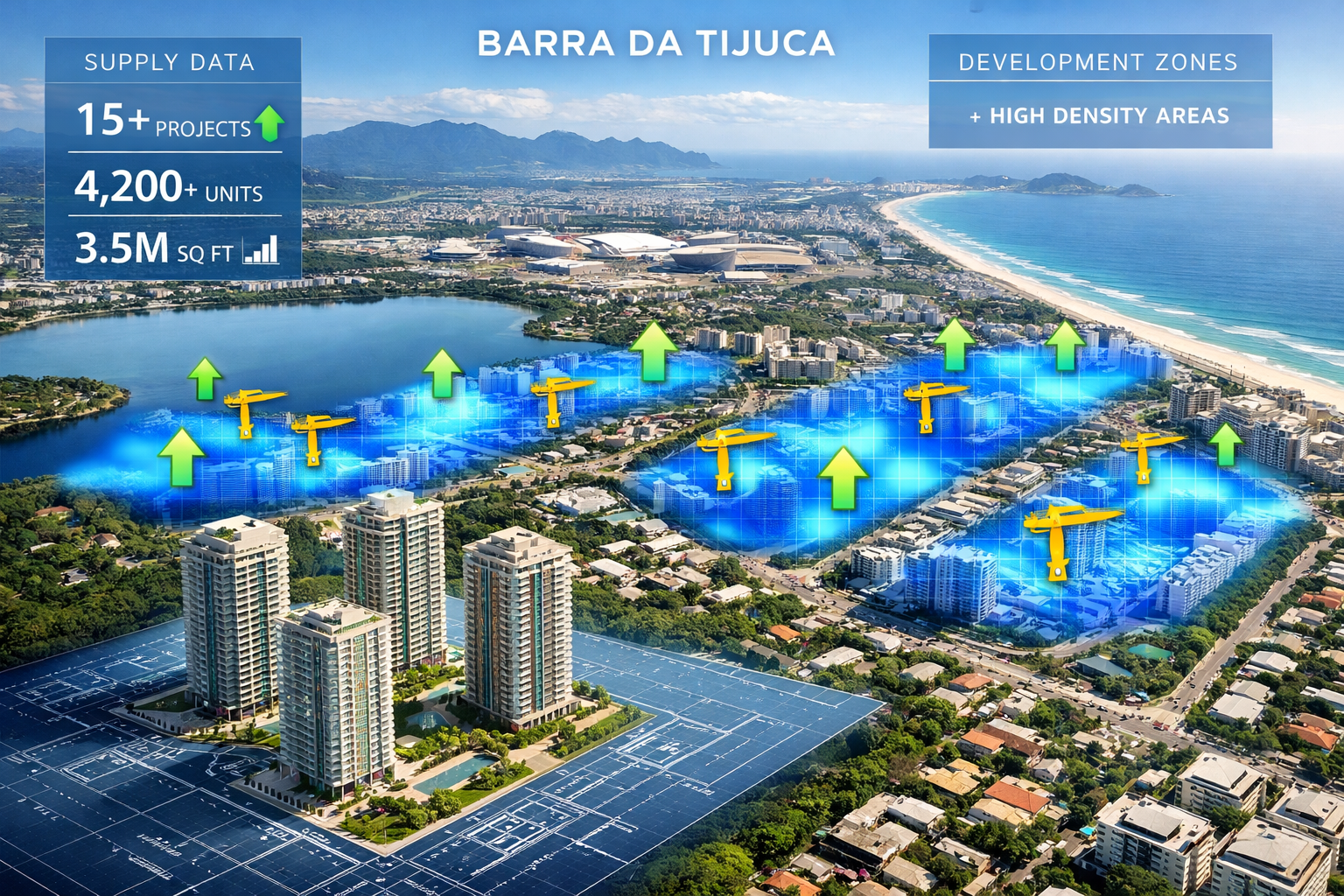
Barra da Tijuca and Recreio dos Bandeirantes check all these boxes. Unlike constrained neighborhoods in Zona Sul (Copacabana, Ipanema, Leblon) where mountains, beaches, and existing density limit new construction, Barra offers:
- Large undeveloped or underdeveloped parcels
- Zoning that permits high-rise residential towers
- Expanding transportation infrastructure
- Growing commercial and retail amenities
- Strong demand from middle and upper-middle-class buyers
This combination means LICIN 2.0’s approval acceleration will disproportionately increase supply in these western neighborhoods.[1]
Price Dynamics: The Slightly Negative Verdict
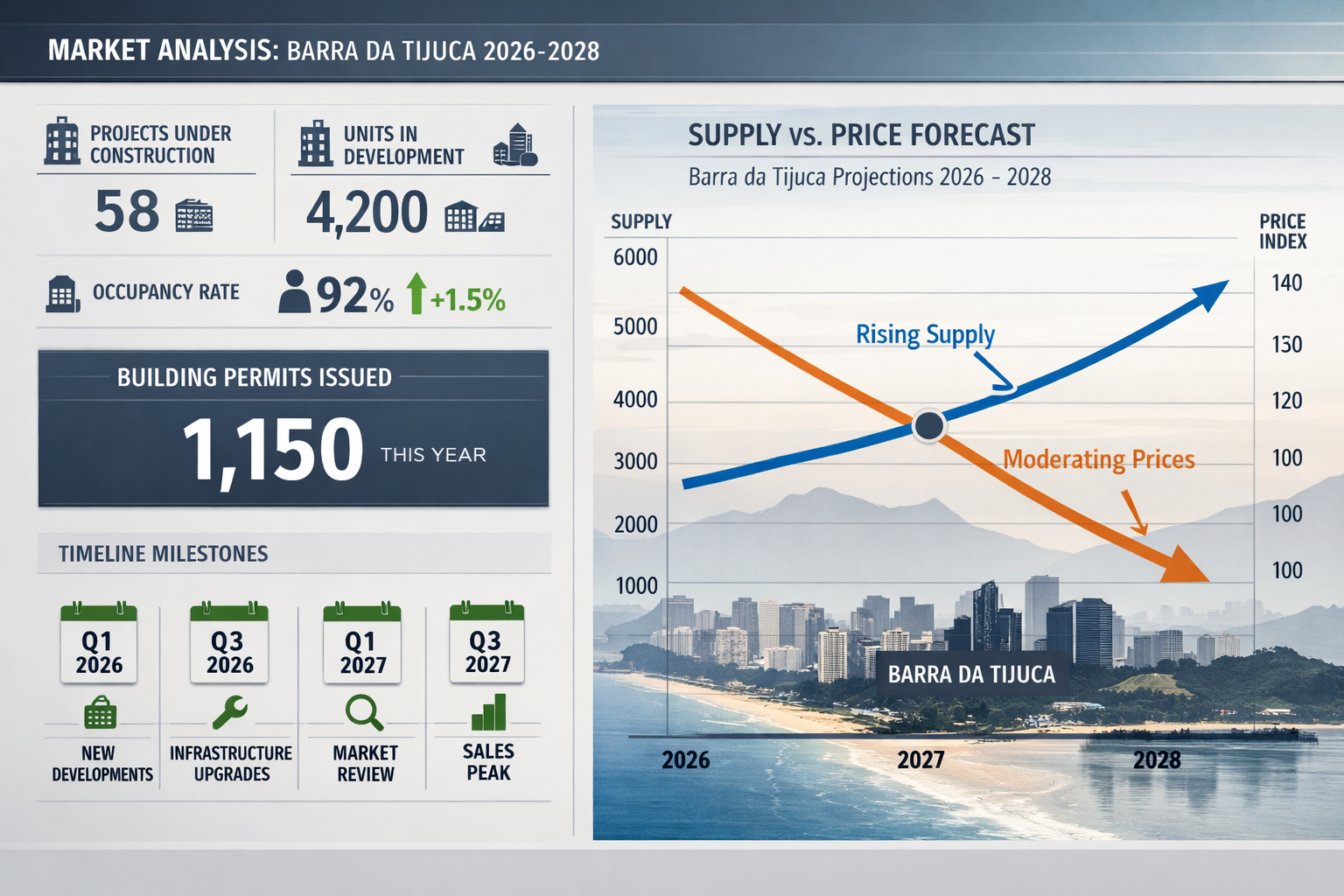
Analysis from February 2026 projects a slightly negative impact on property prices in Barra da Tijuca and Recreio as LICIN 2.0 effects materialize.[1] This assessment reflects several interconnected dynamics:
Supply-Demand Rebalancing: Faster approvals enable supply to catch up with demand more efficiently, reducing the scarcity premium that has supported price appreciation.
Competitive Pressure: As more projects launch simultaneously, developers face intensified competition for buyers, potentially leading to more aggressive pricing and incentive packages.
Buyer Optionality: Increased inventory gives buyers more choices, shifting negotiating power and moderating price escalation.
Absorption Rate Concerns: If new supply enters faster than the market can absorb it, developers may need to adjust pricing to maintain sales velocity.
However, “slightly negative” deserves emphasis—this isn’t a prediction of price collapse, but rather moderated growth or modest declines compared to baseline projections without the reforms.
The Broader Market Context: “Rather Yes” for Strategic Buyers
Despite supply-driven price moderation in buildable areas, the overall verdict for buying property in Rio de Janeiro as of February 2026 was assessed as “rather yes”—indicating favorable conditions persist for strategic purchases.[1]
This seemingly contradictory assessment makes sense when considering:
- Differentiated submarkets: Premium locations with supply constraints may continue appreciating even as Barra moderates
- Long-term fundamentals: Rio’s economic recovery, infrastructure investments, and demographic trends support sustained demand
- Relative value: Even with new supply, Rio’s pricing remains competitive compared to São Paulo and international markets
- Quality improvements: Newer projects benefit from modern design, amenities, and sustainability features that command premiums
For developers and investors working with real estate development strategies, this environment rewards careful submarket selection and differentiated positioning.
Strategic Implications for Developers and Investors in Barra da Tijuca
Timing the Market: Early Positioning vs. Late Entry
The Rio de Janeiro LICIN 2.0 Reforms 2026: Accelerating Approvals and Their Impact on Barra da Tijuca Supply Dynamics create distinct windows of opportunity and risk based on entry timing.
Early Movers (2026-Early 2027) 🏃♂️
Advantages:
- Purchase land before prices reflect increased development feasibility
- Secure approvals while agencies adapt to new systems
- Launch sales before competitive supply materializes
- Capture buyers anticipating future supply constraints
Risks:
- Process uncertainties during reform implementation
- Potential for regulatory adjustments as issues emerge
- Higher carrying costs if approvals still face delays
Mid-Cycle Entrants (Late 2027-2028) ⚖️
Advantages:
- Proven approval processes with predictable timelines
- Clear market feedback from early projects
- Refined understanding of buyer preferences
- Stable regulatory environment
Risks:
- Increased competition from multiple simultaneous launches
- Rising land costs as development potential becomes apparent
- Potential oversupply concerns affecting absorption
Late Entrants (2029+) 🐌
Advantages:
- Clear market equilibrium understanding
- Opportunity to differentiate from first-wave projects
- Potential land acquisition from distressed sellers
Risks:
- Established competition with loyal buyer bases
- Possible oversupply requiring aggressive pricing
- Reduced upside potential as market matures
Product Differentiation Strategies
In a higher-supply environment, differentiation becomes critical. Successful developers will focus on:
Amenity Innovation: Premium fitness centers, coworking spaces, pet facilities, and sustainability features that justify price premiums over commodity projects.
Location Micro-Optimization: Even within Barra, specific blocks near beaches, parks, or transit nodes command premiums—detailed site selection matters more than ever.
Buyer Segmentation: Tailored products for specific demographics (young professionals, families, retirees) rather than generic “something for everyone” approaches.
Quality Signaling: Superior finishes, branded partnerships, and architectural distinction that communicate value beyond square footage.
Developers can learn from market performance trends in other Brazilian markets to inform differentiation strategies.
Financial Modeling Adjustments
LICIN 2.0’s approval acceleration requires updating standard development pro forma models:
| Variable | Pre-Reform Assumption | Post-Reform Adjustment |
|---|---|---|
| Approval timeline | 15-18 months | 6-9 months |
| Carrying costs (pre-construction) | Higher due to extended timeline | Reduced by 40-50% |
| Competitive launches (annual) | 8-12 projects | 15-20 projects |
| Absorption rate | 8-12 units/month | 6-10 units/month (increased competition) |
| Price appreciation | 4-6% annually | 1-3% annually |
| Contingency reserves | 10% | 15% (market uncertainty) |
These adjustments significantly impact IRR calculations and risk-adjusted returns, potentially favoring faster-cycle projects with lower per-unit margins over longer-hold strategies.
Persistent Constraints: What LICIN 2.0 Doesn’t Solve
Construction Financing Costs and the Selic Rate Challenge
While LICIN 2.0 accelerates approvals, it doesn’t address the high cost of construction financing tied to Brazil’s Selic interest rate.[1] As of 2026, elevated rates continue to:
- Increase borrowing costs for developers
- Reduce buyer purchasing power through higher mortgage rates
- Make alternative investments more attractive relative to real estate
- Constrain the pace of construction starts despite faster approvals
This creates a paradox: approvals may be faster, but financing constraints prevent some developers from capitalizing on the streamlined process.
Physical and Geographic Limitations
Rio’s unique geography imposes immutable constraints that no regulatory reform can overcome:[1]
Mountains: The Tijuca Forest and surrounding peaks create natural boundaries limiting westward expansion beyond certain points.
Lagoons: Barra’s lagoon system restricts buildable areas and requires expensive environmental mitigation for nearby development.
Existing Urban Fabric: Established neighborhoods have limited infill opportunities, concentrating new supply in specific zones.
Infrastructure Capacity: Water, sewage, transportation, and power systems require upgrades to support density increases—investments that lag behind approval acceleration.
These physical realities mean that even with faster permitting, total developable area remains finite, providing a natural ceiling on supply increases.
Regulatory and Environmental Compliance
LICIN 2.0 streamlines municipal licensing, but projects still require:
- Federal environmental approvals for larger developments
- Heritage preservation reviews in historically significant areas
- Infrastructure impact assessments for projects affecting traffic or utilities
- Community consultation processes in some neighborhoods
Brazil continues updating environmental rules for major projects,[8] and Rio has been establishing new guidelines for various development types.[7] These parallel regulatory tracks can still introduce delays even after municipal approvals are secured.
Comparative Context: Learning from Other Brazilian Markets
São Paulo’s Licensing Evolution
São Paulo implemented similar approval streamlining measures in 2023-2024, providing valuable lessons:
- Initial supply surge: New launches increased 35% in the first 18 months
- Price moderation: Appreciation slowed from 8% to 3% annually in high-supply districts
- Quality flight: Premium projects maintained pricing power while commodity developments struggled
- Absorption challenges: Some developers extended sales timelines or offered aggressive incentives
These patterns suggest Barra da Tijuca may follow a similar trajectory, with differentiation determining winners and losers.
Florianópolis Market Dynamics
While smaller than Rio, Florianópolis offers insights into how market performance transforms when supply and demand shift. The city’s experience with regional growth demonstrates how infrastructure development and quality-of-life factors can sustain demand even amid supply increases.
Actionable Strategies for Navigating the New Landscape
For Developers 🏗️
Accelerate Land Banking: Secure strategic parcels now before prices fully reflect LICIN 2.0’s development potential.
Optimize Project Sizing: Consider smaller, faster-cycle projects that can launch, sell, and deliver before competitive supply peaks.
Invest in Pre-Sales Marketing: Build buyer pipelines early to ensure strong launch velocity in a more competitive environment.
Enhance Financial Flexibility: Structure financing to accommodate potential absorption delays or pricing adjustments.
Monitor Approval Metrics: Track actual vs. projected approval timelines to refine project scheduling and competitive analysis.
For Investors 💰
Focus on Differentiated Assets: Prioritize unique locations, superior design, or exceptional amenities over generic commodity units.
Consider Pre-Construction Purchases: Buying off-plan from established developers can capture value before delivery while benefiting from construction-phase appreciation.
Diversify Geographically: Balance Barra exposure with investments in supply-constrained neighborhoods or other high-potential markets.
Extend Investment Horizons: Short-term price moderation doesn’t negate long-term fundamentals—patient capital may benefit from temporary supply-driven softness.
Evaluate Rental Yields: As price appreciation moderates, income-focused strategies become relatively more attractive.
For End-User Buyers 🏠
Negotiate Aggressively: Increased supply strengthens buyer negotiating power—don’t accept initial pricing without testing flexibility.
Compare Thoroughly: With more options available, invest time in detailed comparisons of location, amenities, builder reputation, and delivery timelines.
Prioritize Quality: In a crowded market, premium construction and design provide better long-term satisfaction and resale value.
Consider Timing: If not urgent, waiting 6-12 months may provide additional options and potentially better pricing as supply increases.
Conclusion
The Rio de Janeiro LICIN 2.0 Reforms 2026: Accelerating Approvals and Their Impact on Barra da Tijuca Supply Dynamics represent a watershed moment for Brazil’s second-largest real estate market. By dismantling bureaucratic bottlenecks that have constrained development for decades, the reforms promise to accelerate project timelines, increase supply velocity, and reshape competitive dynamics—particularly in buildable neighborhoods like Barra da Tijuca and Recreio dos Bandeirantes.
For developers, the opportunity lies in early positioning before land prices fully adjust and competitive supply materializes. Success will require sophisticated differentiation strategies, refined financial modeling that accounts for faster approvals but potentially slower absorption, and operational excellence in execution.
For investors, the slightly negative price outlook in high-supply areas demands careful submarket selection and product differentiation. The overall “rather yes” market verdict suggests opportunities remain for those who avoid commodity exposure and focus on unique value propositions.
Critically, LICIN 2.0 doesn’t exist in isolation. Persistent constraints—from high financing costs tied to the Selic rate to immutable geographic limitations—will moderate the reforms’ impact, preventing the dramatic oversupply some fear. The result is likely a more balanced market where supply better matches demand, price appreciation moderates but remains positive, and competitive intensity rewards quality and innovation.
Next Steps
For Developers:
- Conduct detailed submarket analysis identifying specific Barra locations with differentiation potential
- Engage with municipal licensing agencies to understand optimized approval pathways under LICIN 2.0
- Stress-test pro forma models against various supply and absorption scenarios
- Explore development opportunities with experienced partners
For Investors:
- Evaluate current portfolio exposure to high-supply risk areas
- Research pre-construction opportunities from established developers
- Consider consultation with local market experts to identify emerging value pockets
- Monitor quarterly supply and absorption data to track market evolution
For All Stakeholders: Stay informed about LICIN 2.0 implementation progress, regulatory adjustments, and market response through industry news and professional networks.
The Rio de Janeiro LICIN 2.0 Reforms 2026: Accelerating Approvals and Their Impact on Barra da Tijuca Supply Dynamics will unfold over the next 2-3 years, creating both challenges and opportunities. Those who understand the nuances, position strategically, and execute with excellence will thrive in this transformed landscape.
References
[1] Rio De Janeiro Good Time – https://thelatinvestor.com/blogs/news/rio-de-janeiro-good-time
[2] Tnf Brazil Regulatory Changes Implementing Crs 2 – https://kpmg.com/us/en/taxnewsflash/news/2026/01/tnf-brazil-regulatory-changes-implementing-crs-2.html
[4] Brazil Tax Reform E Invoicing 2026 – https://www.fonoa.com/resources/blog/brazil-tax-reform-e-invoicing-2026
[7] Rio De Janeiro Approves Offshore Wind Energy Law And Establishes Guidelines For Marine Management Environmental Planning And Institutional Support For The Energy Transition In The State Hl1402 – https://en.clickpetroleoegas.com.br/Rio-de-Janeiro-approves-offshore-wind-energy-law-and-establishes-guidelines-for-marine-management–environmental-planning–and-institutional-support-for-the-energy-transition-in-the-state-hl1402/
[8] Brazil Will Update Certain Environmental Rules For Major Projects – https://www.bnamericas.com/en/news/brazil-will-update-certain-environmental-rules-for-major-projects