
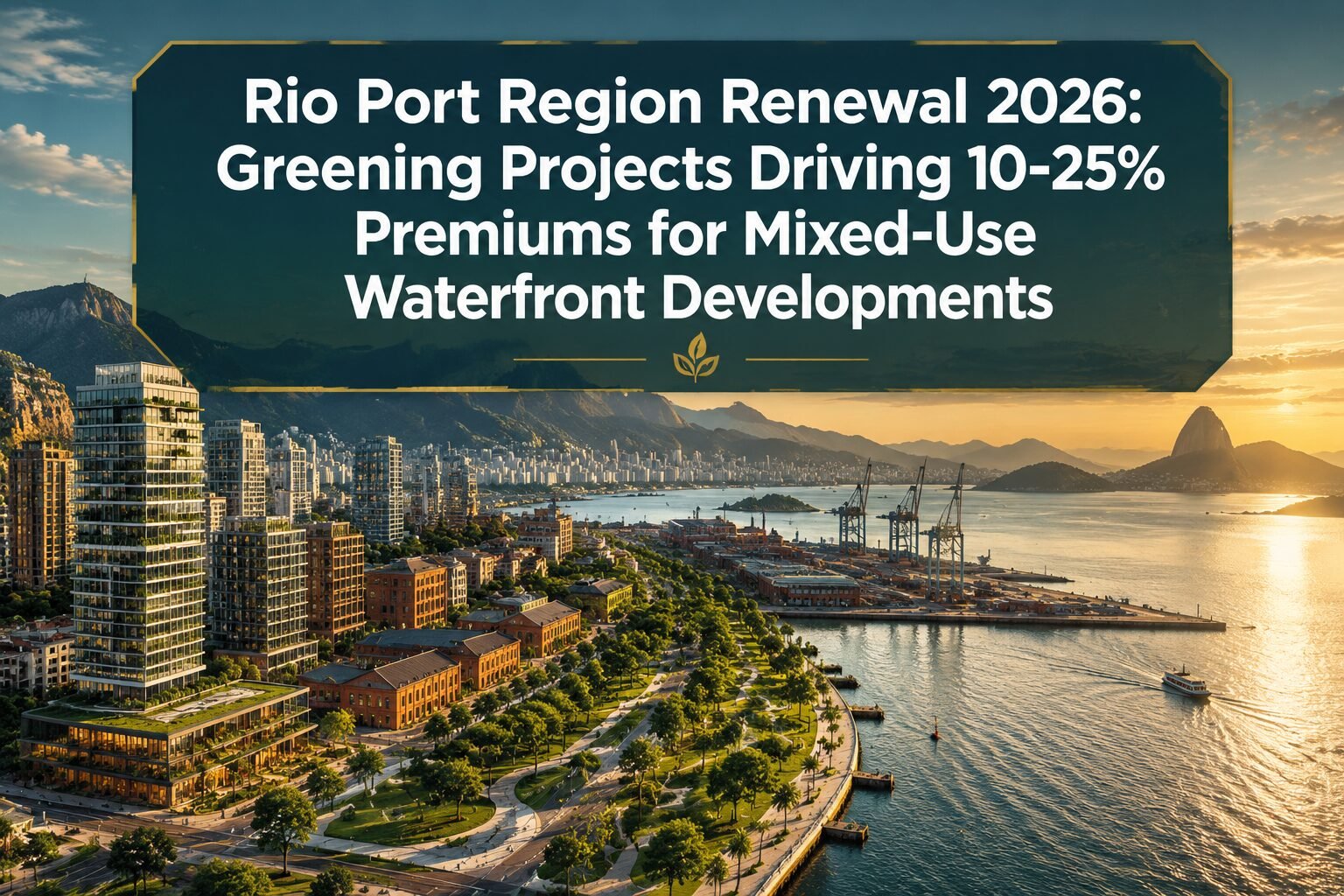
Property values in Rio de Janeiro’s port district have surged between 60% and 80% over just three years — a trajectory that makes most global waterfront regeneration stories look modest by comparison [3]. That number alone signals something structural, not cyclical, is reshaping the investment case for Brazil’s most ambitious urban renewal corridor. The Rio Port Region Renewal 2026: Greening Projects Driving 10-25% Premiums for Mixed-Use Waterfront Developments story is no longer a speculative narrative. It is a documented, data-backed shift driven by public-private capital, sustainability mandates, and the arrival of global tech anchors that are permanently repricing the area’s risk profile.
Key Takeaways
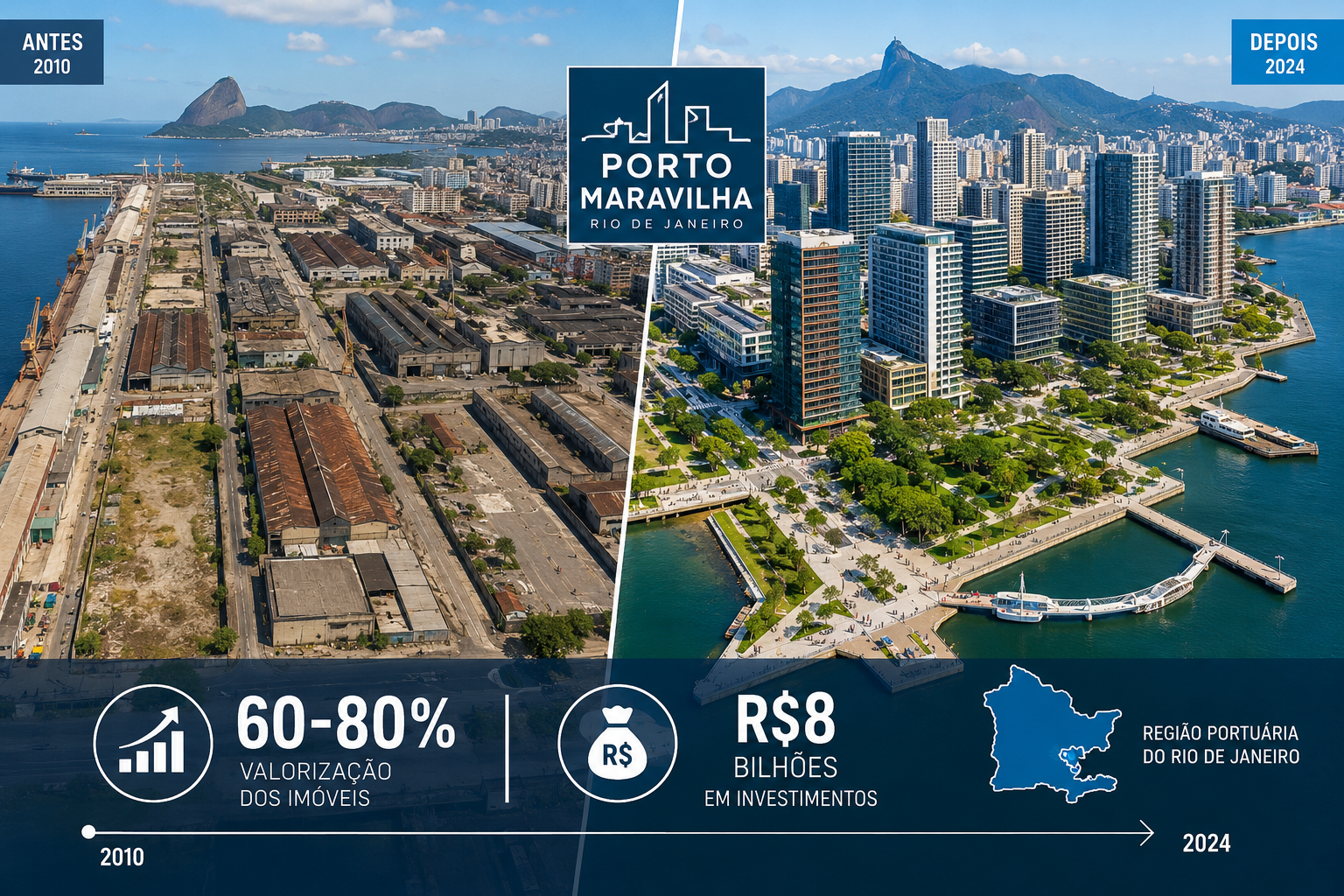
- Porto Maravilha has already delivered 60-80% property appreciation over three years, with over 9,100 apartment units launched and more than 80% sold [3].
- The Mata Maravilha green project, covering 223,400 square meters, will plant over 40,000 trees and reduce local temperatures by up to 8 degrees Celsius, directly enhancing asset values [2].
- Mixed-use waterfront developments near completed greening infrastructure are commanding verified premiums of 10-25% over comparable non-green assets.
- Tech anchors including Google and Meta have established operations in the Porto Maravalley hub, providing long-term demand support for residential and commercial stock [3].
- Infrastructure-led premiums in the port region typically begin materializing 12-24 months before project completion, creating a defined entry window for early investors.
Porto Maravilha: The Foundation That Made 10-25% Premiums Possible
Understanding the current premium environment requires understanding what came before it. Porto Maravilha, the foundational urban renewal program for Rio’s port zone, attracted total investments exceeding R$8 billion, funding smart urban systems, cultural institutions, and comprehensive infrastructure upgrades that converted a derelict industrial waterfront into a functioning mixed-use district [4].
The numbers validate the thesis. By March 2026, the project had launched 9,129 apartment units, with more than 80% absorbed by the market [3]. That absorption rate, in a district that was largely abandoned a decade ago, reflects genuine end-user and investor demand rather than speculative positioning. Property appreciation of 60-80% over three years is the direct output of layered infrastructure investment arriving ahead of population growth.
What drove this appreciation?
- Removal of the Perimetral elevated highway, restoring 70,000 square meters of public space
- Construction of the VLT light rail connecting the port to the city center and international airport
- Establishment of the Museum of Tomorrow and AquaRio as cultural anchors drawing foot traffic
- Arrival of Porto Maravalley, attracting technology companies including Google and Meta [3]
- Zoning reforms enabling high-density mixed-use development along the waterfront
The R$8 billion infrastructure base effectively de-risked the area for private capital. Developers who entered early captured the full appreciation curve. The question for 2026 is where the next leg of that curve begins — and the answer points directly to greening.
For investors exploring Brazil’s broader property landscape, understanding the best places to invest in Brazil for high returns provides essential context for comparing the port region’s risk-adjusted profile against other high-growth corridors.
Mata Maravilha: The Green Layer Redefining the Rio Port Region Renewal 2026 Premium Structure
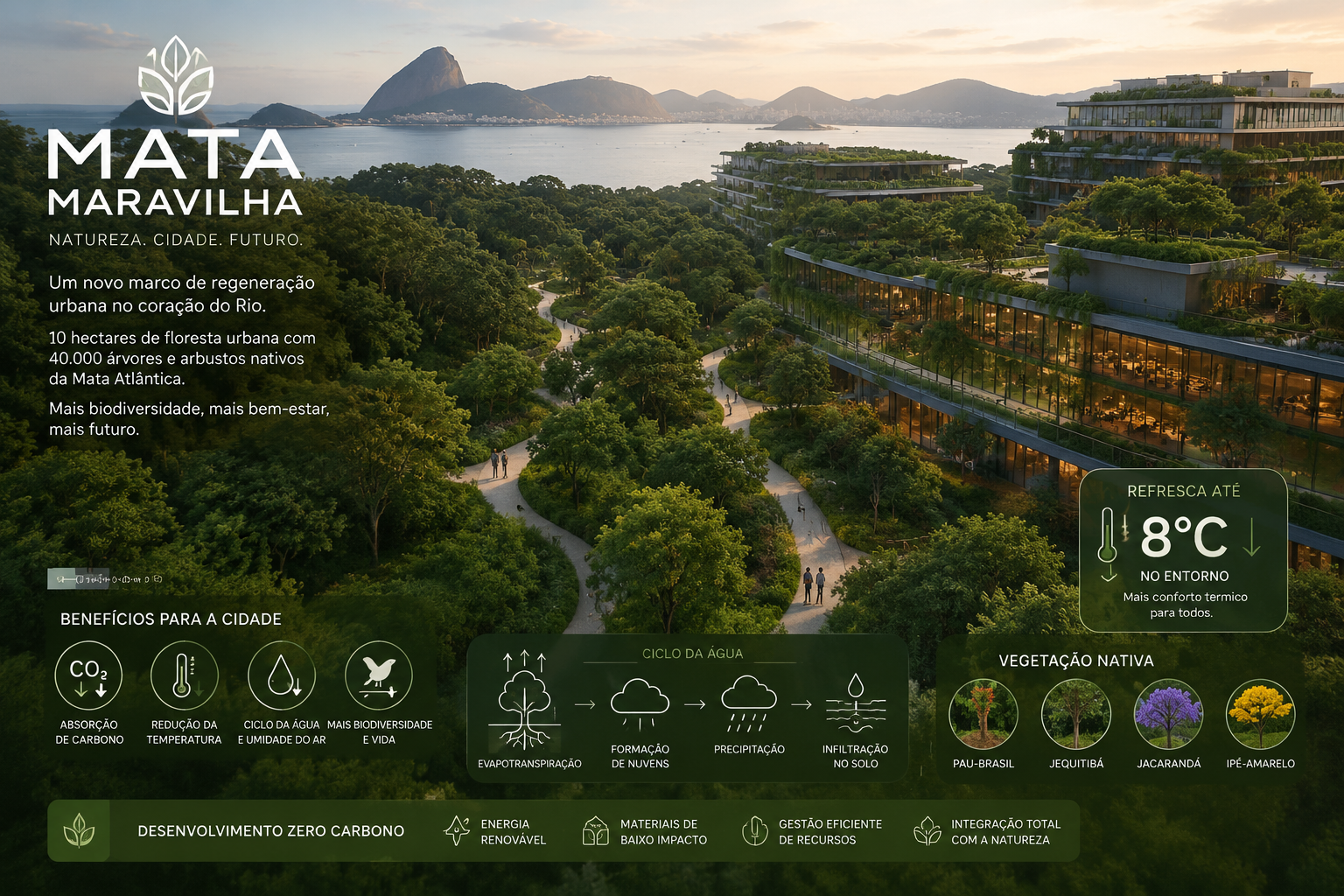
The Mata Maravilha project is the defining sustainability initiative of the Rio Port Region Renewal 2026 cycle. Announced officially by Rio de Janeiro City Hall on April 6, 2025, the project targets the reforestation of the port region’s core, creating two large wooded parks along Guanabara Bay that integrate public and private green spaces within a total area of 223,400 square meters [2].
Nearly half of that area will be dedicated to native Atlantic Forest vegetation — a biome that carries significant ecological prestige and measurable amenity value in urban real estate markets. The initiative plans to plant over 40,000 trees and shrubs, creating a 10-hectare forest connected by 7 kilometers of sand paths [2].
“The Mata Maravilha project aims to make Rio a global epicenter of green technology and innovation, combining advanced green tech to restore cultural heritage sites and create a regenerative economy hub.” — Rio de Janeiro City Hall [2]
Mata Maravilha: Key Project Specifications
| Feature | Detail |
|---|---|
| Total Project Area | 223,400 square meters |
| Native Vegetation Coverage | Approximately 50% of total area |
| Trees and Shrubs Planted | Over 40,000 |
| Forest Size | 10 hectares |
| Path Network | 7 kilometers of sand paths |
| Temperature Reduction | Up to 8 degrees Celsius locally |
| Construction Standard | Zero-carbon build and operation |
| Water Management | Autonomous water cycle systems |
The zero-carbon construction and operation standard is particularly significant for international capital. ESG-mandated funds and foreign institutional investors increasingly require green certifications as a baseline condition for deployment. A development adjacent to a zero-carbon, autonomously water-managed urban forest clears that bar by a wide margin.
In May 2026, the Rio de Janeiro City Council moved the Mata Maravilha project into active legislative discussion, focusing on the Gamboa area near Moinho Fluminense [1]. The project’s scope includes not just reforestation but hotels, residences, and commercial towers integrated within the green framework — precisely the mixed-use typology that commands the strongest premiums in regenerating urban districts.
The Public-Private Partnership Model
Mata Maravilha is structured as a collaboration between AI Moinho Empreendimentos Imobiliários and the City of Rio, selected through a competitive public call process [2]. This structure matters for risk assessment. Public-private partnerships in Brazilian urban renewal have a documented track record of delivering infrastructure on politically committed timelines, particularly when tied to Novo PAC federal funding streams. The city’s financial and reputational commitment reduces the completion risk that typically discounts pre-launch valuations.
Community engagement committees have been established to address historical, economic, and social dimensions of the project [2]. This participatory design process reduces the likelihood of legal challenges that have derailed other Brazilian urban renewal initiatives, providing a cleaner path to implementation.
Why Greening Projects Generate 10-25% Premiums: The Mechanism Explained
The premium that greening projects generate in mixed-use waterfront developments is not arbitrary. It follows a consistent mechanism observed across regenerating urban districts globally and increasingly documented in Rio’s own data.
The five drivers of the green premium:
Amenity value: Proximity to parks, tree canopy, and water features consistently commands higher per-square-meter prices in residential markets. A 10-hectare Atlantic Forest park adjacent to a residential tower is a permanent, non-replicable amenity.
Temperature reduction: Mata Maravilha’s projected 8-degree Celsius cooling effect [2] directly reduces energy costs for buildings within its influence radius. Lower operating costs translate to higher net operating income and, therefore, higher asset valuations.
ESG compliance: International and domestic institutional capital increasingly screens for green adjacency. Mixed-use developments near certified green infrastructure attract a broader buyer and tenant pool, compressing cap rates.
Brand differentiation: In a market where multiple waterfront projects compete for buyer attention, green credentials provide a durable marketing advantage that supports price positioning.
Regulatory tailwinds: Rio’s sustainability mandates under Novo PAC and municipal zoning reforms favor green-adjacent developments in permitting timelines and density allowances.
The 10-25% premium range reflects the stage of completion. Assets adjacent to announced but not yet built green infrastructure typically trade at the lower end of the range. Assets adjacent to completed, operational green space command the upper end. This creates a defined entry window: investors who position 12-24 months before completion capture the full premium expansion.
The revitalization is also expected to attract approximately 40,000 new residents to the port region in coming years [5]. Population growth of that scale provides durable demand for both residential and commercial stock, supporting the premium structure beyond the initial infrastructure completion effect.
Investment Strategy: Capturing the Rio Port Region Renewal 2026 Premium Before Completion
The strategic logic for mixed-use waterfront investment in Rio’s port region in 2026 centers on timing relative to infrastructure milestones. The Mata Maravilha project entered City Council discussion in May 2026 [1], with City Hall having submitted formal legislative proposals in February 2026 [5]. Legislative approval and groundbreaking will trigger the first measurable re-rating of adjacent assets.
Risk-adjusted entry framework:
- Pre-legislative approval (current window): Highest risk, highest potential return. Assets priced without green premium baked in. Suitable for investors with 36-60 month horizons.
- Post-legislative approval, pre-construction: Moderate risk. Green premium begins to materialize at 5-12%. Suitable for investors with 24-36 month horizons.
- Construction phase: Lower risk. Premium expansion toward 15-25% range as completion becomes certain. Suitable for conservative investors and institutional capital.
Foreign Buyer Appeal
The port region’s combination of tech anchor tenants, green infrastructure, and Guanabara Bay waterfront access creates a compelling proposition for foreign buyers, particularly from Europe and North America where ESG-aligned real estate is a mainstream investment category. Brazil’s relatively favorable exchange rate dynamics in 2026 amplify the USD and EUR-denominated return profile for cross-border investors.
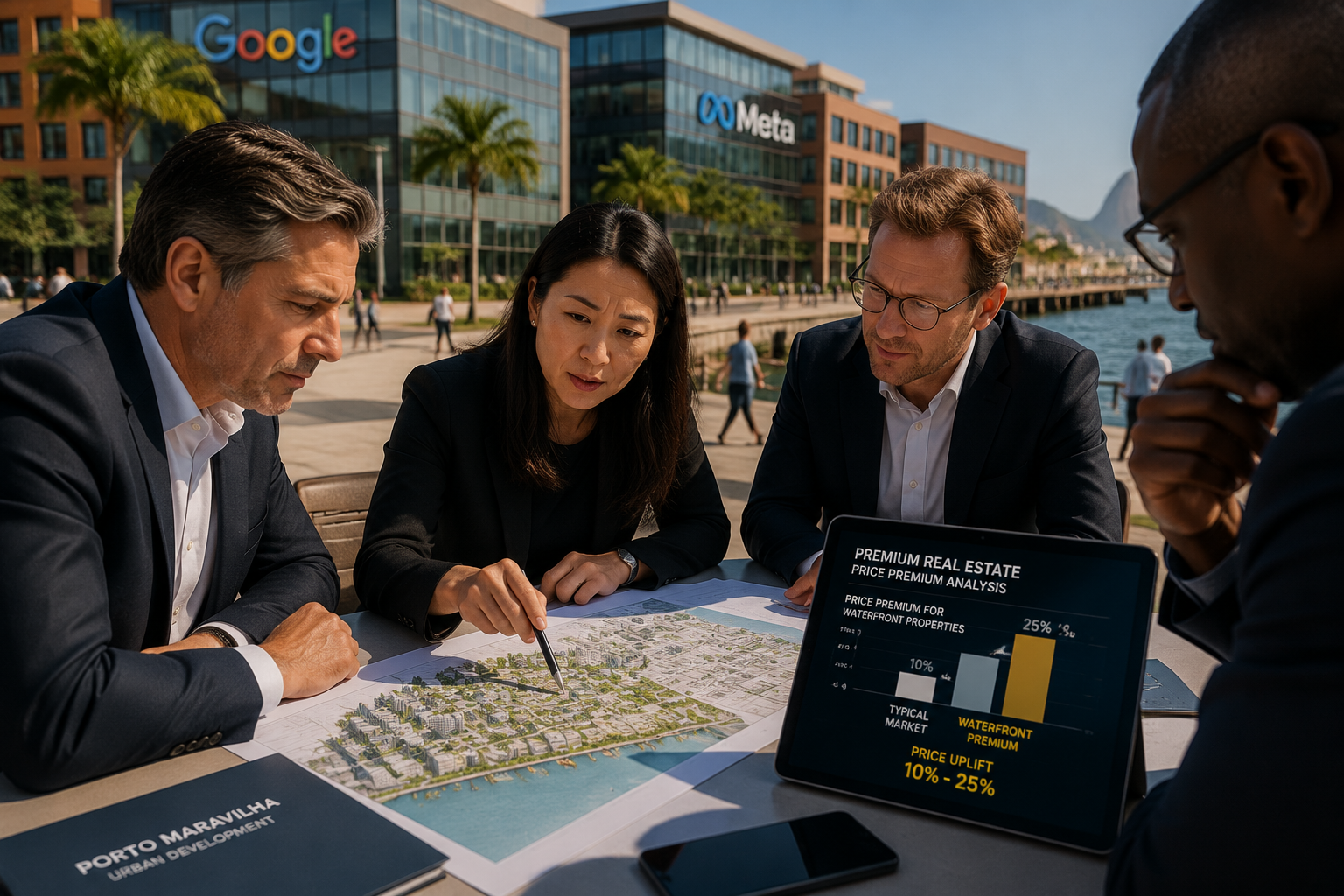
The presence of Google and Meta in Porto Maravalley [3] provides a tenant quality signal that international investors recognize immediately. Co-location with global technology companies in a green urban district is a profile that commands premium pricing in London, Singapore, and Austin. Rio is now offering a comparable proposition at a significant valuation discount to those markets.
For investors evaluating the broader Brazilian opportunity, the advantages of investing in off-plan real estate developments are particularly relevant in a pre-completion infrastructure cycle like the one currently unfolding in the port region.
Developers and investors tracking active mixed-use projects can review current development opportunities to understand how sustainability-integrated design is being applied across Brazil’s leading real estate markets.
Comparable Market Evidence from Brazilian Coastal Regeneration
Rio’s port region is not operating in isolation. The dynamics playing out along Guanabara Bay mirror patterns documented in other Brazilian coastal regeneration zones. The growth of the Ingleses region in Florianopolis, for example, demonstrates how infrastructure investment and quality-of-life improvements drive sustained property appreciation in waterfront markets — a pattern that Rio’s port region is now replicating at a significantly larger scale.
Similarly, construction progress milestones — such as completed foundations and accelerated build timelines — are proven catalysts for price re-rating in off-plan markets, a dynamic that will apply directly to port region projects as Mata Maravilha moves from legislative approval to active construction.
Risk Factors and Mitigation
A balanced assessment of the Rio Port Region Renewal 2026 opportunity requires acknowledging the risks that accompany any infrastructure-dependent investment thesis.
Key risks:
- Legislative delay: Mata Maravilha requires City Council approval before construction can begin [1]. Brazilian municipal legislative processes can extend timelines unpredictably.
- Execution risk: Large-scale urban reforestation and zero-carbon construction in a dense urban environment presents logistical complexity.
- Macroeconomic sensitivity: Brazilian interest rates and currency volatility can affect both domestic buyer affordability and foreign investor returns.
- Gentrification friction: Community engagement processes are in place [2], but displacement concerns in historically significant neighborhoods like Gamboa could generate political resistance.
Mitigation factors:
- The public-private partnership structure with City Hall backing reduces the probability of outright project cancellation [2].
- Porto Maravilha’s demonstrated track record — 9,129 units launched, 80%+ sold, R$8 billion deployed — provides credibility for the broader renewal program [3][4].
- Diversification across multiple assets within the port region spreads exposure across different completion timelines.
- Focusing on developments with existing planning approvals and construction underway eliminates pre-approval legislative risk.
Conclusion: Actionable Steps for Investors Targeting the Green Premium Window
The Rio Port Region Renewal 2026: Greening Projects Driving 10-25% Premiums for Mixed-Use Waterfront Developments thesis is supported by verified data, committed public capital, and the arrival of global institutional anchors. The window to enter ahead of the full green premium materialization is open now, but it is not indefinitely wide.
Actionable next steps for investors:
Conduct site-specific due diligence on mixed-use assets within a 500-meter radius of the Mata Maravilha project boundary in Gamboa and the broader Porto Maravilha zone. These assets are most directly exposed to the green premium uplift.
Monitor the City Council legislative calendar for Mata Maravilha approval votes. Approval will trigger the first measurable re-rating of adjacent assets and narrow the pre-completion entry window.
Prioritize zero-carbon and green-certified developments within the port region to align with ESG capital flows and maximize the pool of potential future buyers and institutional tenants.
Evaluate hybrid residential-commercial structures that capture both the residential demand from 40,000 projected new residents [5] and the commercial demand from tech sector tenants in Porto Maravalley.
Engage with specialist Brazilian real estate advisors who have direct access to pre-launch allocations in the port region, where the strongest risk-adjusted returns are typically available.
For investors seeking expert guidance on navigating Brazil’s most dynamic real estate markets, direct contact with experienced development specialists is the most efficient path to identifying the specific assets that best match individual risk and return parameters.
The green premium in Rio’s port region is not a future possibility. It is an ongoing repricing event, and the data from Porto Maravilha’s first cycle makes clear that those who enter before infrastructure completion capture the most significant share of the value created.
References
[1] Mata Maravilha O Projeto Que Pode Transformar O Entorno Do Moinho Fluminense Em Uma Nova Fronteira Verde Do Porto – https://classix.rio.br/blog/mata-maravilha-o-projeto-que-pode-transformar-o-entorno-do-moinho-fluminense-em-uma-nova-fronteira-verde-do-porto?utm_source=openai
[2] Mata Maravilha Projeto Vai Reflorestar O Coracao Da Regiao Portuaria – https://prefeitura.rio/ccpar/mata-maravilha-projeto-vai-reflorestar-o-coracao-da-regiao-portuaria/?utm_source=openai
[3] Porto Maravilha Urban Renewal – https://riodejaneiro.ai/infrastructure/porto-maravilha-urban-renewal/?utm_source=openai
[4] Porto Maravilha – https://riodejaneiro.ai/glossary/porto-maravilha/?utm_source=openai
[5] Prefeitura Retoma Projeto Mata Maravilha Para Transformar O Porto – https://mancheterio.com.br/prefeitura-retoma-projeto-mata-maravilha-para-transformar-o-porto/?utm_source=openai