
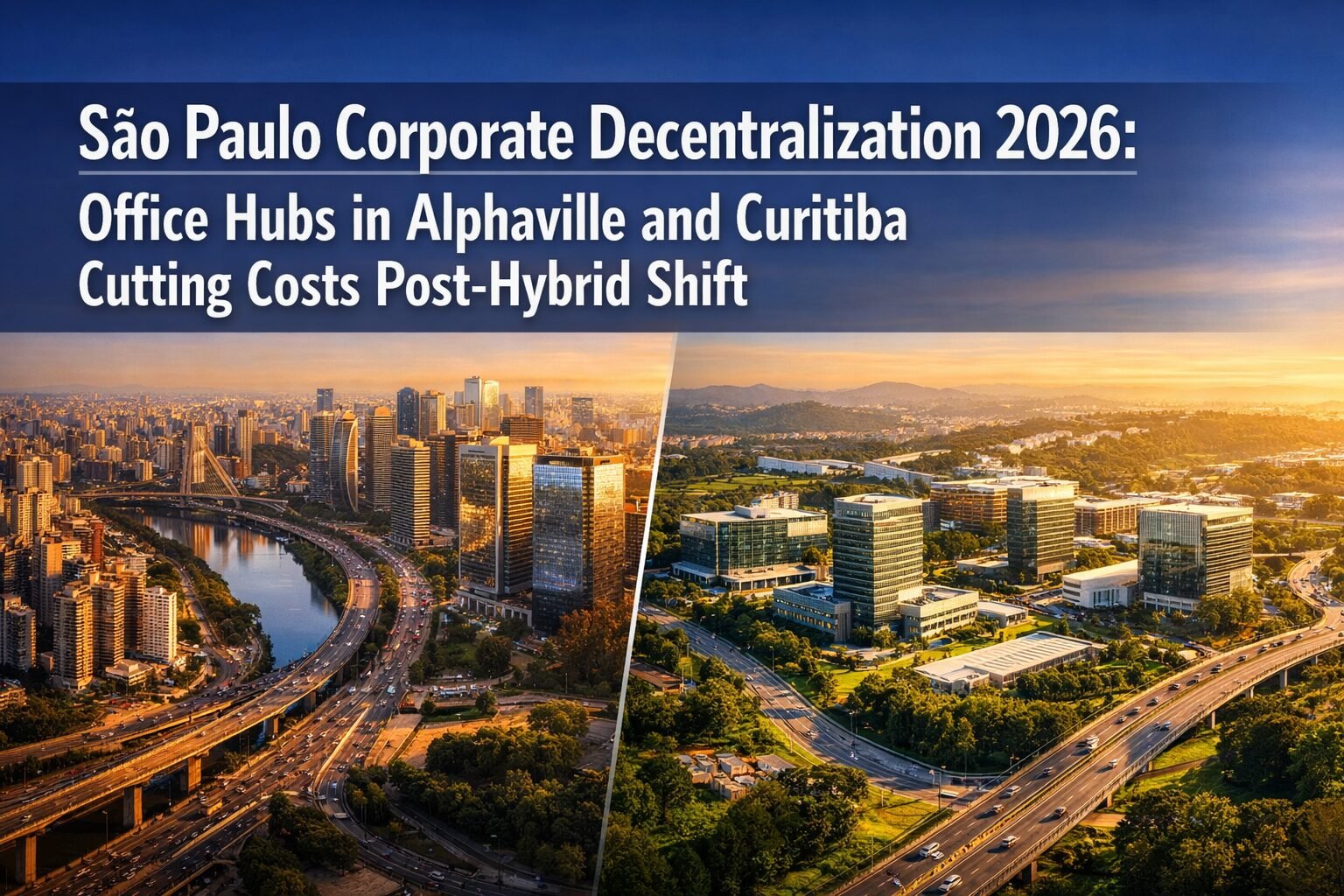
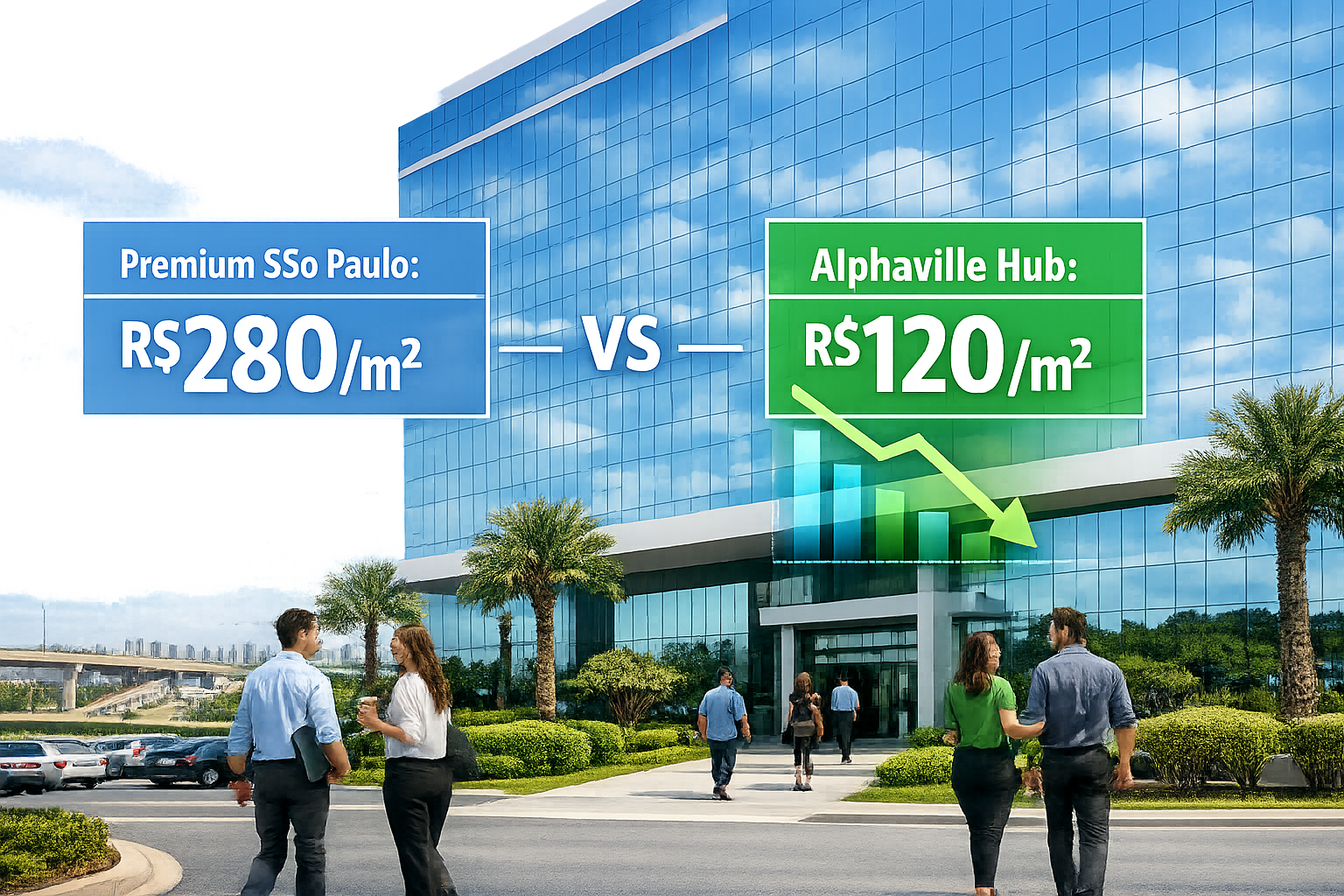
The corporate landscape of Brazil’s largest metropolitan area is experiencing a fundamental transformation. São Paulo Corporate Decentralization 2026: Office Hubs in Alphaville and Curitiba Cutting Costs Post-Hybrid Shift represents more than just a trend—it’s a strategic realignment of how companies allocate resources, manage workforces, and optimize operational expenses in the post-pandemic era. As premium office districts like Faria Lima and Juscelino Kubitschek see asking prices soar to R$ 280/m² with peaks reaching R$ 350/m²[1], corporations are making calculated moves to suburban hubs where competitive pricing meets modern infrastructure.
This shift isn’t happening in isolation. The hybrid work revolution has permanently altered space requirements, with companies realizing they can maintain productivity while relocating back-office functions, shared services centers, and technology teams to locations offering 40-50% cost savings. Alphaville, long established as São Paulo’s premier suburban business district, and Curitiba, the southern capital known for urban planning excellence, have emerged as the primary beneficiaries of this corporate exodus.
Key Takeaways
- Premium São Paulo office prices have doubled from R$ 130/m² to R$ 280/m² over six years, with peak locations reaching R$ 350/m², driving systematic corporate relocation to affordable alternatives[1]
- Alphaville and Curitiba offer 40-50% cost savings compared to traditional premium districts while providing Class A infrastructure, technology-enabled spaces, and superior quality of life for employees
- Hybrid work models enable strategic decentralization as companies relocate back-office functions, shared services, and tech teams to suburban hubs while maintaining smaller executive presence in premium locations
- Secondary São Paulo hubs are absorbing significant demand, with Chucri Zaidan delivering 200,000 m² of new space and reducing vacancy from 25% to 15%, while Chácara Santo Antônio vacancy dropped from 87% to 27.8%[1]
- Infrastructure investments and zoning reforms are accelerating decentralization, with São Paulo’s 2023 Master Plan expanding development possibilities near transit corridors and major corporations announcing new suburban campuses[4]
Understanding São Paulo Corporate Decentralization 2026 Drivers
The Premium Price Ceiling Effect
São Paulo’s traditional corporate corridors have reached a critical inflection point. The Cushman & Wakefield Office MarketBeat report from November 2025 documents a remarkable price trajectory: average asking prices in Faria Lima and Juscelino Kubitschek climbed from R$ 130/m² to R$ 280/m² over just six years[1]. This 115% increase has fundamentally altered corporate real estate calculations.
The most valued stretches now command R$ 350/m²—a price point that forces even well-capitalized corporations to reconsider their space allocation strategies. When a 5,000 m² office in premium Faria Lima costs R$ 1.75 million monthly versus R$ 600,000-800,000 in Alphaville or Curitiba, the financial case for decentralization becomes compelling.
Hybrid Work as the Enabling Technology
The post-pandemic hybrid work model hasn’t just reduced space requirements—it’s fundamentally restructured what companies need from different locations. Organizations have discovered they can maintain:
- Executive suites and client-facing operations in premium downtown locations (smaller footprint)
- Back-office functions, technology teams, and shared services in suburban hubs (larger footprint, lower cost)
- Flexible collaboration spaces in multiple locations to accommodate hybrid schedules
This bifurcation strategy allows companies to optimize for both prestige and efficiency simultaneously. The best places to invest in Brazil property increasingly reflect these corporate location preferences.
Supply Constraints in Premium Districts
São Paulo’s office stock exceeds 8 million square meters[3], but premium district availability remains constrained. City-wide vacancy has declined to 12.8%[1], indicating strong overall absorption, but this masks significant geographic disparities. Premium locations face:
- Limited land availability for new development
- Restrictive zoning in established neighborhoods
- Infrastructure congestion (traffic, parking limitations)
- High construction costs in dense urban areas
These supply-side constraints ensure premium pricing remains elevated even as demand partially shifts to secondary locations.
Alphaville: The Established Suburban Corporate Hub
Strategic Advantages of Alphaville
Located approximately 30 kilometers west of central São Paulo, Alphaville has evolved from a residential development into Brazil’s most successful suburban corporate center. The district offers compelling advantages for companies executing decentralization strategies:
Infrastructure Excellence 🏗️
- Direct highway access via Castello Branco and Rodoanel
- Established fiber optic and telecommunications infrastructure
- Reliable power supply with redundancy options
- Modern Class A and A+ office buildings with advanced building management systems
Cost Competitiveness 💰
- Office space typically priced 40-50% below premium São Paulo districts
- Lower operational costs (utilities, maintenance, security)
- Abundant parking at fraction of downtown costs
- Competitive labor market with quality talent willing to commute or relocate
Quality of Life Factors 🌳
- Integrated residential, commercial, and office zones
- Green spaces and lower density than central São Paulo
- Shopping centers, restaurants, and amenities within district
- Perceived safety advantages attracting talent
Corporate Functions Thriving in Alphaville
The types of operations relocating to Alphaville reveal strategic thinking about function-location fit:
Back-Office Operations
- Finance and accounting departments
- Human resources and administrative functions
- Legal and compliance teams
- Procurement and supply chain management
Technology Centers
- Software development teams
- IT infrastructure and support
- Data centers and server operations
- Digital transformation initiatives
Shared Services Centers
- Customer service operations
- Technical support centers
- Business process outsourcing functions
- Regional coordination hubs
These functions benefit from cost savings while maintaining productivity through technology-enabled collaboration with downtown executive teams.
Curitiba: The Rising Alternative Hub
Why Curitiba Attracts Corporate Decentralization
Curitiba, capital of Paraná state located 400 kilometers south of São Paulo, presents a different value proposition in the São Paulo Corporate Decentralization 2026: Office Hubs in Alphaville and Curitiba Cutting Costs Post-Hybrid Shift narrative. While geographically more distant, Curitiba offers unique advantages:
Urban Planning Excellence 🏙️
- Internationally recognized for sustainable urban development
- Efficient public transportation system (Bus Rapid Transit pioneer)
- Well-maintained infrastructure and public spaces
- Organized zoning supporting business districts
Cost Structure 📊
- Office space costs 50-60% below premium São Paulo
- Lower overall cost of living reduces salary pressure
- Competitive tax incentives for corporate relocations
- Reduced operational overhead across categories
Talent Market 👥
- Strong universities producing engineering and business graduates
- Growing technology sector creating skilled workforce
- Lower employee turnover than São Paulo
- Quality of life attracting professionals from larger cities
Connectivity ✈️
- Afonso Pena International Airport with São Paulo connections
- Highway infrastructure linking to São Paulo industrial corridor
- Advanced telecommunications infrastructure
- Growing coworking and flexible office supply
Strategic Use Cases for Curitiba Operations
Companies choosing Curitiba typically pursue specific strategic objectives:
- Complete back-office consolidation with minimal São Paulo presence
- Regional headquarters serving southern Brazil markets
- Technology development centers leveraging lower costs and talent availability
- Shared services expansion requiring significant headcount at competitive costs
- Business continuity establishing geographic redundancy from São Paulo
The distance from São Paulo becomes advantageous when companies want clear operational separation and maximum cost reduction.
Secondary São Paulo Hubs Capturing Overflow Demand
Chucri Zaidan: The Emerging Powerhouse
While Alphaville and Curitiba represent suburban and regional alternatives, secondary districts within São Paulo proper are capturing significant demand from companies seeking middle-ground solutions. Chucri Zaidan exemplifies this trend with remarkable metrics:
- Delivered approximately 200,000 m² of Class A office space between 2019 and 2025[1]
- Reduced vacancy from 25% to 15% demonstrating strong absorption[1]
- Offers 30-40% cost savings versus Faria Lima while maintaining São Paulo address
- Provides modern infrastructure with new construction meeting contemporary standards
“Companies are systematically moving away from premium areas as these regions reach price and supply limits, seeking locations with good infrastructure and competitive costs.” — Cushman & Wakefield Office MarketBeat[1]
Chácara Santo Antônio: The Transformation Story
Perhaps no district better illustrates the São Paulo Corporate Decentralization 2026 dynamics than Chácara Santo Antônio:
| Metric | 2019 | 2025 | Change |
|---|---|---|---|
| Vacancy Rate | 87% | 27.8% | -59.2 pp |
| Average Price | R$ 69/m² | R$ 72/m² | +4.3% |
| Market Position | Distressed | Emerging | Transformed |
This exceptional transformation—vacancy dropping from 87% to 27.8% while prices remained relatively stable[1]—demonstrates aggressive corporate relocation to emerging areas. Companies found opportunity in distressed inventory, negotiating favorable terms while accessing modern buildings.
The Bifurcation Strategy in Practice
São Paulo’s office market is bifurcating into distinct segments:
Premium Tier (Faria Lima, JK)
- Executive suites and client-facing operations
- Prestige addresses for headquarters presence
- Smaller footprints, higher per-square-meter investment
- Focus on experience and location over cost
Value Tier (Chucri Zaidan, Chácara Santo Antônio, Alphaville)
- Operational headquarters and back-office functions
- Larger footprints, cost-optimized decisions
- Modern infrastructure without premium location surcharge
- Focus on functionality and employee accessibility
This bifurcation creates opportunities across the market spectrum, benefiting investors who understand the valuation dynamics of buying during development phases.
Infrastructure and Policy Enablers
Zoning Reform Supporting Decentralization
São Paulo’s 2023 Master Plan revision includes critical changes facilitating development in secondary areas:
- Increased radius around public transportation hubs from 600 to 700 meters for tall buildings[4]
- Expanded corridors around bus routes from 300 to 400 meters[4]
- Streamlined approval processes for mixed-use developments
- Incentives for transit-oriented development in emerging districts
These regulatory changes directly support the São Paulo Corporate Decentralization 2026: Office Hubs in Alphaville and Curitiba Cutting Costs Post-Hybrid Shift by making suburban and secondary hub development more economically viable.
Major Corporate Infrastructure Investments
Institutional validation of decentralization trends comes from major corporate commitments:
Santander’s New Corporate Campus The banking giant announced a new corporate campus in São Paulo developed by GTIS Partners, scheduled to open in the second half of 2028[2]. This investment signals:
- Long-term confidence in decentralized corporate models
- Willingness to invest in purpose-built suburban facilities
- Recognition that talent will follow well-designed, accessible workplaces
- Commitment to modern, flexible workspace design
Such anchor investments catalyze additional development and validate location strategies for other corporations.
Transportation and Connectivity Improvements
Infrastructure investments enhance suburban hub viability:
- Highway expansions improving Alphaville connectivity
- Metro line extensions reaching previously underserved areas
- Bus rapid transit corridors connecting secondary hubs
- Telecommunications infrastructure ensuring digital parity across locations
These improvements reduce the traditional disadvantages of non-central locations, making cost arbitrage strategies more practical.
Financial Impact and Cost Optimization
Quantifying the Decentralization Savings
Companies executing São Paulo Corporate Decentralization 2026 strategies realize savings across multiple categories:
Direct Real Estate Costs
- Base rent reduction: 40-60% depending on location choice
- Operating expenses: 20-30% lower in suburban locations
- Parking costs: 50-70% reduction or included in lease
- Fit-out costs: Often lower per square meter in new suburban buildings
Indirect Operational Costs
- Salary competitiveness: 10-20% lower compensation expectations in suburban/regional locations
- Employee turnover: Reduced replacement costs with improved quality of life
- Facility management: Economies of scale in consolidated suburban campuses
- Utilities and services: Lower rates outside premium districts
Example Cost Comparison (5,000 m² office):
| Location | Monthly Rent | Annual Cost | Savings vs. Premium |
|---|---|---|---|
| Faria Lima Premium | R$ 1,750,000 | R$ 21,000,000 | Baseline |
| Chucri Zaidan | R$ 1,050,000 | R$ 12,600,000 | 40% |
| Alphaville | R$ 800,000 | R$ 9,600,000 | 54% |
| Curitiba | R$ 700,000 | R$ 8,400,000 | 60% |
These savings flow directly to operating margins or fund investments in technology, talent, and growth initiatives.
Return on Investment for Decentralization Projects
Companies typically realize positive ROI within 18-24 months when considering:
- Relocation costs: Typically 3-6 months of rent savings
- Technology infrastructure: Often needed regardless of location
- Change management: Productivity maintained with proper planning
- Talent retention: Improved with better work-life balance
The real estate market dynamics show similar patterns across Brazilian markets, with quality secondary locations consistently outperforming on value metrics.
Technology Enablement of Distributed Operations
Digital Infrastructure Requirements
Successful decentralization depends on technology parity across locations:
Connectivity Standards 🌐
- Redundant high-speed internet (minimum 1 Gbps)
- SD-WAN connecting all locations seamlessly
- Cloud infrastructure reducing location dependence
- Backup connectivity ensuring business continuity
Collaboration Platforms 💻
- Video conferencing in all meeting spaces
- Digital whiteboarding and collaboration tools
- Project management platforms enabling distributed teams
- Document management systems with universal access
Security Architecture 🔒
- Zero-trust security models independent of location
- VPN and secure access for remote workers
- Endpoint protection across all devices
- Compliance monitoring regardless of physical location
Workspace Technology in Suburban Hubs
Modern suburban offices incorporate technology that premium downtown buildings often lack:
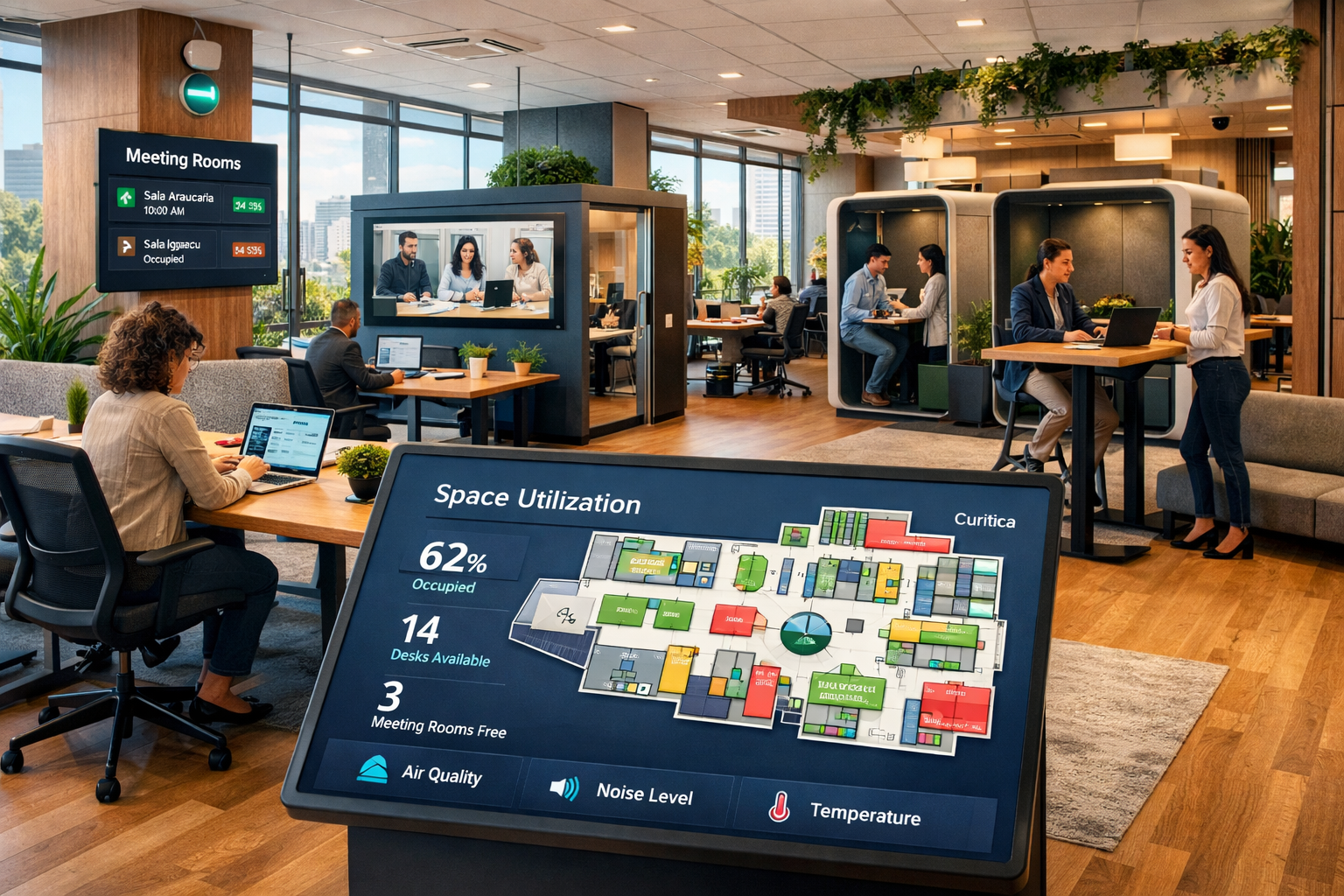
- Occupancy sensors optimizing space utilization in hybrid models
- Desk booking systems managing hot-desking and flexible arrangements
- Environmental controls (air quality, temperature) supporting wellness
- Digital wayfinding helping employees navigate larger suburban campuses
- Access control integration managing security across distributed facilities
These technology investments often cost less to implement in new suburban buildings than retrofitting older premium properties.
Talent Implications and Workforce Strategies
Employee Response to Decentralization
Corporate decentralization strategies succeed or fail based on talent acceptance. Research shows mixed employee responses:
Positive Factors ✅
- Reduced commute times for suburban residents
- Better parking and accessibility
- Modern, purpose-built workspaces
- Improved work-life balance
- Lower cost of living in suburban/regional locations
Resistance Factors ⚠️
- Longer commutes for city-center residents
- Reduced access to urban amenities
- Perceived career disadvantage in non-headquarters locations
- Social isolation in less dense environments
- Change resistance from established patterns
Successful companies address resistance through:
- Flexible hybrid policies allowing choice when possible
- Transportation support (shuttles, parking, transit subsidies)
- Amenity investments creating destination workplaces
- Career development programs ensuring equitable opportunities
- Communication strategies explaining business rationale
Talent Acquisition Advantages
Decentralization opens new talent pools:
- Suburban professionals avoiding São Paulo center commutes
- Regional talent in Curitiba and other secondary cities
- Returning professionals who left São Paulo for quality of life
- Cost-conscious talent prioritizing compensation over location prestige
- Family-oriented employees valuing suburban lifestyle
Companies like those featured in corporate real estate news increasingly emphasize these talent advantages in their location strategies.
Market Outlook and Future Trends
Projected Evolution Through 2028
The São Paulo Corporate Decentralization 2026: Office Hubs in Alphaville and Curitiba Cutting Costs Post-Hybrid Shift trend shows no signs of reversal. Projections through 2028 indicate:
Supply Side Developments
- Additional 300,000+ m² of Class A space in Alphaville and secondary hubs
- Major corporate campus projects like Santander’s 2028 opening[2]
- Conversion of older premium buildings to alternative uses
- Purpose-built hybrid workspace developments in suburban locations
Demand Side Trends
- Continued premium district price pressure driving further decentralization
- Expansion of successful pilot programs into full relocations
- International companies entering Brazil adopting distributed models from start
- Technology sector leading adoption with distributed-first strategies
Market Dynamics
- Premium district vacancy stabilizing at 8-10% (tight but not constrained)
- Secondary hub vacancy declining to 10-15% (healthy absorption)
- Price gap between premium and secondary locations widening further
- Bifurcated market becoming permanent feature rather than temporary trend
Emerging Locations to Watch
Beyond Alphaville and Curitiba, additional locations show decentralization potential:
Within São Paulo Metropolitan Area
- Santo André/São Bernardo (ABC region industrial corridor)
- Osasco (established commercial center with room for growth)
- Guarulhos (airport proximity attracting logistics and operations)
Regional Alternatives
- Campinas (technology hub 100km from São Paulo)
- Ribeirão Preto (regional center with university talent)
- Florianópolis (technology sector growth and quality of life)
The growth patterns in regions like Florianópolis demonstrate how secondary cities can attract corporate functions through infrastructure investment and quality of life advantages.
Investment Implications for Real Estate Stakeholders
Opportunities for Developers
The decentralization trend creates specific development opportunities:
Suburban Office Parks 🏢
- Purpose-built campuses with integrated amenities
- Technology-enabled buildings meeting hybrid work requirements
- Sustainable design attracting ESG-conscious corporate tenants
- Mixed-use developments combining office, retail, and hospitality
Adaptive Reuse in Premium Districts
- Converting older office buildings to residential
- Repositioning secondary buildings for creative industries
- Creating flexible workspace and coworking facilities
- Developing hospitality and entertainment uses
Build-to-Suit Projects
- Corporate campus developments for anchor tenants
- Customized facilities meeting specific operational requirements
- Long-term lease commitments providing stable returns
- Partnership structures sharing development risk
Investor Considerations
Real estate investors should evaluate opportunities through the decentralization lens:
Value-Add Strategies 💡
- Acquiring distressed premium assets for repositioning
- Upgrading secondary buildings with modern systems
- Developing suburban land banks in emerging corridors
- Creating flexible workspace products in multiple locations
Core Investment Approaches
- Quality suburban assets with strong tenant rosters
- Diversified portfolios across premium and secondary locations
- Trophy assets in established hubs like Alphaville
- Regional assets in cities like Curitiba with growth trajectories
Risk Factors to Monitor ⚠️
- Over-concentration in premium districts facing structural headwinds
- Suburban assets with poor connectivity or outdated infrastructure
- Markets without corporate tenant depth
- Buildings unable to meet modern technology and sustainability standards
Understanding investment timing and market cycles remains critical even within favorable structural trends.
Implementation Roadmap for Corporations
Planning a Successful Decentralization Strategy
Companies considering participation in São Paulo Corporate Decentralization 2026: Office Hubs in Alphaville and Curitiba Cutting Costs Post-Hybrid Shift should follow a structured approach:
Phase 1: Strategic Assessment (2-3 months)
- Analyze current real estate costs and space utilization
- Identify functions suitable for relocation
- Evaluate talent implications and employee preferences
- Model financial scenarios across location options
- Assess technology infrastructure requirements
Phase 2: Location Selection (3-4 months)
- Shortlist candidate submarkets and specific buildings
- Conduct site visits and infrastructure assessments
- Analyze talent availability and commute patterns
- Evaluate total cost of occupancy including incentives
- Negotiate preliminary terms with landlords
Phase 3: Pilot Implementation (6-12 months)
- Relocate non-critical function as proof of concept
- Test technology infrastructure and collaboration tools
- Monitor productivity metrics and employee satisfaction
- Refine operational procedures and management approaches
- Document lessons learned for broader rollout
Phase 4: Full Deployment (12-24 months)
- Execute phased relocation of identified functions
- Implement change management and communication programs
- Rightsize premium location footprint
- Optimize technology and workplace design
- Establish governance for distributed operations
Critical Success Factors
Companies achieving best results from decentralization share common practices:
✅ Executive commitment to distributed operating model ✅ Transparent communication about business rationale and employee impact ✅ Technology investment ensuring location parity ✅ Workplace design creating destination environments ✅ Talent strategies addressing recruitment and retention ✅ Performance management adapted to distributed teams ✅ Continuous improvement based on data and feedback
Conclusion
São Paulo Corporate Decentralization 2026: Office Hubs in Alphaville and Curitiba Cutting Costs Post-Hybrid Shift represents a fundamental restructuring of Brazil’s corporate real estate landscape. With premium district prices doubling to R$ 280/m² and reaching peaks of R$ 350/m²[1], companies have moved beyond considering decentralization to actively implementing sophisticated distributed operating models.
The evidence is compelling: Chucri Zaidan delivered 200,000 m² of new space while reducing vacancy from 25% to 15%[1], Chácara Santo Antônio transformed from 87% to 27.8% vacancy[1], and city-wide absorption reduced overall vacancy to 12.8%[1]. These metrics demonstrate systematic corporate relocation rather than isolated decisions.
Alphaville and Curitiba have emerged as primary beneficiaries, offering 40-60% cost savings while providing Class A infrastructure, technology-enabled workspaces, and quality of life advantages that attract talent. Secondary São Paulo hubs capture companies seeking middle-ground solutions—cost savings without leaving the metropolitan area entirely.
The hybrid work revolution enabled this transformation by proving that distributed operations can maintain productivity while optimizing costs. Companies now strategically bifurcate their real estate portfolios: maintaining executive presence in premium locations while relocating back-office functions, technology teams, and shared services to affordable alternatives.
Actionable Next Steps
For Corporate Real Estate Leaders:
- Conduct comprehensive space utilization analysis identifying functions suitable for relocation
- Model financial scenarios comparing current costs against Alphaville, Curitiba, and secondary hub alternatives
- Pilot a decentralization project with a non-critical function to test operational feasibility
- Engage employees early in location planning to address concerns and build support
- Partner with experienced advisors familiar with suburban and regional markets
For Real Estate Investors:
- Evaluate suburban office opportunities in Alphaville and emerging corridors
- Consider regional alternatives like Curitiba with strong fundamentals
- Monitor secondary hub absorption in Chucri Zaidan and Chácara Santo Antônio
- Assess repositioning opportunities in premium districts facing structural changes
- Develop relationships with corporate tenants executing decentralization strategies
For Economic Development Officials:
- Invest in transportation infrastructure connecting suburban hubs to talent pools
- Streamline zoning and permitting for office development in target areas
- Promote regional advantages to corporations considering relocation
- Support workforce development ensuring talent availability
- Create incentive programs attracting corporate functions to secondary locations
The São Paulo corporate decentralization trend is not temporary—it represents a permanent evolution in how companies optimize for cost, talent, and operational efficiency in the hybrid work era. Organizations that strategically embrace this transformation will realize significant competitive advantages through reduced costs, improved talent access, and operational flexibility. Those that resist will face escalating premium district costs and competitive disadvantages as peers capture decentralization benefits.
The opportunity is clear. The infrastructure exists. The financial case is compelling. The question is no longer whether to participate in São Paulo Corporate Decentralization 2026, but how quickly and strategically organizations can execute their distributed operating models.
References
[1] Premium Offices Sp – https://www.cushmanwakefield.com/en/brazil/insights/premium-offices-sp
[2] Santander Announces New Corporate Campus In Sao Paulo To Be Developed By Gtis Partners And Scheduled To Open In The Second Half Of 2028 – https://themalaysianreserve.com/2026/02/27/santander-announces-new-corporate-campus-in-sao-paulo-to-be-developed-by-gtis-partners-and-scheduled-to-open-in-the-second-half-of-2028/
[3] siila.com.br – https://siila.com.br/news/new-office-buildings-delivered-sao-paulo-check-out/2079/lang/en
[4] New Sao Paulo Master Plan Approved Mid Term Review Expands The Possibility Of Constructing Taller Buildings And Introduces Other New Features – https://www.demarest.com.br/en/new-sao-paulo-master-plan-approved-mid-term-review-expands-the-possibility-of-constructing-taller-buildings-and-introduces-other-new-features/