
Brazil’s metropolitan real estate markets — São Paulo, Rio de Janeiro, Belo Horizonte — capture most headlines. Yet the most compelling growth story of 2026 is unfolding 300 kilometers away from those capitals, in mid-sized inland cities where land is cheaper, demand is underserved, and federal housing subsidies are rewriting the rules of property investment.
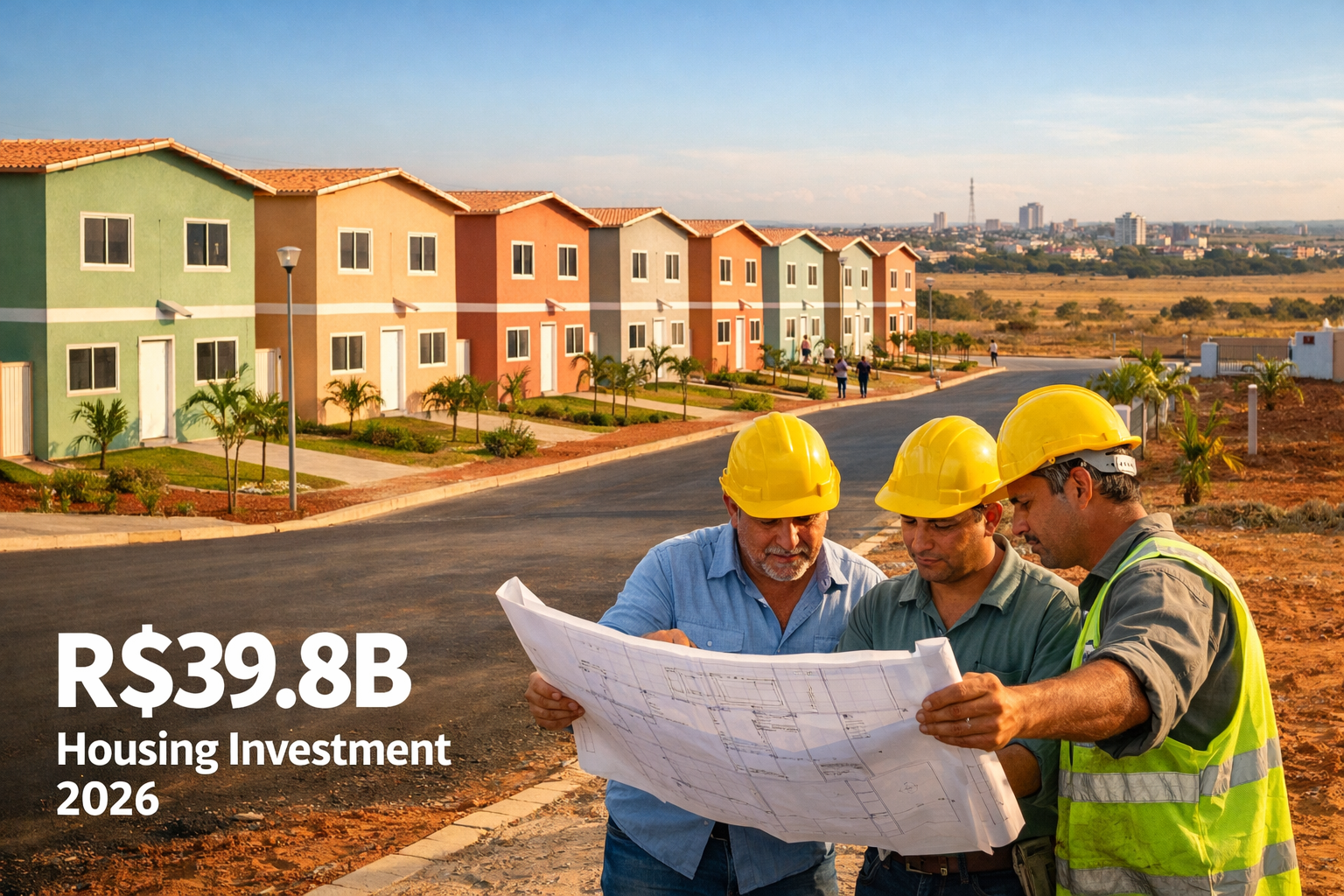
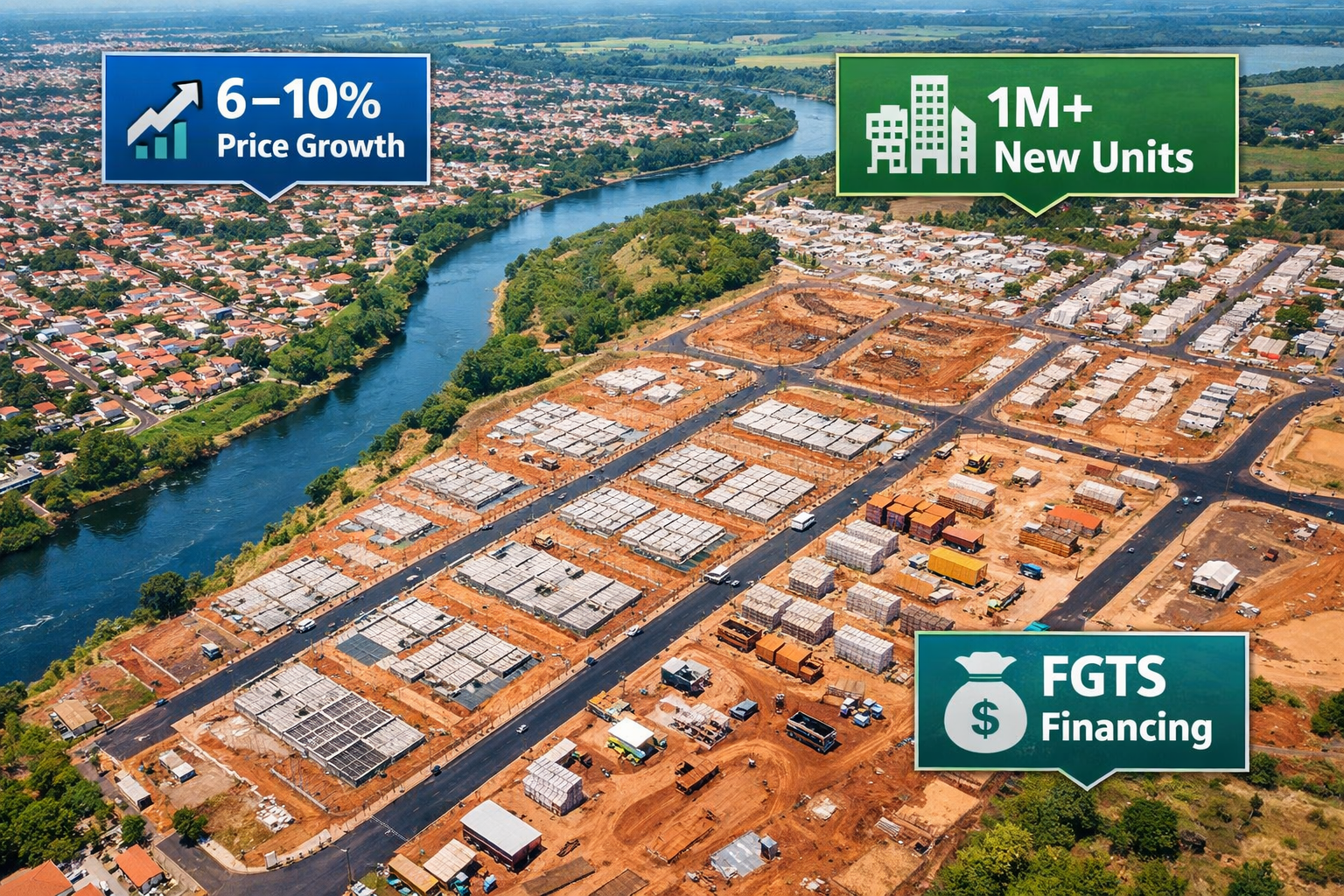
The Secondary Cities Surge 2026: MCMV-Driven Development Plays in Inland Brazil Beyond Capitals is not a speculative trend — it is a policy-backed, capital-driven structural shift. With R$39.8 billion in total housing investment committed for 2026 through the Minha Casa Minha Vida (MCMV) program and the new Reforma Casa Brasil initiative [1], secondary and inland markets are now the front line of Brazil’s residential construction boom. Price growth of 6–10% is projected in key secondary cities, outpacing many saturated metropolitan areas.
For developers, investors, and homebuyers willing to look beyond the obvious, 2026 represents a rare alignment of government subsidy, infrastructure spending, and demographic demand.
Key Takeaways 📌
- R$39.8 billion in combined housing investment is flowing into Brazil’s construction sector in 2026, with MCMV as the primary engine [1]
- Secondary and inland cities are projected to see 6–10% property price growth, outperforming many major metros
- MCMV now accounts for approximately 50% of all new housing launches nationwide, making it the dominant force in residential development [1]
- New financing rules effective January 2, 2026 expanded eligibility and raised property value ceilings for lower-income brackets, directly benefiting inland markets [1]
- Infrastructure giants are committing US$9.96 billion in Brazil operations in 2026, with inland corridors receiving significant attention [2]
Understanding the MCMV Engine: Why Secondary Cities Benefit Most
The Scale of Federal Housing Investment in 2026
The numbers behind the Secondary Cities Surge 2026 are staggering. Brazil’s housing investment for 2026 totals R$39.8 billion, broken down as follows [1]:
| Funding Source | Amount (BRL) |
|---|---|
| Federal Budget Resources | R$1.6 billion |
| FGTS (Mandatory Severance Fund) | R$30.5 billion |
| Social Fund + Caixa Econômica Federal | R$7.4 billion |
| Total | R$39.8 billion |
This is not a single-year anomaly. After MCMV reached its original 4-year target of 2 million contracted units by end of 2025, the program set a new goal: 1 million additional units through 2026, with over 100,000 deliveries expected this year alone [1].
💬 “MCMV represents approximately 50% of all new housing launches nationwide — making it the single most powerful force shaping where and how Brazil builds homes.” [1]
That scale means the program does not just serve homebuyers. It drives entire local economies — construction jobs, materials supply chains, retail, and services. And because land in secondary cities is dramatically cheaper than in capitals, developers can build more units per real invested, improving margins while still qualifying for subsidized financing.
The January 2026 Rule Changes: A Catalyst for Inland Markets
On January 2, 2026, new MCMV financing rules took effect that directly amplified the inland market opportunity [1]. Key changes include:
- ✅ Raised maximum property values for income brackets 1–2 (households earning up to R$4,700/month)
- ✅ Regional price ceilings up to R$255,000–R$270,000 in larger urban centers
- ✅ Expanded eligibility for mid-income households previously excluded from subsidized tiers
In secondary cities — where average property values are still well below these new ceilings — developers can now build units that qualify for full MCMV subsidies while still offering amenities that attract mid-income buyers. This is the structural advantage that capitals simply cannot replicate at scale.
For context on how Brazil’s broader property market is evolving, exploring the best places to invest in Brazilian property reveals how location selection is becoming increasingly data-driven.
The Secondary Cities Surge 2026: Key Markets and Growth Drivers
Which Inland Cities Are Leading the Surge?
The MCMV-driven development plays in inland Brazil beyond capitals are concentrated in cities with three shared characteristics: population between 200,000 and 1 million, strong regional economic bases (agribusiness, logistics, healthcare, education), and significant housing deficits relative to population growth.
Key markets drawing developer attention in 2026 include:
🏙️ Ribeirão Preto (SP) — Agribusiness capital with a growing tech and healthcare sector. MCMV launches accelerating in peripheral districts with strong infrastructure.
🏙️ Uberlândia (MG) — Central Brazil’s logistics hub. Population growth consistently outpaces housing supply, creating persistent demand pressure.
🏙️ Cascavel (PR) — Southern Brazil’s soy and grain corridor. Mid-income housing demand is rising as agribusiness wealth expands into the service sector.
🏙️ Feira de Santana (BA) — Northeast Brazil’s largest inland city. MCMV Faixa 1 and 2 projects are scaling rapidly with strong federal subsidy support.
🏙️ Anápolis (GO) — Proximity to Brasília and an expanding industrial district make this a compelling value play for developers targeting Faixa 2–3 buyers.
Infrastructure Investment: The Multiplier Effect
Secondary cities do not grow in isolation. They grow because infrastructure follows population and economic activity — and in 2026, infrastructure investment is substantial. Major infrastructure companies have committed over US$9.96 billion in Brazil operations this year [2], with significant allocations toward logistics corridors, energy, and sanitation in inland regions.
This matters for real estate in a direct way: property values in secondary cities rise fastest when infrastructure improvements reduce commute times, improve utilities, and connect cities to national supply chains. Developers who position projects near planned infrastructure improvements — highways, rail corridors, industrial parks — capture the appreciation wave ahead of the broader market.
Brazil’s OECD economic review for 2026 also highlights the importance of structural reforms and investment in connectivity as foundations for sustained regional growth [4], reinforcing the long-term thesis for inland markets.
Price Growth Projections: Secondary vs. Metropolitan Markets
The projected 6–10% price growth in key secondary cities contrasts sharply with the more compressed growth seen in oversupplied metropolitan segments. Several factors drive this outperformance:
- Lower base prices — More room to grow from a lower starting point
- Undersupply relative to demand — Housing deficits remain large in many inland cities
- MCMV subsidy pull — Subsidized financing creates immediate, bankable demand
- Infrastructure catalysts — New roads, utilities, and logistics investment drives location premiums
- Migration from metros — Cost-of-living pressures in São Paulo and Rio continue to push families toward secondary cities
For investors evaluating entry points, understanding how buying off-plan can amplify returns in rising markets is particularly relevant in secondary cities where early-stage projects carry the highest upside.
Developer Strategies: Capturing the MCMV-Driven Opportunity in Inland Brazil
Structuring Projects for Maximum Subsidy Capture
The most effective developers operating in secondary cities in 2026 are not simply building cheaper units. They are engineering projects to maximize MCMV eligibility while delivering quality that attracts mid-income buyers who could theoretically afford market-rate housing but choose subsidized financing for the cost advantage.
Key strategic principles include:
📐 Unit sizing discipline — Keeping units within MCMV-eligible square footage thresholds while maximizing functional layouts. Compact studios and 2-bedroom units in the 42–55m² range dominate successful inland launches.
📍 Land acquisition strategy — Targeting land on city peripheries with approved zoning for residential use, near planned infrastructure improvements. Land costs in secondary cities can be 60–80% lower than comparable metropolitan plots.
🏗️ Phased development — Launching in phases allows developers to calibrate supply to absorption rates, reducing inventory risk in markets with less liquidity than major metros.
💰 FGTS-linked financing — Structuring payment plans around FGTS withdrawal eligibility maximizes the buyer pool. With R$30.5 billion in FGTS funding allocated to MCMV in 2026 [1], buyers have real purchasing power.
Risk Factors Developers Must Manage
The inland opportunity is real, but it is not risk-free. Key challenges include:
- Interest rate environment: Brazil’s Selic rate remains elevated in 2026, increasing financing costs for non-subsidized portions of projects [1][3]
- Political risk: MCMV is a federal program subject to budget cycles and political priorities [5]
- Liquidity risk: Secondary city markets have thinner secondary markets, making exit timing more important
- Construction cost inflation: Steel and aluminum price pressures affect margins across all MCMV projects [1]
Developers who succeed in this environment combine local market knowledge with disciplined financial structuring — ensuring that projects remain viable even if subsidy parameters shift.
For those exploring how innovative financing models are reshaping real estate development, the intersection of crypto and real estate incorporation represents an emerging frontier worth monitoring.
The Mid-Income Sweet Spot: Faixa 2 and Faixa 3
While much attention focuses on MCMV’s lowest-income bracket (Faixa 1), the most commercially attractive segment for developers in secondary cities is Faixa 2–3 — households earning R$2,640–R$8,000/month. This segment:
- Receives meaningful subsidies and below-market interest rates
- Has sufficient income to sustain mortgage payments without default risk
- Is large and growing in secondary cities driven by agribusiness and services
- Is underserved by existing housing stock, which skews toward either very low-end or aspirational high-end
The January 2026 rule changes specifically expanded this segment’s access to MCMV financing [1], creating a larger addressable market precisely in the price ranges most common in inland cities.

The Broader Investment Thesis: Why 2026 Is the Inflection Point
Macro Conditions Supporting the Secondary Cities Surge
Brazil’s economic trajectory in 2026 provides a supportive backdrop for the secondary cities thesis. Despite elevated interest rates, formal employment growth, rising minimum wages, and expanding FGTS balances are strengthening household purchasing power in exactly the income bands MCMV targets [3].
The OECD’s 2026 assessment of Brazil emphasizes the importance of leveraging institutional frameworks — like FGTS and Caixa Econômica Federal — to channel long-term savings into productive housing investment [4]. This institutional architecture is precisely what makes MCMV resilient across economic cycles.
Meanwhile, Brazil’s housing deficit remains estimated at over 8 million units, with the largest gaps concentrated in lower and mid-income segments outside major metros. Secondary cities represent both the problem and the solution: they have the largest deficits, the lowest land costs, and the most room for MCMV-driven development to make a structural difference.
Comparing Coastal and Inland Investment Profiles
Coastal cities like Florianópolis attract a different investor profile — lifestyle buyers, high-income migrants, and tourism-driven demand. The real estate market in Greater Florianópolis has shown strong performance driven by quality-of-life demand. However, entry prices are significantly higher, and MCMV eligibility is more constrained by property value ceilings in premium coastal markets.
Inland secondary cities offer a different but complementary risk-return profile:
| Factor | Coastal/Capital Markets | Secondary Inland Cities |
|---|---|---|
| Entry Price | High | Low–Medium |
| MCMV Eligibility | Limited | High |
| Price Growth Potential | Moderate (compressed) | 6–10% projected |
| Liquidity | Higher | Lower |
| Demand Driver | Lifestyle/Premium | Structural housing deficit |
| Risk Profile | Lower volatility | Higher upside, manageable risk |
For investors building a diversified Brazilian real estate portfolio, reviewing available development projects across different market segments provides a practical starting point for comparison.
Long-Term Structural Demand
The Secondary Cities Surge 2026 is not a one-year phenomenon. Urbanization in Brazil’s interior is a multi-decade trend driven by agribusiness expansion, logistics infrastructure, and the decentralization of services. Cities like Uberlândia, Ribeirão Preto, and Cascavel have been growing consistently for 20 years — MCMV is accelerating a trend that was already structurally sound.
Brazil’s political risk landscape in 2026 does introduce some uncertainty around program continuity [5], but the underlying housing deficit and FGTS funding mechanism provide a floor of demand that transcends any single administration’s priorities.
Conclusion: Actionable Next Steps for Developers and Investors
The Secondary Cities Surge 2026: MCMV-Driven Development Plays in Inland Brazil Beyond Capitals represents one of the most clearly defined investment opportunities in Brazilian real estate today. The combination of R$39.8 billion in committed housing investment [1], expanded MCMV eligibility rules, US$9.96 billion in infrastructure spending [2], and structural housing deficits in inland markets creates a convergence that disciplined developers and investors can capitalize on.
Actionable Next Steps 🎯
Identify target secondary cities — Screen markets by population growth rate, housing deficit data, infrastructure pipeline, and MCMV project absorption rates. Prioritize cities in the 300,000–800,000 population range.
Map MCMV eligibility windows — Analyze local income distribution against the January 2026 financing rules to identify the largest eligible buyer pools in each target market.
Conduct land acquisition due diligence — Focus on plots with approved residential zoning near confirmed infrastructure investments. Move early — land prices in secondary cities are rising as developer interest grows.
Structure projects for Faixa 2–3 optimization — Design unit mixes and pricing to maximize FGTS-backed financing eligibility while delivering quality that reduces default risk.
Build local partnerships — Secondary city markets reward local knowledge. Partner with regional brokers, municipal governments, and community organizations to accelerate sales velocity.
Monitor program parameters — MCMV rules evolve. Stay current with Caixa Econômica Federal guidelines and federal budget cycles to adjust project structuring proactively.
Diversify across markets — Spread exposure across 2–3 secondary cities to manage liquidity risk and capture multiple regional growth drivers.
The window for first-mover advantage in Brazil’s inland secondary cities is open — but it will not stay open indefinitely. As developer interest grows and land prices adjust, the margin for error will narrow. The time to act on the MCMV-driven development plays in inland Brazil is 2026.
For ongoing insights into Brazilian real estate development trends and project opportunities, explore the latest news and market analysis from developers active in this space.
References
[1] Brazil’s Construction Sector 2026 Housing Programs Support Rates High Risks Persist – https://www.fastmarkets.com/insights/brazils-construction-sector-2026-housing-programs-support-rates-high-risks-persist/
[2] Infrastructure Giants Plan To Invest Around Us10 Billion In Brazil In 2026 – https://www.bnamericas.com/en/analysis/infrastructure-giants-plan-to-invest-around-us10-billion-in-brazil-in-2026
[3] Brazil’s 2026 Economic Inflection Point – https://hightoweradvisors.com/blogs/well-th-blog/brazils-2026-economic-inflection-point
[4] Brazil 7155911c – https://www.oecd.org/en/publications/2026/04/foundations-for-growth-and-competitiveness-2026_f68a156b/full-report/brazil_7155911c.html
[5] Top Risks 2026 Implications For Brazil – https://www.eurasiagroup.net/issues/Top-Risks-2026-Implications-for-Brazil