
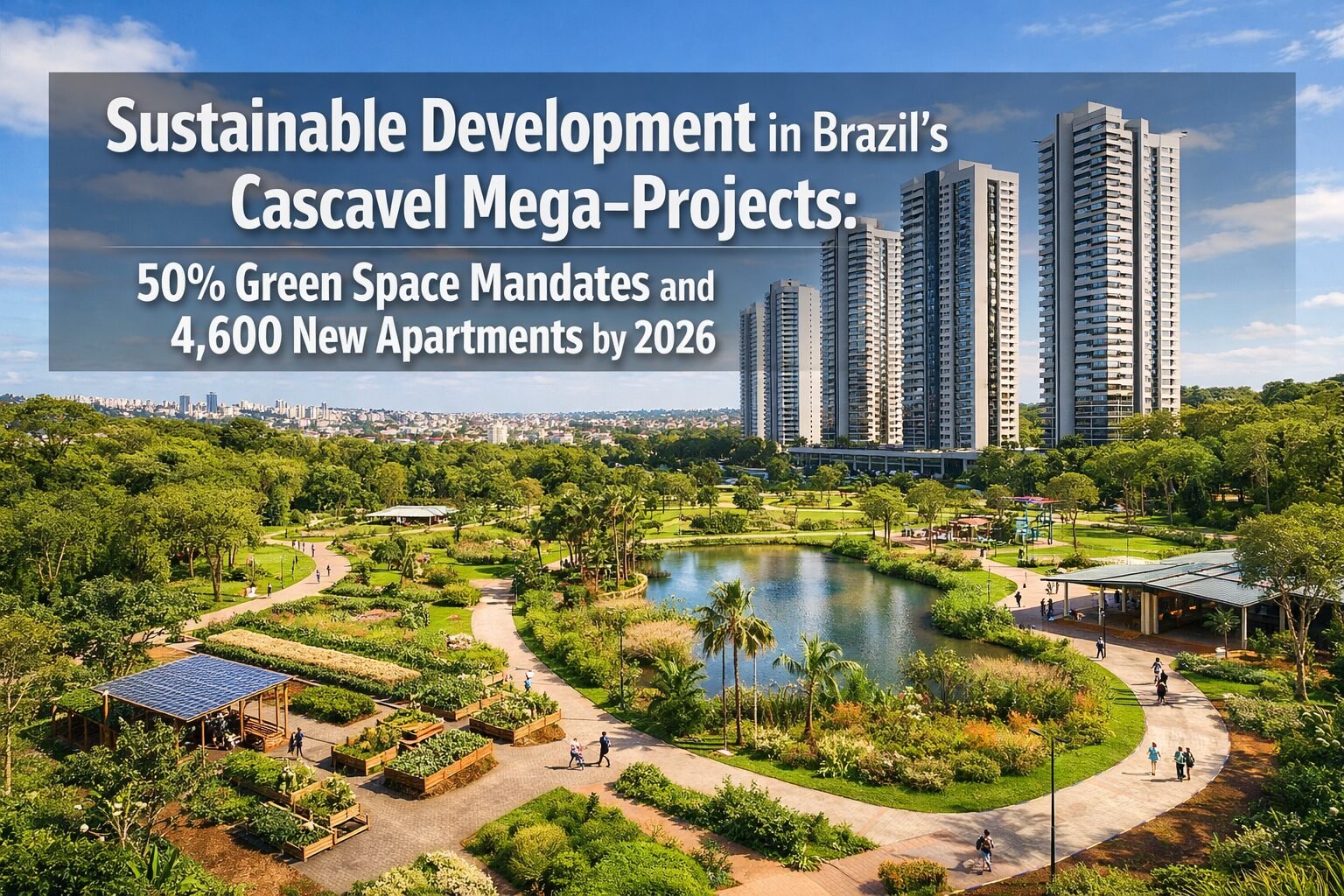
Brazil’s urban landscape is undergoing a remarkable transformation. In Cascavel, Paraná, a groundbreaking development project is rewriting the rules of sustainable urban expansion. Sustainable Development in Brazil’s Cascavel Mega-Projects: 50% Green Space Mandates and 4,600 New Apartments by 2026 represents more than just another housing initiative—it’s a bold blueprint for how cities across Brazil and beyond can balance rapid urbanization with environmental responsibility.
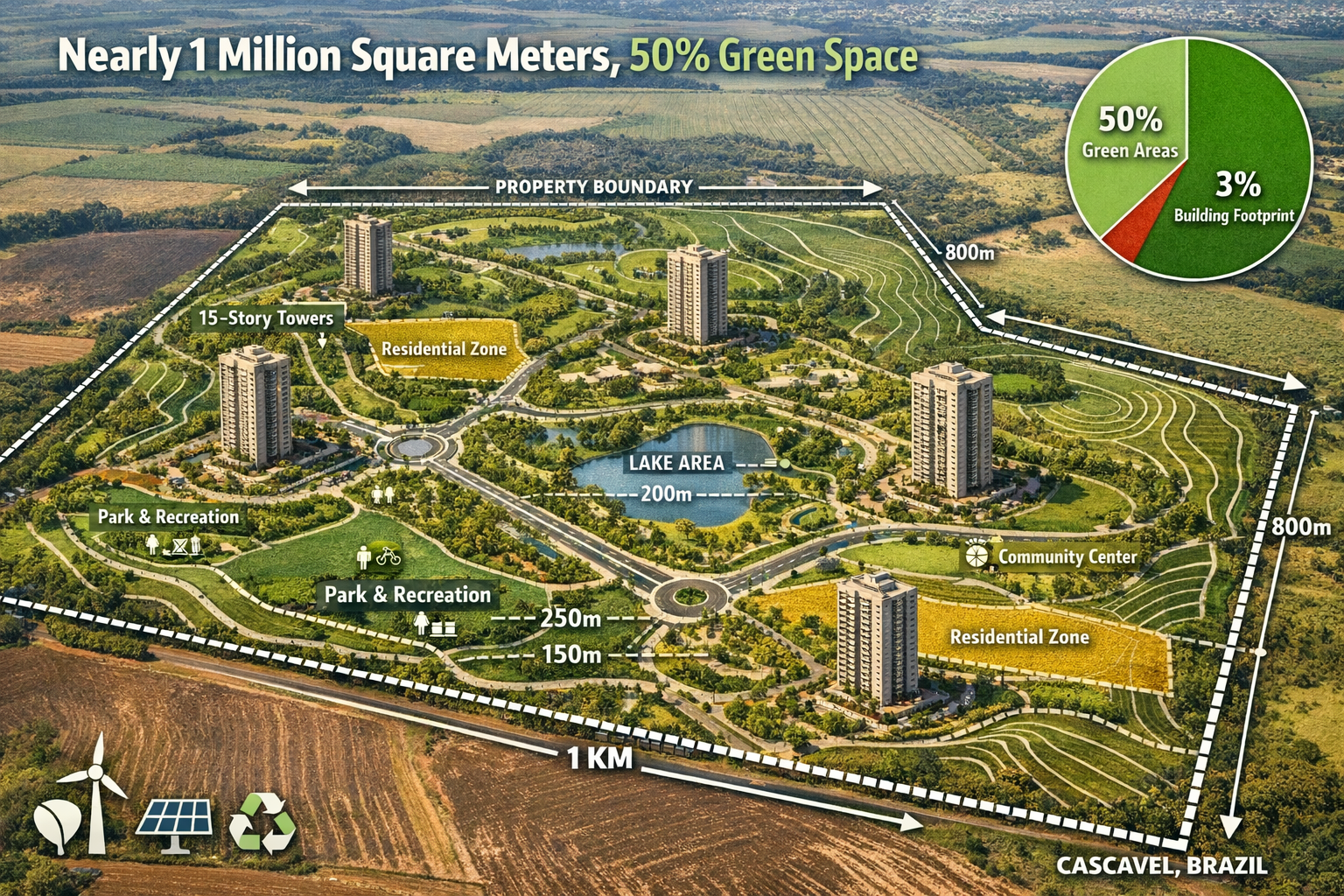
Spanning nearly one million square meters, this ambitious project allocates over half of its total area to green spaces while delivering 4,600 modern apartments[1][2]. The development demonstrates that high-density housing and environmental preservation aren’t mutually exclusive. Instead, they can work together to create vibrant, livable communities that meet the needs of Brazil’s growing middle class while protecting the planet for future generations.
Key Takeaways
🌳 Unprecedented Green Space Commitment: More than 50% of the nearly one million square meter project is dedicated to parks, gardens, and natural areas—setting a new standard for sustainable urban development in Brazil[1][2]
🏢 Efficient Land Use: Residential buildings occupy only 3% of the total project footprint, demonstrating how high-rise construction enables both density and environmental preservation[2]
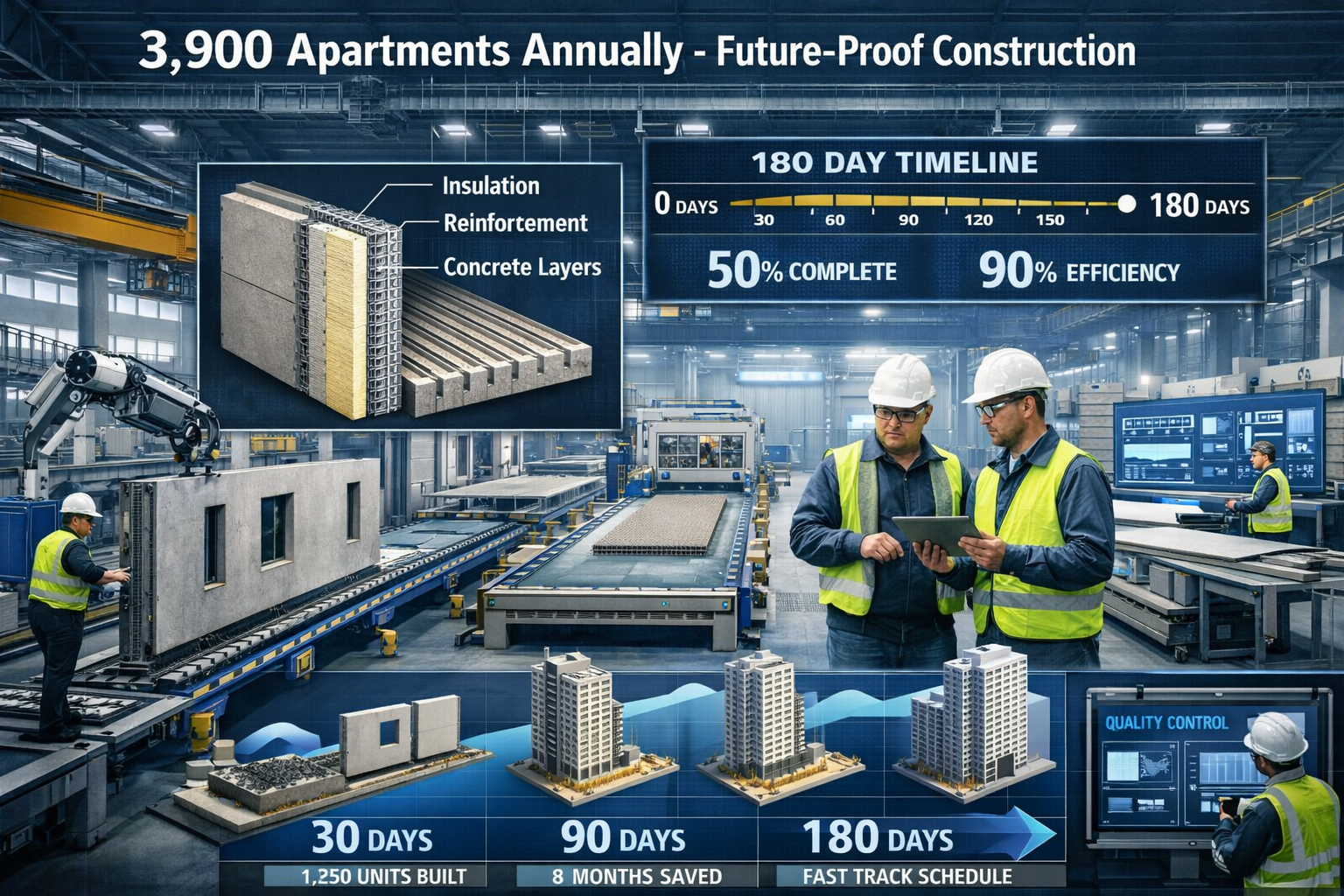
⚡ Revolutionary Construction Speed: Advanced robotized precast concrete systems can complete 15-20 story buildings in less than 180 days, producing elements for up to 3,900 apartments annually[2]
🏘️ Comprehensive Housing Solution: The project will deliver 4,600 fully furnished apartments ranging from 96 to 160 square meters, specifically designed for Brazil’s middle-class families[1][2]
📈 Scalable National Model: Positioned as a pilot project, the Ecoparque Bairros Integrados development serves as a replicable blueprint for sustainable urban expansion throughout Brazil and Europe[2]
Understanding the Cascavel Development Vision
The Cascavel mega-project represents a fundamental shift in how Brazilian cities approach urban planning. Traditional development models often prioritize maximum building coverage to maximize short-term profits. This approach leads to overcrowded neighborhoods with insufficient green spaces, poor air quality, and diminished quality of life.
The Sustainable Development in Brazil’s Cascavel Mega-Projects: 50% Green Space Mandates and 4,600 New Apartments by 2026 takes a different path. By dedicating more than half of the project’s nearly one million square meters to green spaces, developers are investing in long-term community health, environmental sustainability, and property value appreciation[1][2].
The Scale and Scope of the Project
The numbers behind this development tell a compelling story:
| Project Component | Specification | Impact |
|---|---|---|
| Total Project Area | Nearly 1,000,000 m² | Comprehensive urban planning space[1][2] |
| Green Space Allocation | >50% of total area | Environmental preservation priority[1][2] |
| Building Footprint | 3% of total area | Efficient vertical construction[2] |
| Total Apartments | 4,600 units | Substantial housing supply[1][2] |
| Building Heights | 15-20 floors | High-density, low-impact design[2] |
| Apartment Sizes | 96-160 m² | Family-oriented housing[2] |
| Construction Timeline | <180 days per building | Rapid, scalable delivery[2] |
This allocation demonstrates a commitment to sustainable development that goes far beyond regulatory compliance. When developers choose to preserve green spaces rather than maximize buildable area, they’re making a statement about values and long-term vision.
For investors looking to understand best places to invest in Brazil property, projects like Cascavel offer insights into emerging trends that prioritize sustainability alongside returns.
The 50% Green Space Mandate: Environmental Innovation in Action
Why Green Space Matters in Urban Development
Green spaces aren’t just aesthetic additions to urban environments—they’re essential infrastructure that provides measurable benefits to residents and the broader ecosystem. The decision to allocate more than 50% of the Cascavel project to green areas reflects an understanding of these critical functions[1][2].
Environmental Benefits:
- 🌬️ Air Quality Improvement: Trees and vegetation filter pollutants and produce oxygen
- 💧 Stormwater Management: Natural areas absorb rainfall, reducing flooding risks
- 🌡️ Urban Heat Island Mitigation: Green spaces cool surrounding areas by several degrees
- 🦜 Biodiversity Preservation: Native vegetation supports local wildlife populations
- 🌱 Carbon Sequestration: Plants capture and store atmospheric carbon dioxide
Social and Health Benefits:
- 🏃 Physical Activity: Parks and trails encourage exercise and outdoor recreation
- 🧘 Mental Health: Access to nature reduces stress and improves psychological well-being
- 👨👩👧👦 Community Building: Shared green spaces create opportunities for social interaction
- 👶 Child Development: Natural play areas support healthy childhood development
- 📚 Educational Opportunities: Green spaces serve as outdoor classrooms
Implementing the Green Space Vision
The Sustainable Development in Brazil’s Cascavel Mega-Projects: 50% Green Space Mandates and 4,600 New Apartments by 2026 doesn’t just set aside land—it creates functional, integrated ecosystems. The green space design likely includes:
Parks and Recreation Areas: Central gathering spaces with playground equipment, sports facilities, and picnic areas that serve as community focal points.
Walking and Cycling Paths: Interconnected trail systems that promote active transportation and reduce automobile dependency.
Native Plant Gardens: Landscaping featuring indigenous Brazilian flora that requires minimal water and maintenance while supporting local ecosystems.
Community Gardens: Shared agricultural spaces where residents can grow vegetables and herbs, promoting food security and community engagement.
Natural Buffers: Green zones between residential buildings that provide privacy, noise reduction, and visual appeal.
This comprehensive approach to green space planning sets a precedent for future developments across Brazil. The model demonstrates that even in projects delivering thousands of housing units, environmental considerations can remain central to the design philosophy.
Revolutionary Construction Methods Enabling Sustainable Scale
The Robotized Precast Concrete System
One of the most innovative aspects of the Cascavel project is its construction methodology. Traditional building techniques struggle to deliver large-scale housing quickly while maintaining quality standards. The Sustainable Development in Brazil’s Cascavel Mega-Projects: 50% Green Space Mandates and 4,600 New Apartments by 2026 solves this challenge through advanced manufacturing[2].
The on-site robotized precast concrete plant represents a significant technological investment. This facility can produce building elements for up to 3,900 apartments annually, using the latest machine technology and highly automated processes[2].
Key Advantages of the Precast System:
✅ Speed: Individual residential buildings of 15 to 20 floors can be completed in less than 180 days[2]
✅ Quality Control: Factory conditions ensure consistent standards regardless of weather or site conditions[2]
✅ Sustainability: Reduced construction waste and more efficient material usage
✅ Safety: Fewer workers at height and controlled manufacturing environment
✅ Scalability: The system is designed as “future-proof” for replication across multiple regions[2]
✅ Cost Efficiency: Standardized production reduces per-unit costs while maintaining quality
Construction Timeline and Delivery
The aggressive construction timeline is essential to the project’s success. By completing buildings in less than 180 days, developers can:
- Respond to Market Demand: Quickly deliver units as housing needs evolve
- Manage Cash Flow: Faster completion means earlier sales and revenue generation
- Scale Operations: Proven systems enable confident expansion to new sites
- Maintain Momentum: Continuous construction activity sustains workforce and supplier relationships
This approach aligns with broader trends in Brazilian real estate, where property development performance increasingly depends on efficient delivery and quality execution.
The first residents were originally scheduled to move in during 2025, with the full 4,600 apartments targeted for completion by 2026[2]. This timeline demonstrates the project’s commitment to rapid delivery without compromising on sustainability standards.
Housing Design: Meeting Middle-Class Needs
Apartment Specifications and Features
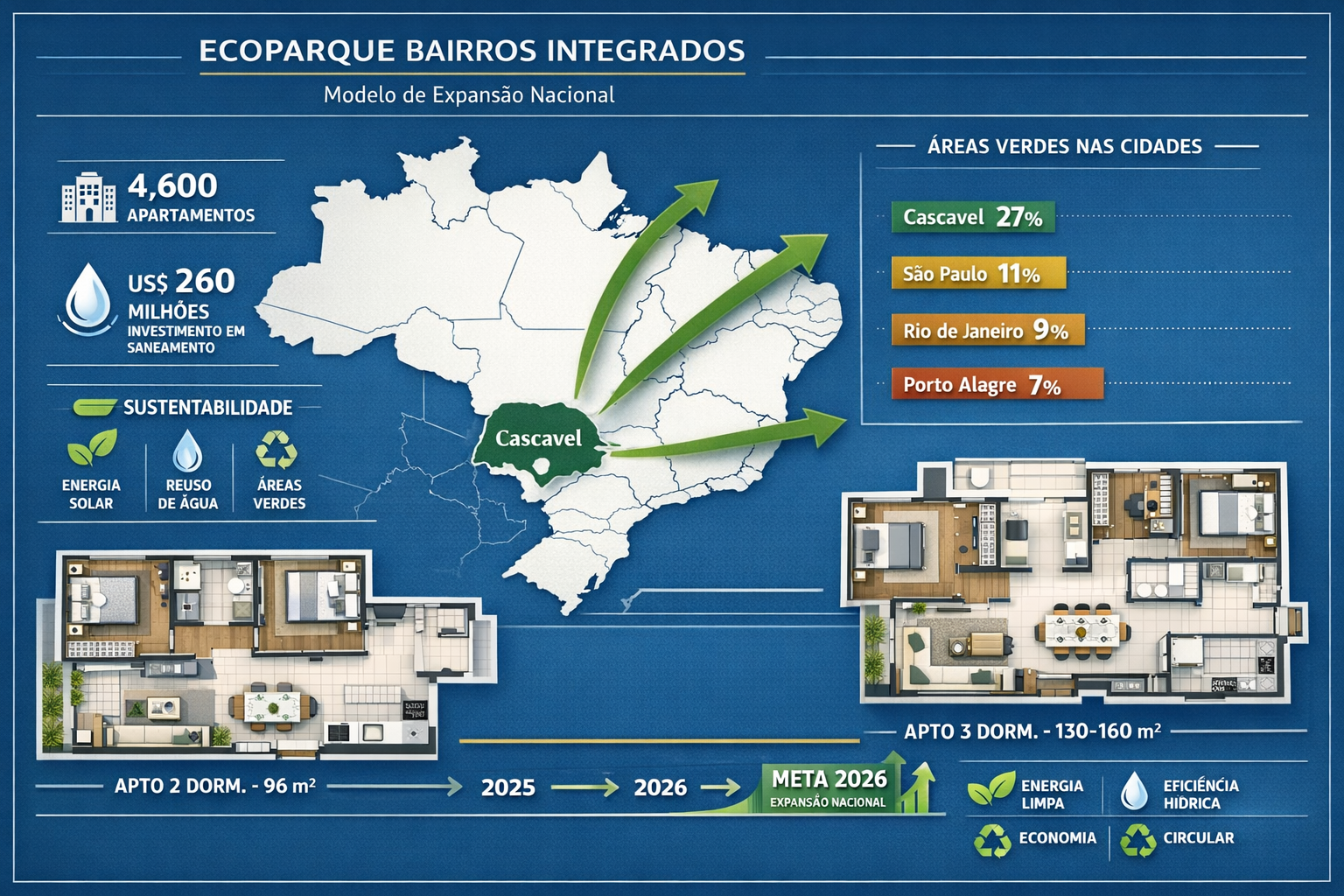
The Sustainable Development in Brazil’s Cascavel Mega-Projects: 50% Green Space Mandates and 4,600 New Apartments by 2026 focuses on delivering quality housing for Brazil’s growing middle class. The 4,600 planned apartments come in two primary configurations[1][2]:
2-Bedroom Units: Ranging from 96 to approximately 120 square meters, these apartments provide comfortable living spaces for small families or couples.
3-Bedroom Units: Extending up to 160 square meters, these larger units accommodate growing families with multiple children.
All units come fully furnished, removing a significant barrier to homeownership for middle-class families. This feature provides:
- 💰 Immediate Cost Savings: No need for substantial furniture purchases after closing
- 🏠 Move-In Ready: Residents can occupy their homes immediately
- 🎨 Coordinated Design: Professional interior design ensures aesthetic coherence
- 📦 Convenience: Eliminates the stress of furniture shopping and delivery coordination
Building Design and Amenities
The 15-story residential buildings are designed to maximize both efficiency and livability. The vertical construction approach allows the project to achieve high density while preserving extensive ground-level green spaces[2].
Expected Building Features:
- 🚪 Secure Entry Systems: Controlled access for resident safety
- 🏋️ Fitness Centers: On-site gyms promoting healthy lifestyles
- 👶 Children’s Play Areas: Safe, supervised spaces for young residents
- 🚗 Parking Facilities: Adequate vehicle storage for residents
- 📶 High-Speed Internet: Modern connectivity infrastructure
- ♿ Accessibility: Elevators and universal design principles
- 🌳 Balconies and Views: Private outdoor spaces with green space vistas
This comprehensive approach to residential design ensures that the Cascavel project delivers not just housing units, but complete living environments that support quality of life.
Infrastructure Investment Supporting Sustainable Growth
Sanepar’s US$260 Million Commitment
Sustainable development requires more than just thoughtful building design—it demands robust infrastructure to support growing populations. Recognizing this reality, Sanepar, Paraná state’s water and sanitation company, has committed US$260 million in sanitation investments for Cascavel city[3].
This substantial infrastructure investment addresses critical needs:
Water Supply Systems: Ensuring adequate clean water delivery to all new residents
Wastewater Treatment: Processing sewage to environmental standards before discharge
Stormwater Management: Handling increased runoff from developed areas
Distribution Networks: Building pipes, pumps, and treatment facilities to serve the expanded population
The timing of this investment alongside the Sustainable Development in Brazil’s Cascavel Mega-Projects: 50% Green Space Mandates and 4,600 New Apartments by 2026 demonstrates coordinated planning between public and private sectors. This collaboration ensures that housing development doesn’t outpace essential services.
The Importance of Coordinated Infrastructure Planning
Many Brazilian cities have experienced challenges when housing development proceeds faster than infrastructure improvements. The results include:
- ❌ Water shortages during peak demand periods
- ❌ Inadequate sewage treatment leading to environmental contamination
- ❌ Traffic congestion from insufficient road capacity
- ❌ Overloaded electrical grids causing power interruptions
- ❌ Limited public transportation access
The Cascavel project avoids these pitfalls through proactive infrastructure coordination. By securing Sanepar’s commitment before residents move in, developers ensure that essential services will meet demand from day one[3].
This integrated approach to infrastructure and housing development provides a model for other Brazilian cities facing similar growth pressures. It demonstrates that sustainable development requires thinking beyond individual project boundaries to consider broader urban systems.
The Pilot Project Model: Blueprint for National Expansion
Ecoparque Bairros Integrados as a Replicable System
The Cascavel development isn’t designed as a one-off project. Instead, it’s positioned as a pilot project for the Ecoparque Bairros Integrados concept—a replicable model for sustainable urban expansion throughout Brazil and potentially Europe[2].
This strategic positioning offers several advantages:
Proof of Concept: The Cascavel project demonstrates that the model works in real-world conditions, not just theoretical planning.
Refinement Opportunity: Early implementation allows developers to identify challenges and optimize processes before scaling.
Investor Confidence: Successful pilot projects reduce perceived risk for future developments using the same model.
Regulatory Precedent: Demonstrating compliance with environmental standards in one location facilitates approvals elsewhere.
Knowledge Transfer: Lessons learned in Cascavel can be systematically applied to subsequent projects.
Scaling Across Brazil and Beyond
Brazil faces a substantial housing deficit, particularly for middle-class families. The Sustainable Development in Brazil’s Cascavel Mega-Projects: 50% Green Space Mandates and 4,600 New Apartments by 2026 offers a scalable solution that addresses this need while respecting environmental constraints.
Potential Expansion Targets:
🌆 Secondary Cities: Mid-sized urban areas experiencing population growth but lacking modern housing stock
🏙️ Metropolitan Peripheries: Suburban areas around major cities where land costs enable the 50% green space model
🌴 Coastal Regions: Tourist and retirement destinations requiring sustainable development frameworks
🏞️ Interior Development Corridors: Areas along new transportation routes opening to urbanization
The “future-proof” construction system is specifically designed to enable this replication across multiple regions[2]. Standardized processes, proven technologies, and documented best practices allow developers to confidently expand the model to new locations.
For those interested in understanding real estate investment opportunities across Brazil, tracking the expansion of this sustainable development model may identify emerging markets before they become widely recognized.
Environmental Sustainability in Brazilian Context
Brazil’s Broader Sustainability Commitments
The Cascavel project aligns with Brazil’s national and international environmental commitments. As a signatory to global climate agreements, Brazil has pledged to reduce greenhouse gas emissions and promote sustainable development[4][7].
Key Brazilian Sustainability Initiatives:
- 🌲 Amazon Preservation: Protecting the world’s largest rainforest from deforestation
- ⚡ Renewable Energy: Expanding hydroelectric, wind, and solar power generation
- ♻️ Circular Economy: Promoting waste reduction and recycling programs
- 🏗️ Green Building Standards: Implementing environmental certifications for construction
- 🚌 Sustainable Transportation: Investing in public transit and reducing automobile dependency
The Sustainable Development in Brazil’s Cascavel Mega-Projects: 50% Green Space Mandates and 4,600 New Apartments by 2026 demonstrates how these national priorities can be implemented at the local level. By dedicating over half the project area to green spaces, developers contribute to Brazil’s environmental goals while delivering needed housing[1][2].
Lessons from Other Brazilian Sustainability Projects
Brazil has pioneered several innovative sustainability initiatives that provide context for the Cascavel development:
Itaipu Landfill Solar Plant: This project transformed a former waste disposal site into a renewable energy facility, demonstrating creative approaches to environmental remediation and clean energy generation[5].
Curitiba’s Bus Rapid Transit: The city developed an efficient, affordable public transportation system that became a global model for sustainable urban mobility.
São Paulo’s Green Roof Requirements: Municipal regulations mandate vegetated roofs on certain buildings, reducing urban heat and managing stormwater.
These precedents show that Brazilian cities are increasingly willing to implement ambitious sustainability measures. The Cascavel project builds on this tradition, applying green space mandates to large-scale residential development in ways that could influence future regulations nationwide.
Economic Implications and Investment Considerations
Property Value and Appreciation Potential
The Sustainable Development in Brazil’s Cascavel Mega-Projects: 50% Green Space Mandates and 4,600 New Apartments by 2026 offers interesting dynamics for property investors. Several factors suggest strong appreciation potential:
Green Space Premium: Research consistently shows that properties near parks and green spaces command higher prices and appreciate faster than comparable properties without such access.
Limited Supply: With only 3% of the total area dedicated to buildings, the project creates inherent scarcity that supports value retention[2].
Quality Construction: The robotized precast concrete system ensures consistent, high-quality building standards that reduce maintenance costs and extend building lifespan[2].
Infrastructure Support: Sanepar’s US$260 million investment ensures adequate services that prevent the value degradation often seen in underserviced developments[3].
First-Mover Advantage: Early buyers in the pilot project may benefit as the model expands and the Ecoparque brand gains recognition.
For investors considering buying pre-construction properties, the Cascavel project illustrates how sustainable development features can enhance long-term returns.
Rental Market Potential
Beyond appreciation, the 4,600 apartments represent substantial rental market opportunities. The project’s features align well with rental demand drivers:
✅ Furnished Units: Attract corporate relocations and professionals seeking turnkey housing
✅ Family Sizing: 2- and 3-bedroom configurations match family rental demand better than studios
✅ Amenity Package: On-site facilities reduce tenant turnover by meeting lifestyle needs
✅ Green Spaces: Increasingly important to renters, especially families with children
✅ Modern Construction: New buildings minimize maintenance issues and tenant complaints
The middle-class focus also positions these units in a rental market segment with strong demand but often limited supply in Brazilian secondary cities.
Risks and Considerations
While the project offers compelling features, potential investors should consider several factors:
⚠️ Market Timing: Delivery of 4,600 units represents substantial new supply that could temporarily soften pricing
⚠️ Economic Conditions: Brazil’s economic volatility can affect middle-class purchasing power and rental demand
⚠️ Location Factors: Cascavel’s economic base and population growth will significantly influence long-term performance
⚠️ Construction Execution: Despite advanced systems, large-scale projects face completion risks
⚠️ Regulatory Changes: Future environmental or building regulations could affect operational costs
Thorough due diligence and realistic expectations are essential for any real estate investment, including innovative projects like this one.
Social Impact and Community Development
Addressing Brazil’s Housing Deficit
Brazil faces a significant housing shortage, particularly for middle-income families who earn too much for social housing programs but struggle to afford market-rate properties. The Sustainable Development in Brazil’s Cascavel Mega-Projects: 50% Green Space Mandates and 4,600 New Apartments by 2026 directly addresses this gap.
By delivering 4,600 fully furnished apartments specifically designed for middle-class needs, the project makes homeownership accessible to families who might otherwise remain renters indefinitely[1][2]. This transition from renting to owning provides:
Financial Security: Building equity rather than paying rent to landlords
Stability: Protection from rent increases and eviction risks
Community Investment: Homeowners typically engage more deeply in neighborhood improvement
Generational Wealth: Property ownership that can be passed to children
Pride of Place: The psychological benefits of owning one’s home
Creating Integrated Communities
The project name—Ecoparque Bairros Integrados (Integrated Neighborhoods Ecopark)—signals an intention to create genuine communities, not just housing clusters. The extensive green spaces play a crucial role in this community-building process[2].
Community Integration Features:
👥 Shared Spaces: Parks and recreation areas where residents naturally interact
🎉 Event Venues: Open areas suitable for community gatherings and celebrations
🏃 Activity Zones: Sports facilities and playgrounds that bring families together
🌳 Natural Beauty: Attractive surroundings that residents take pride in maintaining
🚶 Walkability: Pedestrian-friendly design encouraging casual encounters
These elements transform the development from a collection of apartment buildings into a cohesive neighborhood with social connections and shared identity.
Employment and Economic Development
Large-scale construction projects generate substantial employment, both during construction and after completion. The Cascavel project creates opportunities across multiple skill levels:
Construction Phase Employment:
- 🔨 Skilled trades (electricians, plumbers, carpenters)
- 🏗️ Heavy equipment operators
- 👷 General laborers
- 🎨 Finishing specialists
- 📋 Project managers and supervisors
- 🚚 Logistics and materials handlers
Operational Phase Employment:
- 🔧 Building maintenance staff
- 🌳 Landscaping and groundskeeping teams
- 🛡️ Security personnel
- 🏢 Property management professionals
- 🧹 Cleaning and janitorial services
Additionally, the influx of 4,600 households creates demand for local businesses—grocery stores, restaurants, schools, healthcare facilities, and retail shops—generating broader economic activity throughout Cascavel.
Challenges and Critical Perspectives
Implementation Challenges
While the Sustainable Development in Brazil’s Cascavel Mega-Projects: 50% Green Space Mandates and 4,600 New Apartments by 2026 presents an impressive vision, implementing such ambitious projects inevitably involves challenges:
Coordination Complexity: Managing construction of multiple 15-20 story buildings simultaneously requires sophisticated project management and coordination among numerous contractors, suppliers, and regulatory agencies.
Weather and Environmental Factors: Even with robotized precast systems that reduce weather dependency, Brazil’s tropical climate can present challenges during site preparation and assembly phases[2].
Supply Chain Management: Producing elements for up to 3,900 apartments annually demands reliable material supplies and logistics—any disruption could cascade through the entire project timeline[2].
Regulatory Navigation: Large-scale developments must satisfy multiple regulatory agencies covering environmental protection, building codes, fire safety, accessibility, and urban planning.
Community Relations: Managing expectations and addressing concerns from existing Cascavel residents about the impact of thousands of new neighbors requires ongoing communication and responsiveness.
Sustainability Questions
While the 50% green space allocation is impressive, critical observers might raise several questions:
❓ Maintenance Commitment: Who will maintain these extensive green spaces long-term, and how will funding be secured?
❓ Native vs. Ornamental: Will landscaping prioritize native Brazilian species that support local ecosystems, or conventional ornamental plants?
❓ Water Usage: In a country facing water stress in some regions, how will landscape irrigation be managed sustainably?
❓ Accessibility: Will green spaces be genuinely accessible to all residents, or will design inadvertently create barriers for elderly or disabled community members?
❓ Long-term Protection: What mechanisms prevent future conversion of green spaces to buildings if economic pressures increase?
Addressing these questions transparently will be essential to maintaining the project’s sustainability credentials over time.
Comparative Analysis: Cascavel vs. Other Brazilian Developments
Traditional Development Models
To appreciate the innovation in the Sustainable Development in Brazil’s Cascavel Mega-Projects: 50% Green Space Mandates and 4,600 New Apartments by 2026, it’s helpful to compare it with conventional Brazilian residential developments:
| Feature | Traditional Model | Cascavel Model |
|---|---|---|
| Green Space | 10-20% of total area | >50% of total area[1][2] |
| Building Footprint | 20-40% of total area | 3% of total area[2] |
| Construction Method | On-site conventional building | Robotized precast concrete[2] |
| Construction Timeline | 12-24 months per building | <180 days per building[2] |
| Furnishing | Buyer responsibility | Fully furnished[2] |
| Scalability | Project-specific | Designed for replication[2] |
| Infrastructure Coordination | Often reactive | Proactive (US$260M investment)[3] |
This comparison highlights how significantly the Cascavel approach differs from standard practice. The commitment to green spaces and advanced construction methods represents a fundamental reimagining of residential development.
Learning from Florianópolis and Other Markets
Brazil’s real estate market shows regional variation in development approaches. Florianópolis, for example, has experienced significant growth in recent years, with market dynamics reflecting different priorities and constraints than Cascavel.
Coastal vs. Interior Development:
Coastal cities like Florianópolis face land scarcity that drives higher density and prices, while interior cities like Cascavel have more flexibility to implement generous green space allocations. However, the principles demonstrated in Cascavel—prioritizing sustainability, using advanced construction methods, and coordinating infrastructure—apply across contexts.
The success of the Cascavel model could influence development practices in diverse Brazilian markets, from growing regions like Ingleses to established urban centers.
Future Outlook: 2026 and Beyond
Completion and Initial Performance
As 2026 approaches, the completion of the Sustainable Development in Brazil’s Cascavel Mega-Projects: 50% Green Space Mandates and 4,600 New Apartments by 2026 will provide crucial data on the model’s viability. Key performance indicators to watch include:
📊 Sales Velocity: How quickly units sell compared to conventional developments
📈 Price Performance: Whether green space premiums materialize in market pricing
👨👩👧👦 Occupancy Rates: Rental demand and tenant retention in the furnished units
🌱 Green Space Utilization: Whether residents actively use parks and recreation areas
⭐ Resident Satisfaction: Quality of life measures and community engagement levels
💰 Maintenance Costs: Whether green spaces prove financially sustainable long-term
Early results will significantly influence whether the model expands as planned or requires adjustment.
Expansion Potential
If the Cascavel pilot succeeds, the Ecoparque Bairros Integrados model could expand rapidly across Brazil. The “future-proof” construction system is specifically designed to enable this replication[2].
Likely Expansion Scenarios:
Scenario 1 – Gradual Rollout: Developers implement the model in 2-3 additional cities, refining processes before broader expansion.
Scenario 2 – Rapid Scaling: Strong initial performance triggers aggressive expansion to 10+ locations simultaneously.
Scenario 3 – Adapted Models: The core concept spreads, but implementations vary based on local conditions and regulations.
Scenario 4 – International Extension: Success in Brazil leads to European implementations as originally envisioned[2].
The robotized precast concrete plant’s capacity to produce elements for up to 3,900 apartments annually suggests that developers are prepared for substantial scaling[2].
Regulatory and Policy Implications
The Cascavel project may influence Brazilian urban planning policy in several ways:
Green Space Standards: Other municipalities might adopt similar 50% green space requirements for large developments.
Construction Innovation: Regulatory frameworks may evolve to better accommodate advanced building systems like robotized precast concrete.
Infrastructure Coordination: The Sanepar investment model could become a template for public-private infrastructure planning[3].
Middle-Class Housing: Success could prompt policy initiatives to replicate the model in cities with severe housing deficits.
Sustainability Metrics: The project may establish benchmarks for measuring and verifying sustainable development claims.
As Brazil continues addressing its housing needs while meeting environmental commitments, projects like Cascavel that successfully balance these priorities will likely shape future policy directions.
Lessons for Developers and Investors
Key Success Factors
The Sustainable Development in Brazil’s Cascavel Mega-Projects: 50% Green Space Mandates and 4,600 New Apartments by 2026 offers several lessons for developers and investors considering similar initiatives:
1. Technology Enables Sustainability: The robotized precast concrete system demonstrates how construction technology can make ambitious sustainability goals economically viable[2].
2. Infrastructure Coordination Is Essential: Sanepar’s US$260 million commitment shows that successful large-scale development requires coordinated infrastructure investment[3].
3. Green Spaces Add Value: Dedicating over 50% of the project to green areas isn’t just environmental responsibility—it’s a value proposition that can differentiate the project in the market[1][2].
4. Scalability Requires Planning: Designing systems as “future-proof” from the beginning enables confident expansion rather than requiring complete redesign for each new location[2].
5. Middle-Class Focus Matters: Targeting underserved market segments with appropriate product (fully furnished, family-sized apartments) addresses real needs and reduces competition[2].
Replication Considerations
Developers considering similar projects should evaluate several factors:
✓ Land Availability: The 50% green space model requires sufficient land area at reasonable costs
✓ Market Demand: Middle-class population size and housing deficit severity
✓ Infrastructure Capacity: Existing or planned utilities to support population growth
✓ Regulatory Environment: Local zoning and environmental regulations that support or hinder the model
✓ Construction Expertise: Access to advanced building technologies and skilled workforce
✓ Financial Resources: Substantial upfront capital for robotized manufacturing facilities
✓ Long-term Commitment: Willingness to maintain green spaces and community amenities over decades
Not every market will support this development model, but those with the right conditions may find it offers compelling advantages over conventional approaches.
Conclusion: A Blueprint for Sustainable Urban Growth
The Sustainable Development in Brazil’s Cascavel Mega-Projects: 50% Green Space Mandates and 4,600 New Apartments by 2026 represents more than an ambitious real estate development. It’s a comprehensive reimagining of how cities can grow sustainably while meeting the housing needs of expanding populations.
By allocating more than half of its nearly one million square meters to green spaces while delivering 4,600 modern apartments, the project proves that environmental responsibility and urban density can coexist[1][2]. The innovative robotized precast concrete construction system enables rapid delivery without sacrificing quality, producing elements for up to 3,900 apartments annually and completing buildings in less than 180 days[2].
The project’s positioning as a pilot for nationwide expansion demonstrates developer confidence in the model’s scalability. With Sanepar’s US$260 million infrastructure investment ensuring adequate services, the foundation is set for successful long-term community development[3].
Actionable Next Steps
For Prospective Residents:
- 🏠 Monitor project completion timelines and unit availability
- 💰 Evaluate financing options for middle-class housing programs
- 📍 Visit Cascavel to assess the location and surrounding amenities
- 📋 Review apartment specifications to ensure they meet family needs
- 🌳 Consider the lifestyle benefits of extensive green space access
For Investors:
- 📊 Track sales performance and pricing trends as units come to market
- 🔍 Research Cascavel’s economic fundamentals and growth prospects
- 💼 Evaluate rental market potential for furnished middle-class units
- 📈 Monitor the expansion of the Ecoparque model to other cities
- 🤝 Consider partnerships with developers implementing similar models
For Developers:
- 🏗️ Study the robotized precast concrete system and its applications
- 🌱 Evaluate green space mandates as competitive differentiation
- 🤝 Explore infrastructure coordination models with public utilities
- 📐 Design projects with scalability and replication in mind
- 🎯 Identify underserved middle-class markets with housing deficits
For Policymakers:
- 📜 Consider green space requirements for large-scale developments
- 🏛️ Develop frameworks supporting advanced construction technologies
- 💧 Coordinate infrastructure investments with housing development timelines
- 🌍 Align local regulations with national sustainability commitments
- 📊 Establish metrics for measuring sustainable development outcomes
The Cascavel mega-project demonstrates that Brazil can address its housing challenges while advancing environmental goals. As the project reaches completion in 2026, its performance will provide valuable insights for cities worldwide seeking sustainable urban growth models.
For those interested in following Brazil’s evolving real estate landscape and sustainable development initiatives, exploring current market trends and investment opportunities provides valuable context for understanding how projects like Cascavel fit into the broader picture.
The future of urban development in Brazil—and potentially globally—may well be shaped by the lessons learned from this pioneering project in Cascavel, Paraná. With its commitment to green spaces, innovative construction methods, and focus on middle-class housing needs, it offers a blueprint worth watching closely as 2026 approaches.
References
[1] Brazil – https://propertydevelopments.com/brazil/
[2] New Housing Concept With Precast Concrete Elements For Brazils Middle Class 4167022 – https://www.bft-international.com/en/artikel/new-housing-concept-with-precast-concrete-elements-for-brazils-middle-class-4167022.html
[3] Sanepar To Invest Us260mn In Cascavel City Via New Sanitation Contract – https://www.bnamericas.com/en/news/sanepar-to-invest-us260mn-in-cascavel-city-via-new-sanitation-contract
[4] Sustainable Development – https://internationalconferencealerts.com/brazil/sustainable-development
[5] Itaipu Landfill Solar Plant – https://canalsolar.com.br/en/itaipu-landfill-solar-plant/
[7] Environmental Sustainability – https://internationalconferencealerts.com/brazil/environmental-sustainability