
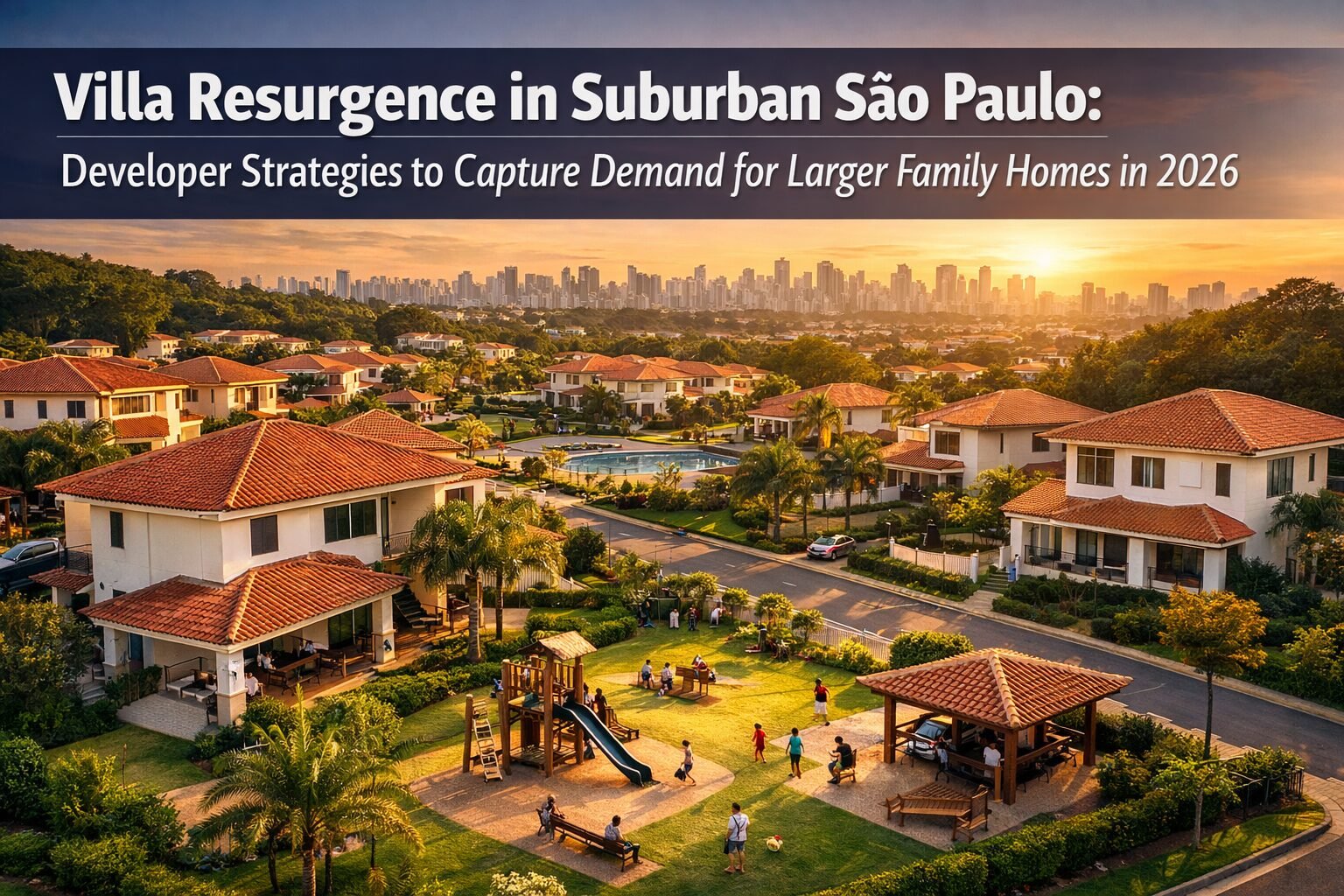
The Brazilian real estate landscape is experiencing a remarkable transformation. While apartment towers have long dominated São Paulo’s skyline, a powerful counter-trend is reshaping the metropolitan periphery: families are increasingly choosing spacious villas over compact urban units. The Villa Resurgence in Suburban São Paulo: Developer Strategies to Capture Demand for Larger Family Homes in 2026 represents more than a fleeting preference—it signals a fundamental shift in how Brazilian families envision their ideal living environment. 🏡
This movement toward suburban villa developments reflects post-pandemic priorities: dedicated home offices, private outdoor spaces, and room for multi-generational living. Developers who recognize and capitalize on this demand are deploying sophisticated strategies—from master-planned communities to innovative financing structures—to meet the needs of space-hungry buyers willing to trade urban convenience for suburban comfort.
Key Takeaways
- Villas are outpacing apartments in growth: The villa and landed house segment is projected to grow at 6.31% CAGR through 2031, compared to 5.33% for the overall residential market[2]
- Suburban affordability drives demand: Lower property prices in suburban areas combined with infrastructure improvements are attracting families seeking value and appreciation potential[1]
- Developer strategies focus on master planning: Phased developments, off-site construction methods, and gated communities are becoming standard approaches to capture suburban family demand[2]
- Post-pandemic priorities persist: Buyers in 2026 prioritize properties with home offices, green spaces, and enhanced amenities over sheer proximity to city centers[5]
- Financing improvements boost accessibility: Declining interest rates and innovative funding structures are making larger family homes more attainable for middle-class buyers[2]
Understanding the Villa Resurgence Phenomenon in São Paulo’s Suburbs
The Shift from Vertical to Horizontal Living
For decades, São Paulo’s real estate development followed a predictable pattern: high-density apartment buildings concentrated in urban centers. However, 2026 marks a decisive turning point. The Villa Resurgence in Suburban São Paulo: Developer Strategies to Capture Demand for Larger Family Homes in 2026 reflects a qualitative shift in buyer preferences rather than merely quantitative expansion.
What’s driving this change?
The pandemic permanently altered how families view their homes. No longer just a place to sleep, the modern home must accommodate:
- Remote work requirements with dedicated office spaces
- Educational needs for children studying at home
- Multi-generational living as extended families consolidate
- Wellness priorities including private gardens and outdoor areas
- Security concerns addressed through gated communities
These requirements are difficult to satisfy in traditional apartment formats, particularly at accessible price points. Suburban villas offer a compelling solution.
Market Data: Villas Outperforming Apartments
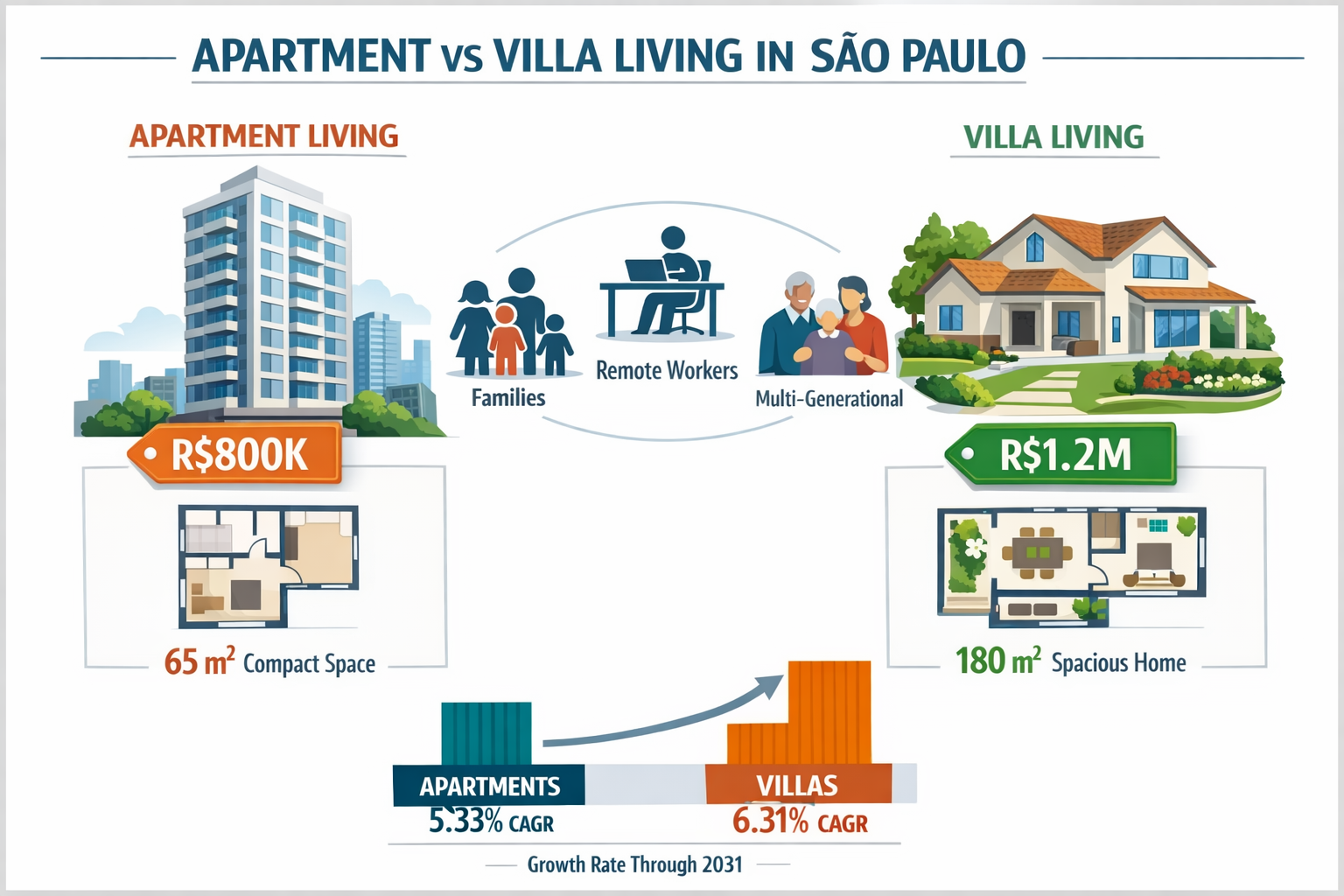
The numbers tell a clear story. Villas and landed houses are projected to grow at a 6.31% pace through 2031, significantly outpacing the overall residential market’s 5.33% growth rate[2]. This differential represents billions of reais in development opportunity for builders who can successfully execute suburban strategies.
| Property Type | CAGR 2026-2031 | Primary Buyer Demographic | Average Price Range |
|---|---|---|---|
| Urban Apartments | 5.33% | Young professionals, singles | R$400K – R$900K |
| Suburban Villas | 6.31% | Families, multi-generational | R$800K – R$2.5M |
| Gated Communities | 6.50%+ | Security-conscious families | R$1.2M – R$3.5M |
The suburban advantage becomes even clearer when examining affordability and appreciation potential. Properties in expanding suburban areas offer lower entry prices while benefiting from infrastructure improvements that drive long-term value[1]. This combination attracts both end-users seeking quality of life and investors pursuing capital appreciation.
Demographic Drivers Behind Villa Demand
Who exactly is fueling this suburban villa boom? The buyer profile is surprisingly diverse:
Primary Buyer Segments:
- Growing Families 👨👩👧👦 – Parents with 2-3 children seeking space for play, study, and growth
- Multi-Generational Households – Extended families consolidating to share caregiving and expenses
- Remote Workers 💼 – Professionals no longer tethered to central business districts
- Retirees Seeking Comfort – Empty-nesters trading urban apartments for peaceful suburban living
- Investors – Buyers recognizing the appreciation potential in well-planned suburban developments
Small apartments in central areas and gated-community houses in suburban rings are identified as the property types that will benefit most from these demographic trends[4]. Developers who understand these segments can tailor their offerings accordingly.
For those exploring broader real estate investment opportunities, the suburban villa segment represents a particularly promising avenue in 2026.
Developer Strategies for Capturing Suburban Villa Demand in 2026
Master-Planned Community Development
The most successful developers aren’t simply building houses—they’re creating complete lifestyle environments. Master-planned residential resort communities have emerged as the gold standard for suburban villa developments, particularly in areas like the São Paulo Coast (Guarujá) and metropolitan suburban rings[5].
Key Elements of Successful Master Planning:
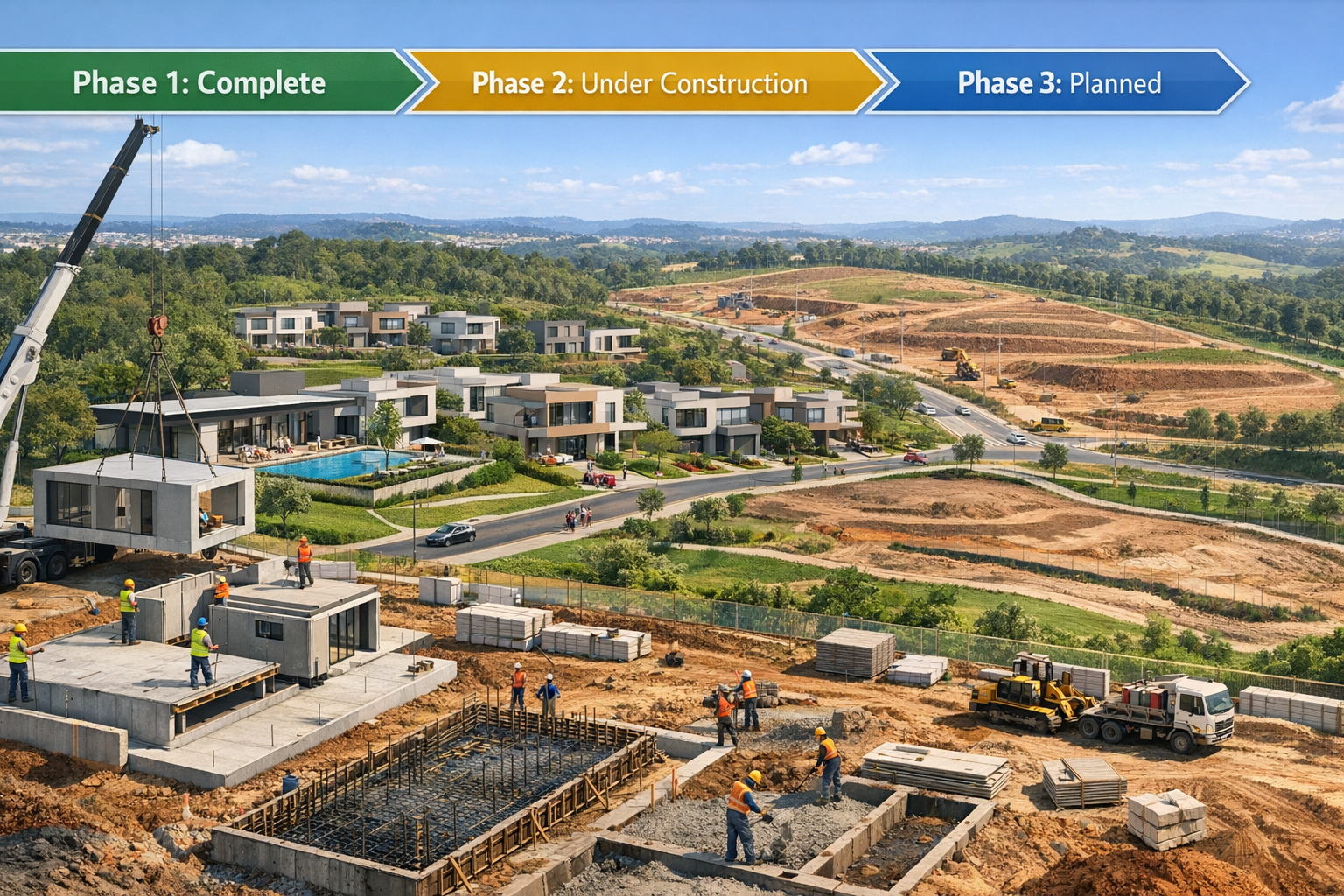
- Phased Development Approach 📊 – Rolling out sections sequentially to match absorption rates and manage capital deployment
- Integrated Amenities – Clubhouses, pools, sports courts, and parks included from Phase 1
- Commercial Components – Convenience retail, medical facilities, and services within the community
- Infrastructure First – Roads, utilities, fiber optic, and drainage completed before home construction
- Preserved Green Spaces – Environmental corridors and parks that enhance quality of life
- Security Integration – Perimeter walls, controlled access, and monitoring systems
This comprehensive approach addresses a critical challenge: ensuring infrastructure matches demand in suburban districts while preserving sensitive environmental areas[2]. Developers who cut corners on infrastructure face buyer resistance and regulatory obstacles.
The strategy also aligns with municipal planning frameworks that channel growth while protecting ecologically sensitive zones. By working within these frameworks rather than against them, developers accelerate approvals and reduce regulatory risk.
Off-Site Construction and Modular Building Methods
Traditional on-site construction faces significant challenges in suburban contexts: skilled labor shortages, weather delays, and quality control issues. Progressive developers are embracing off-site construction methods to overcome these obstacles[2].
Advantages of Off-Site Approaches:
✅ Faster Construction Timelines – Components manufactured simultaneously with site preparation
✅ Consistent Quality Control – Factory conditions ensure superior workmanship
✅ Reduced Weather Impact – Manufacturing continues regardless of site conditions
✅ Lower Labor Costs – Centralized production reduces skilled labor requirements
✅ Improved Safety – Factory environments are inherently safer than construction sites
✅ Environmental Benefits – Reduced waste and more efficient material usage
These methods are particularly effective for villa developments where design standardization across multiple units allows economies of scale while still permitting customization in finishes and layouts.
The approach also helps developers manage the capacity constraints at municipal review bodies that have extended approval cycles in fast-growing markets[2]. By demonstrating proven construction methodologies and predictable timelines, developers can expedite technical scrutiny.
Gated Community Positioning and Security Features
Security remains a paramount concern for Brazilian families. Gated-community houses in metro suburban rings are experiencing consistent demand precisely because they address this concern while offering the space advantages of suburban living[4].
Essential Security and Community Features:
🔒 Physical Security Infrastructure
- Perimeter walls (minimum 2.5m height)
- 24/7 manned guardhouses at entry points
- CCTV coverage of common areas and perimeters
- Vehicle and visitor registration systems
🏘️ Community Governance
- Homeowners association with clear bylaws
- Professional property management
- Maintenance fees covering security and amenities
- Architectural review boards maintaining aesthetic standards
🌳 Quality of Life Amenities
- Walking and cycling paths
- Children’s playgrounds and sports facilities
- Community centers for events and gatherings
- Landscaped common areas
This gated community model has proven particularly successful in suburban São Paulo, where it combines the space and privacy of detached housing with the security and amenities typically associated with high-end apartment complexes.
Developers can learn from successful projects in other Brazilian markets, such as those highlighted in discussions of Florianópolis market dynamics, where similar community-focused developments have thrived.
Cost Comparisons, Financing, and Zoning Adaptations
Villa vs. Apartment: The True Cost Analysis
The perception that villas are exclusively for wealthy buyers is outdated. When analyzed comprehensively, suburban villas offer compelling value propositions compared to urban apartments.
Comparative Cost Analysis (São Paulo Metropolitan Area, 2026):
| Factor | Urban 3BR Apartment | Suburban 3BR Villa | Advantage |
|---|---|---|---|
| Purchase Price | R$850,000 | R$1,200,000 | Apartment |
| Price per m² | R$10,625 (80m²) | R$6,667 (180m²) | Villa |
| Monthly Condo Fees | R$1,200 | R$350 | Villa |
| Property Tax (IPTU) | R$450/month | R$380/month | Villa |
| Parking Spaces | 1 included | 2+ included | Villa |
| Outdoor Space | Shared balcony | Private garden | Villa |
| 10-Year Total Cost | R$1,048,000 | R$1,287,600 | Apartment |
| Appreciation Potential | 5.33% CAGR | 6.31% CAGR | Villa |
When factoring in lower per-square-meter costs, reduced monthly fees, and superior appreciation rates[2], suburban villas often represent better long-term value despite higher initial prices.
The affordability equation improved significantly in 2026 as interest rates trended lower. Purchase affordability gains are expected to lift sales further, with structured partnerships and receivables-backed funding helping align construction timelines with sales schedules[2].
Innovative Financing Structures for Family Buyers
Developers aren’t leaving affordability to chance. Sophisticated financing strategies are making suburban villas accessible to middle-class families:
Developer-Facilitated Financing Options:
💰 Extended Payment Plans
- Construction-phase installments with minimal interest
- Balloon payment structures aligned with property delivery
- Trade-in programs accepting urban apartments as down payments
🏦 Partnership with Financial Institutions
- Pre-approved mortgage packages for qualified buyers
- Subsidized interest rates for initial years
- Government housing program integration (Casa Verde e Amarela)
📈 Receivables-Backed Funding
- Developers securitizing future receivables to reduce carrying costs
- Lower financing costs passed to buyers through competitive pricing
- Improved cash flow enabling faster construction schedules
These structures address a fundamental challenge: bridging the gap between buyer aspirations and immediate financial capacity. By offering flexible payment terms and creative financing, developers expand their addressable market significantly.
The approach mirrors successful strategies in other Brazilian markets, where buying during pre-construction phases offers buyers both payment flexibility and appreciation potential.
Zoning Adaptations and Regulatory Navigation
Suburban villa development requires navigating complex zoning and regulatory frameworks. Successful developers in 2026 are proactively engaging with municipal authorities to facilitate appropriate zoning adaptations.
Key Regulatory Considerations:
📋 Zoning Classifications
- Residential-1 (R1) zones permitting single-family detached homes
- Mixed-use suburban zones allowing commercial integration
- Planned Unit Development (PUD) designations for master-planned communities
- Environmental overlay zones requiring preservation of green corridors
🏗️ Approval Process Optimization
- Early consultation with planning departments
- Environmental impact assessments completed proactively
- Infrastructure commitment agreements demonstrating capacity
- Community engagement to address neighbor concerns
⚖️ Regulatory Challenges
- Extended approval cycles due to capacity constraints at municipal review bodies[2]
- Increased technical scrutiny in São Paulo raising carrying costs on land
- Environmental protection requirements in suburban expansion areas
- Infrastructure adequacy demonstrations for water, sewage, and traffic
The developers succeeding in this environment are those with strong balance sheets capable of absorbing extended carrying costs and expertise in regulatory navigation. This creates a natural advantage for established players and well-capitalized firms.
Understanding these dynamics is crucial for anyone exploring real estate development opportunities in Brazil’s evolving suburban markets.
Market Outlook and Future Opportunities
Infrastructure Expansion Driving Suburban Growth
The Villa Resurgence in Suburban São Paulo: Developer Strategies to Capture Demand for Larger Family Homes in 2026 is fundamentally enabled by infrastructure improvements. Suburban areas are becoming more attractive due to affordable property prices and potential for appreciation, with expanding infrastructure and amenities enhancing their appeal[1].
Critical Infrastructure Developments:
🚇 Transportation Improvements
- Metro line extensions reaching suburban municipalities
- Bus rapid transit (BRT) corridors connecting suburbs to employment centers
- Highway expansions reducing commute times
- Cycling infrastructure supporting active transportation
💡 Utility and Service Expansion
- Fiber optic internet reaching suburban areas
- Upgraded electrical grid capacity
- Modern water and sewage treatment facilities
- Natural gas distribution networks
🏥 Social Infrastructure
- New schools and educational facilities
- Healthcare clinics and hospitals
- Shopping centers and entertainment venues
- Parks and recreational facilities
These improvements transform suburban areas from bedroom communities into complete living environments where families can work, learn, shop, and play without constant trips to urban centers.
Competitive Landscape and Market Positioning
The suburban villa market is attracting diverse developer types, each with distinct competitive advantages:
Developer Categories:
- Large National Developers – Leverage scale, brand recognition, and financing capacity
- Regional Specialists – Deep local knowledge and municipal relationships
- Boutique Luxury Developers – High-end custom communities with premium positioning
- Land Bankers Transitioning – Converting agricultural holdings to residential use
The market is large enough to accommodate multiple players, but success requires clear differentiation. Developers must choose their positioning carefully:
- Value-focused – Maximizing affordability through efficient design and construction
- Amenity-rich – Competing on lifestyle features and community facilities
- Location-premium – Emphasizing proximity to infrastructure and services
- Sustainability-oriented – Green building practices and environmental stewardship
Those tracking market performance indicators can identify which positioning strategies are resonating most strongly with buyers.
Sustainability and Long-Term Value Creation
Forward-thinking developers are integrating sustainability not as a marketing afterthought but as a core value proposition. Environmentally conscious design delivers tangible benefits:
Sustainability Features Buyers Value:
🌱 Energy Efficiency
- Solar panel pre-installation or inclusion
- High-performance insulation and windows
- LED lighting and energy-efficient appliances
- Smart home systems optimizing consumption
💧 Water Management
- Rainwater harvesting for irrigation
- Low-flow fixtures and appliances
- Native landscaping requiring minimal watering
- Permeable paving reducing runoff
♻️ Environmental Integration
- Preserved natural areas within developments
- Native plant landscaping supporting biodiversity
- Walking trails and outdoor recreation spaces
- Community gardens and green spaces
These features not only reduce operating costs for homeowners but also enhance long-term property values as environmental consciousness grows among Brazilian buyers.
The approach aligns with broader trends in quality of life-focused development that prioritize sustainable, livable communities over purely profit-maximized density.
Conclusion: Capitalizing on the Villa Opportunity
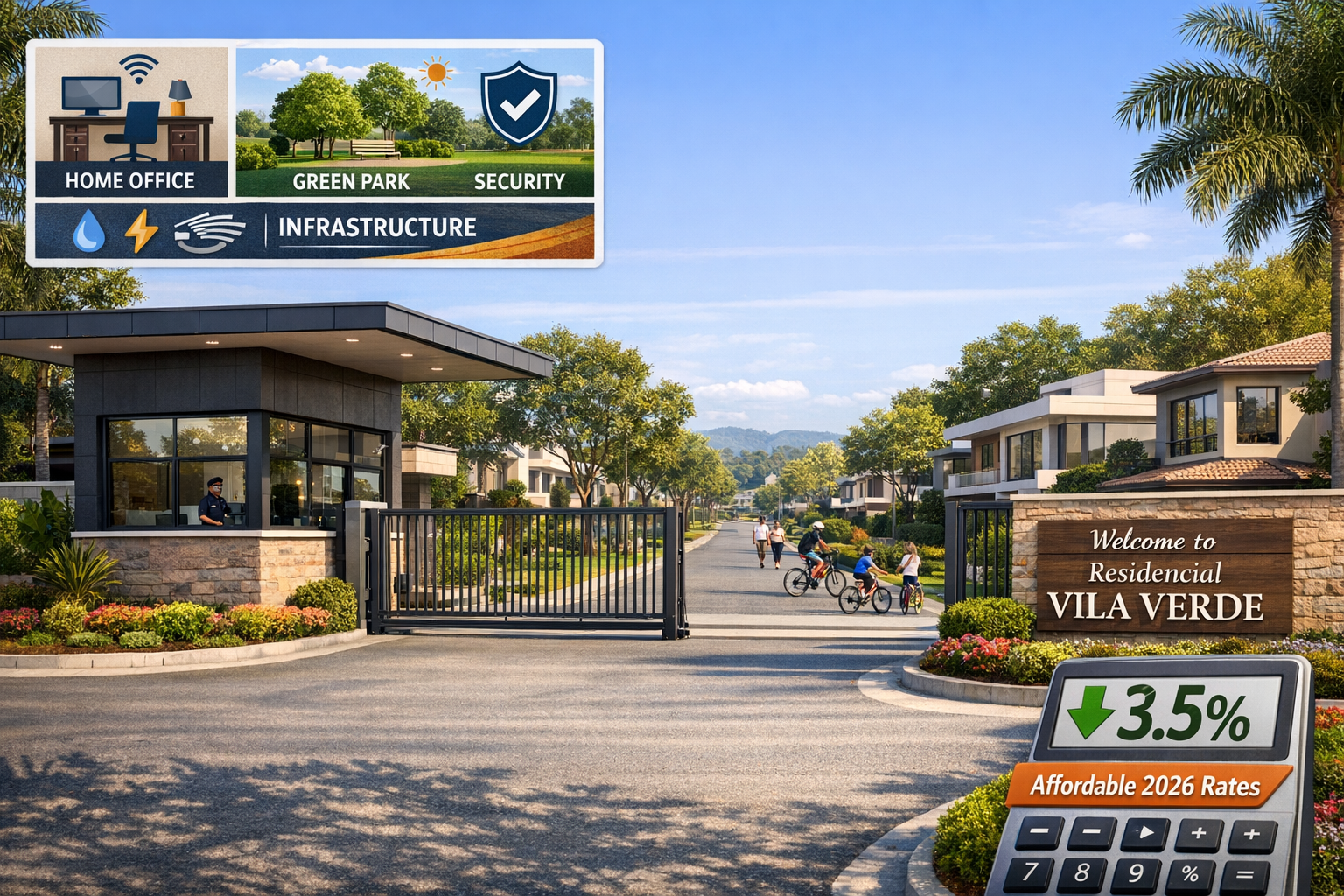
The Villa Resurgence in Suburban São Paulo: Developer Strategies to Capture Demand for Larger Family Homes in 2026 represents a generational opportunity for developers who can execute effectively. The fundamentals are compelling: accelerating growth rates (6.31% CAGR for villas vs. 5.33% overall)[2], improving affordability through lower interest rates, and persistent post-pandemic preferences for space and amenities[5].
Success in this market requires more than simply building houses in suburban locations. The winning formula combines:
✅ Strategic master planning with phased development and integrated amenities
✅ Innovative construction methods including off-site and modular approaches
✅ Comprehensive security through gated community formats
✅ Creative financing structures making villas accessible to middle-class families
✅ Proactive regulatory engagement navigating zoning and approval processes
✅ Sustainability integration delivering long-term value and operational efficiency
Developers who master these elements will capture disproportionate market share as Brazilian families continue their migration toward suburban villa living.
Actionable Next Steps
For Developers:
- Conduct detailed market analysis of specific suburban corridors with infrastructure investment
- Secure land positions in areas with favorable zoning and development potential
- Build relationships with municipal planning authorities to streamline approvals
- Develop financing partnerships enabling competitive buyer terms
- Create differentiated community concepts aligned with target buyer segments
For Investors:
- Evaluate suburban villa developments based on infrastructure proximity and master planning quality
- Consider pre-construction purchases to maximize appreciation potential
- Assess developer track records and financial stability before committing
- Factor total cost of ownership, not just purchase price, in investment decisions
For Homebuyers:
- Compare total 10-year costs between urban apartments and suburban villas
- Prioritize developments with completed infrastructure and established amenities
- Investigate financing options including developer payment plans and government programs
- Visit completed phases to assess build quality and community atmosphere
The suburban villa market in São Paulo is not a temporary phenomenon but a structural shift in how Brazilian families choose to live. Those who recognize and act on this transformation will benefit from years of sustained growth and opportunity.
For the latest insights on Brazilian real estate developments and market trends, explore our comprehensive news and analysis.
References
[1] Brazil Real Estate Market – https://thelatinvestor.com/blogs/news/brazil-real-estate-market
[2] Residential Real Estate Market In Brazil – https://www.mordorintelligence.com/industry-reports/residential-real-estate-market-in-brazil
[4] Brazil Price Forecasts – https://thelatinvestor.com/blogs/news/brazil-price-forecasts
[5] Brazil Property Market Predictions For 2026 – https://esalesinternational.com/2025/11/20/brazil-property-market-predictions-for-2026/