
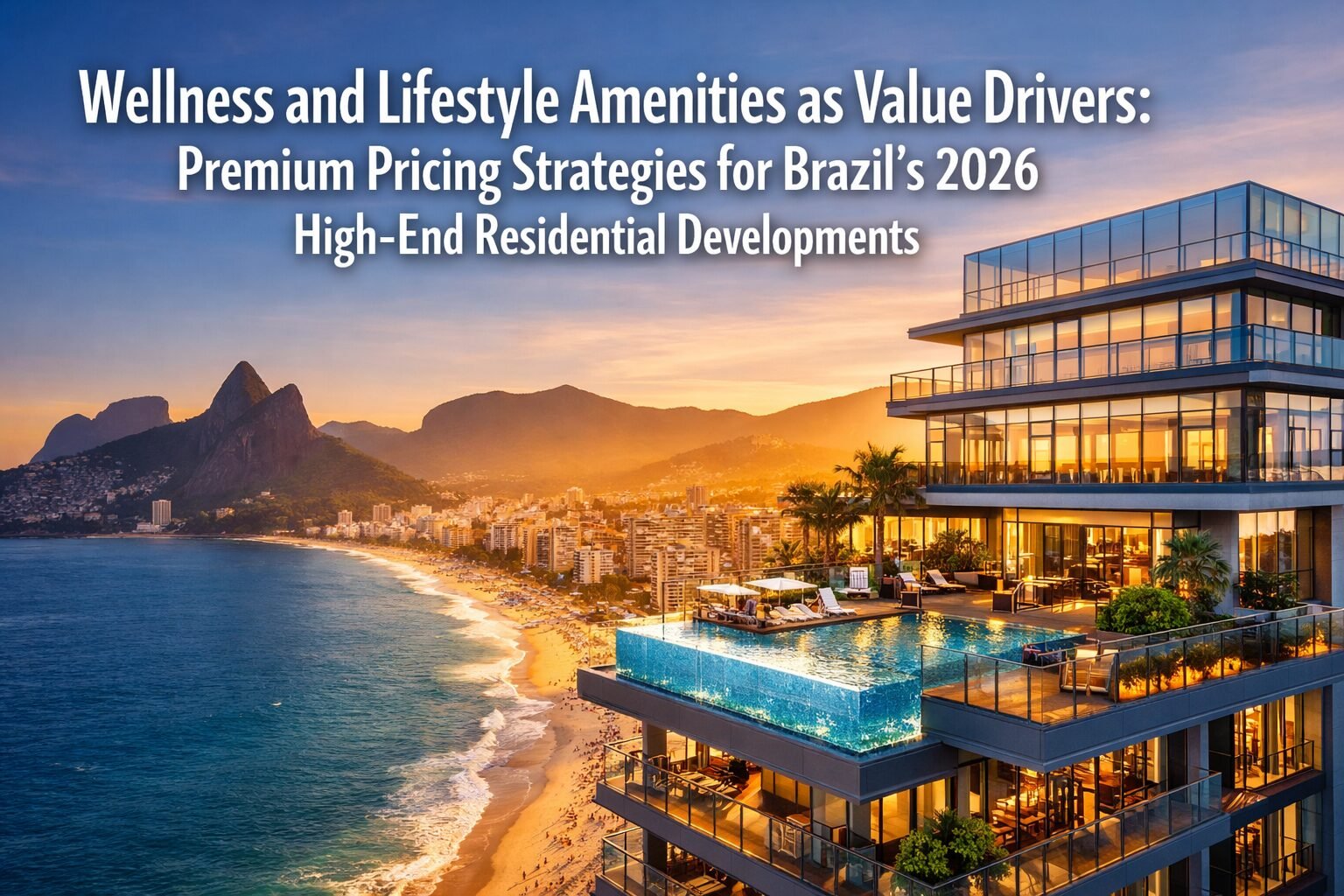
Brazil’s luxury residential market has undergone a fundamental transformation. In 2026, wealthy buyers no longer view swimming pools and fitness centers as premium features—they expect them as baseline standards. The real question facing developers today: how can strategic amenity investment justify price premiums of 10-25% when location alone no longer guarantees differentiation? The answer lies in creating integrated wellness ecosystems and lifestyle experiences that transcend traditional luxury offerings.
Post-pandemic buyer priorities have shifted dramatically. Today’s high-net-worth individuals seek properties that function as comprehensive wellness destinations, complete with health certifications, cutting-edge technology integration, and curated lifestyle services. This evolution presents both challenges and opportunities for developers navigating Brazil’s competitive luxury property market.
Key Takeaways
- Branded residences achieve 31% value uplift over non-branded properties through hospitality partnerships and comprehensive service ecosystems[4]
- Baseline luxury amenities (24/7 security, concierge, smart-home systems, rooftop pools) now represent minimum expectations rather than differentiators in Rio’s premium market[1]
- Integrated wellness complexes featuring spa facilities, tennis courts, and dedicated health spaces command measurable premium pricing in São Paulo’s competitive landscape[4]
- Mixed-use lifestyle ecosystems combining residential, retail, entertainment, and wellness facilities attract international buyers seeking comprehensive urban experiences[3]
- Sustainability certifications and smart technology have transitioned from luxury add-ons to essential features driving value in 2026 developments[2]
Understanding the 2026 Brazilian Luxury Residential Landscape
The Evolution of Premium Expectations
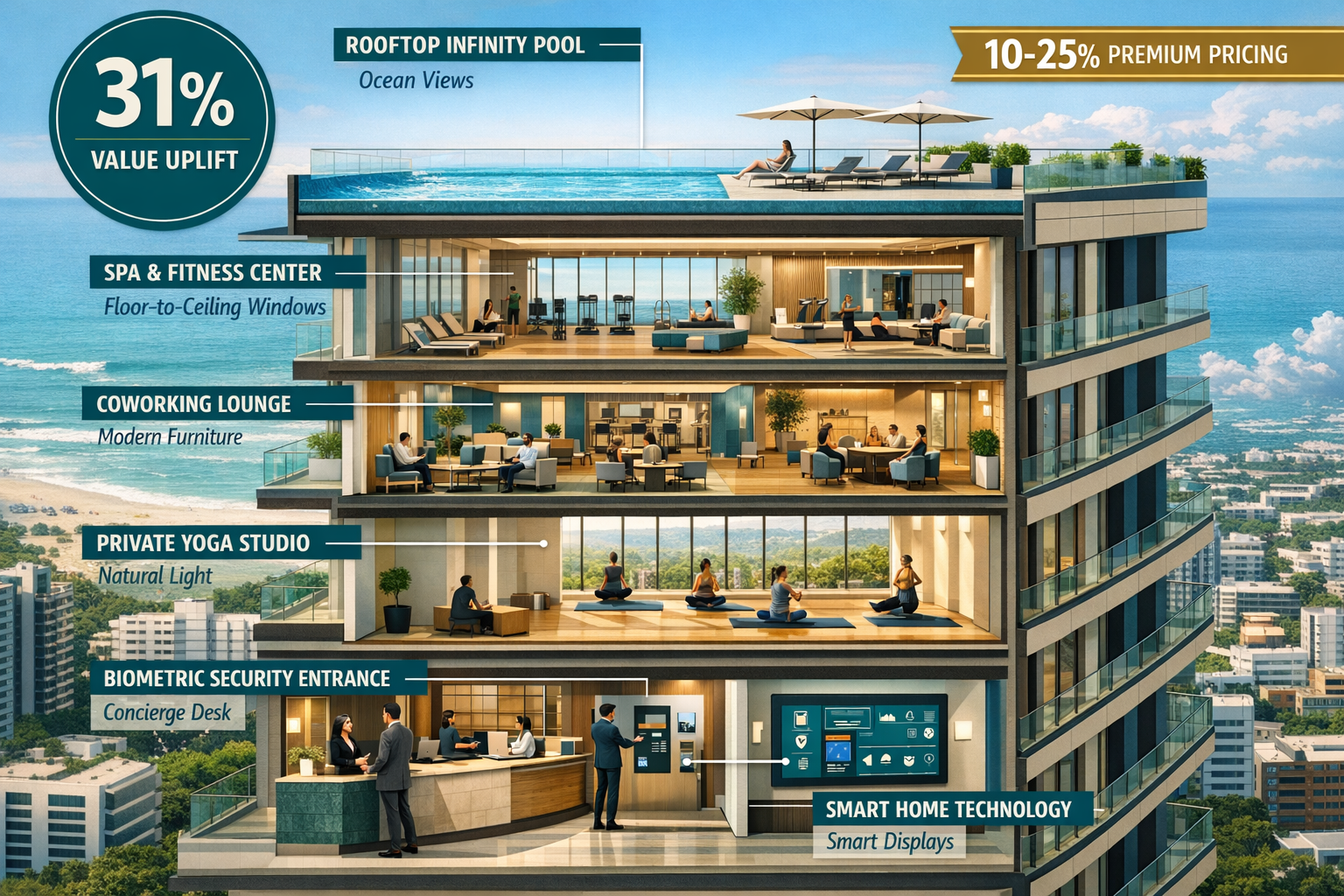
The Brazilian luxury residential sector has experienced a remarkable recalibration of buyer expectations. What constituted “luxury” in 2020 now represents the minimum standard for high-end developments in 2026. Properties in Rio de Janeiro’s premium neighborhoods like Leblon, Ipanema, and Barra da Tijuca now feature 24/7 professional security with biometric access, concierge services, high-speed elevators, complete leisure areas including gyms and saunas, rooftop infinity pools, smart-home systems, and expansive terraces with ocean or lagoon views as baseline offerings[1].
This standardization creates a critical challenge for developers: how to differentiate properties when traditional luxury features have become commoditized? The solution lies in moving beyond individual amenities toward comprehensive lifestyle ecosystems that address holistic wellness, community building, and personalized service delivery.
Geographic Hotspots and Market Dynamics
Brazil’s luxury residential market concentrates in specific urban centers, each with distinct characteristics:
Rio de Janeiro maintains its position as Brazil’s luxury capital, with Leblon commanding the highest per-square-meter prices in the country through exclusive amenities like private pools on penthouse terraces, five-star services, and maximum privacy[1]. Meanwhile, Barra da Tijuca has emerged as the new luxury hub, featuring large gated communities with Olympic pools, tennis courts, spas, coworking spaces, and direct beach access[1].
São Paulo leads in branded residence development, with international hospitality and fashion brands establishing significant portfolios. The city’s proximity to business districts like Avenida Paulista and Avenida Faria Lima makes it attractive to executives and international investors seeking both luxury and convenience[4].
These geographic concentrations reflect a broader trend: location remains important, but amenity sophistication increasingly determines premium pricing power. Developers can no longer rely solely on prestigious addresses to justify elevated price points.
Wellness and Lifestyle Amenities as Value Drivers: Premium Pricing Strategies for Brazil’s 2026 High-End Residential Developments—The Core Components
Branded Residence Partnerships: The 31% Value Premium
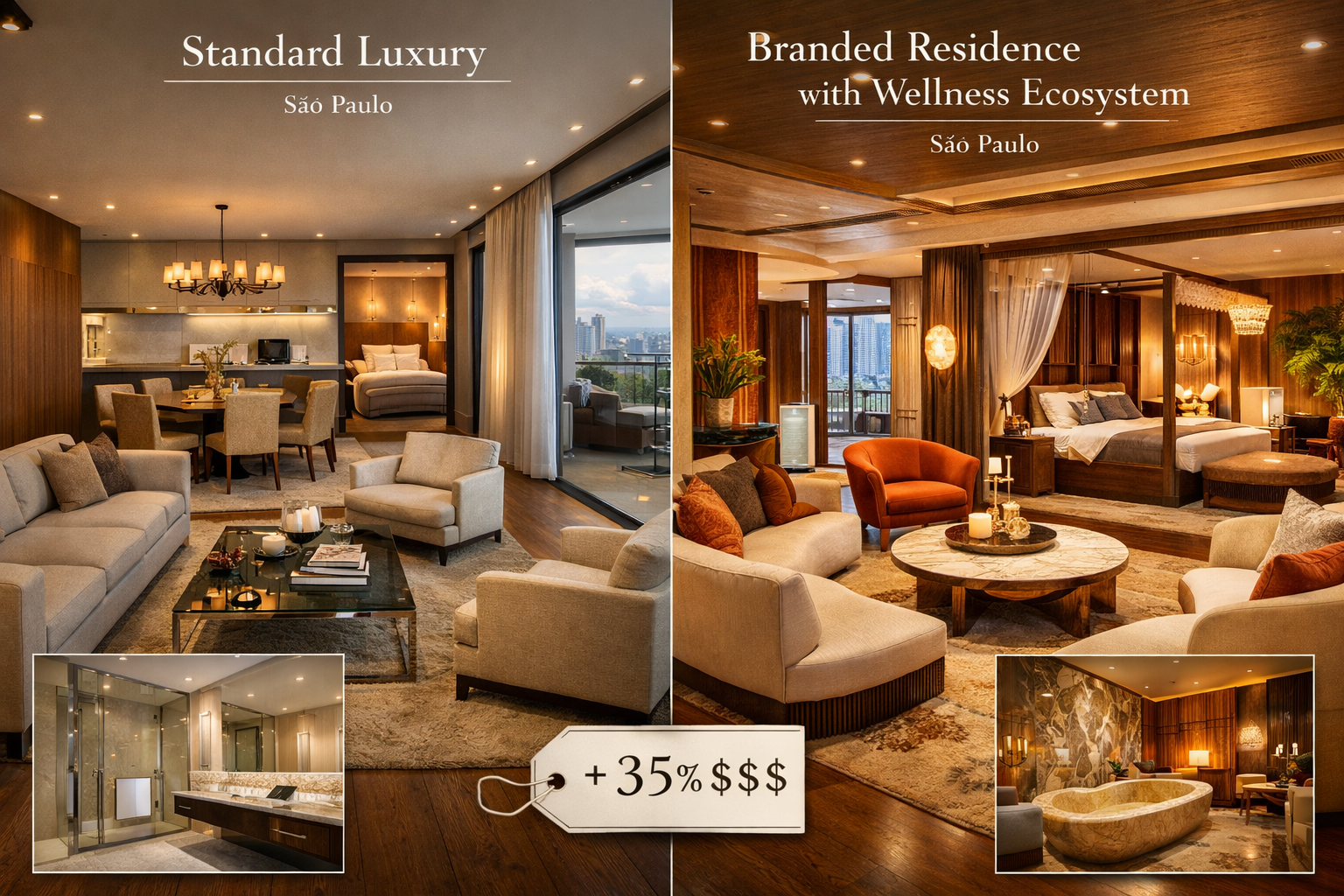
The most compelling evidence for wellness and lifestyle amenities as value drivers comes from branded residence performance data. YOO-designed branded residences in São Paulo achieve a remarkable 31% value uplift over comparable non-branded properties[4]. This premium reflects the comprehensive service ecosystems, design excellence, and hospitality-grade amenities that branded partnerships deliver.
Several major projects exemplify this strategy:
Rosewood Residences São Paulo, designed by Jean Nouvel with interiors by Philippe Starck, offers 100 residences up to 6,458 square feet with concierge services, housekeeping, dining services, and cultural spaces positioned near Avenida Paulista[4]. The integration of hotel-quality services with residential living creates a seamless lifestyle experience that justifies significant price premiums.
Faena São Paulo Residences features two tennis courts, two 25-meter swimming pools, and integrated wellness areas within a 20,000 m² development located 300 meters from Avenida Faria Lima. The project combines luxury residential apartments (286–1,024 m²) with hotel and art center components, creating a cultural and wellness destination rather than merely a residence[4].
Saffire Residences, Elie Saab’s first South American project in São Paulo’s Moema neighborhood, spans 7,500 m² with terraces and interiors featuring Elie Saab Maison Collection furnishings, scheduled for completion in 2026[4]. This fashion-luxury partnership demonstrates how brand equity translates directly into residential value.
These branded developments succeed because they offer more than physical amenities—they provide access to exclusive ecosystems, personalized services, and the prestige associated with globally recognized hospitality and lifestyle brands.
Comprehensive Wellness Infrastructure
Modern luxury buyers in 2026 expect properties to function as wellness sanctuaries. This requires infrastructure that extends far beyond traditional gym facilities:
🏊 Resort-Style Aquatic Facilities: Multiple swimming pools including lap pools, infinity pools with panoramic views, and temperature-controlled pools for year-round use
🧘 Dedicated Wellness Centers: Professional-grade spa facilities with treatment rooms, saunas, steam rooms, and meditation spaces designed for daily use
🎾 Sports Complexes: Tennis courts, padel courts, and multi-sport areas that facilitate both individual exercise and community building
💪 Advanced Fitness Centers: Equipment that rivals premium gym memberships, including personal training spaces, group fitness studios, and specialized areas for yoga, Pilates, and functional training
🌿 Biophilic Design Elements: Integration of nature through green walls, rooftop gardens, and landscaped terraces that support mental health and stress reduction
These comprehensive wellness offerings address the post-pandemic recognition that home must support holistic health. Developers who invest strategically in these facilities can justify premium pricing by demonstrating measurable lifestyle value that extends beyond square footage.
Technology Integration and Smart Living
Smart-home technology has transitioned from luxury feature to baseline expectation in Brazil’s 2026 high-end market[1]. However, true differentiation comes from comprehensive technology ecosystems that integrate:
Building Management Systems: Centralized control of lighting, climate, security, and entertainment through intuitive interfaces and mobile applications
Health Monitoring Integration: Air quality sensors, water purification systems, and circadian lighting that actively support resident wellness
Energy Efficiency: Solar panels, water reuse systems, and infrastructure for electric vehicle charging that reduce operating costs while supporting sustainability goals[2]
Connectivity Infrastructure: High-speed internet throughout common areas, coworking spaces equipped with enterprise-grade technology, and seamless connectivity that supports remote work
The most successful developments in Brazil’s evolving real estate market treat technology as an invisible enabler of lifestyle rather than a visible feature, creating environments that anticipate resident needs through intelligent automation.
Mixed-Use Lifestyle Ecosystems
A significant trend in Brazil’s 2026 luxury market involves mixed-use developments that combine residential, commercial, and entertainment functions. New mega-structure developments include planned amenities such as racetracks, wellness centers, and tennis courts, plus public-facing shops, restaurants, and entertainment facilities[3].
This approach offers several advantages:
✅ Convenience: Residents access dining, shopping, and entertainment without leaving the development
✅ Community: Shared spaces and activities facilitate social connections among residents
✅ Investment Value: Mixed-use properties often demonstrate stronger appreciation due to diversified revenue streams and enhanced desirability
✅ Urban Integration: Rather than creating isolated luxury enclaves, these developments contribute to neighborhood vitality
The mixed-use model represents a sophisticated understanding that luxury buyers seek integrated urban experiences rather than isolated residential towers. Developers who successfully execute this vision can command premium pricing through the comprehensive lifestyle value they deliver.
Premium Pricing Strategies: Justifying the 10-25% Value Premium
Strategic Amenity Investment Framework
Achieving premium pricing through wellness and lifestyle amenities requires strategic investment decisions rather than simply adding features. Successful developers in 2026 follow a disciplined framework:
1. Market Segmentation Analysis
Identify the specific buyer persona and their lifestyle priorities. International buyers from the United States, Europe, and the Middle East prioritize different amenities than domestic Brazilian buyers. Understanding these preferences allows targeted amenity investment that resonates with the intended market.
2. Competitive Differentiation Assessment
Analyze competing developments to identify amenity gaps and opportunities for differentiation. In saturated markets like Florianópolis’s growing regions, unique wellness offerings can provide decisive competitive advantages.
3. Cost-Benefit Optimization
Calculate the investment required for each amenity category against the pricing premium it enables. Branded partnerships, for example, require significant upfront investment but deliver documented 31% value uplift[4], representing strong return on investment.
4. Operational Sustainability Planning
Consider ongoing maintenance costs and operational complexity. Amenities that require specialized staff or expensive maintenance may erode profitability unless pricing adequately reflects these ongoing costs.
Pricing Architecture for Premium Developments
Translating amenity investment into pricing requires sophisticated approaches:
Tiered Pricing Models: Offer different unit types with varying access to premium amenities. Penthouses with private pools and exclusive services command maximum premiums, while standard units benefit from shared facilities at moderate price points.
Service Package Integration: Bundle certain amenities (concierge services, housekeeping, dining) as optional packages that allow buyers to customize their lifestyle investment while providing developers with recurring revenue streams.
Pre-Launch Premium Positioning: Market comprehensive amenity packages during pre-construction phases to establish premium positioning early. Buyers who purchase off-plan developments often accept higher prices when they understand the complete lifestyle vision.
Comparative Value Demonstration: Provide detailed analyses showing how integrated amenities eliminate external costs (gym memberships, spa treatments, coworking space rentals) to justify premium pricing through comprehensive value.
Marketing Wellness and Lifestyle Value
Effective marketing translates amenity features into lifestyle benefits:
| Amenity Feature | Lifestyle Benefit | Marketing Message |
|---|---|---|
| 25-meter lap pool | Daily wellness routine | “Start every morning with an Olympic-quality swim overlooking Ipanema” |
| Branded hospitality services | Time savings and convenience | “Experience five-star hotel service in your own home” |
| Coworking spaces | Work-life integration | “Commute 30 seconds to your private office with ocean views” |
| Spa and wellness center | Stress management | “Transform your home into a personal wellness retreat” |
| Mixed-use retail | Urban convenience | “Everything you need within your private neighborhood” |
This benefit-focused messaging helps buyers understand why premium pricing reflects genuine lifestyle value rather than simply higher construction costs.
Wellness and Lifestyle Amenities as Value Drivers: Regional Implementation Strategies
Rio de Janeiro: Leveraging Natural Assets
Rio’s luxury market benefits from extraordinary natural settings—ocean, mountains, lagoons—that provide inherent lifestyle value. Successful premium pricing strategies in Rio integrate natural assets with constructed amenities:
Developments in Barra da Tijuca maximize beach access while providing resort-style amenities that enhance rather than compete with natural surroundings[1]. Properties in Leblon and Ipanema emphasize privacy, exclusivity, and personalized services that complement the prestigious location[1].
The key insight: in markets with strong natural advantages, amenities should amplify existing lifestyle benefits rather than attempting to create entirely new value propositions.
São Paulo: Creating Urban Sanctuaries
São Paulo’s luxury market faces different challenges—urban density, traffic congestion, and limited natural amenities. Here, premium pricing depends on creating comprehensive urban sanctuaries that provide escape from city pressures:
Developments near Avenida Paulista and Avenida Faria Lima succeed by offering extensive green spaces, wellness facilities, and quiet zones that contrast with the surrounding urban intensity[4]. The integration of cultural spaces, art galleries, and curated community programming adds intellectual and social dimensions to the lifestyle offering.
In dense urban markets, amenities must provide refuge and enrichment that residents cannot easily access elsewhere, justifying premium pricing through scarcity value.
Emerging Markets: Establishing New Standards
Emerging luxury markets in Brazil, including coastal developments and secondary cities, present opportunities to establish new standards rather than competing with established luxury neighborhoods. Developers in these markets can achieve premium pricing by:
- Introducing wellness certifications and sustainability features ahead of market expectations
- Creating comprehensive lifestyle ecosystems that eliminate the need for external services
- Partnering with recognized brands to establish immediate credibility and prestige
- Emphasizing quality-of-life advantages (less congestion, natural settings, community focus) that justify location choices
For developers exploring investment opportunities across Brazil, these emerging markets often offer better margins when premium positioning is established early in market development.
Sustainability and Wellness: The Inseparable Connection
Modern luxury buyers increasingly recognize that personal wellness and environmental sustainability are interconnected. Developments that integrate both dimensions command premium pricing through comprehensive value propositions:
Green Building Certifications: LEED, AQUA, or similar certifications that verify environmental performance and health-focused design
Active Sustainability Features: Solar panels, rainwater harvesting, water reuse systems, and electric vehicle infrastructure that reduce operating costs while supporting environmental goals[2]
Biophilic Design: Extensive landscaping, green walls, rooftop gardens, and natural materials that improve air quality and mental health
Health-Focused Materials: Low-VOC finishes, non-toxic materials, and advanced air filtration systems that create healthier indoor environments
These sustainability features appeal to buyer values while delivering tangible benefits—lower utility costs, healthier living environments, and stronger long-term value retention. Developers who authentically integrate sustainability with wellness positioning can justify significant premium pricing while attracting environmentally conscious luxury buyers.
Implementation Challenges and Solutions
Capital Investment Requirements
Comprehensive wellness and lifestyle amenities require substantial upfront investment. Developers must balance amenity sophistication against project economics:
Solution: Phased amenity development that prioritizes high-impact features in initial phases while planning future additions as the project matures and generates cash flow.
Solution: Strategic partnerships with wellness brands, fitness operators, or hospitality companies that share development costs in exchange for operational rights or revenue sharing arrangements.
Operational Complexity
Sophisticated amenities require professional management, specialized staff, and ongoing maintenance that increase operational costs:
Solution: Establish professional property management structures from project inception, with clear governance models and adequate reserve funds for maintenance and upgrades.
Solution: Implement technology systems that reduce staffing requirements through automation while maintaining service quality.
Market Education
Buyers may not immediately understand the value of comprehensive wellness ecosystems, particularly in markets where such offerings are novel:
Solution: Develop detailed marketing materials that translate amenity features into lifestyle benefits and financial value (cost savings from eliminated external services).
Solution: Create experiential marketing opportunities—model units, amenity showcases, and lifestyle demonstrations that allow buyers to experience the value proposition directly.
Competitive Response
As wellness amenities become more common, maintaining differentiation requires continuous innovation:
Solution: Focus on service quality and operational excellence rather than simply amenity quantity. Exceptional execution of standard amenities often provides better differentiation than mediocre execution of unique features.
Solution: Establish ongoing innovation pipelines that introduce new wellness technologies, services, and programming to maintain competitive advantages over time.
Future Trends: Wellness and Lifestyle Amenities Beyond 2026
Looking beyond 2026, several emerging trends will shape premium pricing strategies in Brazil’s luxury residential market:
🔮 Personalized Wellness Technology: Integration of health monitoring, genetic testing, and personalized wellness programming that transforms developments into proactive health management platforms
🔮 Community-Centric Programming: Curated social events, educational workshops, and shared experiences that transform developments from collections of individual units into genuine communities
🔮 Flexible Space Design: Adaptable amenity spaces that evolve with resident needs, supporting remote work, creative pursuits, and changing lifestyle priorities
🔮 Wellness Certification Programs: Third-party verification of health-focused design through programs like WELL Building Standard that provide objective validation of wellness claims
🔮 Integrated Healthcare Services: On-site medical facilities, telemedicine capabilities, and partnerships with healthcare providers that position developments as comprehensive health ecosystems
Developers who anticipate these trends and begin integration now will establish competitive advantages that support premium pricing for years to come.
Conclusion
Wellness and lifestyle amenities as value drivers represent far more than marketing rhetoric in Brazil’s 2026 high-end residential developments—they constitute a fundamental shift in how luxury properties create and capture value. The evidence is compelling: branded residences achieve 31% value uplift through comprehensive service ecosystems[4], while strategic amenity investment enables 10-25% premium pricing even in competitive markets.
Success requires moving beyond amenity checklists toward integrated lifestyle ecosystems that address holistic wellness, community building, technological sophistication, and environmental sustainability. Developers who understand this distinction can justify significant price premiums by delivering measurable lifestyle value that transcends location and square footage.
The baseline has risen dramatically—24/7 security, concierge services, smart-home systems, and resort-style pools now represent minimum expectations rather than differentiators[1]. True premium positioning in 2026 demands comprehensive wellness infrastructure, branded partnerships, mixed-use integration, and operational excellence that creates genuine lifestyle transformation.
Actionable Next Steps
For developers seeking to implement premium pricing strategies through wellness and lifestyle amenities:
Conduct detailed buyer persona research to understand the specific wellness priorities and lifestyle expectations of your target market
Analyze competitive amenity offerings to identify differentiation opportunities that justify premium positioning
Develop comprehensive financial models that account for both amenity investment costs and the pricing premiums they enable
Establish strategic partnerships with wellness brands, hospitality operators, or lifestyle companies that can enhance credibility and operational capabilities
Create benefit-focused marketing materials that translate amenity features into tangible lifestyle improvements and financial value
Plan for operational excellence through professional management structures, adequate maintenance reserves, and continuous innovation
Consider sustainability integration as an inseparable component of wellness positioning that appeals to buyer values while delivering tangible benefits
The Brazilian luxury residential market in 2026 rewards developers who understand that wellness and lifestyle amenities are not simply features to be added—they are comprehensive value propositions that justify premium pricing through authentic lifestyle transformation. Those who execute this vision strategically will capture significant value while setting new standards for luxury living.
For developers ready to explore these strategies in Brazil’s most promising markets, connecting with experienced development partners can provide valuable insights into regional opportunities and implementation approaches.
References
[1] Luxury Condominiums In Rio De Janeiro A 2026 Market Outlook For High End Buyers – https://www.oabitat.com/en/luxury-condominiums-in-rio-de-janeiro-a-2026-market-outlook-for-high-end-buyers/
[2] Apartment Real+estate Properties+for+sale Brazil – https://properties.lefigaro.com/announces/apartment-real+estate-properties+for+sale-brazil/?option=contemporain
[3] New Brazilian Development Aims To Be The Worlds Tallest Multifamily Tower – https://www.naiemoryhill.com/new-brazilian-development-aims-to-be-the-worlds-tallest-multifamily-tower/
[4] Branded Residences In Sao Paulo – https://brandedresi.com/branded-residences-in-sao-paulo/