
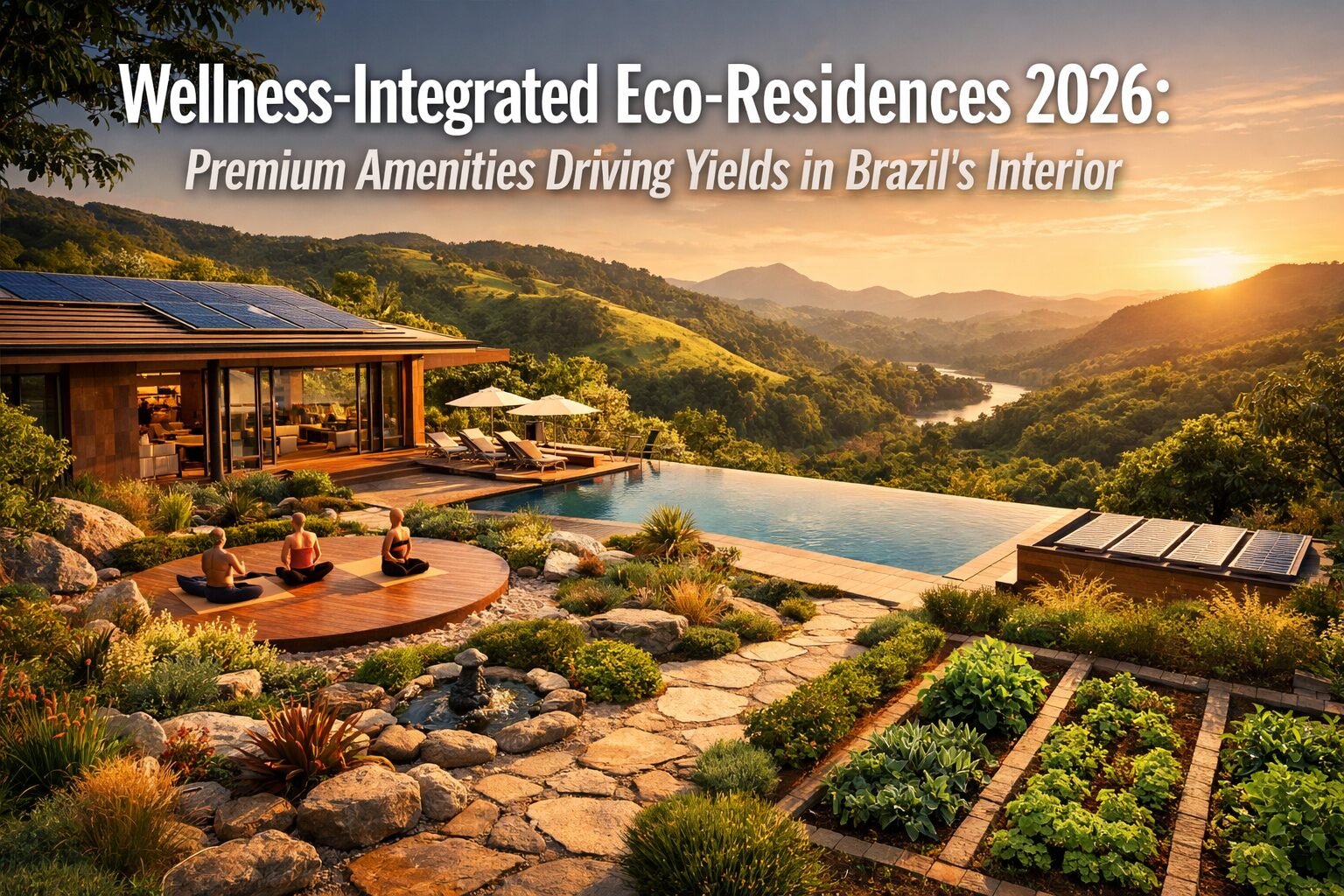
Brazil’s interior regions are experiencing a 22% surge in eco-residential investment as international wellness tourists seek authentic, sustainable retreats beyond traditional coastal destinations. This shift is redefining where and how developers are building premium properties in 2026.
The convergence of wellness tourism, sustainability premiums, and short-term rental demand has created a unique opportunity in Brazil’s non-coastal interior regions. Wellness-Integrated Eco-Residences 2026: Premium Amenities Driving Yields in Brazil’s Interior represents a fundamental transformation in how investors approach Brazilian real estate, moving beyond traditional beach properties to capitalize on growing demand for holistic wellness experiences in natural settings.
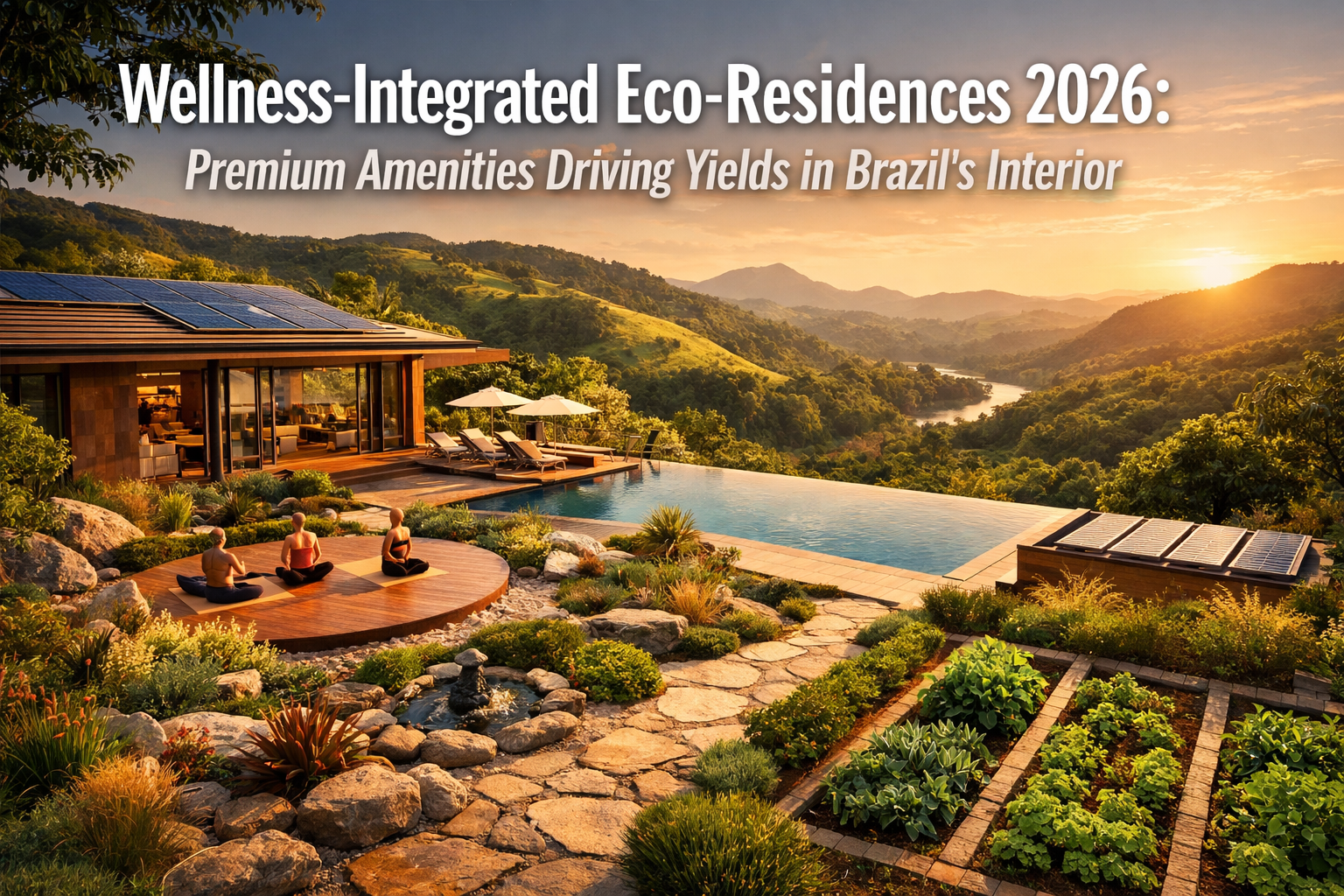
Key Takeaways
- Wellness eco-residences in Brazil’s interior are generating 12-15% rental yields, outperforming traditional urban properties by 3-5 percentage points
- International wellness tourists are driving 65% of short-term rental bookings at premium eco-properties in interior regions
- Sustainability features command 18-25% price premiums and attract environmentally conscious guests willing to pay higher nightly rates
- Strategic interior locations in Minas Gerais, Goiás, and São Paulo’s countryside offer lower land costs with higher appreciation potential
- Premium wellness amenities (yoga studios, meditation spaces, organic gardens) increase occupancy rates by 30-40% compared to standard properties
Understanding the Wellness-Integrated Eco-Residence Market in Brazil’s Interior
The Brazilian real estate landscape is undergoing a significant transformation in 2026. While coastal cities have traditionally dominated investment portfolios, interior regions are emerging as hotspots for a new type of development that combines ecological sustainability with comprehensive wellness amenities.
What Defines Wellness-Integrated Eco-Residences
These properties go far beyond basic “green” features. A true wellness-integrated eco-residence incorporates:
- Comprehensive fitness facilities including equipped gyms with modern cardio and strength training equipment
- Dedicated yoga and meditation spaces designed with natural materials and optimal natural lighting
- Organic gardens and farm-to-table experiences that connect guests with sustainable food production
- Biophilic design principles that maximize connection to nature through architecture and landscaping
- Renewable energy systems such as solar panels and rainwater harvesting
- Natural building materials sourced locally to reduce environmental impact
The distinction between these properties and standard eco-lodges lies in the integration of premium wellness amenities with environmental sustainability. This combination attracts a specific demographic: affluent international travelers seeking transformative wellness experiences in authentic natural settings.
Why Brazil’s Interior Regions Are Attracting Investment
Several factors are converging to make interior locations particularly attractive for this development model:
Lower Land Acquisition Costs: Interior properties typically cost 40-60% less than equivalent coastal land, allowing developers to invest more heavily in premium amenities while maintaining competitive pricing.
Authentic Natural Environments: Unlike developed coastal areas, interior regions offer pristine landscapes, native forests, and genuine ecological experiences that wellness tourists actively seek.
Reduced Competition: While coastal markets are saturated with accommodation options, interior regions offer first-mover advantages for well-designed wellness properties.
Government Incentives: Many interior municipalities offer tax benefits and streamlined permitting for sustainable development projects that boost local tourism.
Growing Domestic Market: Brazil’s expanding middle and upper classes are increasingly seeking wellness retreats within their own country, creating year-round demand beyond international tourism.
For investors exploring opportunities in Brazilian real estate, understanding these regional dynamics is crucial. The best places to invest in Brazil property now extend well beyond traditional coastal hotspots.
Premium Amenities Driving Wellness-Integrated Eco-Residences 2026 Investment Returns
The financial performance of Wellness-Integrated Eco-Residences 2026: Premium Amenities Driving Yields in Brazil’s Interior is directly tied to the quality and comprehensiveness of wellness amenities offered. Properties that invest strategically in these features are seeing remarkable returns.
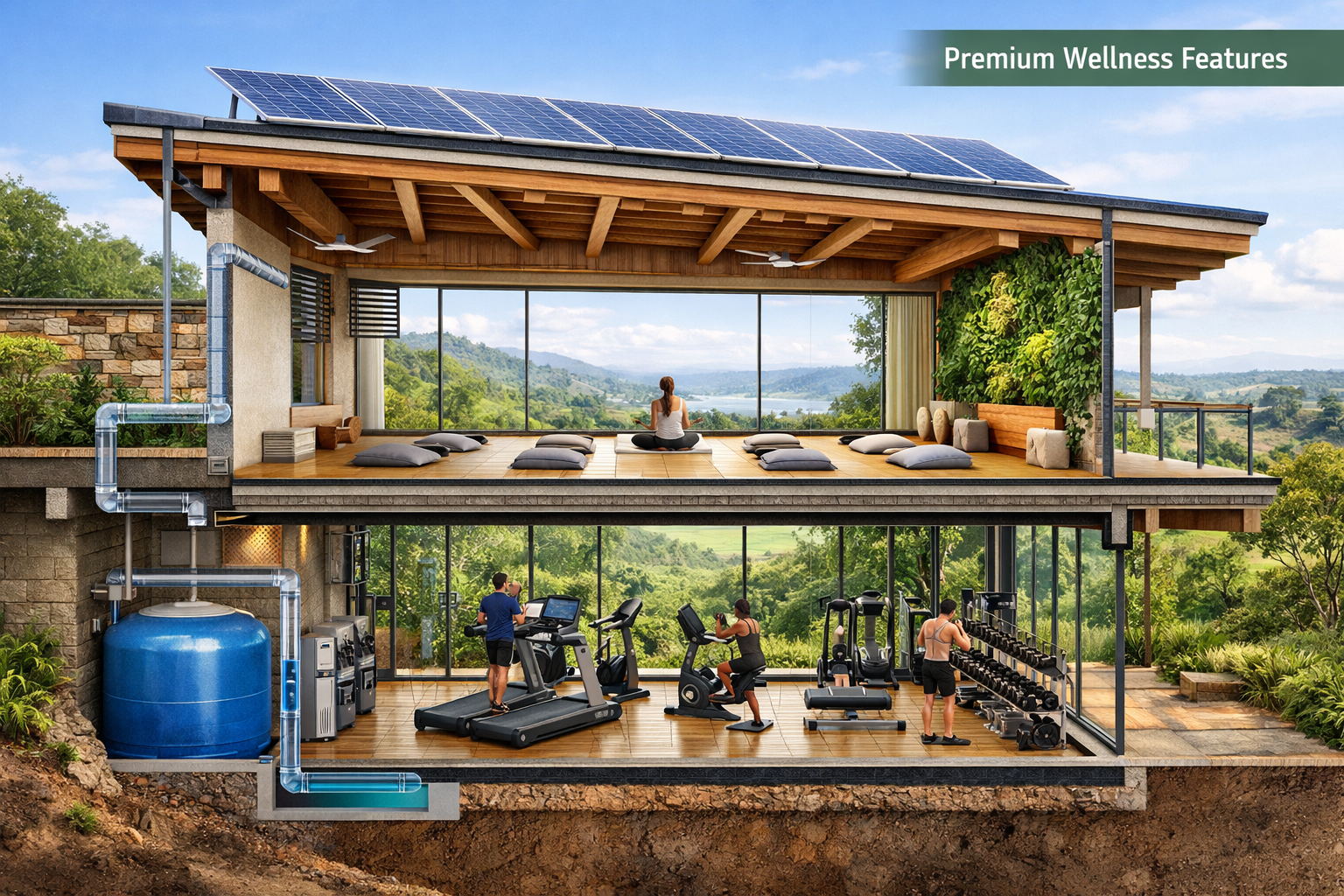
Essential Wellness Amenities That Command Premium Rates
Fitness and Movement Spaces
Modern wellness tourists expect professional-grade fitness facilities that rival urban gym memberships. Successful properties include:
- Fully equipped gyms with cardio machines, free weights, and functional training equipment (minimum 80-120 square meters)
- Outdoor fitness areas utilizing natural terrain for bodyweight training and circuit workouts
- Personal training services available on-demand or as package add-ons
- Group fitness classes including HIIT, strength training, and dance-based workouts
Properties with comprehensive fitness amenities report average nightly rates 35-45% higher than comparable properties without these features.
Yoga and Meditation Facilities
The global yoga and meditation market continues expanding, with practitioners specifically seeking retreat environments. Essential features include:
- Dedicated yoga studios with bamboo or hardwood flooring, mirrors, and storage for mats and props (minimum 60-80 square meters)
- Outdoor yoga decks with shade structures and panoramic natural views
- Meditation gardens designed with native plants, water features, and quiet zones
- Sound healing spaces for gong baths, singing bowls, and acoustic therapy sessions
Properties offering daily yoga and meditation sessions see occupancy rates 30-40% higher than those without structured wellness programming.
Organic Gardens and Sustainable Food Systems
Farm-to-table experiences resonate deeply with wellness-focused guests. Successful implementations include:
- Organic vegetable and herb gardens where guests can participate in harvesting
- Composting systems that demonstrate circular food waste management
- Outdoor dining areas where meals showcase garden-fresh ingredients
- Cooking classes teaching Brazilian cuisine with organic, local ingredients
Properties emphasizing organic food experiences command 15-20% higher rates and receive significantly higher guest satisfaction scores.
Sustainability Features That Increase Property Value
Beyond wellness amenities, environmental sustainability features create tangible value through both guest appeal and operational efficiency:
Solar Energy Systems: Properties with comprehensive solar installations reduce operating costs by 40-60% while appealing to environmentally conscious guests. Initial investment typically achieves ROI within 4-6 years.
Rainwater Harvesting: Collection and filtration systems reduce water costs and demonstrate environmental stewardship. These systems are particularly valuable in interior regions with seasonal rainfall patterns.
Natural Cooling and Ventilation: Architectural designs that maximize natural airflow and minimize air conditioning needs reduce energy consumption while creating healthier indoor environments.
Native Landscaping: Using indigenous plants reduces maintenance costs, conserves water, and supports local biodiversity—all factors that wellness tourists value highly.
Properties incorporating these features report 18-25% sustainability premiums in both sales prices and rental rates compared to conventional properties.
Yields and Returns: How Wellness-Integrated Eco-Residences 2026 Outperform Traditional Properties
The financial case for Wellness-Integrated Eco-Residences 2026: Premium Amenities Driving Yields in Brazil’s Interior becomes compelling when examining actual performance metrics from existing properties.
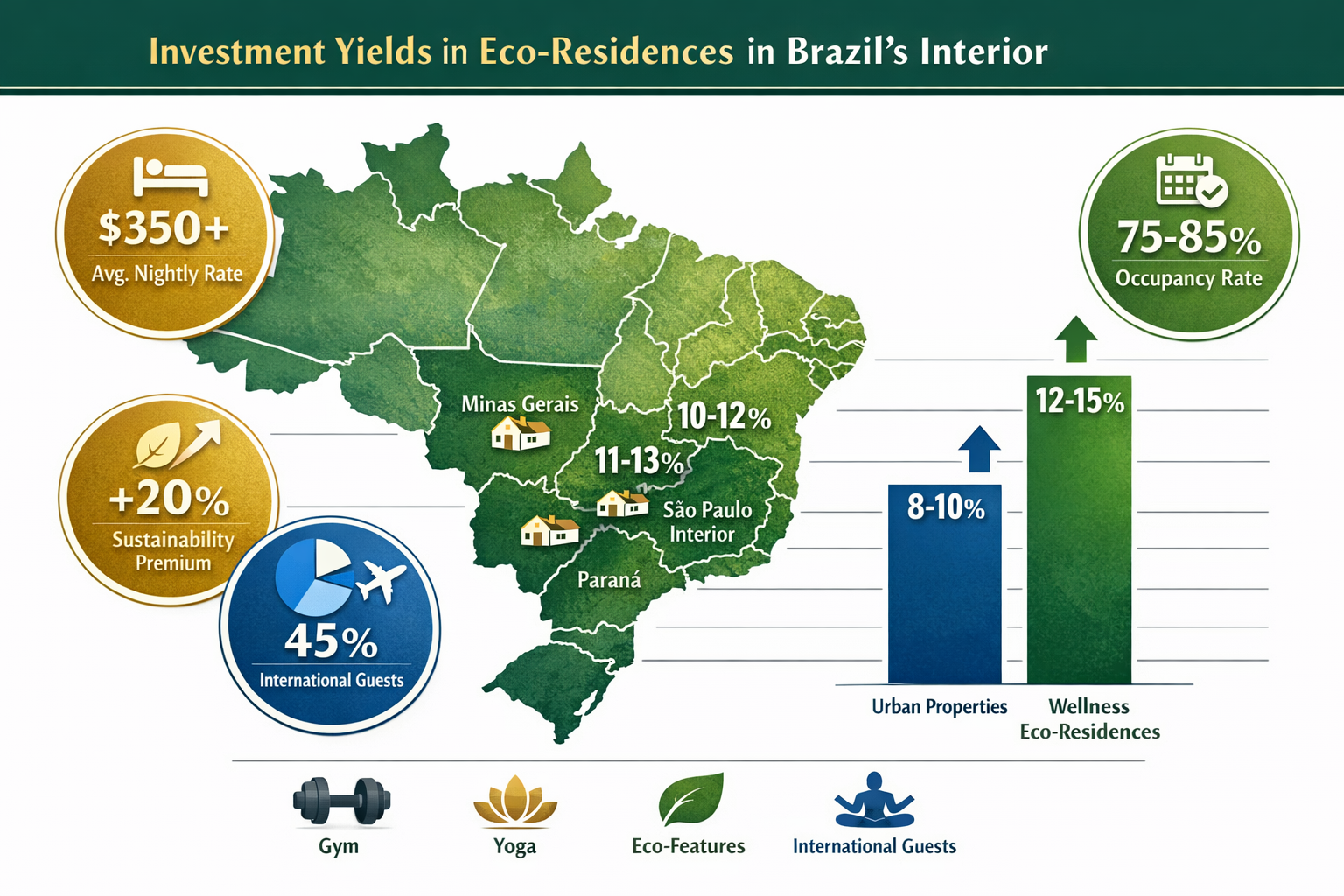
Rental Yield Performance in 2026
Current data from interior eco-residences shows impressive returns:
Short-Term Rental Yields: Well-positioned wellness properties are achieving 12-15% annual yields through short-term rental platforms, compared to 8-10% for traditional urban properties.
Occupancy Rates: Premium wellness properties maintain 65-75% occupancy year-round, with peak seasons reaching 90-95%. This compares favorably to standard vacation rentals averaging 45-55% occupancy.
Average Nightly Rates: Wellness-integrated properties command $180-350 USD per night, depending on location and amenities, compared to $80-150 for standard interior vacation rentals.
Booking Lead Times: Wellness properties see bookings made 60-90 days in advance on average, compared to 14-30 days for standard properties, providing better revenue predictability.
Target Demographics Driving Demand
Understanding who books these properties explains their strong performance:
International Wellness Tourists (40% of bookings): Primarily from North America and Europe, these guests seek week-long or longer stays focused on wellness retreats, yoga intensives, or digital detox experiences. Average booking value: $2,500-4,500.
Brazilian Urban Professionals (35% of bookings): Affluent residents of São Paulo, Rio de Janeiro, and Brasília seeking weekend wellness escapes. Average booking value: $800-1,500.
Wellness Retreat Groups (15% of bookings): Organized yoga teacher trainings, corporate wellness retreats, and health coaching programs. Average booking value: $8,000-15,000.
Digital Nomads (10% of bookings): Remote workers seeking month-long stays combining work with wellness. Average booking value: $3,000-5,000.
This diverse guest mix creates revenue stability across seasons and economic conditions. Properties targeting these demographics benefit from guests who prioritize experience quality over price sensitivity.
Strategic Interior Locations for Maximum Returns
Not all interior locations offer equal opportunity. The highest-performing wellness eco-residences are strategically positioned in:
Minas Gerais: The state’s mountainous regions offer cooler climates, mineral springs, and proximity to historic towns. Properties within 2-3 hours of Belo Horizonte perform particularly well.
Goiás: The Chapada dos Veadeiros region attracts wellness tourists with stunning natural beauty, waterfalls, and existing wellness tourism infrastructure.
Interior São Paulo: Areas like Serra da Mantiqueira and the region around São Bento do Sapucaí offer mountain landscapes within driving distance of São Paulo city.
Paraná: The Serra do Mar region provides Atlantic Forest experiences with cooler climates ideal for wellness activities.
Properties in these regions benefit from existing tourism infrastructure while maintaining the authentic natural environments that wellness tourists seek. Investors interested in broader market trends should explore emerging real estate opportunities across Brazilian regions.
Appreciation Potential and Long-Term Value
Beyond rental yields, wellness-integrated eco-residences offer strong appreciation potential:
Market Scarcity: Limited supply of high-quality wellness properties in interior regions creates upward price pressure as demand grows.
Infrastructure Development: Interior regions are seeing improved road access, internet connectivity, and tourism services, increasing property values.
Sustainability Premium Growth: As environmental consciousness increases globally, properties with authentic sustainability features command growing premiums.
Wellness Tourism Growth: The global wellness tourism market is projected to grow 12-15% annually through 2030, directly benefiting properties positioned in this sector.
Properties purchased in early development phases are seeing 15-25% appreciation within the first 3-5 years, before factoring in rental income. This compares favorably to traditional residential properties appreciating 6-10% over similar periods.
For investors considering pre-construction opportunities, understanding valuation potential when buying off-plan can maximize returns.
Design and Development Considerations for Wellness-Integrated Eco-Residences
Successfully developing Wellness-Integrated Eco-Residences 2026: Premium Amenities Driving Yields in Brazil’s Interior requires careful attention to design, construction, and operational planning.
Architectural Design Principles
Biophilic Design Integration: Successful properties maximize visual and physical connections to nature through:
- Floor-to-ceiling windows in common areas and wellness spaces
- Indoor-outdoor flow with seamless transitions between interior and exterior spaces
- Natural materials including local stone, certified wood, and bamboo
- Green walls and living roofs that integrate vegetation into the building structure
Spatial Planning for Wellness: Layout decisions significantly impact guest experience:
- Separate zones for active fitness, quiet meditation, and social gathering
- Acoustic design ensuring yoga and meditation spaces remain peaceful
- Privacy considerations balancing community areas with personal retreat spaces
- Accessibility features making wellness amenities available to guests of all abilities
Sustainable Construction Methods
Local Material Sourcing: Using regionally available materials reduces costs and environmental impact while supporting local economies. Successful projects source:
- Stone and timber from certified local suppliers
- Bamboo from managed regional plantations
- Natural fiber textiles from Brazilian artisans
- Recycled and reclaimed materials where appropriate
Energy-Efficient Building Techniques: Construction methods that reduce long-term operating costs include:
- Passive solar design optimizing building orientation and window placement
- High-performance insulation using natural materials like sheep’s wool or recycled cotton
- Thermal mass construction utilizing materials that regulate indoor temperatures naturally
- Green roof systems providing insulation, stormwater management, and habitat
Technology Integration for Guest Experience
Modern wellness tourists expect seamless technology that enhances rather than detracts from their retreat experience:
Smart Home Systems: Automated controls for lighting, temperature, and entertainment that guests can customize while minimizing energy waste.
High-Speed Internet: Despite the retreat setting, reliable connectivity is essential for digital nomads and guests who need occasional work access.
Booking and Management Platforms: Professional property management systems that handle reservations, guest communications, and reviews efficiently.
Wellness Programming Apps: Digital platforms that provide yoga class schedules, meditation guides, hiking trails, and wellness activity bookings.
Regulatory Compliance and Permitting
Navigating Brazilian regulations for eco-residential development requires attention to:
Environmental Licensing: Properties must obtain appropriate environmental permits, particularly when building in sensitive ecological areas or near water sources.
Tourism Registration: Registering as a tourism accommodation provider with municipal and state authorities enables legal short-term rental operations.
Building Codes: Compliance with local construction standards while incorporating sustainable building methods.
Water and Waste Management: Approval for septic systems, greywater recycling, and waste management plans appropriate for the property’s capacity.
Working with experienced local developers and legal advisors familiar with interior region regulations is essential. Investors can explore development opportunities that already navigate these regulatory requirements.
Marketing and Positioning Wellness-Integrated Eco-Residences for International Guests
Successfully attracting the target demographic requires strategic marketing that emphasizes both wellness amenities and authentic sustainability.
Digital Marketing Strategies
Wellness Tourism Platforms: Listing properties on specialized platforms like BookRetreats, Retreat Guru, and BookYogaRetreats connects directly with wellness-focused travelers.
Social Media Content: Instagram and Pinterest are particularly effective for showcasing:
- Stunning natural landscapes and property views
- Guests engaging in yoga, meditation, and fitness activities
- Farm-to-table dining experiences with organic ingredients
- Sustainability features and eco-friendly practices
Search Engine Optimization: Content marketing targeting keywords like “yoga retreat Brazil,” “eco-wellness resort,” and “sustainable accommodation Brazil interior” captures organic search traffic.
Influencer Partnerships: Collaborating with wellness influencers, yoga teachers, and sustainable travel advocates generates authentic promotion to engaged audiences.
Pricing Strategies for Maximum Yield
Dynamic Pricing: Adjusting rates based on demand, seasonality, and booking lead time optimizes revenue:
- Peak wellness seasons (January-March, July-August): Premium rates
- Shoulder seasons: Mid-range rates with package deals
- Low seasons: Competitive rates with extended stay discounts
Package Development: Creating bundled experiences increases booking values:
- Wellness Week Packages: 7-night stays including daily yoga, massage, and organic meals
- Fitness Retreat Packages: Intensive training programs with personal coaching
- Digital Detox Packages: Extended stays with limited connectivity and structured wellness programming
Group Booking Incentives: Offering competitive rates for yoga teacher trainings, corporate retreats, and wellness groups fills shoulder season periods.
Building Partnerships for Consistent Bookings
Wellness Retreat Organizers: Establishing relationships with yoga teachers, wellness coaches, and retreat leaders who bring groups generates consistent bookings.
Corporate Wellness Programs: Partnering with companies offering employee wellness retreats creates B2B revenue streams.
Travel Agencies: Working with agencies specializing in wellness and eco-tourism expands international reach.
Local Tourism Boards: Collaborating with regional tourism promotion organizations increases visibility and credibility.
Operational Excellence for Sustained High Yields
Maintaining premium rates and high occupancy requires exceptional operational management.
Staffing and Service Delivery
Wellness Programming Staff: Employing qualified yoga instructors, fitness trainers, and wellness coaches ensures high-quality guest experiences.
Property Management: Professional managers who maintain pristine conditions and handle guest communications promptly.
Culinary Staff: Chefs experienced in healthy, organic cuisine who can accommodate dietary restrictions and preferences.
Maintenance Teams: Regular upkeep of fitness equipment, yoga spaces, gardens, and sustainability systems.
Guest Experience Management
Pre-Arrival Communication: Detailed information about wellness offerings, packing recommendations, and retreat preparation sets appropriate expectations.
Personalization: Understanding guest wellness goals and preferences enables customized experiences that generate exceptional reviews.
Community Building: Creating opportunities for guests to connect (optional group meals, shared activities) enhances the retreat experience.
Post-Stay Follow-Up: Maintaining relationships with past guests encourages repeat bookings and referrals.
Sustainability Operations
Waste Management: Implementing comprehensive recycling, composting, and waste reduction programs that guests can observe and participate in.
Energy Monitoring: Tracking energy consumption and continuously optimizing renewable energy systems.
Water Conservation: Managing water use efficiently through low-flow fixtures, greywater systems, and guest education.
Supply Chain Management: Sourcing food, supplies, and materials from local, sustainable sources whenever possible.
Properties that excel operationally maintain guest satisfaction scores above 4.8/5.0, directly correlating with higher occupancy and premium pricing power.
Future Outlook: Wellness-Integrated Eco-Residences Beyond 2026
The trajectory for Wellness-Integrated Eco-Residences 2026: Premium Amenities Driving Yields in Brazil’s Interior suggests continued strong performance and evolution.
Emerging Trends Shaping the Market
Regenerative Tourism: Moving beyond sustainability to properties that actively improve ecosystems through reforestation, wildlife habitat creation, and soil regeneration.
Longevity and Biohacking: Integration of advanced wellness technologies including cold plunge pools, infrared saunas, and biometric health monitoring.
Mental Health Focus: Expanding beyond physical wellness to comprehensive mental health support including therapy, counseling, and trauma-informed practices.
Community Living Models: Development of intentional communities combining private residences with shared wellness amenities for long-term residents.
Investment Considerations for 2026 and Beyond
Market Timing: Current market conditions favor entry before widespread development increases competition and land costs.
Portfolio Diversification: Wellness eco-residences offer diversification beyond traditional residential and commercial real estate.
Currency Considerations: International investors benefit from favorable exchange rates when investing in Brazilian real estate.
Exit Strategies: Strong demand from both individual buyers and institutional investors creates multiple exit options.
For investors evaluating timing and market conditions, staying informed about broader real estate market trends provides valuable context.
Risk Mitigation Strategies
Diversified Guest Mix: Targeting multiple demographics (international tourists, domestic weekenders, groups, long-term stays) reduces dependence on any single market segment.
Professional Management: Partnering with experienced property management companies minimizes operational risks.
Insurance Coverage: Comprehensive policies covering property damage, liability, and business interruption protect investment value.
Legal Structure: Proper corporate structure and legal compliance protect investors from personal liability.
Conclusion: Capitalizing on Brazil’s Interior Wellness Real Estate Opportunity
Wellness-Integrated Eco-Residences 2026: Premium Amenities Driving Yields in Brazil’s Interior represents a compelling investment thesis at the intersection of multiple powerful trends: growing wellness tourism, increasing environmental consciousness, and the search for authentic experiences beyond traditional tourist destinations.
The financial performance of these properties—with rental yields of 12-15% and strong appreciation potential—demonstrates that sustainability and profitability are not mutually exclusive. By strategically combining premium wellness amenities with authentic eco-friendly features in carefully selected interior locations, investors can capture growing demand from international wellness tourists and affluent domestic travelers.
Key Success Factors
✅ Strategic location selection in accessible interior regions with natural beauty and existing tourism infrastructure
✅ Comprehensive wellness amenities including professional fitness facilities, dedicated yoga spaces, and organic food experiences
✅ Authentic sustainability features that reduce operating costs while appealing to environmentally conscious guests
✅ Professional operations and marketing that maintain high occupancy and premium pricing
✅ Diversified guest targeting across international tourists, domestic weekenders, retreat groups, and digital nomads
Actionable Next Steps
For investors considering this opportunity:
Research target regions: Visit potential locations in Minas Gerais, Goiás, interior São Paulo, and Paraná to assess natural beauty, accessibility, and existing tourism infrastructure
Analyze comparable properties: Study existing wellness eco-residences to understand pricing, occupancy, and guest demographics
Develop financial models: Project acquisition costs, development expenses, operating costs, and revenue potential based on realistic occupancy and rate assumptions
Build professional partnerships: Connect with experienced developers, architects specializing in sustainable design, and property management companies with wellness property experience
Explore financing options: Investigate Brazilian development financing, international investment structures, and partnership models
Start with consultation: Contact experienced developers who understand both Brazilian real estate regulations and wellness property development
The convergence of wellness tourism growth, sustainability premiums, and strategic interior locations creates a unique window of opportunity in 2026. Investors who act now—before widespread development increases competition and land costs—stand to benefit from both strong rental yields and significant appreciation as this market segment matures.
Brazil’s interior regions offer the authentic natural environments, lower development costs, and first-mover advantages that make Wellness-Integrated Eco-Residences 2026: Premium Amenities Driving Yields in Brazil’s Interior one of the most promising real estate investment opportunities in the Brazilian market today.