
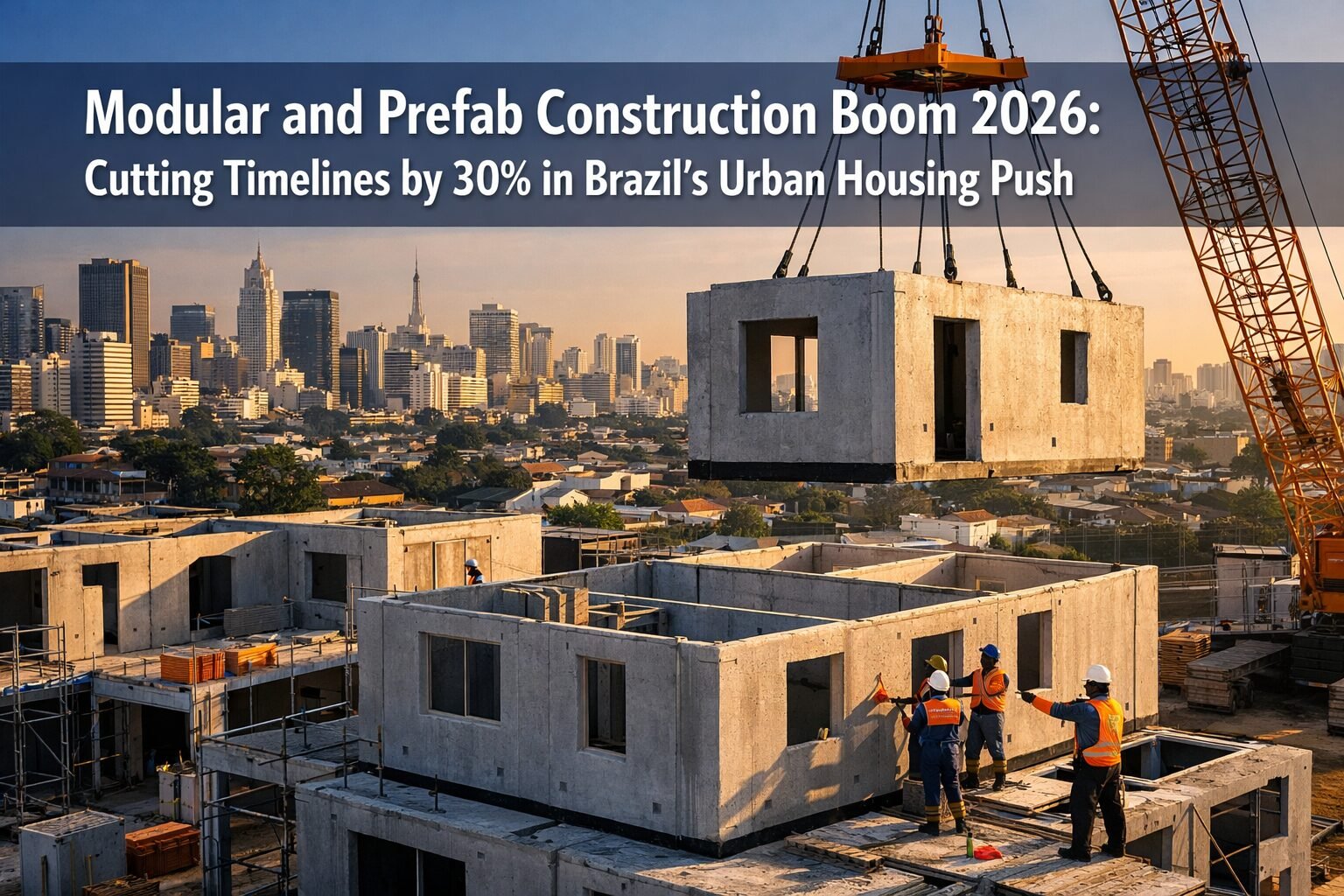
Brazil’s construction landscape is undergoing a revolutionary transformation in 2026. As urban centers grapple with a staggering housing deficit exceeding 5.8 million units, developers and government agencies are turning to an innovative solution that promises to reshape how the nation builds: modular and prefabricated construction. This isn’t just another construction trend—it’s a fundamental shift that’s cutting project timelines by 30% while delivering cost predictability in an industry historically plagued by delays and budget overruns.
The Modular and Prefab Construction Boom 2026: Cutting Timelines by 30% in Brazil’s Urban Housing Push represents more than technological advancement; it’s an economic imperative. With Brazil’s prefabricated construction market reaching USD 3.81 billion in 2026 and projected to hit USD 5.02 billion by 2031, the momentum behind factory-built housing solutions has never been stronger [1]. From São Paulo’s towering residential complexes to Salvador’s rapid-deployment schools, prefab methods are proving that speed, quality, and affordability can coexist.
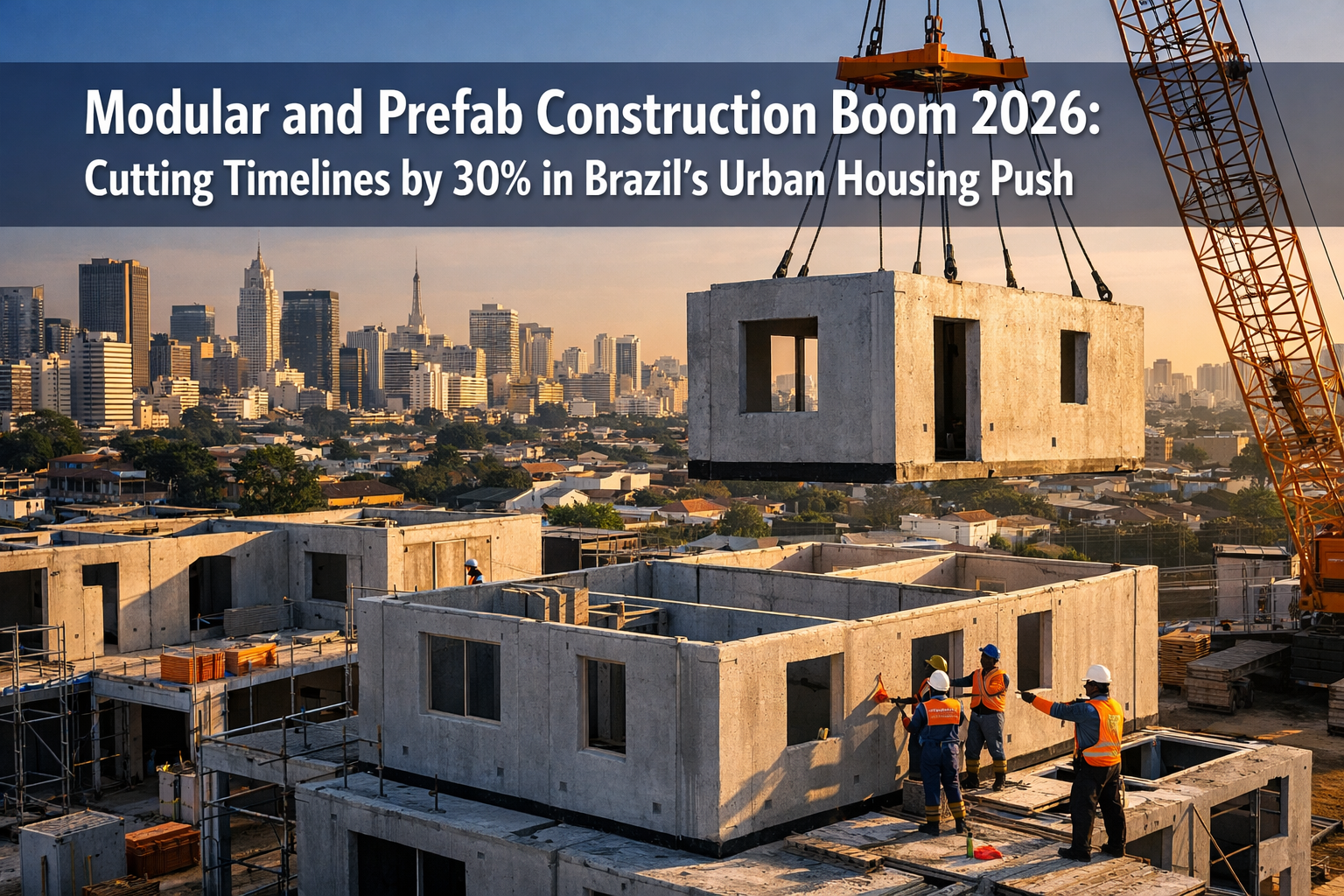
Key Takeaways
✅ Market Explosion: Brazil’s prefabricated construction market reached USD 3.81 billion in 2026, with modular construction generating USD 660.6 million in 2025 and tracking toward USD 1.08 billion by 2033 [1][3]
✅ Timeline Revolution: Modular methods are cutting construction timelines by 30% compared to traditional on-site building, with some projects completing in seven months versus the typical 12-15 months
✅ Housing Crisis Solution: With a 5.8 million unit housing deficit concentrated in urban areas, prefab construction offers the scalability needed to address Brazil’s most pressing social challenge [2]
✅ Government Backing: State and municipal buyers commissioned 120 schools and 45 clinics in modular form during 2024—a 35% jump over 2023—signaling strong public sector adoption [1]
✅ Concrete Dominance: Concrete maintains a 47.2% market share in prefab materials, leveraging Brazil’s established precast capacity and meeting stringent fire-safety regulations [1]
Understanding the Modular and Prefab Construction Boom 2026: Cutting Timelines by 30% in Brazil’s Urban Housing Push
The current wave of prefabricated construction adoption in Brazil didn’t emerge overnight. It’s the result of converging pressures: urbanization, labor shortages, cost inflation, and an urgent need for scalable housing solutions. Traditional construction methods simply cannot keep pace with demand, particularly in metropolitan areas where property investment opportunities are most concentrated.
What Makes Modular Construction Different?
Modular construction involves building complete three-dimensional units in a controlled factory environment, then transporting and assembling them on-site. These modules arrive with mechanical, electrical, and plumbing (MEP) systems already installed—a game-changer for project timelines [1].
In contrast, panelized prefabrication produces two-dimensional components (walls, floors, roof trusses) that are assembled on-site into a complete structure. Both approaches dramatically reduce on-site labor requirements and weather-related delays.
The 30% Timeline Advantage Explained
The 30% reduction in construction timelines stems from several factors:
🏭 Parallel Processing: While site preparation and foundation work proceed, factory production of modules or panels happens simultaneously
☔ Weather Independence: Factory environments eliminate weather-related delays that plague traditional construction in Brazil’s tropical climate
👷 Labor Efficiency: Controlled factory conditions enable specialized workers to complete tasks faster and with higher quality than on-site crews
📦 Supply Chain Optimization: Materials arrive at factories in bulk, reducing the coordination complexity of delivering components to multiple job sites
A concrete example: Salvador commissioned 18 prefab schools in 2024 with a seven-month delivery cap using standardized concrete panels and trusses [1]. Comparable traditional construction would typically require 12-15 months.
Market Size and Growth Trajectory in Brazil’s Prefab Sector
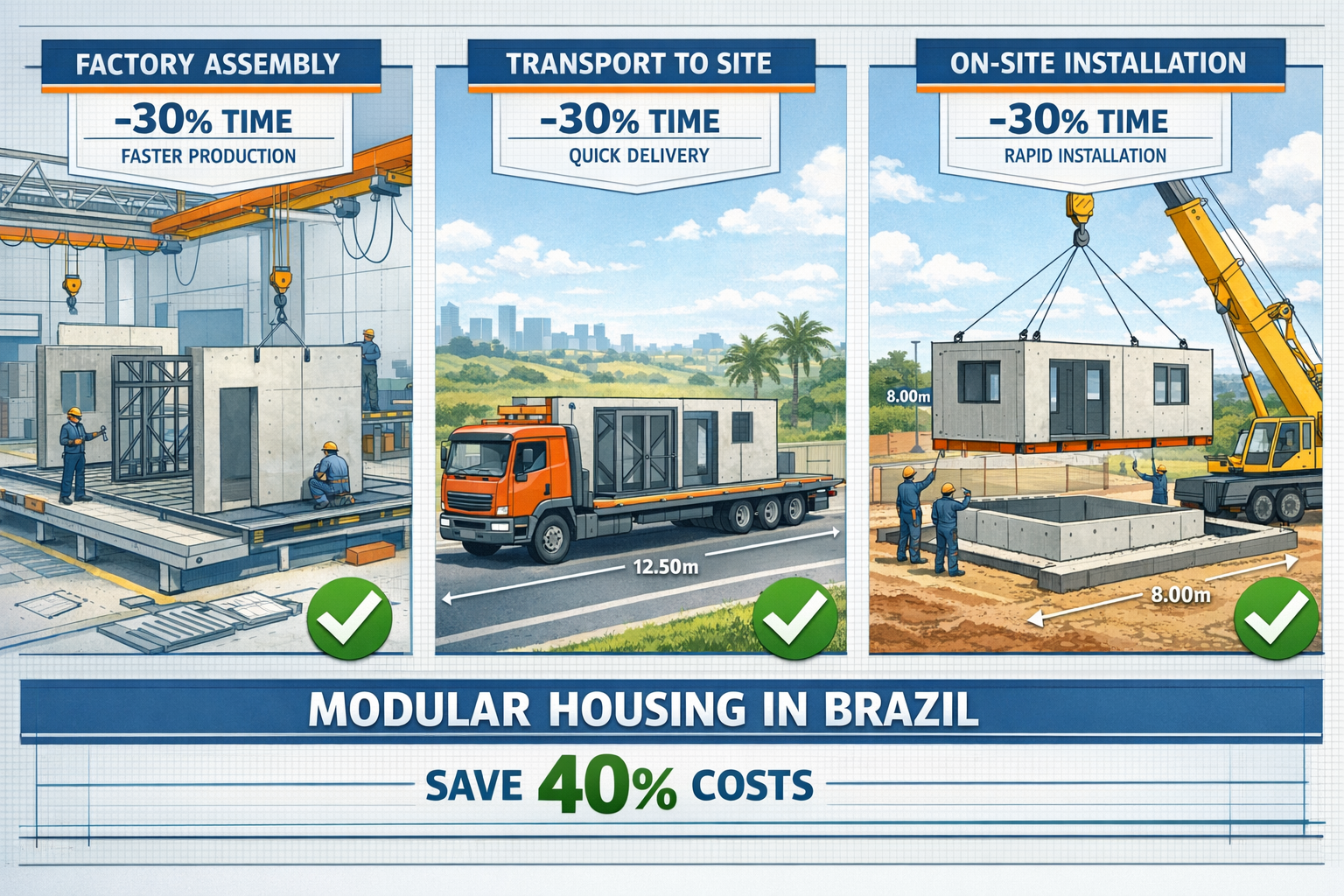
The numbers behind the Modular and Prefab Construction Boom 2026: Cutting Timelines by 30% in Brazil’s Urban Housing Push reveal an industry experiencing explosive growth across multiple dimensions.
Overall Market Valuation
Brazil’s prefabricated buildings market reached USD 3.81 billion in 2026, with projections indicating growth to USD 5.02 billion by 2031 at a compound annual growth rate (CAGR) of 5.67% [1]. This growth trajectory reflects increasing confidence among developers, government agencies, and private buyers in prefab methodologies.
The modular construction segment specifically generated USD 660.6 million in 2025 and is forecast to reach USD 1,083.2 million by 2033, representing a robust 6.4% CAGR through that period [3]. This segment’s faster growth rate indicates that fully-integrated modular units are gaining market share against simpler panelized approaches.
Segment Breakdown by Building Type
| Building Type | Market Share (2025) | Key Drivers |
|---|---|---|
| Residential | 55.6% | Minha Casa Minha Vida subsidies, urban housing deficit, private towers in São Paulo [1] |
| Commercial | 18.3% | Retail expansion, office space demand |
| Institutional | 15.8% | Schools, clinics, government facilities |
| Industrial | 10.3% | Warehouses, logistics centers |
The residential segment’s dominance at 55.6% reflects both the massive housing deficit and government programs specifically designed to encourage affordable housing development [1]. The real estate market dynamics in key urban centers continue to favor rapid-delivery solutions.
Material Preferences and Innovation
Concrete remains the dominant material with a 47.2% market share in 2025, benefiting from Brazil’s established precast capacity and compliance with the nation’s stringent fire-safety regulations [1]. Brazilian builders have decades of experience with precast concrete, creating a natural advantage for concrete-based prefab systems.
However, timber-based systems are emerging as the fastest-growing segment, projected to post a 6.71% CAGR through 2031 [1]. This growth is driven by:
- 🌳 Decarbonization incentives from federal and state governments
- 🏗️ New CLT (cross-laminated timber) plants expanding supply capacity
- 🌍 Sustainability certifications increasingly required for commercial projects
- 💰 Cost competitiveness as domestic timber production scales
Steel-framed systems occupy the middle ground, offering design flexibility and lighter weight for high-rise applications, particularly in São Paulo’s competitive residential tower market.
Government Programs Accelerating the Modular and Prefab Construction Boom 2026
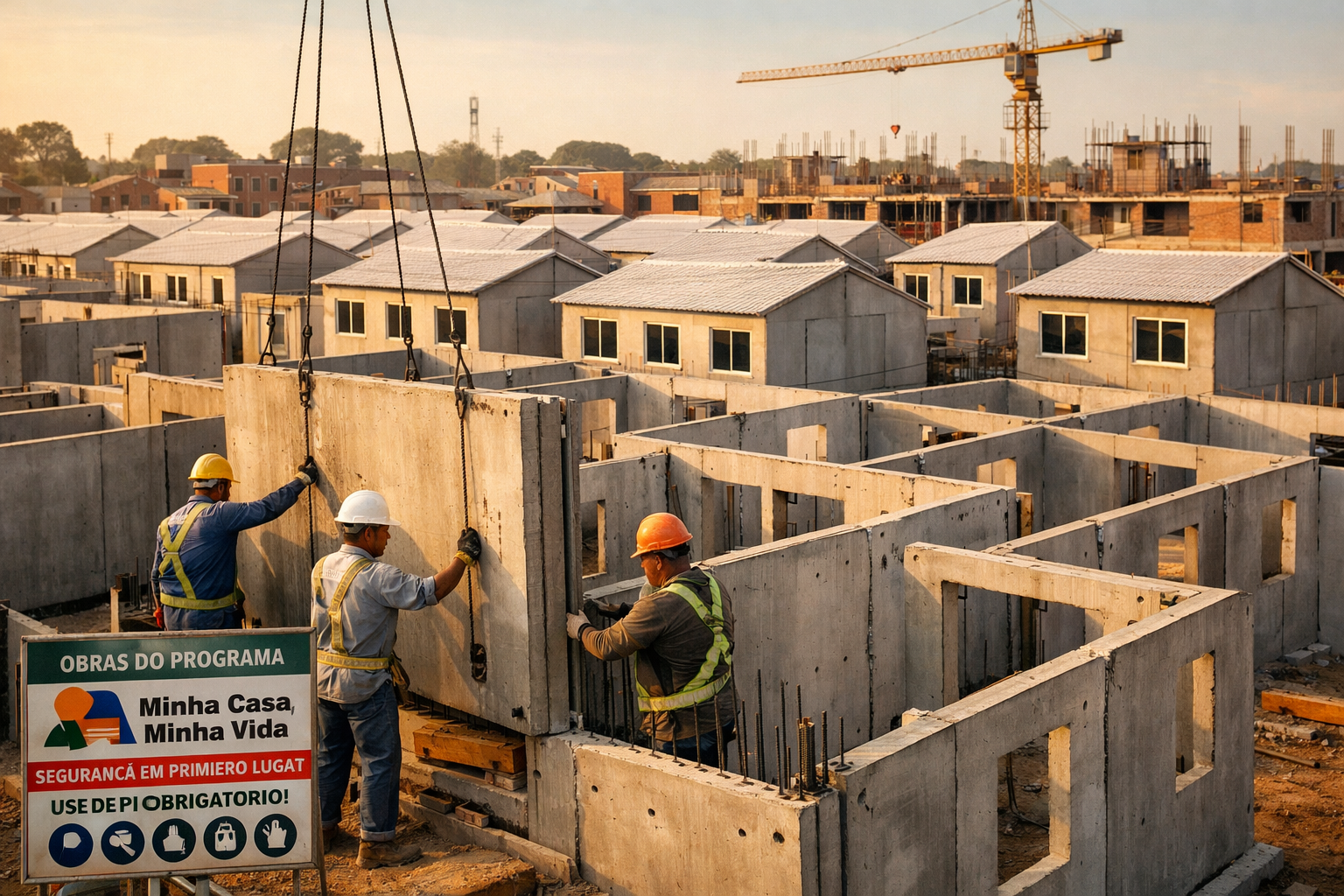
Government policy has been instrumental in driving the Modular and Prefab Construction Boom 2026: Cutting Timelines by 30% in Brazil’s Urban Housing Push. Both federal and state-level initiatives are creating demand while simultaneously removing regulatory barriers.
Minha Casa Minha Vida: The Primary Catalyst
The “Minha Casa Minha Vida” (My House My Life) program has become increasingly reliant on prefabricated solutions as a cost-effective method to address Brazil’s substantial housing deficit, particularly for low-income families in urban areas [4]. The program’s latest iteration specifically incentivizes developers who can demonstrate:
- ✅ Faster delivery timelines (projects completing in under 10 months receive bonus subsidies)
- ✅ Cost predictability (fixed-price contracts reduce government budget risk)
- ✅ Sustainability metrics (reduced construction waste and energy efficiency)
These criteria naturally favor prefab methodologies, creating a powerful market pull for modular and panelized construction.
Public Infrastructure Expansion
The public sector’s embrace of prefabrication extends beyond housing. State and municipal buyers commissioned 120 schools and 45 clinics in modular form during 2024—representing a 35% jump over 2023 [1]. This acceleration reflects growing confidence in prefab quality and recognition of the urgent need to expand public services in rapidly growing urban peripheries.
Salvador’s example is particularly instructive: the city ordered 18 prefab schools with a seven-month delivery cap using standardized concrete panels and trusses [1]. This standardization approach allows:
- 📐 Design replication across multiple sites
- 🏭 Volume discounts from manufacturers
- 🔧 Simplified maintenance with interchangeable components
- 📊 Quality consistency through factory production
Similar programs are underway in Rio de Janeiro, Brasília, and Belo Horizonte, creating a sustained pipeline of public-sector prefab projects through 2027.
Regulatory Modernization
Brazilian building codes have historically been written with traditional construction in mind, creating unintentional barriers for prefab methods. Recent regulatory updates at both federal and state levels have:
- Streamlined approval processes for standardized modular designs
- Created fast-track permitting for projects meeting sustainability criteria
- Established quality certification programs for prefab manufacturers
- Harmonized fire-safety standards to accommodate modern materials like CLT
These changes reduce the regulatory friction that previously made developers hesitant to adopt prefab approaches, particularly for larger projects requiring multiple agency approvals.
Cost Benefits and Financial Predictability for Developers
Beyond timeline advantages, the Modular and Prefab Construction Boom 2026: Cutting Timelines by 30% in Brazil’s Urban Housing Push offers compelling financial benefits that are reshaping investment strategies in Brazil’s property market.
Fixed Pricing in an Inflationary Environment
Developers using prefabricated systems can lock in fixed pricing, as factory output resists wage inflation and weather-driven delays that typically affect traditional on-site construction [1]. This predictability is particularly valuable in Brazil’s economic context, where:
- 💸 Labor costs have increased 18-22% annually in major urban markets (2023-2026)
- 📈 Material price volatility creates budget uncertainty for projects lasting 12+ months
- ⏱️ Delay penalties from extended timelines can consume 5-8% of project budgets
A modular approach allows developers to sign fixed-price contracts with manufacturers, transferring price risk away from the project budget. For mid-market developers working on thin margins, this predictability can mean the difference between profitability and loss.
Reduced On-Site Labor Requirements
Traditional construction in São Paulo requires approximately 35-40 workers per 1,000 square meters of residential space over a 12-month period. Comparable modular construction requires only 15-20 workers for on-site assembly over 6-8 months [2]. This reduction translates to:
- 💰 Lower labor costs (40-50% reduction in total labor expenses)
- 🏗️ Smaller site footprint (less space needed for worker facilities and material staging)
- 🛡️ Reduced safety incidents (fewer workers and shorter timelines decrease accident exposure)
- 📋 Simplified management (smaller crews are easier to coordinate and supervise)
For developers entering markets like Florianópolis where construction activity is accelerating, these labor efficiencies are critical competitive advantages.
Faster Time-to-Market and Cash Flow Benefits
The 30% timeline reduction creates substantial financial benefits beyond direct cost savings:
Revenue Acceleration: Projects completing in 8 months versus 12 months begin generating rental income or sale proceeds four months earlier, improving internal rate of return (IRR) by 15-25% depending on financing structure.
Reduced Financing Costs: Shorter construction periods mean less interest accumulation on construction loans. For a R$10 million project financed at 12% annual interest, a four-month timeline reduction saves approximately R$400,000 in interest expenses.
Market Timing Flexibility: Faster delivery allows developers to better align project completion with favorable market conditions, reducing the risk of delivering units into a softening market.
These advantages are particularly relevant for developers focused on pre-construction investment opportunities where timing and predictability drive returns.
Adoption Roadmap for Mid-Market Developers
For mid-market developers considering participation in the Modular and Prefab Construction Boom 2026: Cutting Timelines by 30% in Brazil’s Urban Housing Push, a structured adoption approach maximizes success probability while managing risk.
Phase 1: Assessment and Partner Selection (Months 1-3)
Evaluate Project Suitability
Not all projects benefit equally from prefab methods. Ideal candidates typically feature:
- 🏢 Repetitive design elements (multiple identical units or floors)
- 📏 Standardized dimensions (modules that fit transportation constraints)
- ⏰ Timeline sensitivity (projects where speed creates competitive advantage)
- 🌆 Urban locations (where on-site space is limited and labor costs are high)
Identify Qualified Manufacturers
Brazil’s prefab industry includes both established players and newer entrants. Key selection criteria include:
- ✅ Production capacity (can they handle your project volume and timeline?)
- ✅ Quality certifications (ISO standards, fire-safety compliance, structural engineering credentials)
- ✅ Reference projects (similar scale and complexity to your planned development)
- ✅ Financial stability (manufacturer bankruptcy mid-project is catastrophic)
- ✅ Geographic proximity (transportation costs increase significantly beyond 500km)
Leading manufacturers in Brazil’s modular market include Tecverde, Construtora Pacaembu, and MPA Pré-Fabricados, each with specialized capabilities in different building types and materials.
Phase 2: Pilot Project Implementation (Months 4-12)
Start Small and Learn
Rather than converting an entire portfolio to prefab methods, successful developers typically begin with a pilot project that allows learning while limiting risk exposure. Ideal pilot characteristics:
- 📊 Mid-sized scale (20-50 units for residential, or single institutional building)
- 🎯 Clear success metrics (timeline, cost, quality benchmarks established upfront)
- 👥 Dedicated team (assign experienced project managers who can document lessons learned)
- 📍 Strategic location (choose a market where speed advantages create clear value)
Collaborative Design Process
Prefab construction requires design-for-manufacturing (DFM) thinking from the earliest stages. Work closely with your chosen manufacturer to:
- Optimize module dimensions for transportation efficiency
- Minimize custom elements that require specialized tooling
- Sequence MEP systems for factory installation
- Plan connection details between modules or panels
This collaboration often reveals cost-saving opportunities that traditional design processes miss. For example, studio apartment developments benefit significantly from modular approaches due to their inherent design repetition.
Phase 3: Process Refinement and Scaling (Months 13-24)
Document and Standardize
After pilot project completion, conduct a thorough post-mortem analysis:
- 📈 Timeline analysis: Where did the 30% savings materialize? Where were there delays?
- 💵 Cost breakdown: Which budget categories performed better/worse than traditional methods?
- 🏗️ Quality assessment: Customer satisfaction, defect rates, warranty claims
- 🔄 Process improvements: What would you do differently on the next project?
This documentation becomes the foundation for standardized processes as you scale prefab adoption across your portfolio.
Develop In-House Expertise
As prefab becomes a larger portion of your business, consider:
- Training existing project managers in prefab-specific methodologies
- Hiring specialists with factory construction experience
- Creating design templates for common building types
- Establishing preferred relationships with 2-3 qualified manufacturers
Expand Strategically
With lessons learned from the pilot, expand prefab adoption to projects where advantages are most pronounced. Many developers find success with a hybrid portfolio approach:
- Use prefab for projects with high timeline sensitivity or labor constraints
- Continue traditional methods for custom, high-end developments where speed is less critical
- Apply panelized approaches to mid-rise projects and full modular to low-rise developments
This flexibility allows optimization based on specific project characteristics rather than forcing a one-size-fits-all approach.
Sustainability and Environmental Benefits
The Modular and Prefab Construction Boom 2026: Cutting Timelines by 30% in Brazil’s Urban Housing Push aligns with Brazil’s rising focus on sustainability, supporting green building certifications and reducing waste while offering lower energy consumption compared to traditional construction methods [4].
Construction Waste Reduction
Traditional on-site construction generates approximately 120-150 kg of waste per square meter of built space in Brazilian urban projects. Prefab methods reduce this to 30-50 kg per square meter—a 60-75% reduction [4]. This dramatic improvement stems from:
- 🎯 Precision manufacturing (computer-controlled cutting eliminates over-ordering)
- ♻️ Factory recycling (scrap materials are systematically recovered and reused)
- 📦 Optimized packaging (materials arrive in exact quantities needed)
- 🔧 Reduced rework (quality control catches errors before installation)
For developers pursuing LEED or AQUA-HQE certification, this waste reduction provides substantial credits toward certification requirements.
Embodied Carbon Advantages
While concrete-based prefab systems (47.2% market share) have similar embodied carbon to traditional concrete construction, the timber-based systems growing at 6.71% CAGR offer significant carbon sequestration benefits [1]. Cross-laminated timber (CLT) buildings can achieve:
- 🌳 Carbon-negative construction (wood stores more CO₂ than is emitted during production)
- ⚡ Lower operational energy (superior insulation properties reduce HVAC loads)
- 🏗️ Lighter foundations (reduced building weight decreases concrete requirements)
As CLT production capacity expands in Brazil through 2027-2028, these systems will become increasingly cost-competitive with concrete alternatives.
Energy Efficiency in Operations
Factory-built modules achieve tighter building envelopes than field-constructed buildings, reducing air infiltration and improving thermal performance. This translates to:
- ❄️ 15-25% lower cooling costs in Brazil’s tropical climate
- 🌡️ More consistent interior temperatures (improved comfort and reduced HVAC cycling)
- 🔇 Better acoustic performance (factory-installed insulation is more uniform)
These operational savings compound over building lifespans, improving investment returns for developers who retain ownership or can command premium rents for energy-efficient units.
Challenges and Considerations for Prefab Adoption
Despite the compelling advantages driving the Modular and Prefab Construction Boom 2026: Cutting Timelines by 30% in Brazil’s Urban Housing Push, developers must navigate several challenges to achieve successful implementation.
Transportation and Logistics Constraints
Module size limitations are dictated by Brazil’s road infrastructure:
- 📏 Maximum width: 3.2 meters (wider loads require special permits and route planning)
- 📏 Maximum height: 4.4 meters (including transport trailer)
- 📏 Maximum length: 12-15 meters (depending on articulation)
These constraints influence architectural design from the earliest stages. Projects located more than 500 km from manufacturing facilities face significantly higher transportation costs that can erode prefab’s economic advantages.
Urban delivery challenges in dense cities like São Paulo require careful planning:
- 🚧 Limited crane access in tight urban sites
- 🚦 Traffic restrictions on module delivery times
- 🏗️ Coordination with neighboring properties for crane positioning
Successful developers conduct detailed logistics feasibility studies before committing to modular approaches for constrained urban sites.
Design Flexibility Trade-offs
Prefab construction achieves cost and timeline advantages through standardization and repetition. Projects requiring extensive customization may not benefit proportionally. Developers must balance:
- 🎨 Architectural distinctiveness (market differentiation)
- 💰 Cost efficiency (standardization savings)
- ⏱️ Timeline advantages (repetition enables speed)
This balance varies by market segment. Affordable housing projects for government programs prioritize efficiency over customization, while mid-market developments targeting discerning buyers in areas like Florianópolis require more design flexibility.
Financing and Appraisal Considerations
Brazilian banks and appraisers have decades of experience with traditional construction but less familiarity with prefab methodologies. This can create:
- 📋 Additional documentation requirements for construction loan approval
- 💵 More conservative loan-to-value ratios until lender comfort increases
- 🏦 Slower approval processes as underwriters evaluate unfamiliar methods
Developers can mitigate these challenges by:
- Providing lenders with detailed manufacturer credentials and reference projects
- Offering completion guarantees from financially stable manufacturers
- Demonstrating cost and timeline advantages through pilot project data
- Working with lenders who have prior prefab financing experience
As the market matures and more successful projects establish track records, these financing frictions will diminish.
Quality Perception Management
Despite objective quality advantages of factory-controlled production, some market segments maintain perceptions that prefab construction is “lower quality” or “temporary.” This perception challenge is particularly acute in Brazil’s luxury residential segment.
Successful developers address this through:
- 🏆 Showcase projects with high-quality finishes demonstrating prefab capabilities
- 📸 Transparent marketing showing factory production processes and quality controls
- 🎓 Buyer education explaining technical advantages and durability
- ⭐ Warranty programs offering extended coverage to demonstrate confidence
As more high-quality prefab projects enter the market, these perceptions are shifting, particularly among younger buyers who prioritize sustainability and efficiency over construction methodology.
Future Outlook: Beyond 2026
The trajectory of the Modular and Prefab Construction Boom 2026: Cutting Timelines by 30% in Brazil’s Urban Housing Push suggests continued acceleration through the remainder of the decade.
Market Growth Projections
With the prefabricated construction market projected to reach USD 5.02 billion by 2031 at a 5.67% CAGR [1], and the modular segment specifically tracking toward USD 1.08 billion by 2033 at 6.4% CAGR [3], Brazil’s prefab industry is entering a sustained growth phase that will fundamentally reshape the construction landscape.
Technology Integration Trends
Digital fabrication technologies are increasingly integrated into Brazilian prefab manufacturing:
- 🤖 Robotic assembly systems improving precision and speed
- 🖥️ Building Information Modeling (BIM) enabling seamless design-to-production workflows
- 📱 IoT sensors embedded during factory production for smart building capabilities
- 🏭 Automated quality control using computer vision and AI
These technologies will further widen the performance gap between prefab and traditional construction methods.
Material Innovation Pipeline
Beyond the current concrete dominance and emerging timber growth, several material innovations are approaching commercial viability:
- 🧱 Ultra-high-performance concrete (UHPC) enabling thinner, lighter panels
- 🌾 Bamboo composite systems leveraging Brazil’s abundant bamboo resources
- ♻️ Recycled plastic-concrete hybrids addressing waste streams while reducing costs
- 🔬 Phase-change materials integrated into panels for passive thermal regulation
These innovations will expand the design possibilities and performance characteristics available through prefab methods.
Geographic Expansion Patterns
While São Paulo, Rio de Janeiro, and other major metros have led prefab adoption, the next wave of growth will concentrate in secondary cities experiencing rapid urbanization:
- 🌴 Florianópolis and surrounding regions where infrastructure development is accelerating
- 🏖️ Coastal resort areas requiring seasonal construction capacity
- 🏭 Industrial zones needing rapid warehouse and logistics facility deployment
- 🎓 University towns with cyclical student housing demand
These markets offer particularly favorable conditions for prefab adoption due to limited local construction capacity and seasonal demand patterns.
Conclusion: Embracing the Prefab Revolution
The Modular and Prefab Construction Boom 2026: Cutting Timelines by 30% in Brazil’s Urban Housing Push represents a fundamental transformation in how Brazil builds. With a USD 3.81 billion market in 2026 projected to reach USD 5.02 billion by 2031, backed by government programs addressing a 5.8 million unit housing deficit, the momentum behind prefabricated construction is undeniable [1][2].
For developers, the value proposition is compelling: 30% faster timelines, fixed pricing that resists inflation, reduced labor requirements, and improved sustainability metrics—all while maintaining or improving quality standards. The residential segment’s 55.6% market share demonstrates that buyers and government agencies alike are embracing these methods [1].
Actionable Next Steps for Developers
For developers ready to participate in this transformation:
Conduct a portfolio audit to identify projects where prefab advantages are most pronounced—look for repetitive designs, timeline sensitivity, and urban locations with labor constraints
Initiate manufacturer conversations with 3-5 qualified prefab producers to understand capabilities, capacity, and cost structures specific to your project types
Select a pilot project that allows learning while limiting risk—aim for mid-sized scale with clear success metrics and dedicated project management
Engage early with financing partners to address any documentation or approval process requirements specific to prefab construction
Invest in design-for-manufacturing expertise either through training existing teams or hiring specialists who understand factory production constraints and opportunities
Document everything to create standardized processes that enable scaling across your portfolio
The Modular and Prefab Construction Boom 2026: Cutting Timelines by 30% in Brazil’s Urban Housing Push is not a temporary trend—it’s a structural shift driven by economic necessity, government policy, and technological capability. Developers who master these methods now will hold decisive competitive advantages as Brazil’s urban housing push accelerates through the remainder of the decade.
For those seeking to explore investment opportunities in Brazil’s evolving property market or learn more about innovative development approaches, the prefab revolution offers unprecedented potential for those willing to embrace new methodologies.
The question is no longer whether prefab construction will reshape Brazil’s building industry—it’s whether your development strategy will adapt quickly enough to capitalize on the transformation already underway. To discuss how these trends might apply to your specific projects, contact our team for a consultation.
References
[1] Brazil Prefabricated Buildings Market – mordorintelligence.com
[2] Brazil Engineering And Modular Construction – trade.gov
[3] Brazil – grandviewresearch.com
[4] Brazil Prefabricated Buildings Market – imarcgroup.com