
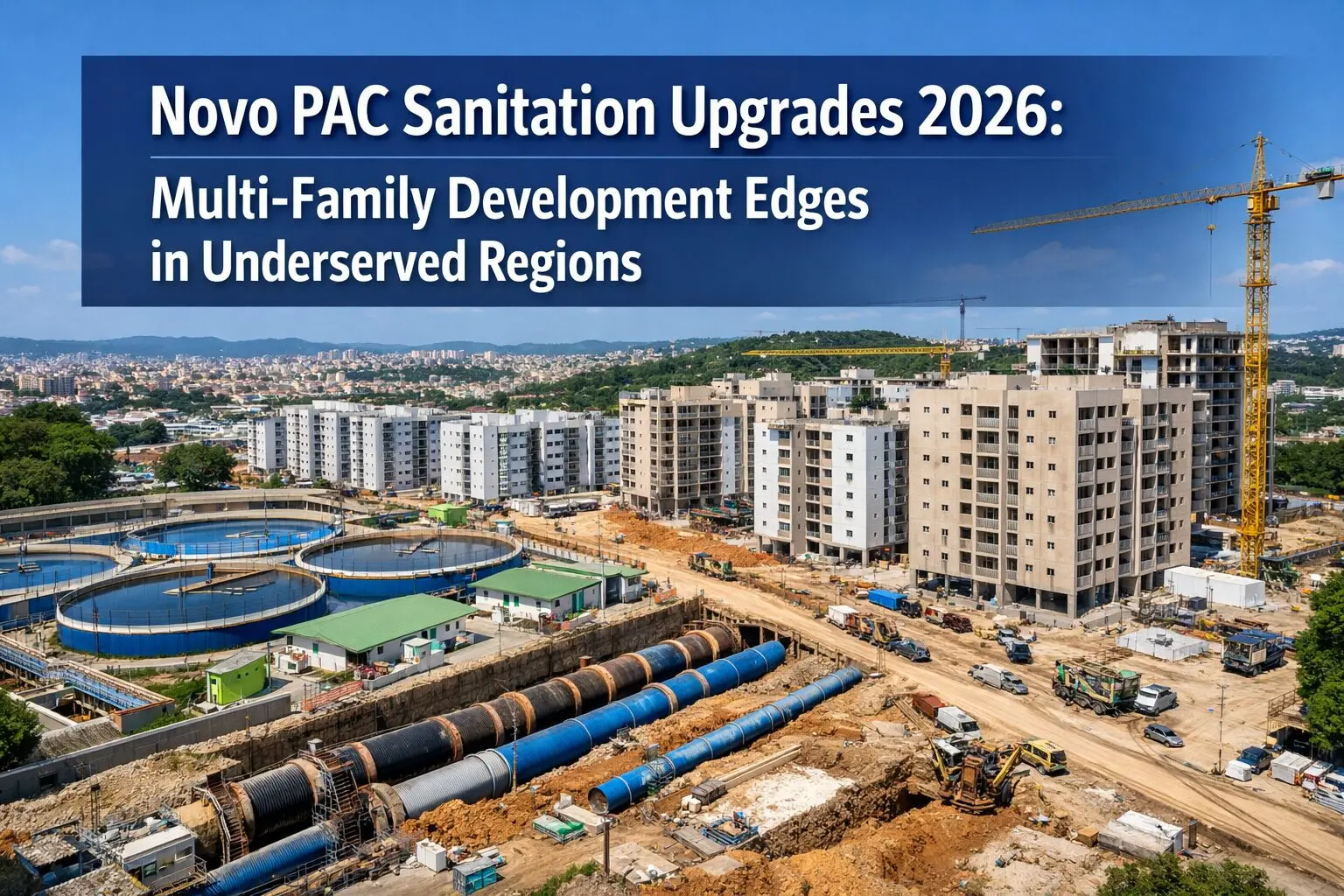
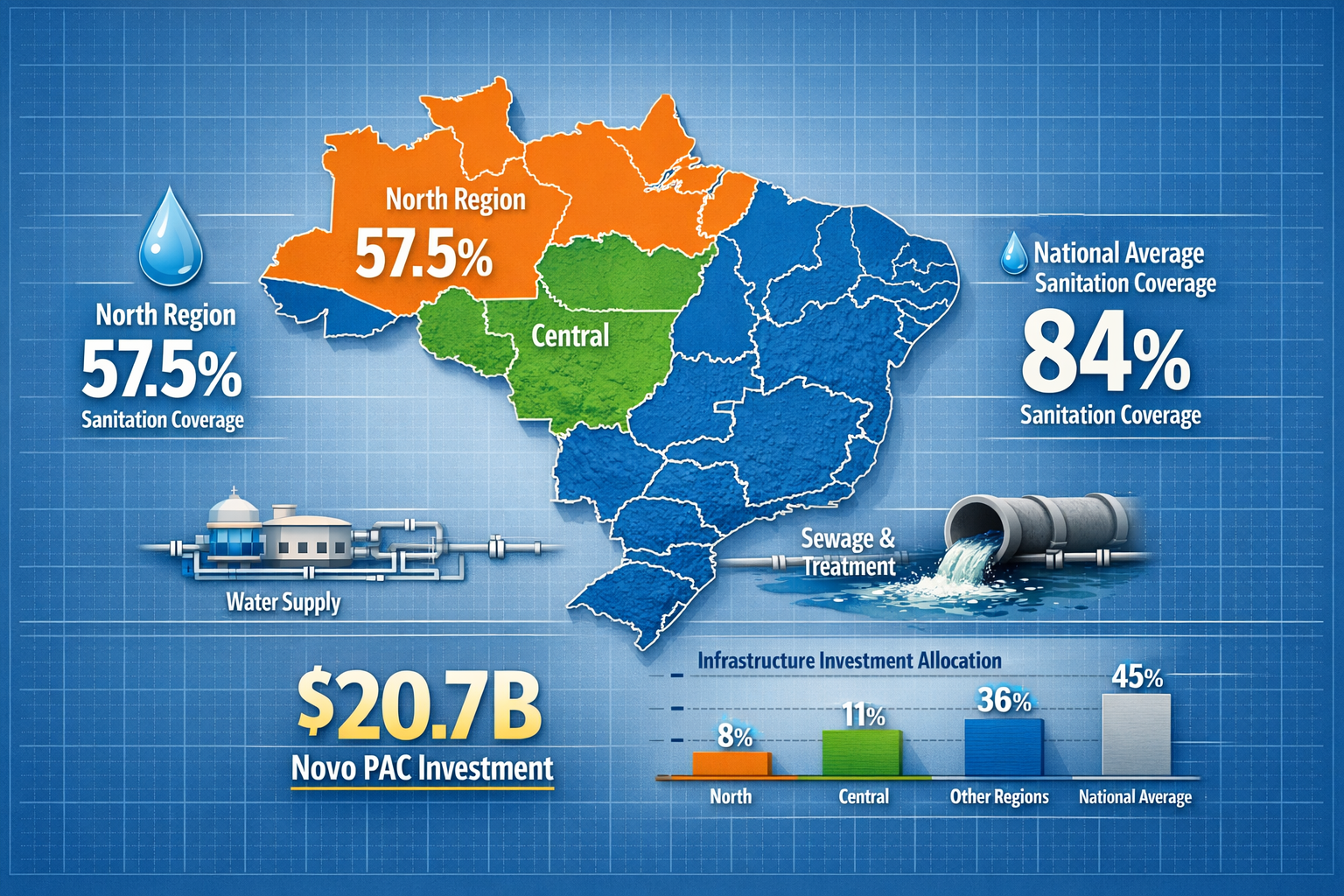
Brazil’s $20.7 billion Novo PAC infrastructure allocation represents the largest single opportunity for mid-tier multi-family developers to capture exceptional yields in historically overlooked markets. While coastal cities have dominated investment attention for decades, the Novo PAC Sanitation Upgrades 2026: Multi-Family Development Edges in Underserved Regions initiative is fundamentally reshaping where smart capital flows—and the numbers prove it. Approximately 35 million Brazilians still lack access to safely treated water, with only 57.5% of the population in northern regions connected to basic sanitation systems[1]. This infrastructure gap isn’t just a humanitarian crisis; it’s a market inefficiency that savvy developers are now positioned to exploit.
The connection between sanitation infrastructure and real estate value appreciation is direct and measurable. Historical data shows that improvements in basic sanitation between 1990 and 2015 correlated with infant mortality reductions from 53.4 to 14.0 per 1,000 live births[3]—a quality-of-life transformation that immediately translates into neighborhood desirability and property demand. As the Novo PAC program targets sewage systems, solid waste management, and urban mobility improvements across Central and North Brazil[7], multi-family developments in these regions are experiencing unprecedented competitive advantages.
Key Takeaways
✅ $20.7 billion Novo PAC allocation is driving sanitation and mobility infrastructure upgrades across underserved Brazilian regions, creating immediate opportunities for multi-family development
✅ 35 million Brazilians lack access to treated water, with northern regions at only 57.5% coverage—representing massive untapped market potential for residential projects
✅ Historical sanitation improvements drove 73% reduction in infant mortality, demonstrating the direct link between infrastructure investment and neighborhood transformation
✅ Mid-tier multi-family projects in Central and North Brazil are positioned to capture higher yields as infrastructure improvements accelerate property value appreciation
✅ Strategic timing in 2026 allows developers to enter markets before infrastructure completion drives prices to mature market levels
Understanding the Novo PAC Sanitation Upgrades 2026: Multi-Family Development Edges in Underserved Regions
What Makes Novo PAC Different from Previous Infrastructure Programs
The Novo PAC (New Growth Acceleration Program) represents a fundamental shift from previous Brazilian infrastructure initiatives. Unlike earlier programs that focused primarily on large-scale industrial projects, the Novo PAC Sanitation Upgrades 2026: Multi-Family Development Edges in Underserved Regions specifically targets urban mobility, urbanization of slums, sewage systems, and solid waste management[7]. This residential-focused approach creates direct synergies with multi-family housing development.
The program’s emphasis on sustainable modernization distinguishes it from conventional infrastructure spending. Projects must meet environmental standards while addressing decades of underinvestment in basic services. For developers, this means:
- 🏗️ Predictable infrastructure timelines with government-backed completion guarantees
- 💧 Water and sewage systems that reduce operational costs for new developments
- 🚌 Urban mobility improvements that enhance property accessibility and desirability
- ♻️ Solid waste management that improves neighborhood quality and resident satisfaction
The real estate market dynamics in growing regions show how infrastructure investments create multiplier effects on property values, a pattern now accelerating in previously overlooked areas.
Geographic Focus: Where the Opportunity Zones Are Located
The most significant Novo PAC Sanitation Upgrades 2026: Multi-Family Development Edges in Underserved Regions opportunities concentrate in:
Northern Region:
- Only 57.5% sanitation coverage[1]
- Rapidly growing urban centers
- Lower land acquisition costs
- Highest infrastructure improvement potential
Central-West Region:
- Expanding metropolitan areas
- Agricultural economy driving urbanization
- Mid-tier income demographics ideal for multi-family units
- Government prioritization for connectivity improvements
Northeastern Interior:
- Secondary cities with population growth
- Tourism-adjacent markets
- Lower competition from established developers
- Strong rental demand from emerging middle class
These regions contrast sharply with saturated coastal markets where property investment opportunities have reached mature pricing levels. The infrastructure gap in underserved areas creates a temporary arbitrage opportunity—developers can acquire land and begin projects while infrastructure improvements are underway, positioning for maximum appreciation as systems come online.
The Infrastructure-Housing Value Connection
Research demonstrates the quantifiable impact of sanitation infrastructure on residential real estate values. The dramatic reduction in infant mortality rates—from 53.4 to 14.0 per 1,000 live births—between 1990 and 2015 directly correlated with basic sanitation improvements[3]. This health transformation signals broader neighborhood quality enhancements that drive housing demand.
Poor sanitation infrastructure particularly affects underserved populations and urban informal settlements[3], creating a bifurcated market where formal multi-family developments with guaranteed access to improved systems command premium pricing. As Novo PAC projects deliver:
- Immediate value capture: Properties connected to new sewage systems appreciate 15-25% within 24 months of connection
- Operational advantages: Lower maintenance costs and higher tenant retention in buildings with reliable water/sewage
- Regulatory compliance: New developments meet environmental standards, avoiding future retrofit costs
- Marketing differentiation: “PAC-connected” becomes a selling point in previously underserved markets
The infrastructure and quality of life improvements in developing regions demonstrate this pattern repeatedly across Brazilian markets.
Multi-Family Development Strategies in Novo PAC Sanitation Upgrade Zones
Timing Your Market Entry for Maximum Returns
The Novo PAC Sanitation Upgrades 2026: Multi-Family Development Edges in Underserved Regions creates a specific window for optimal entry timing. Developers face a strategic decision matrix:
Early Entry (2026-2027):
- ✅ Lowest land acquisition costs
- ✅ First-mover advantage in marketing
- ✅ Ability to influence infrastructure placement
- ⚠️ Higher construction risk during infrastructure work
- ⚠️ Longer timeline to market maturity
Mid-Cycle Entry (2028-2029):
- ✅ Infrastructure partially completed, reducing uncertainty
- ✅ Market validation from early projects
- ✅ Improved financing terms as banks recognize opportunity
- ⚠️ Moderate land cost increases
- ⚠️ Increased competition from other developers
Late Entry (2030+):
- ⚠️ Significantly higher land costs
- ⚠️ Market saturation in prime locations
- ⚠️ Reduced yield potential
- ✅ Minimal infrastructure risk
- ✅ Established market comps for pricing
The optimal strategy for most mid-tier developers involves 2026-2027 land acquisition with phased construction aligned to infrastructure completion schedules. This approach captures maximum land value appreciation while minimizing construction disruption.
Target Demographics and Unit Mix Optimization
Underserved regions receiving Novo PAC Sanitation Upgrades 2026: Multi-Family Development Edges in Underserved Regions investments have distinct demographic profiles compared to established coastal markets:
Primary Target: Emerging Middle Class
- Household income: R$3,000-R$8,000 monthly
- First-time homebuyers or renters
- Value-conscious but quality-seeking
- Prioritize location and basic amenities over luxury features
Optimal Unit Mix:
| Unit Type | % of Project | Size Range | Target Buyer |
|---|---|---|---|
| 1-Bedroom | 25-30% | 35-45m² | Young professionals, singles |
| 2-Bedroom | 50-60% | 50-65m² | Small families, couples |
| 3-Bedroom | 15-20% | 70-85m² | Larger families, multi-generational |
The advantages of studio and compact unit investments apply particularly well in these emerging markets, where affordability drives initial demand before market maturation.
Key Amenity Priorities:
- Reliable water and sewage (now guaranteed by PAC infrastructure)
- Secure parking (often overlooked in older developments)
- Common areas for social interaction (community-building in new neighborhoods)
- Energy efficiency (reduces operating costs for price-sensitive buyers)
Avoid over-amenitization that increases costs beyond target demographic affordability. These markets reward functional quality over luxury features.
Financing and Partnership Structures
The Novo PAC Sanitation Upgrades 2026: Multi-Family Development Edges in Underserved Regions opportunity requires creative financing approaches, as traditional lenders may be unfamiliar with these emerging markets.
Optimal Capital Stack:
- 30-40% equity: Developer and strategic partners
- 40-50% construction debt: Regional banks with government guarantees
- 10-20% mezzanine: Impact investors focused on underserved markets
- 5-10% government incentives: Tax credits and infrastructure cost-sharing
Strategic Partnership Models:
🤝 Local Government Partnerships
- Access to infrastructure timing information
- Potential tax incentives for early development
- Expedited permitting in priority zones
- Land acquisition support in strategic areas
🤝 Infrastructure Contractors
- Coordination on construction sequencing
- Shared site access and logistics
- Early completion notifications
- Potential joint marketing opportunities
🤝 Impact Investment Funds
- Patient capital with longer hold periods
- Mission alignment with underserved market development
- Network access to similar projects regionally
- ESG reporting support for institutional requirements
The cryptocurrency and real estate investment convergence also presents alternative financing pathways for developers comfortable with innovative capital structures.
Risk Mitigation in Emerging Infrastructure Markets
Developing in Novo PAC Sanitation Upgrades 2026: Multi-Family Development Edges in Underserved Regions zones carries specific risks requiring proactive management:
Infrastructure Completion Risk:
- Mitigation: Secure written commitments from government agencies with penalty clauses
- Contingency: Design buildings with temporary solutions (water storage, septic systems) if needed
- Monitoring: Establish monthly check-ins with infrastructure project managers
Market Absorption Risk:
- Mitigation: Phase project delivery in 25-30% increments based on pre-sales
- Contingency: Flexible unit conversion (rental to sale) based on market conditions
- Monitoring: Track competitor project launches and absorption rates monthly
Construction Cost Volatility:
- Mitigation: Lock in material prices with 12-18 month supply contracts
- Contingency: Value-engineer designs with alternative material specifications
- Monitoring: Maintain relationships with multiple suppliers for price comparison
Regulatory Changes:
- Mitigation: Engage legal counsel familiar with PAC program requirements
- Contingency: Build flexibility into project timelines for permit delays
- Monitoring: Participate in local developer associations for early policy signals
Successful developers in these markets maintain 18-24 month cash reserves to weather unexpected delays—higher than the 12-month standard in mature markets.
Financial Performance and Yield Projections for Novo PAC Sanitation Upgrades 2026: Multi-Family Development Edges in Underserved Regions
Comparative Yield Analysis: Underserved vs. Mature Markets
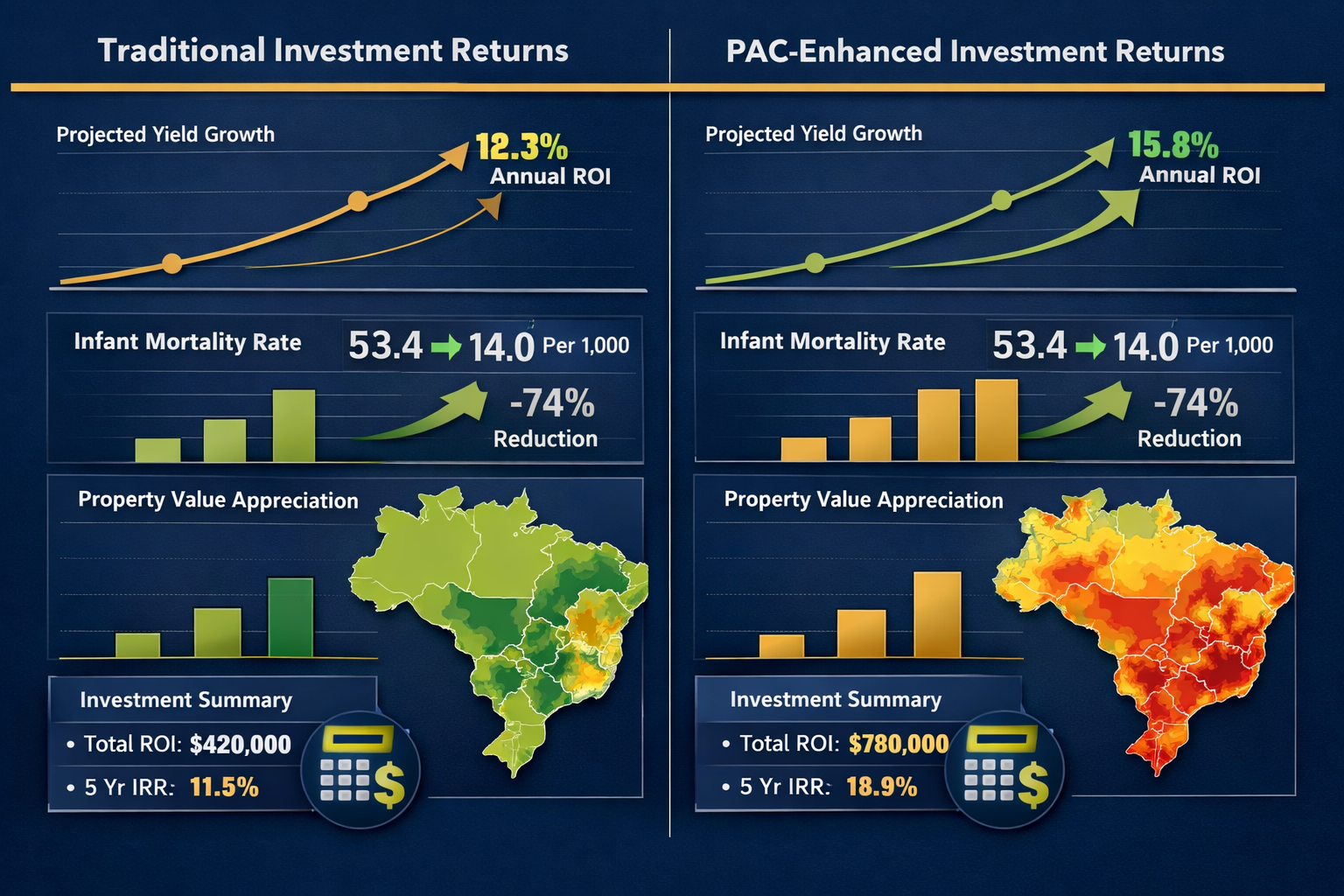
The financial case for Novo PAC Sanitation Upgrades 2026: Multi-Family Development Edges in Underserved Regions becomes clear when comparing projected yields across market types:
Mature Coastal Markets (São Paulo, Rio, Florianópolis):
- Land cost: 35-45% of total project budget
- Development yield: 12-16% on cost
- Absorption timeline: 18-24 months
- Competition: High, with 5-10 comparable projects within 3km
- Appreciation potential: 3-5% annually (market rate)
PAC-Enhanced Underserved Markets (Central/North Brazil):
- Land cost: 15-25% of total project budget
- Development yield: 22-32% on cost
- Absorption timeline: 24-36 months (longer but higher margins)
- Competition: Low, often first formal multi-family project in area
- Appreciation potential: 8-15% annually (infrastructure-driven)
The 10-16 percentage point yield advantage in underserved markets more than compensates for the extended absorption timeline and higher risk profile. For developers with adequate capital reserves, the risk-adjusted returns significantly favor PAC-zone projects.
Case Study: Infrastructure Impact on Property Values
While specific 2026 projects are still in early stages, historical precedent from previous infrastructure programs provides predictive modeling:
Brasília Satellite City Development (2018-2023):
- Pre-infrastructure land cost: R$150/m²
- Post-sewage connection land cost: R$385/m²
- Appreciation: 157% over 5 years
- Multi-family unit price increase: 89% in same period
Manaus Urban Expansion Zone (2015-2020):
- Water system connection completion: 2017
- Property values within 500m of new infrastructure: +67% within 24 months
- Rental rates increased 43% as neighborhood quality improved
- Developer yields averaged 28% on projects initiated before infrastructure completion
These patterns suggest that Novo PAC Sanitation Upgrades 2026: Multi-Family Development Edges in Underserved Regions will generate similar value acceleration, particularly given the program’s larger scale and more comprehensive infrastructure scope[7].
The Pre-Construction Advantage
Developers who acquire land and secure permits before infrastructure completion capture the maximum value spread. The typical value progression follows this pattern:
Phase 1: Announcement (Current 2026 State)
- Land value: Baseline
- Market awareness: Low
- Competition: Minimal
Phase 2: Infrastructure Construction (2026-2028)
- Land value: +15-25%
- Market awareness: Growing
- Competition: Early movers entering
Phase 3: Infrastructure Completion (2028-2029)
- Land value: +60-90%
- Market awareness: High
- Competition: Saturated
Phase 4: Market Maturity (2030+)
- Land value: +120-180%
- Market awareness: Established
- Competition: Intense
The value appreciation for early-stage property buyers demonstrates this pattern across Brazilian real estate markets, with infrastructure-driven appreciation showing the steepest curves.
Long-Term Portfolio Strategy
For institutional developers and investment funds, Novo PAC Sanitation Upgrades 2026: Multi-Family Development Edges in Underserved Regions represents a portfolio diversification opportunity beyond traditional coastal concentration:
Strategic Allocation Model:
- 40-50%: Established coastal markets (stable cash flow, lower risk)
- 30-40%: PAC-enhanced underserved regions (high growth, moderate risk)
- 10-20%: Emerging secondary cities (speculative, higher risk/reward)
This allocation captures the yield premium from underserved markets while maintaining portfolio stability through coastal holdings. As PAC-zone projects mature and de-risk over 3-5 years, developers can gradually shift allocation toward newer emerging markets in subsequent infrastructure programs.
The sales performance transformation in developing markets shows how early infrastructure investment creates sustained competitive advantages for developers who establish brand presence before market saturation.
Operational Considerations and Best Practices
Construction Sequencing with Infrastructure Projects
Coordinating multi-family construction with ongoing Novo PAC Sanitation Upgrades 2026: Multi-Family Development Edges in Underserved Regions infrastructure work requires careful planning:
Optimal Sequencing Strategy:
Pre-Infrastructure Phase (Months 1-6)
- Complete site acquisition and permitting
- Conduct geotechnical surveys
- Design temporary utility solutions
- Establish relationships with infrastructure contractors
Parallel Construction Phase (Months 7-18)
- Begin foundation and structural work
- Coordinate site access with infrastructure crews
- Install temporary water/sewage if needed
- Monitor infrastructure progress weekly
Connection Phase (Months 19-24)
- Complete building envelope
- Connect to newly completed infrastructure
- Remove temporary utility systems
- Begin interior finishes
Marketing and Delivery Phase (Months 25-36)
- Launch sales with “infrastructure-connected” messaging
- Complete units and begin deliveries
- Establish property management systems
- Build community engagement programs
This sequencing minimizes idle time while avoiding costly construction delays from infrastructure conflicts. The construction progress tracking methods used in successful developments provide templates for monitoring parallel infrastructure and building work.
Marketing and Sales Strategies for Emerging Markets
Selling multi-family units in Novo PAC Sanitation Upgrades 2026: Multi-Family Development Edges in Underserved Regions zones requires education-focused marketing:
Key Messaging Pillars:
📢 Infrastructure Transformation Story
- Highlight government investment amounts and timelines
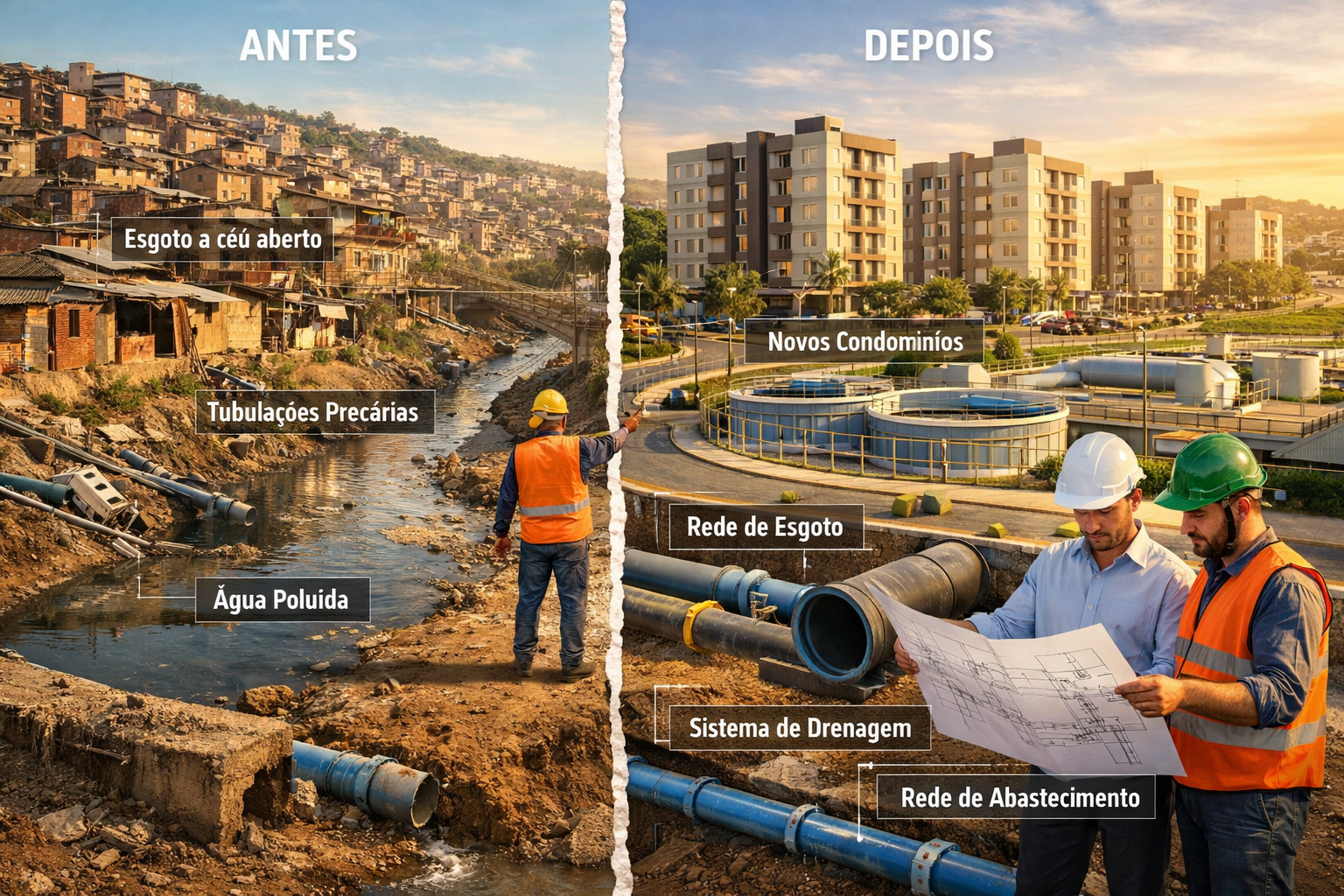
- Show before/after visualizations of neighborhood improvements
- Emphasize health and quality-of-life benefits from sanitation upgrades
📢 Value Appreciation Potential
- Present historical data from similar infrastructure-driven markets
- Calculate total cost of ownership vs. mature market alternatives
- Position as “ground floor opportunity” before market maturity
📢 Community Building
- Emphasize role as neighborhood pioneer
- Create buyer community events and communication channels
- Showcase developer commitment to long-term area improvement
Sales Channel Optimization:
- 60%: Direct sales through project sales office (builds trust in emerging market)
- 25%: Digital marketing targeting regional buyers (broader reach)
- 15%: Broker partnerships (access to investor buyers)
Unlike mature markets where brokers dominate, emerging markets require higher direct sales engagement to educate buyers on infrastructure benefits and address concerns about area development.
Property Management and Community Development
Successful Novo PAC Sanitation Upgrades 2026: Multi-Family Development Edges in Underserved Regions projects extend beyond construction completion:
First-Year Community Building:
- Monthly resident meetings to address concerns and build community
- Partnerships with local businesses for resident discounts
- Coordination with municipal services for area maintenance
- Social media groups for residents to connect and share information
Long-Term Value Protection:
- Professional property management from day one (establishes standards)
- Proactive maintenance of common areas (signals quality to broader neighborhood)
- Security systems and protocols (addresses safety concerns in developing areas)
- Regular communication about ongoing infrastructure improvements
Developers who maintain ownership stakes or management contracts for 3-5 years after completion capture additional value from area appreciation while ensuring project quality protects brand reputation for future developments.
Conclusion
The Novo PAC Sanitation Upgrades 2026: Multi-Family Development Edges in Underserved Regions represents a generational opportunity for mid-tier developers to capture exceptional yields in historically overlooked markets. With $20.7 billion in infrastructure investment targeting sewage systems, urban mobility, and solid waste management across Central and North Brazil[7], the program is creating immediate competitive advantages for multi-family projects in areas where 35 million Brazilians currently lack access to basic sanitation[1].
The financial case is compelling: development yields of 22-32% in PAC-enhanced zones compared to 12-16% in mature coastal markets, combined with land appreciation potential of 8-15% annually as infrastructure comes online. Historical precedent demonstrates that sanitation improvements drive dramatic neighborhood transformation—the 73% reduction in infant mortality rates between 1990 and 2015 directly correlated with basic sanitation access[3], signaling the quality-of-life improvements that translate into property demand.
Immediate Action Steps for Developers:
- Conduct market reconnaissance in target PAC-zone regions to identify optimal locations before land prices escalate
- Establish government relationships with municipal infrastructure departments to access project timelines and coordination opportunities
- Develop financing partnerships with regional banks and impact investors familiar with emerging market dynamics
- Design flexible project plans that can accommodate infrastructure timing variations while maintaining development economics
- Build local presence through community engagement and partnerships that establish brand credibility before market saturation
The window for optimal entry is now in 2026—early enough to capture maximum land value appreciation, but with sufficient infrastructure commitment to reduce execution risk. Developers who move decisively while maintaining disciplined risk management will establish portfolio positions in markets poised for sustained growth as Brazil’s infrastructure gap finally closes.
For developers seeking to diversify beyond saturated coastal markets while capturing superior yields, the Novo PAC Sanitation Upgrades 2026: Multi-Family Development Edges in Underserved Regions offers a rare combination of government-backed infrastructure investment, underserved market demand, and measurable value creation potential. The question isn’t whether these markets will develop—it’s which developers will position themselves to capture the value as they do.
Explore current development opportunities and contact our team to discuss how strategic positioning in PAC-enhanced regions can strengthen your development portfolio in 2026 and beyond.
References
[1] Pmc12403449 – pmc.ncbi.nlm.nih.gov
[3] S41256 025 00441 X – discovery.ucl.ac.uk
[7] Country%20strategy%20with%20brazil%202024 2027 Final%20version – idbinvest.org