
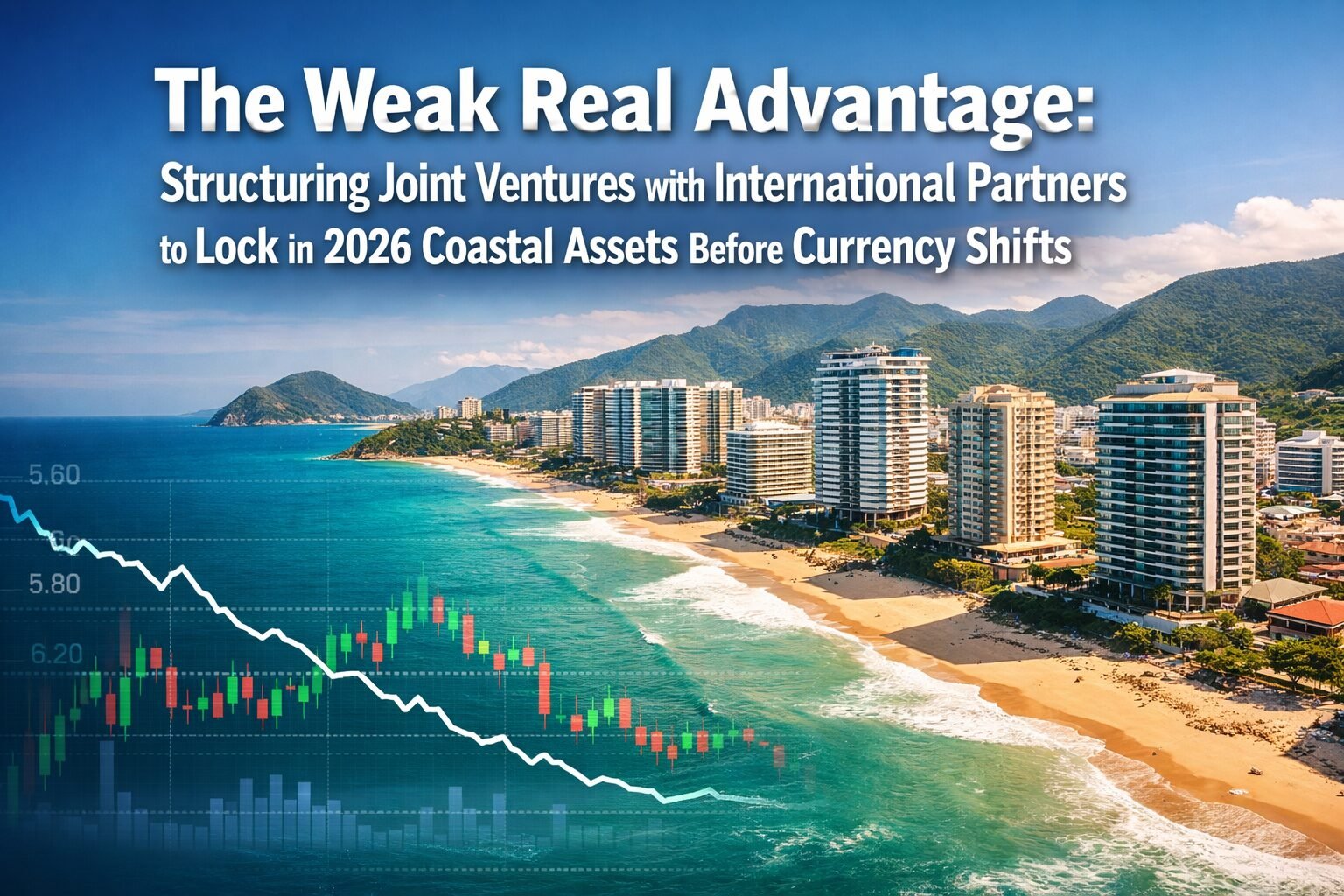
Currency hedging appeared in 65% of cross-border deals in 2025—up from just 40% in 2024—signaling that international investors recognize the temporary nature of exchange rate advantages and are racing to lock in favorable positions before markets normalize[1]. The Brazilian Real’s historic weakness in 2026 has created an unprecedented 12-24 month window for international capital to acquire premium coastal assets at valuations that may never return.
Understanding The Weak Real Advantage: Structuring Joint Ventures with International Partners to Lock in 2026 Coastal Assets Before Currency Shifts represents more than opportunistic timing—it’s a strategic imperative for developers who recognize that currency cycles create wealth transfer opportunities measured in decades, not quarters.
Key Takeaways
- Currency windows are temporary: The weak Real provides international buyers with 12-25% purchasing power advantages in 2026, but strategic developers must structure deals now before normalization
- Joint venture structures preserve flexibility: Minority stake arrangements allow international partners to enter high-value coastal markets while navigating regulatory requirements and preserving future control options
- Gateway coastal cities attract premium capital: International investors are specifically targeting real estate in Brazil’s coastal gateway cities as primary acquisition objectives in 2026
- Hedging is now standard practice: Currency risk management has become essential, with sophisticated structures protecting both parties from exchange rate volatility
- Timing determines decade-long returns: Developers who structure partnerships during this 2026 currency window can lock in advantages that compound over entire development cycles
Understanding the Currency Advantage Window in 2026
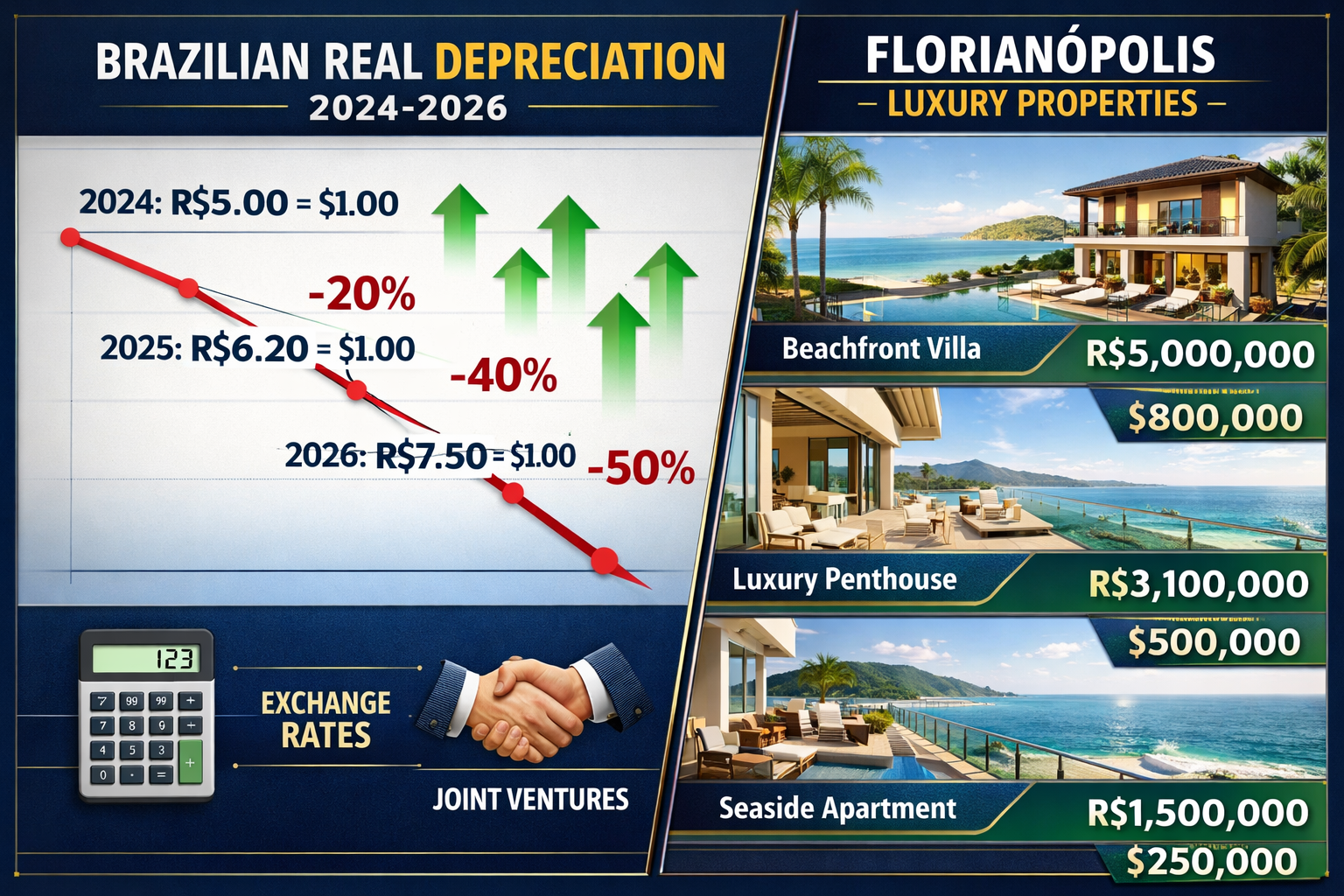
The Brazilian Real’s depreciation against major currencies has created what financial analysts call a “purchasing power arbitrage”—a temporary misalignment between asset values and international buying capacity. For foreign investors holding dollars, euros, or pounds, Brazilian coastal properties are effectively 15-25% less expensive than they were 24 months ago, despite underlying asset quality remaining constant or improving.
Why This Window Won’t Last
Currency advantages are inherently temporary. European buyers enjoyed a 12% purchasing power advantage for U.S. assets in late 2025 due to EUR weakness, yet strategic buyers still pursued acquisitions despite FX headwinds because they understood the underlying value proposition[1]. The same principle applies to Brazil’s coastal markets in 2026.
Three factors will close this window:
- Central bank interventions designed to stabilize the Real and prevent capital flight
- Market corrections as international capital flows increase demand and push local prices higher
- Economic recovery cycles that naturally strengthen emerging market currencies during global expansion phases
The Florianópolis real estate market exemplifies this dynamic, where strong fundamentals meet temporary currency advantages to create exceptional entry points for international partnerships.
Quantifying the Real Advantage
| Currency Pair | 2024 Average | 2026 Current | Purchasing Power Gain |
|---|---|---|---|
| USD/BRL | 4.95 | 6.15 | +24.2% |
| EUR/BRL | 5.35 | 6.45 | +20.6% |
| GBP/BRL | 6.25 | 7.50 | +20.0% |
These figures translate directly into acquisition costs. A R$10 million coastal property that cost a U.S. investor $2.02 million in 2024 now costs just $1.63 million—a savings of $390,000 on a single asset.
The Weak Real Advantage: Structuring Joint Ventures for Maximum Strategic Value
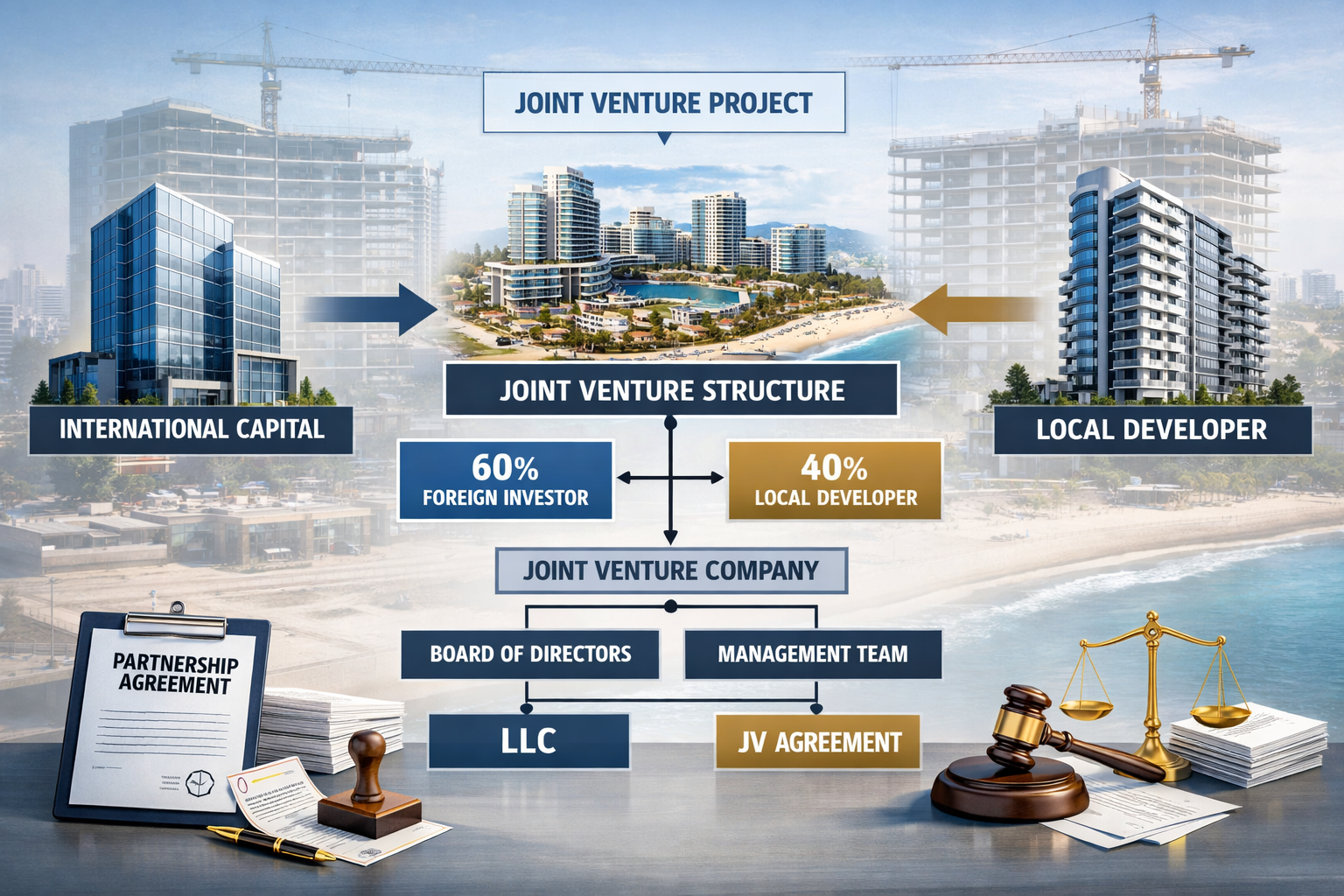
Structuring joint ventures to capitalize on The Weak Real Advantage: Structuring Joint Ventures with International Partners to Lock in 2026 Coastal Assets Before Currency Shifts requires more sophistication than simple currency arbitrage. The most successful partnerships balance immediate financial advantages with long-term strategic positioning.
Core Structural Elements
1. Minority Stake Entry Positions
Strategic buyers increasingly consider minority stake structures in sectors facing regulatory scrutiny, preserving optionality for future control acquisition when regulatory clarity improves[1]. This approach offers international partners:
- Lower initial capital requirements during currency advantage periods
- Reduced regulatory friction and approval timelines
- Preserved upside participation as assets appreciate
- Clear pathways to majority control as markets mature
2. Currency-Protected Capital Contributions
Modern joint ventures incorporate sophisticated currency hedging mechanisms that appeared in 65% of cross-border deals in 2025[1]. These structures typically include:
- Fixed exchange rate agreements for initial capital contributions
- Collar arrangements that protect both parties from extreme volatility
- Staged funding mechanisms that lock in favorable rates across development phases
- Natural hedges through revenue-sharing in multiple currencies
3. Local Expertise + International Capital Model
The most successful structures pair international financial capacity with local development expertise. Brazilian developers bring:
✅ Regulatory navigation through complex permitting processes
✅ Market intelligence on micro-location dynamics and buyer preferences
✅ Construction management with established contractor relationships
✅ Sales infrastructure for local and domestic buyer channels
International partners contribute:
💰 Capital efficiency through favorable currency conversion
🌍 Global buyer networks for premium unit pre-sales
📊 Financial structuring expertise for complex development financing
🔒 Risk management frameworks from mature market experience
Optimal Ownership Structures for 2026
The ideal joint venture structure for coastal asset acquisition in 2026 typically follows one of three models:
Model A: Development Partnership (60/40)
- Local developer: 60% equity, operational control
- International partner: 40% equity, financial oversight
- Best for: Established developers with proven track records seeking growth capital
Model B: Capital Partnership (50/50)
- Equal equity split with defined decision-making protocols
- International partner provides majority of capital via preferred structure
- Best for: Balanced partnerships with complementary strengths
Model C: Platform Investment (70/30)
- International partner: 70% equity, strategic control
- Local operator: 30% equity, operational management
- Best for: International investors building long-term market presence
Projects in emerging coastal regions like Ingleses in Florianópolis particularly benefit from these structures, where infrastructure development and appreciation potential align with currency advantages.
Identifying and Securing 2026 Coastal Assets Before Normalization
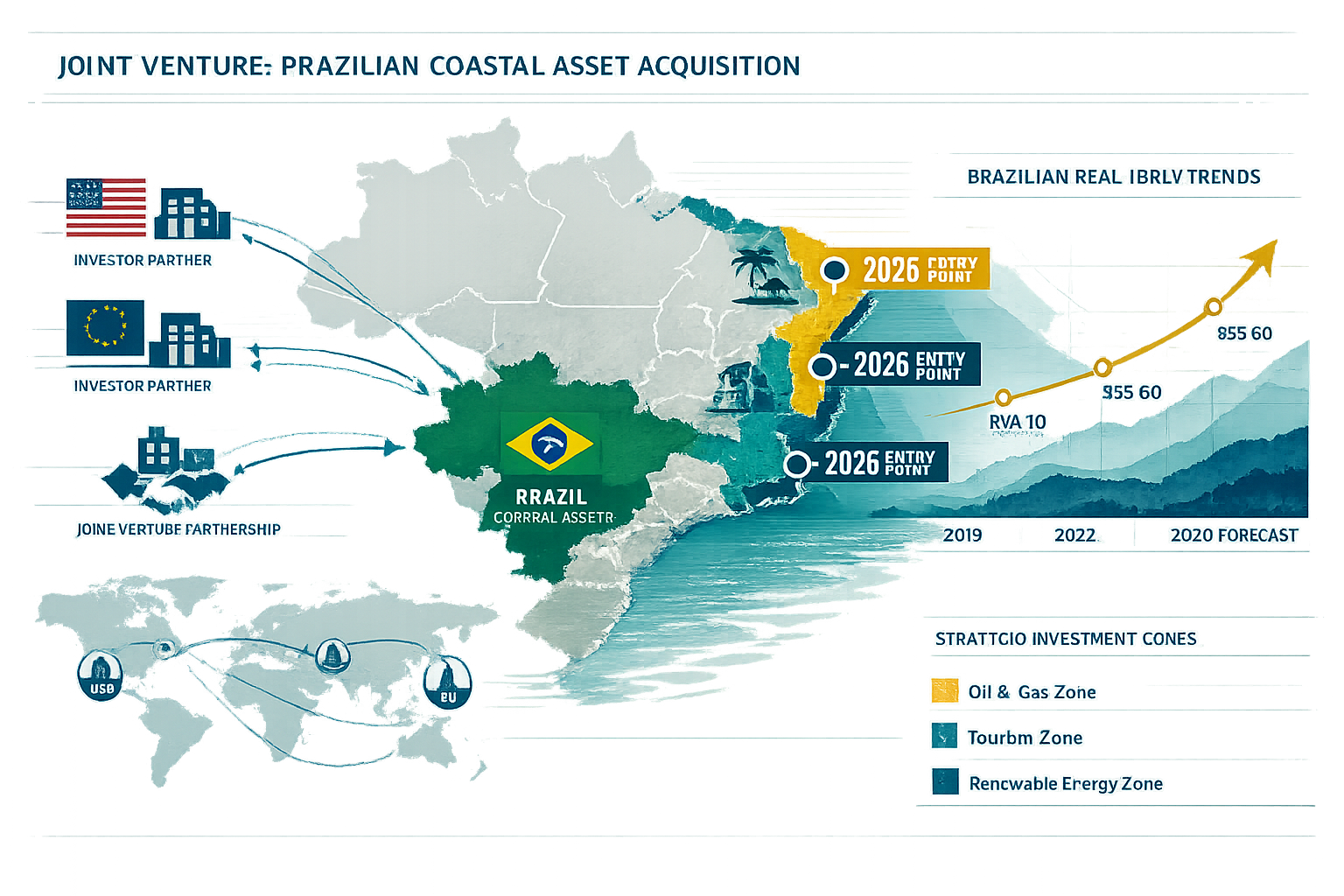
MENA capital and other international investors are specifically targeting “real estate in gateway cities” as primary M&A objectives[1], with Brazilian coastal markets receiving increased attention in 2026. The race to secure premium assets before currency normalization requires systematic identification and rapid execution capabilities.
Target Asset Characteristics
Premium coastal assets worth locking in during 2026 include:
🏖️ Beachfront development sites with approved permits in established tourism corridors
🏗️ Under-construction projects offering immediate entry at favorable currency rates
🏢 Income-producing assets with dollar-denominated or inflation-indexed leases
📈 Land banks in infrastructure expansion zones with 3-5 year development horizons
Geographic Prioritization
Gateway coastal cities offer the strongest combination of liquidity, appreciation potential, and international buyer demand. Priority markets include:
- Florianópolis and surrounding beaches – Established international tourism, strong domestic demand, infrastructure investment
- Rio de Janeiro premium zones – Global brand recognition, luxury segment resilience
- Northeastern coastal capitals – Emerging markets with significant upside potential
- São Paulo coastal corridor – Proximity to wealth centers, weekend/vacation demand
The valuation potential of buying pre-construction compounds when combined with favorable currency entry points, creating dual appreciation mechanisms.
Due Diligence Acceleration
Time compression is essential when capitalizing on currency windows. Accelerated due diligence frameworks should address:
Legal & Regulatory
- Title verification and encumbrance searches
- Zoning compliance and permit status validation
- Environmental licensing and compliance status
- Foreign ownership restrictions and structuring requirements
Financial & Market
- Comparable transaction analysis at current exchange rates
- Pro forma modeling with currency normalization scenarios
- Exit liquidity assessment for international buyers
- Local financing availability and terms
Operational & Development
- Construction cost verification and contractor capability
- Timeline feasibility and completion risk assessment
- Sales absorption analysis for target buyer segments
- Property management and operational infrastructure
Negotiation Strategies for Currency-Advantaged Deals
Successful negotiations during currency advantage periods require acknowledging the reality that local sellers understand exchange rate dynamics. Effective approaches include:
Value Creation Beyond Price
- Faster closing timelines with reduced contingencies
- Larger earnest money deposits demonstrating commitment
- Development partnerships that preserve seller upside participation
- Staged acquisitions that provide immediate liquidity plus future consideration
Currency Risk Sharing
- Partial payment in hard currency at favorable rates
- Inflation-indexed components for deferred payments
- Revenue sharing arrangements that benefit both parties from appreciation
- Performance earnouts tied to development milestones rather than time
Developers can explore opportunities in projects like Tramonto and Solis to understand how structured developments capitalize on market timing advantages.
Risk Management and Currency Hedging Strategies
While the weak Real creates opportunities, sophisticated partnerships require comprehensive risk management frameworks that protect both parties from adverse scenarios.
Multi-Layer Hedging Approaches
Operational Hedges
- Revenue diversification across domestic and international buyer segments
- Construction contracts with currency-adjusted escalation clauses
- Pre-sales programs that lock in buyer commitments at current rates
- Material procurement strategies that balance local and imported components
Financial Hedges
- Forward contracts fixing exchange rates for future capital calls
- Options strategies providing downside protection with upside participation
- Cross-currency swaps for long-term development financing
- Natural hedges through dollar-denominated revenue streams
Strategic Hedges
- Portfolio diversification across multiple coastal markets
- Staged development timelines that allow mid-course adjustments
- Exit optionality through multiple buyer channels and holding periods
- Partnership structures with flexible capital and control provisions
Regulatory Considerations
International joint ventures in Brazilian real estate must navigate several regulatory frameworks:
Foreign Investment Registration
- Central Bank registration requirements for foreign capital
- Tax treaty optimization for dividend repatriation
- Transfer pricing documentation for related-party transactions
- Compliance with foreign exchange control regulations
Real Estate Specific Requirements
- Rural property ownership restrictions for foreign entities
- Coastal zone development regulations and environmental licensing
- Municipal approval processes for foreign investment structures
- Condominium governance and foreign ownership rights
Understanding cryptocurrency integration in real estate development provides additional insights into innovative financial structuring for international partnerships.
Executing the 2026 Opportunity: Action Timeline
The currency advantage window operates on a compressed timeline. Developers and international partners should follow this execution framework:
Months 1-2: Partnership Formation
- Identify compatible international partners with capital availability
- Structure preliminary term sheets with currency protection mechanisms
- Establish legal entities and regulatory compliance frameworks
- Secure preliminary financing commitments
Months 3-4: Asset Identification
- Deploy systematic screening of target coastal assets
- Conduct accelerated due diligence on priority opportunities
- Negotiate letter of intent with currency-advantaged pricing
- Finalize partnership operating agreements
Months 5-6: Transaction Closing
- Complete comprehensive due diligence and title work
- Execute currency hedging instruments for capital contributions
- Close acquisitions and fund initial development phases
- Establish operational governance and reporting systems
Months 7-24: Development Execution
- Manage construction with currency-optimized procurement
- Execute pre-sales programs targeting international buyers
- Monitor currency markets and adjust hedging positions
- Prepare exit strategies as currency normalizes
The performance transformation in Florianópolis real estate demonstrates how market timing combined with execution excellence generates outsized returns.
Case Study: Structuring Success in Coastal Markets
Consider a hypothetical joint venture structured in Q2 2026:
Partnership Structure:
- International investor: 45% equity ($2.5M USD = R$15.4M at 6.15 rate)
- Local developer: 55% equity (R$18.9M via land contribution and development rights)
- Total project value: R$34.3M ($5.6M USD equivalent)
Currency Protection Mechanisms:
- Fixed exchange rate of 6.15 for initial capital contribution
- Collar arrangement (5.80-6.50) for future capital calls
- 60% of unit sales targeted to international buyers in USD/EUR
- Revenue sharing adjusted quarterly for currency fluctuations
Projected Outcomes:
If currency normalizes to 5.50 BRL/USD by project completion (18 months):
- International partner’s R$15.4M investment = $2.8M equivalent (12% FX gain)
- Property appreciation (conservative 20%) = R$41.2M total value
- International partner’s share = R$18.5M = $3.36M (34% total return)
- Annual return = 22.7% in USD terms
This structure demonstrates how The Weak Real Advantage: Structuring Joint Ventures with International Partners to Lock in 2026 Coastal Assets Before Currency Shifts creates compounding returns through currency entry advantages plus underlying asset appreciation.
Conclusion: Capitalizing on the 2026 Currency Window
The weak Brazilian Real in 2026 represents a generational opportunity for developers who understand that currency cycles create wealth transfer moments that define decades of returns. The Weak Real Advantage: Structuring Joint Ventures with International Partners to Lock in 2026 Coastal Assets Before Currency Shifts is not merely about opportunistic timing—it’s about strategic positioning for long-term market leadership.
The evidence is clear: currency hedging has become standard practice in cross-border deals, international capital is specifically targeting gateway city real estate, and sophisticated structures using minority stakes preserve optionality while capturing immediate advantages[1]. The developers who act decisively during this 12-24 month window will lock in competitive advantages that persist long after exchange rates normalize.
Actionable Next Steps
For Brazilian Developers:
- Identify international partners with capital availability and strategic alignment for coastal projects
- Structure preliminary term sheets incorporating currency protection mechanisms and staged capital deployment
- Prioritize assets with strong fundamentals in gateway coastal markets that attract international buyer demand
- Engage legal and financial advisors experienced in cross-border joint venture structuring
- Move quickly recognizing that currency windows close faster than development timelines
For International Investors:
- Establish Brazilian legal entities and regulatory compliance frameworks immediately
- Partner with established local developers who bring market knowledge and operational expertise
- Implement currency hedging strategies that lock in favorable rates while preserving upside
- Focus on gateway coastal assets with liquidity and international buyer appeal
- Structure for flexibility using minority stakes that preserve future control options
The investment opportunities in Florianópolis studios and other coastal segments demonstrate how currency advantages amplify already strong market fundamentals.
The 2026 currency window won’t wait for perfect preparation. Developers and international partners who recognize this moment and execute with sophisticated joint venture structures will look back on this period as the foundation of extraordinary long-term returns. The weak Real advantage is real, temporary, and actionable—but only for those who move decisively before normalization closes the window.
For more information about structuring international partnerships in Brazilian coastal real estate, contact our team or explore our current development projects.
References
[1] Cross Border Ma Why Decembers Global Deal Sprint Signals A 2026 Transformation – maadvisor.com
[2] Emerging Markets 2026 Outlook – franklintempleton.com
[3] Why A Weaker Us Dollar Could Drive The Next Wave Of Foreign Buyers To Miami Real Estate – brosdaandbentley.com
[4] The Bullish Case For Emerging Markets After A Decade Of Us Exceptionalism – eastspring.com
[5] Country Atlas 2026 Az – allianz.com
[6] Sam Market Outlook 2026 Climbing Towards New Highs – santanderassetmanagement.com
[7] Might Makes Right Is Back Are Markets Already Adjusting – usfunds.com
[8] Why Us Rate Cuts Matter More For The Gcc – gulfbusiness.com
[9] The Year Ahead 2026 – natwest.com
[10] Cio Monthly Extended En 1653356 – ubs.com