
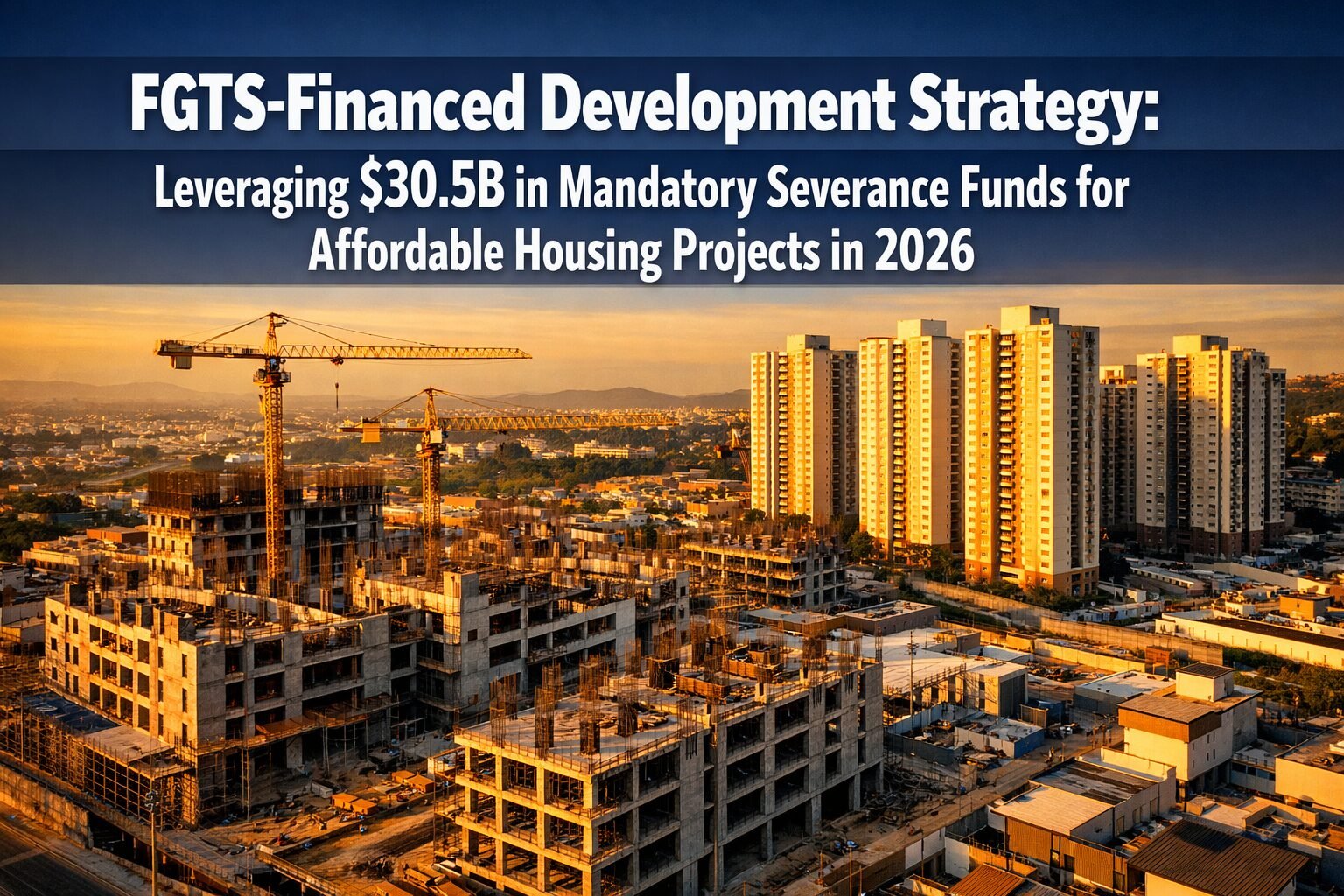
Every formal-sector worker in Brazil contributes 8% of their monthly salary to a fund they rarely think about — yet that fund is quietly becoming one of the most powerful engines of real estate development on the continent. In 2026, the FGTS-Financed Development Strategy: Leveraging $30.5B in Mandatory Severance Funds for Affordable Housing Projects in 2026 has moved from a background policy mechanism to the centerpiece of Brazil’s national housing agenda, commanding a $30.5 billion allocation that dwarfs most sovereign housing budgets worldwide [3]. For developers, investors, and urban planners, understanding how this capital flows — and how to position projects to access it — is no longer optional. It is a competitive necessity.
Key Takeaways 📌
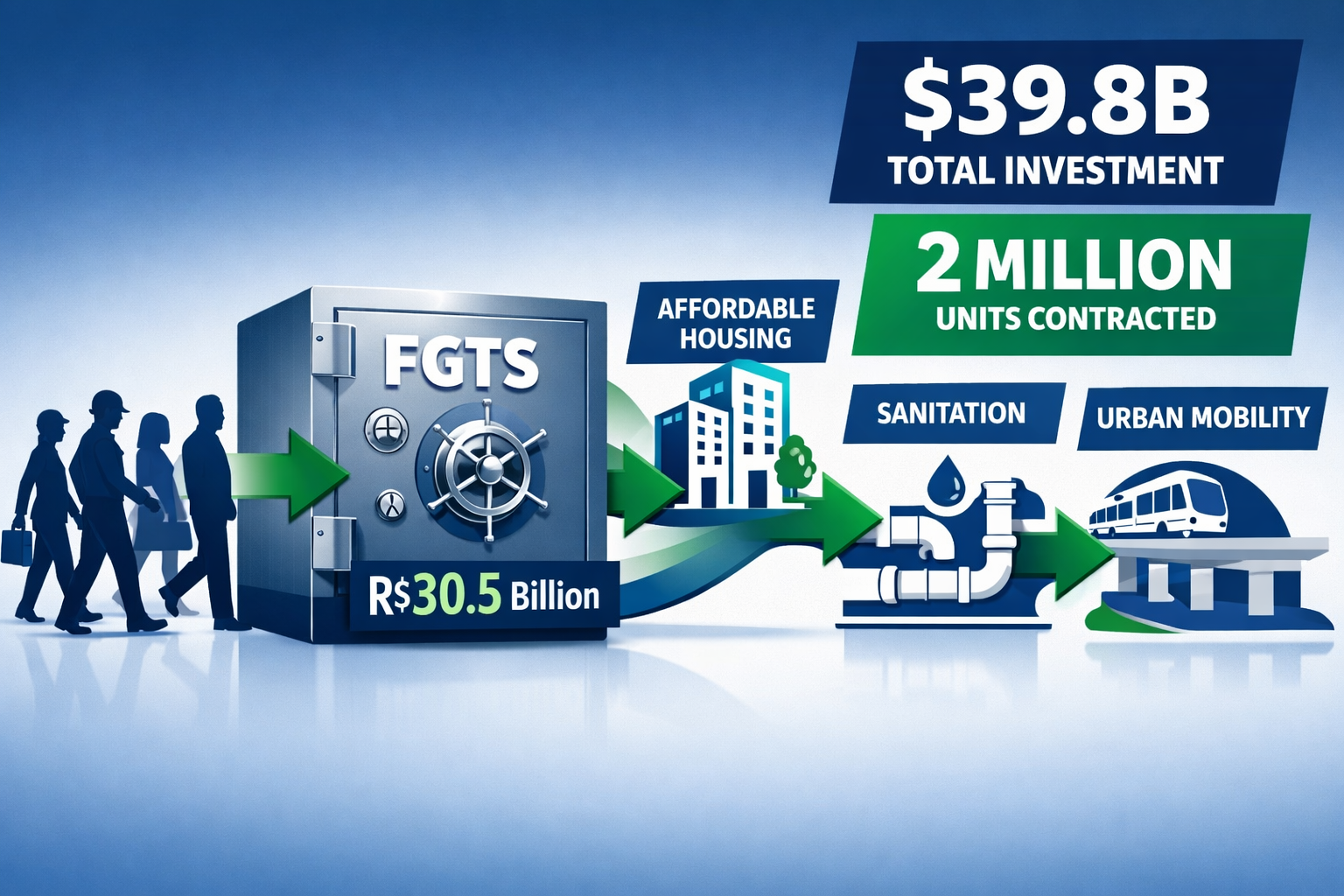
- $30.5 billion in FGTS funds are allocated for housing programs in 2026, forming the backbone of a $39.8 billion total housing investment package.
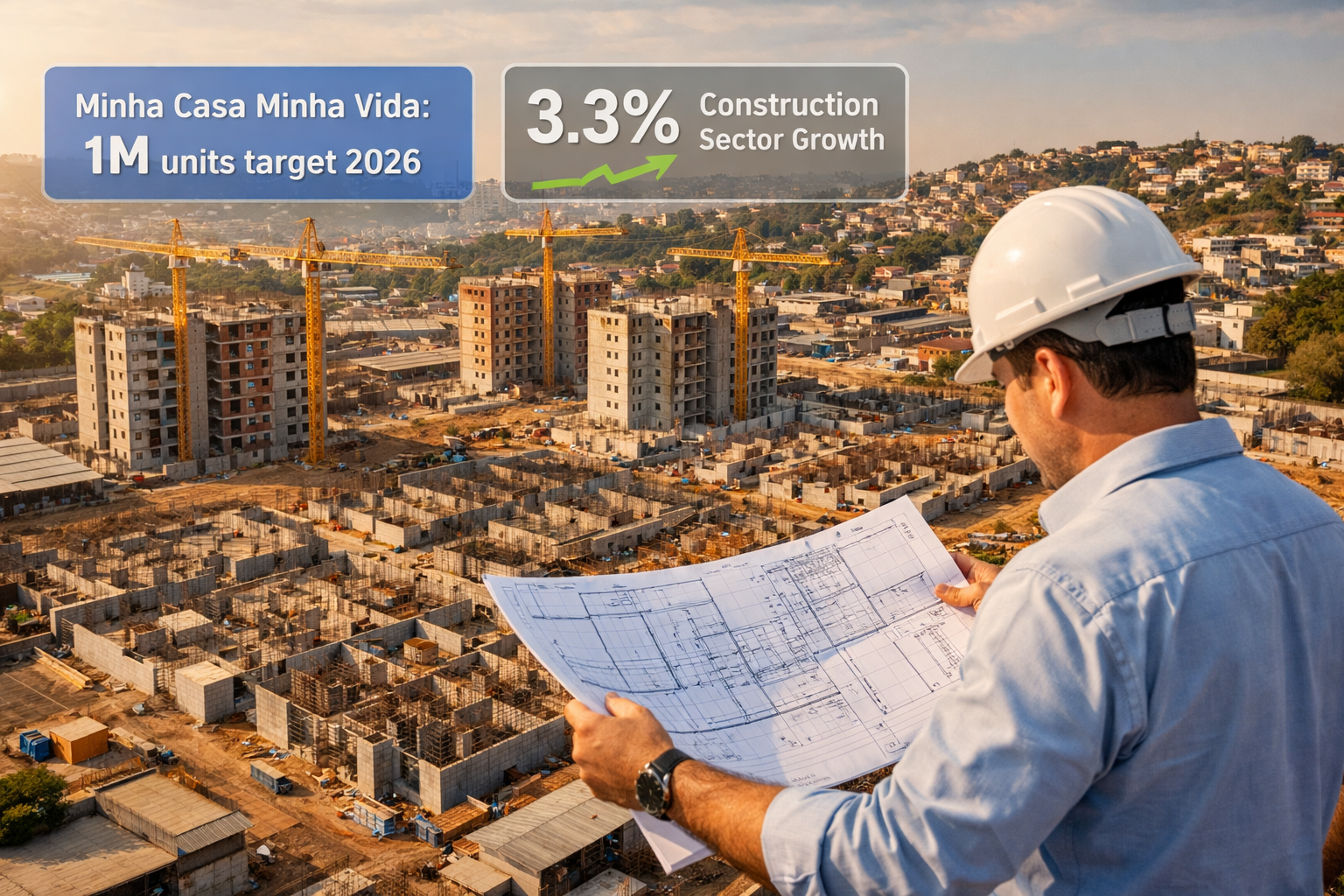
- The “Minha Casa, Minha Vida” (MCMV) program targets 1 million additional contracted units by December 2026, building on 2 million already contracted since its relaunch.
- FGTS financing offers below-market interest rates, partially insulating qualifying projects from Brazil’s high Selic benchmark rate.
- A newly launched “Reforma Casa Brasil” program adds $7.4 billion for urban housing improvement, opening a second channel for developer and contractor participation.
- Construction sector growth is now projected at 3.3% for 2026 — nearly double the initial forecast — driven largely by FGTS-backed public investment.
Understanding the FGTS: Brazil’s Mandatory Severance Fund Explained
The Fundo de Garantia do Tempo de Serviço (FGTS) was created in 1966 as a mandatory severance protection system. Every month, Brazilian employers deposit 8% of each formal employee’s salary into an individual FGTS account managed by Caixa Econômica Federal. Workers can access these funds under specific conditions: job termination, home purchase, serious illness, or retirement.
The critical insight for developers is what happens to the aggregate pool of these contributions. Because withdrawals are restricted, the fund accumulates enormous liquidity year after year. That liquidity is then channeled — by law and by policy — into subsidized housing credit, sanitation infrastructure, and urban mobility. This is not discretionary government spending. It is a structural, recurring capital source that operates independently of annual budget negotiations.
Why FGTS Beats Traditional Mortgage Markets in 2026
Brazil’s Selic interest rate has remained elevated, creating a hostile environment for conventional real estate financing. Private mortgage lenders price risk accordingly, pushing rates well above what low- and middle-income buyers can absorb. FGTS-backed programs sidestep this problem entirely.
“Programs operating through FGTS funding offer rates significantly below prevailing market rates, reducing sector exposure to Selic benchmark rate fluctuations.” — Ministry of Cities [3]
This rate advantage is not marginal. For a developer building units in the R$200,000–R$350,000 price range, FGTS-eligible financing can mean the difference between a sold-out launch and a stalled project. For buyers, it means affordability that the open market simply cannot replicate in the current rate environment.
The 2026 Funding Architecture: Breaking Down the $39.8B Housing Investment
The FGTS-Financed Development Strategy: Leveraging $30.5B in Mandatory Severance Funds for Affordable Housing Projects in 2026 does not operate in isolation. It is the dominant pillar of a multi-source funding architecture totaling $39.8 billion in projected housing investment for the year [3].
The Four Funding Pillars
| Funding Source | 2026 Allocation | Primary Use |
|---|---|---|
| FGTS (Severance Fund) | $30.5 billion | MCMV housing credit & subsidies |
| Federal Budget Resources | $1.6 billion | Direct housing subsidies |
| Social Fund + Caixa Econômica Federal | $7.4 billion | Reforma Casa Brasil program |
| Other mechanisms | ~$0.3 billion | Complementary programs |
| Total | $39.8 billion | All housing initiatives |
Source: [3]
Minha Casa, Minha Vida (MCMV): The Primary Deployment Vehicle
The MCMV program is the primary mechanism through which FGTS capital reaches the housing market. Since its relaunch, the program has contracted 2 million housing units through the end of 2025 and is targeting 1 million additional units by December 2026 [3]. Since its original 2009 launch, the program has mobilized a cumulative $140–145 billion — making it one of the largest affordable housing initiatives in the developing world.
For developers, MCMV represents a guaranteed demand channel. Units built to program specifications, within eligible price bands, and in qualifying municipalities benefit from:
- ✅ Pre-approved buyer financing through Caixa Econômica Federal
- ✅ Below-market interest rates subsidized by FGTS returns
- ✅ Federal subsidy top-ups for the lowest income brackets
- ✅ Streamlined approval pathways in participating municipalities
Reforma Casa Brasil: The New $7.4B Opportunity 🏗️
Launched in 2026, “Reforma Casa Brasil” is a distinct program funded by $7.4 billion from the Social Fund and Caixa Econômica Federal. Unlike MCMV — which finances new construction — Reforma Casa Brasil targets urban families needing to improve existing housing conditions [3].
This creates a second, largely untapped channel for contractors, renovation specialists, and smaller developers who may not have the scale to compete for large MCMV contracts. The program is operating for the first time during an election year, which historically correlates with accelerated disbursement timelines.
Beyond Housing: FGTS in Sanitation and Urban Mobility
The FGTS mandate extends beyond residential units. In 2026, US$3 billion (approximately R$16 billion) was approved through FGTS financing for basic sanitation and urban mobility projects [2]. This matters to real estate developers because sanitation infrastructure directly unlocks developable land. Municipalities receiving FGTS-backed sanitation investment become eligible for new residential projects that were previously constrained by infrastructure deficits.
Developers tracking land acquisition strategy should monitor FGTS sanitation approvals as a leading indicator of where residential development opportunities will emerge in the 12–24 month window following infrastructure completion. For those exploring the best places to invest in Brazilian property, FGTS infrastructure flows provide a data-driven filter for identifying high-growth corridors.
Implementing the FGTS-Financed Development Strategy: Leveraging $30.5B in Mandatory Severance Funds for Affordable Housing Projects in 2026
Understanding the funding architecture is step one. Translating it into executable project strategy requires navigating approval timelines, eligibility criteria, and risk factors that many developers underestimate.

Eligibility Criteria: What Projects Qualify?
Not every affordable housing project automatically qualifies for FGTS-backed financing. Key eligibility parameters for MCMV in 2026 include:
Income Brackets (Faixas):
- Faixa 1 — Families earning up to 2x minimum wage; highest subsidy, lowest buyer rate
- Faixa 2 — Families earning 2–4x minimum wage; moderate subsidy
- Faixa 3 — Families earning 4–8x minimum wage; FGTS credit at subsidized rates, minimal direct subsidy
Unit Price Caps: Price ceilings vary by municipality size and region. Metropolitan areas carry higher caps than smaller cities, reflecting land cost differentials.
Technical Standards: Units must meet Caixa Econômica Federal’s technical specifications for construction quality, minimum unit size, and accessibility features.
Developer Registration: Companies must be registered with Caixa and maintain clean compliance records with FGTS contribution obligations for their own workforce — a requirement that eliminates informally operating contractors.
Approval Timelines: Planning for Reality
One of the most common strategic errors developers make is underestimating FGTS-program approval timelines. The process typically involves:
- Municipal pre-qualification — 30–90 days depending on local capacity
- Caixa technical review — 60–120 days for engineering and financial analysis
- Credit committee approval — 30–60 days
- Contract execution — 15–30 days
Total realistic timeline: 4–9 months from submission to first disbursement. Developers who build this into their land acquisition and construction scheduling avoid the cash flow crises that have derailed otherwise viable FGTS-eligible projects.
The FGTS Debt Relief Dimension: A Complementary Market Signal
In parallel with housing investment, the Brazilian government is studying the release of up to R$7 billion (approximately $1.3 billion USD) from FGTS accounts to support workers paying off debts [6]. A revived “Desenrola” debt relief program using FGTS resources and federal guarantees offers discounts of up to 80% on debt settlement for low-income borrowers earning up to 2x minimum wage [5].
This matters for housing developers for a specific reason: household indebtedness constrains home purchase capacity. With household debt reaching 36.7% of GDP in Q3 2025 and a 29.3% debt service ratio [5], a significant portion of the MCMV target demographic is currently locked out of qualifying for even subsidized mortgages due to existing debt burdens [1][4].
The Desenrola revival is therefore a demand-side enabler for FGTS-financed housing. As debt relief clears balance sheets for low-income workers, a larger pool of buyers becomes eligible for MCMV financing — directly expanding the addressable market for qualifying developments.
Risk Factors Developers Must Quantify
The FGTS-financed development pathway carries specific risks that differ from conventional market-rate development:
⚠️ Political cycle risk: The Reforma Casa Brasil program is operating during an election year (October 2026 elections). Post-election policy continuity for new program commitments carries uncertainty.
⚠️ Disbursement pace risk: FGTS fund disbursements can slow during periods of high aggregate withdrawal demand. Economic stress events that trigger mass worker terminations increase individual withdrawals, temporarily compressing available capital for housing programs.
⚠️ Cost inflation risk: Construction sector growth at 3.3% [3] combined with high Selic rates creates input cost pressure. Fixed-price MCMV contracts signed today may face margin compression if materials costs accelerate.
⚠️ Compliance risk: Developers with any irregularity in their own FGTS contribution records face automatic disqualification from program participation — a risk that requires active HR and payroll compliance management.
Strategic Positioning for Developers in 2026
The most effective positioning for the FGTS-Financed Development Strategy: Leveraging $30.5B in Mandatory Severance Funds for Affordable Housing Projects in 2026 combines several elements:
🎯 Target Faixa 2 and Faixa 3 units — These brackets offer better margin potential than Faixa 1 while still accessing FGTS credit advantages. The subsidy competition is less intense, and buyer profiles are more financially stable.
🎯 Geographic arbitrage — FGTS price caps are higher in metropolitan areas, but land costs are also higher. Secondary cities with active FGTS sanitation investment (signaling infrastructure improvement) offer the best margin-to-risk ratio. Markets like the Greater Florianópolis region exemplify this dynamic, where regional growth and quality of life improvements are driving sustained demand.
🎯 Stack MCMV with Reforma Casa Brasil — In urban renewal zones, developers can structure phased projects where new construction qualifies for MCMV while adjacent existing stock improvements access Reforma Casa Brasil funding.
🎯 Early Caixa engagement — Developers who engage Caixa technical teams during the land acquisition phase — before project design is finalized — dramatically reduce approval timeline risk and avoid costly redesigns.
🎯 Monitor FGTS sanitation approvals — Use the $3 billion sanitation investment pipeline [2] as a forward indicator for land banking decisions. Infrastructure-unlocked land in qualifying areas will appreciate as residential eligibility expands.
For investors evaluating real estate development opportunities in this environment, understanding how off-plan property purchases can amplify returns is directly relevant — FGTS-eligible projects often launch at pre-construction prices before subsidy-driven demand fully materializes. Developers with proven execution track records, such as those with active projects demonstrating construction progress, are better positioned to attract both FGTS program approval and investor confidence simultaneously.
The intersection of FGTS housing strategy with broader real estate investment considerations also highlights that even market-rate segments benefit indirectly — as FGTS programs absorb demand from lower income brackets, mid-market and premium segments face less price competition from first-time buyers, allowing cleaner market segmentation.
Conclusion: Actionable Next Steps for Developers and Investors
The FGTS-Financed Development Strategy: Leveraging $30.5B in Mandatory Severance Funds for Affordable Housing Projects in 2026 represents one of the largest structured real estate financing opportunities available anywhere in Latin America this year. The capital is committed, the programs are operational, and the demand fundamentals — a housing deficit in the tens of millions of units — are not going away.
For developers ready to act, the priority sequence is clear:
- Audit FGTS compliance immediately. Any payroll irregularity disqualifies participation. Fix it before pursuing program approval.
- Map FGTS sanitation investment flows to identify land acquisition targets in infrastructure-unlocked corridors.
- Engage Caixa Econômica Federal early — before design finalization — to align project specifications with current program requirements and avoid approval delays.
- Model Faixa 2/3 unit economics with realistic 4–9 month approval timelines and current materials cost escalation built in.
- Track Reforma Casa Brasil disbursement pace as a secondary revenue channel, particularly for urban renewal project structures.
- Watch the debt relief pipeline — Desenrola revival success will expand the qualified buyer pool for MCMV units over the next 12–18 months.
The $30.5 billion is already allocated. The developers who understand the mechanics, respect the timelines, and manage the compliance requirements will capture a disproportionate share of it. Those who treat FGTS as a background policy detail will find themselves competing for a shrinking pool of market-rate buyers in a high-rate environment. The choice — and the strategy — is clear.
To explore development opportunities in high-growth Brazilian markets aligned with these trends, view current projects and developments or get in touch with our team for a strategic consultation.
References
[1] With Millions Of Brazilians In Debt And Interest Rates Soaring The Proposal To Use Fgts To Pay Off Debts Reemerges And Sparks Immediate Curiosity – https://en.clickpetroleoegas.com.br/with-millions-of-brazilians-in-debt-and-interest-rates-soaring-the-proposal-to-use-fgts-to-pay-off-debts-reemerges-and-sparks-immediate-curi-caes/
[2] Brazil Approves Us3 Billion In Financing From The Fgts For Sanitation And Urban Mobility – https://www.bnamericas.com/en/news/brazil-approves-us3-billion-in-financing-from-the-fgts-for-sanitation-and-urban-mobility
[3] Brazils Construction Sector 2026 Housing Programs Support Rates High Risks Persist – https://www.fastmarkets.com/insights/brazils-construction-sector-2026-housing-programs-support-rates-high-risks-persist/
[4] The Government Wants To Release Fgts To Pay Off Debts And Is Preparing A Credit Package With Union Guarantees Discounts Of Up To 80 – https://en.clickpetroleoegas.com.br/the-government-wants-to-release-fgts-to-pay-off-debts-and-is-preparing-a-credit-package-with-union-guarantees-discounts-of-up-to-80-and-a-po-ctl01/
[5] Brazil Fgts Debt Relief Plan Revived Political Credit Crisis Catalyst President Lula – https://www.ainvest.com/news/brazil-fgts-debt-relief-plan-revived-political-credit-crisis-catalyst-president-lula-2604/
[6] Papo de Bolsa: Government FGTS Debt Relief Discussion – https://www.youtube.com/watch?v=7zCq3h3q4bM
[7] Raised Fgts Limit Helps Homebuyers – https://www.riotimesonline.com/raised-fgts-limit-helps-homebuyers/