

Brazil’s rental market just crossed a threshold that most investors missed: rents grew 7–10% in the past year alone — roughly double the country’s general inflation rate — while the share of Brazilian households that rent climbed from 18% to 23% in eight years [2]. That structural shift is not a cycle. It is a new baseline, and it is creating the conditions for an entirely different way of building, owning, and monetizing residential real estate.
The Rent as a Service (RaaS) Revolution in Brazil 2026: Developer Models for High-Yield Residential Rentals is the industry’s answer to that baseline. Rather than selling units and walking away, forward-thinking developers are retaining assets, plugging them into tech-enabled management platforms, and generating recurring revenue streams that compound over time. This guide breaks down exactly how those models work — and why secondary cities may be the biggest opportunity of the decade.
Key Takeaways 📌
- Rents are outpacing inflation by 2x, giving landlords real purchasing power gains and making long-term holds more attractive than ever.
- RaaS platforms move beyond traditional leasing by bundling property management, tenant tech, and data analytics into a single recurring-revenue model.
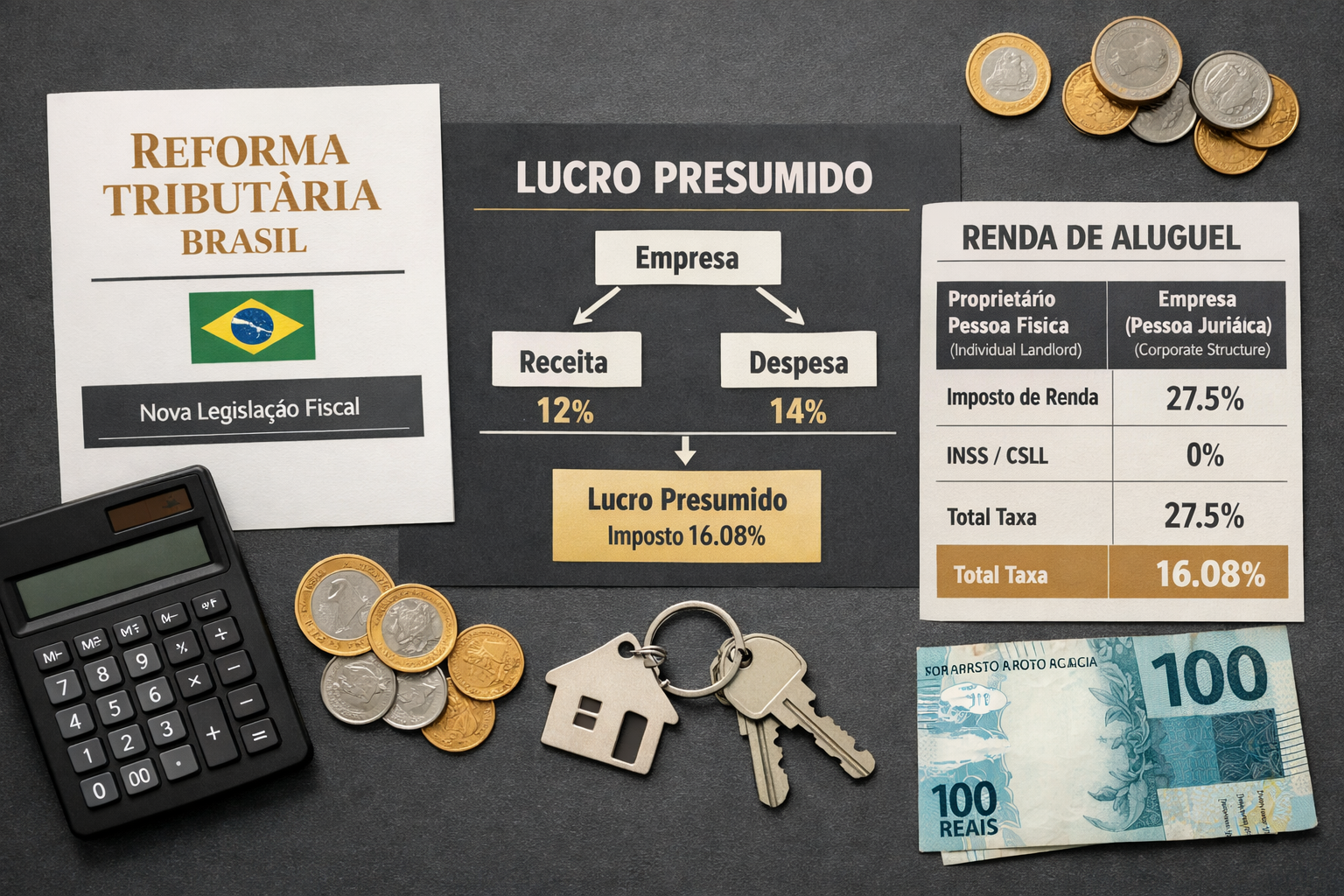
- Corporate ownership structures (Lucro Presumido) can cut effective tax rates to ~16% on long-term rentals versus ~35.9% for individual professional landlords under Brazil’s 2026 tax reform.
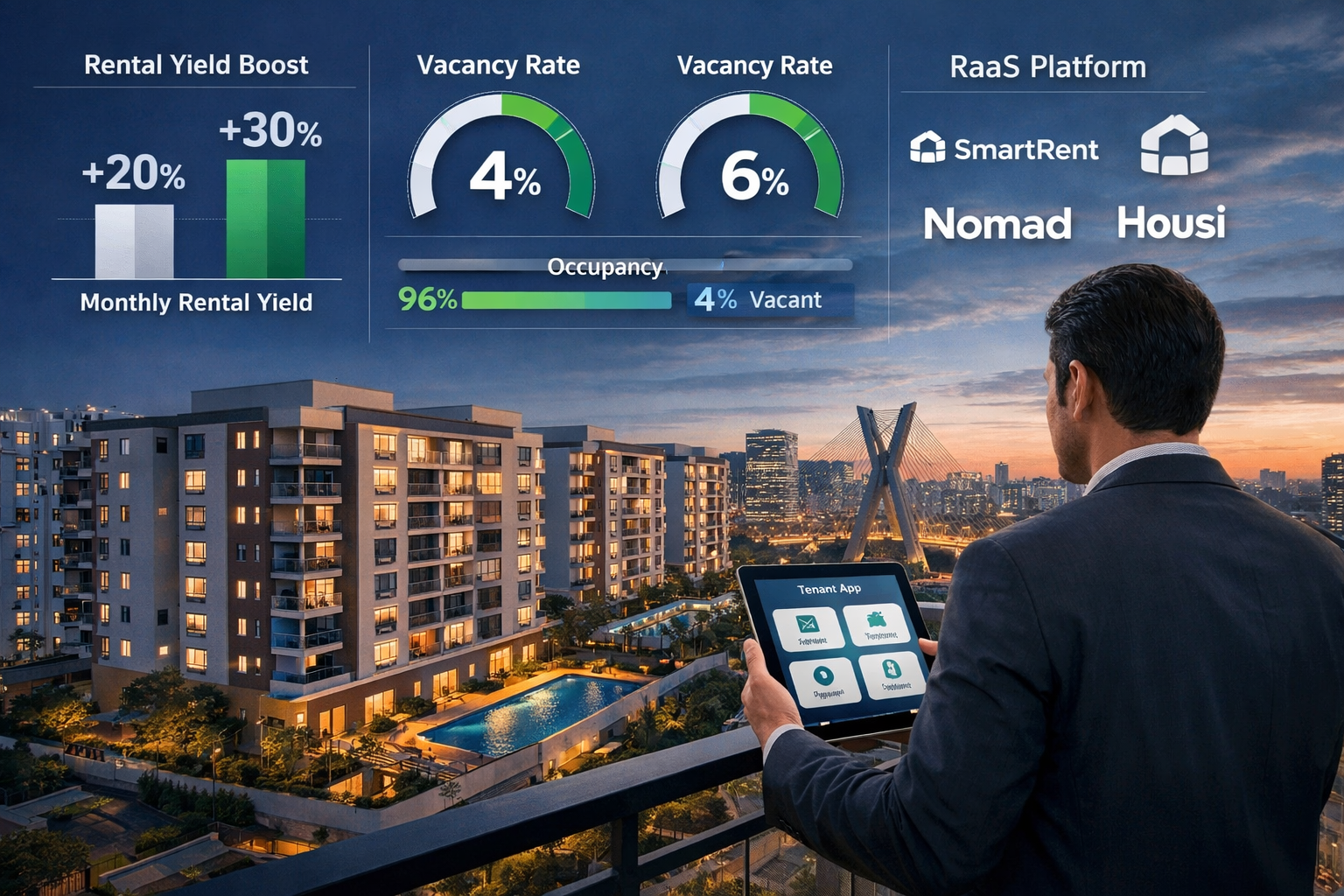
- Secondary cities like Florianópolis, Curitiba, and Campinas are showing projected yield boosts of 20–30% when RaaS models are applied to mid-tier condos.
- Full tax transparency via Brazil’s new real estate register (CIB) means compliance is no longer optional — it is existential.
What Is RaaS and Why Is Brazil’s Market Ready for It?
Defining Rent as a Service Beyond Traditional Leasing
Traditional leasing is transactional: a landlord owns a unit, a tenant signs a contract, and rent is collected monthly. Rent as a Service flips that logic. Under a RaaS model, the developer or operator treats the rental unit as a product delivered on a subscription basis — complete with digital onboarding, maintenance-as-a-feature, flexible lease terms, and data-driven pricing.
Think of it like a software subscription. The tenant is not just paying for four walls; they are paying for a managed living experience that includes:
- 🔑 Smart-lock access and digital key management
- 📱 Tenant apps for maintenance requests, bill splitting, and community features
- 🛠️ Bundled maintenance and concierge services
- 📊 Dynamic pricing adjusted to local demand signals
For developers, this means monthly recurring revenue (MRR) rather than a one-time sale margin. For tenants, it means predictability and convenience. For the broader market, it means higher occupancy rates and lower churn.
Why Brazil’s Structural Shift Makes RaaS Viable Right Now
Several forces have converged in 2026 to make the Rent as a Service (RaaS) Revolution in Brazil 2026 not just possible but inevitable:
| Market Signal | Data Point | Implication |
|---|---|---|
| Renter population growth | 23% of households now rent [2] | Larger addressable market |
| Rent price growth | 7–10% YoY [2] | Strong revenue upside |
| Prime vacancy rates | 4–6% in São Paulo/Rio [2] | Demand exceeds supply |
| São Paulo studio premium | R$1,870/month vs. R$1,540 national avg [2] | Pricing power in key markets |
| Infrastructure investment | ~US$10 billion planned for 2026 [6] | Urban growth driving demand |
The combination of a growing renter class, tight supply in prime areas, and massive infrastructure investment [6] creates a market that is structurally hungry for professionally managed rental product. RaaS platforms are the delivery mechanism.
“The question for Brazilian developers in 2026 is no longer whether to build for rent — it is how to operationalize the rental relationship at scale.”
The RaaS Developer Playbook: Models That Generate High Yields
Model 1: The Tech-Integrated Mid-Tier Condo
The most accessible entry point for developers is the tech-integrated mid-tier condominium. These are projects in the R$300,000–R$600,000 per unit range, built or retrofitted with smart-home infrastructure and connected to a RaaS platform from day one.
The key difference from a standard rental building is data integration. Every unit feeds occupancy, maintenance, and pricing data into a central dashboard. The platform uses that data to:
- Optimize pricing dynamically based on local demand
- Predict maintenance needs before they become costly repairs
- Reduce vacancy through faster digital onboarding
- Upsell services like furnished packages, parking, or co-working access
Developers who have adopted this model in São Paulo and Florianópolis are reporting net operating income (NOI) improvements of 15–25% compared to traditionally managed buildings. For investors exploring the best places to invest in Brazil property, mid-tier condos in secondary cities with RaaS infrastructure are emerging as the highest-conviction opportunity.
Model 2: Developer-Platform Partnerships
Not every developer wants to build and operate a technology platform. The partnership model solves that problem. Under this structure:
- The developer builds and retains ownership of units
- A RaaS platform (QuintoAndar, Loft, or emerging operators) manages tenant acquisition, pricing, and services
- Revenue is split via a management fee + performance bonus structure
This model is particularly powerful for developers who specialize in construction but lack property management expertise. It converts a development company into a real estate income business without requiring a full technology build-out.
Platforms take fees typically ranging from 8–15% of gross rent, but the efficiency gains — lower vacancy, faster lease-up, reduced maintenance costs — often more than offset that fee. The net result is a recurring revenue stream that grows as the portfolio scales.
Model 3: The Built-to-Rent (BTR) Institutional Play
At the top end of the market, institutional developers are building entire projects designed exclusively for rental — never for sale. This Built-to-Rent (BTR) model is well-established in the United States and United Kingdom and is now gaining traction in Brazil’s major metros.
BTR projects are optimized for operational efficiency from the ground up:
- Floor plans designed for easy turnover and minimal maintenance
- Amenity packages (gyms, co-working, rooftop areas) that justify premium rents
- Single ownership of the entire building, enabling economies of scale in management
- Institutional-grade reporting for potential future securitization or sale
For developers considering this path, understanding how off-plan purchases can amplify investment gains is critical — BTR projects built today at construction-phase costs will be valued at completed-asset prices once operational.
Navigating Brazil’s 2026 Tax Reform: The RaaS Compliance Imperative
What Changed and Who Is Affected
Brazil’s tax reform is the single biggest variable affecting rental yield calculations in 2026. The new CBS/IBS consumption taxes fundamentally change the math for professional landlords [1].
Here is the breakdown by investor type:
🟢 Small Individual Landlords (under R$240,000/year in rental income)
- Status: Unchanged
- Tax: IRPF personal income tax only (7.5–27.5%)
- No new CBS/IBS obligations [1]
🟡 Professional Individual Landlords (over R$240,000/year or 3+ properties)
- Status: Significantly impacted
- Effective tax rate rises from
27.5% to **35.9%** [1] - Long-term rentals are less affected than short-term
🔴 Short-Term / Airbnb Operators
- Status: Most impacted
- Effective tax rate reaches ~44.3% (IRPF + IBS/CBS at ~16.8%) [1]
- Many operators will need to restructure or exit the model
The Corporate Structure Advantage
Here is where the Rent as a Service (RaaS) Revolution in Brazil 2026: Developer Models for High-Yield Residential Rentals creates a genuine structural edge: operating through a properly structured company (Lucro Presumido) dramatically changes the tax equation [1].
| Structure | Long-Term Rental Tax Rate | Short-Term Rental Tax Rate |
|---|---|---|
| Individual (professional) | ~35.9% | ~44.3% |
| Lucro Presumido company | ~16.08% | ~24.48% |
The difference is not marginal — it is transformational. A developer operating 50 units through a corporate structure versus individual ownership could retain hundreds of thousands of reais annually that would otherwise go to taxes.
The corporate structure also allows tax credits on expenses — management fees, maintenance, platform costs, and depreciation — further reducing the effective tax burden [1].
The CIB: Compliance Is Now Automatic
Brazil’s new Cadastro Imobiliário Brasileiro (CIB) connects land registries, tax data, and digital platforms including Airbnb and QuintoAndar [1]. Every rental transaction is now visible to tax authorities in near real-time.
⚠️ Critical warning: Rental income omissions are now easily detectable. Fines reach 150% of unpaid tax plus interest [1]. Any RaaS model must be built on a foundation of full compliance.
This transparency requirement actually favors professional RaaS operators over informal landlords. Platforms generate compliant documentation automatically, reducing audit risk and creating clean financial records that support future financing or asset sales.
Developers interested in how technology is reshaping the real estate landscape in Brazil can explore how performance-driven sales are transforming Florianópolis real estate — a market where RaaS adoption is accelerating rapidly.

Secondary Cities: Where the 20–30% Yield Boost Is Happening
Why Secondary Markets Are the RaaS Frontier
São Paulo and Rio de Janeiro dominate headlines, but the Rent as a Service (RaaS) Revolution in Brazil 2026: Developer Models for High-Yield Residential Rentals is generating its most dramatic yield improvements in secondary cities. The reason is straightforward: lower acquisition costs combined with rapidly rising rents create a wider spread.
Cities showing the strongest RaaS momentum in 2026:
- 🏙️ Florianópolis — Tourism-driven demand, tech sector growth, strong short-to-long-term rental conversion opportunities
- 🏙️ Curitiba — Strong industrial base, growing professional renter class, lower entry costs than São Paulo
- 🏙️ Campinas — University population, tech corridor, high occupancy in well-managed buildings
- 🏙️ Goiânia — Rapid urbanization, undersupplied rental market, early-mover advantage for RaaS operators
- 🏙️ Recife — Port economy growth, infrastructure investment, emerging middle-class renter demand
In these markets, developers applying RaaS models to mid-tier condos are projecting yield boosts of 20–30% compared to traditional unmanaged rentals. The mechanism is consistent: lower vacancy (from better tenant matching), higher rents (from dynamic pricing), and lower operating costs (from predictive maintenance and digital management).
For a deeper look at one of Brazil’s fastest-growing secondary markets, the Florianópolis real estate market outlook provides detailed context on why this city is attracting serious developer attention.
The Studio Advantage in Secondary Markets
Studios and compact one-bedroom units are the highest-yield asset class within the RaaS model. They are easier to manage, faster to lease, and attract the growing segment of young professionals and digital nomads who prioritize location and amenities over space.
The national average rent for a studio sits at R$1,540/month, while São Paulo commands R$1,870/month [2]. In secondary cities, studios priced at R$1,200–R$1,400/month with strong amenity packages are achieving occupancy rates above 95% when managed through RaaS platforms.
Developers exploring this asset class should review the advantages of investing in studios in Florianópolis — a market where the studio RaaS model is already delivering strong results.
Infrastructure Investment as a Yield Catalyst
Brazil’s infrastructure pipeline is a direct yield catalyst for RaaS operators. With approximately US$10 billion in infrastructure investment planned for 2026 [6], new transportation corridors, logistics hubs, and urban development projects are creating rental demand in previously overlooked neighborhoods.
Developers who identify infrastructure-adjacent locations before projects break ground — and build or acquire rental assets there — position themselves to capture both capital appreciation and rising rents as the surrounding area develops. This is the RaaS equivalent of buying before the curve.
The Ingleses region growth story in Florianópolis is a case study in exactly this dynamic: infrastructure investment driving quality-of-life improvements that translate directly into rental demand and price appreciation.
Building a RaaS Portfolio: Practical Steps for Developers
Step 1: Choose the Right Asset Class and Location
Not every property type is RaaS-ready. Focus on:
- Studios and 1-bedroom units in urban cores or near employment centers
- Mid-tier condos with existing or upgradeable smart-home infrastructure
- Secondary cities with strong employment fundamentals and growing renter populations
Step 2: Structure Ownership Correctly from Day One
Given Brazil’s 2026 tax reform, the corporate structure decision must be made before the first unit is acquired. Retroactive restructuring is possible but costly. A Lucro Presumido company structure, properly set up, can reduce effective tax rates by more than half compared to individual professional ownership [1].
Step 3: Select or Build a Technology Layer
RaaS without technology is just property management. The technology layer — tenant app, dynamic pricing engine, maintenance tracking, and financial reporting — is what converts a rental portfolio into a scalable platform. Developers can:
- Partner with an existing RaaS platform (fastest path to market)
- License white-label property management software
- Build proprietary technology (highest long-term value, highest upfront cost)
Step 4: Optimize for the CIB Compliance Environment
Every transaction must be documented and reported through compliant channels [1]. Choose platforms that generate automatic tax documentation and integrate with Brazil’s digital tax infrastructure. This is not optional — it is the cost of operating professionally in 2026.
Step 5: Scale Through Reinvestment
The compounding power of RaaS comes from reinvesting recurring revenue into additional units. A portfolio of 10 well-managed units generating 20% higher yields than market average creates the capital to acquire units 11–15 within 18–24 months. That flywheel, once spinning, is difficult to stop.
Developers looking at specific projects that align with this model can explore current opportunities like Solis and Tramonto — developments built with the infrastructure and location profile that supports high-yield rental strategies.
Conclusion: The RaaS Window Is Open — But Not Forever
The Rent as a Service (RaaS) Revolution in Brazil 2026: Developer Models for High-Yield Residential Rentals represents a genuine inflection point. Structural demand growth, rising rents, tight vacancy, and a tax environment that rewards professional operators over informal landlords have created a window that is open right now — but will narrow as more capital recognizes the opportunity.
Actionable next steps for developers and investors:
- ✅ Audit your current ownership structure against Brazil’s 2026 tax reform parameters — if you hold 3+ properties or earn over R$240,000/year in rental income, restructuring is urgent.
- ✅ Identify one secondary city with strong employment fundamentals and begin underwriting mid-tier condo opportunities with RaaS yield assumptions.
- ✅ Evaluate RaaS platform partnerships — the fastest path to higher yields is often connecting existing assets to a professional management platform rather than building from scratch.
- ✅ Prioritize CIB compliance from day one — the cost of non-compliance (up to 150% of unpaid tax plus interest) far exceeds the cost of proper setup.
- ✅ Focus on studios and compact units in urban cores — this asset class consistently outperforms on occupancy and yield within the RaaS model.
The developers who move decisively in 2026 will build portfolios that compound for decades. Those who wait will pay higher acquisition costs and face a more competitive platform landscape. The RaaS revolution in Brazil is not coming — it is already here.
References
[1] Brazil Tax Reform Rental Income Investors Landlords – https://www.oabitat.com/en/brazil-tax-reform-rental-income-investors-landlords/ [2] Brazil Rents – https://thelatinvestor.com/blogs/news/brazil-rents [6] Infrastructure Giants Plan To Invest Around Us10 Billion In Brazil In 2026 – https://www.bnamericas.com/en/analysis/infrastructure-giants-plan-to-invest-around-us10-billion-in-brazil-in-2026