
Brazil’s average household size dropped from 3.3 persons in 2000 to approximately 2.3 persons by 2026 — a demographic shift so profound that it is fundamentally rewriting the rulebook for residential real estate development. Shrinking Family Profiles Driving Compact Housing Designs 2026: Profitable Micro-Units in Urban Brazil is not a trend on the horizon; it is the defining investment thesis reshaping how developers, architects, and capital allocators approach urban housing right now.
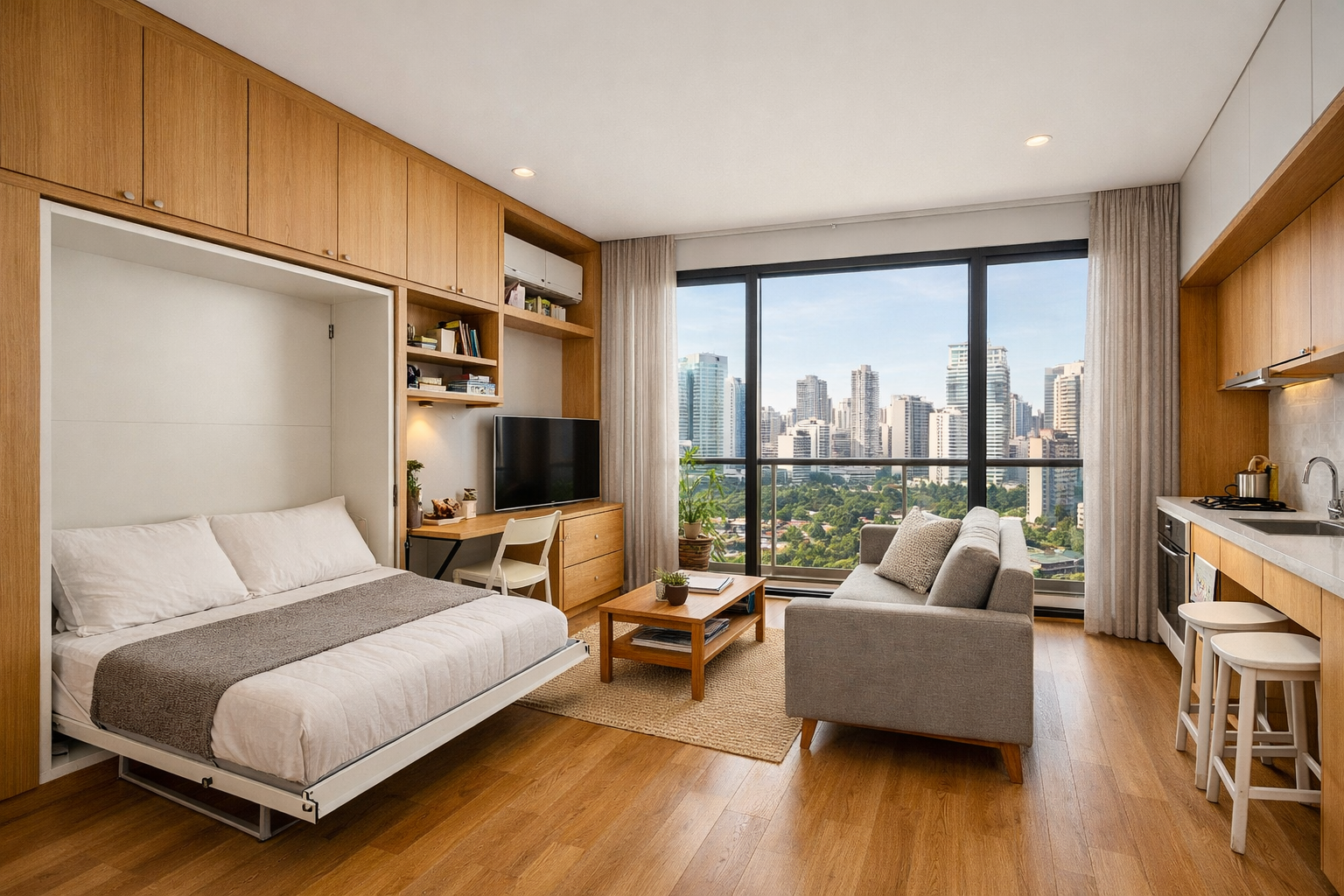
The post-pandemic restructuring of Brazilian households accelerated what sociologists had been tracking for two decades. Remote work normalized solo living. Rising urban costs pushed couples to delay children. Young professionals in São Paulo, Fortaleza, and Recife prioritized location and lifestyle over square footage. The result: a massive, underserved demand for well-designed 40–60 sqm units that deliver premium amenities within compact footprints.
Key Takeaways 📌
- 🏙️ Brazil’s household size has shrunk to ~2.3 persons on average in 2026, creating structural demand for smaller urban units.
- 💰 Micro-units (40–60 sqm) in São Paulo peripheries and Northeast metros are generating above-average rental yields when paired with smart amenities.
- 🏗️ Architectural innovation — inspired by projects like Casa Tupin and Grama House — is proving that compact does not mean compromised.
- 📈 Developer ROI improves when more units are built per land parcel, reducing per-unit land cost while targeting a growing demographic.
- 🌎 Cities like Fortaleza, Recife, and São Paulo’s expanding peripheries represent the highest-growth opportunity zones for compact housing investment in 2026.
The Demographic Engine Behind Compact Housing Demand
Understanding why shrinking family profiles are driving compact housing designs in 2026 requires looking at the numbers behind Brazil’s social transformation.
Key demographic shifts shaping the market:
| Indicator | 2000 | 2026 (Est.) |
|---|---|---|
| Avg. household size (persons) | 3.3 | ~2.3 |
| Single-person households (% of total) | ~10% | ~18–20% |
| Urban population share | 81% | ~88% |
| Median age of first marriage | 24 years | ~29 years |
Several forces are converging simultaneously:
- Later marriage and childbearing — Brazilian millennials and Gen Z are marrying later and having fewer children, often choosing urban apartments over suburban family homes.
- Rising divorce rates — Household dissolution creates two smaller households from one larger one, doubling demand for compact units.
- Student and young professional migration — University cities and tech hubs are absorbing waves of solo migrants who need affordable, well-located housing.
- Aging singles and empty nesters — Older Brazilians whose children have left home are downsizing into manageable urban units close to services.
“The family of four is no longer the default customer for Brazilian developers. The default customer in 2026 is a single professional or a couple without children — and they want efficiency, not space.”
This demographic reality is not uniform across Brazil. São Paulo’s peripheries — areas like Guarulhos, Osasco, and Santo André — are seeing explosive demand from working-class singles and young couples priced out of the city center. In the Northeast, cities like Fortaleza and Recife are emerging as high-growth compact housing markets, driven by tech sector expansion and internal migration from smaller interior cities.
For investors exploring the best places to invest in Brazil property, understanding this demographic map is the critical first step.
Design Tactics That Make 40–60 sqm Units Command Premium Prices
The architectural community in Brazil has been rising to this challenge with remarkable creativity. Recent projects documented in 2026 demonstrate that compact living does not require sacrificing quality or character [2][3].
Casa Tupin by Bloco Arquitetos in Brasília showcases how courtyard design principles — traditionally used in large residential projects — can be adapted to create spatial generosity within tight footprints [2]. Studio Arthur Casas’ Grama House demonstrates how material honesty and connection to nature can elevate even modest square footage into aspirational living [3]. Collections of small Brazilian homes under 100 square meters consistently show that sustainable materials and cultural expression are central to the country’s compact design identity [1][6].
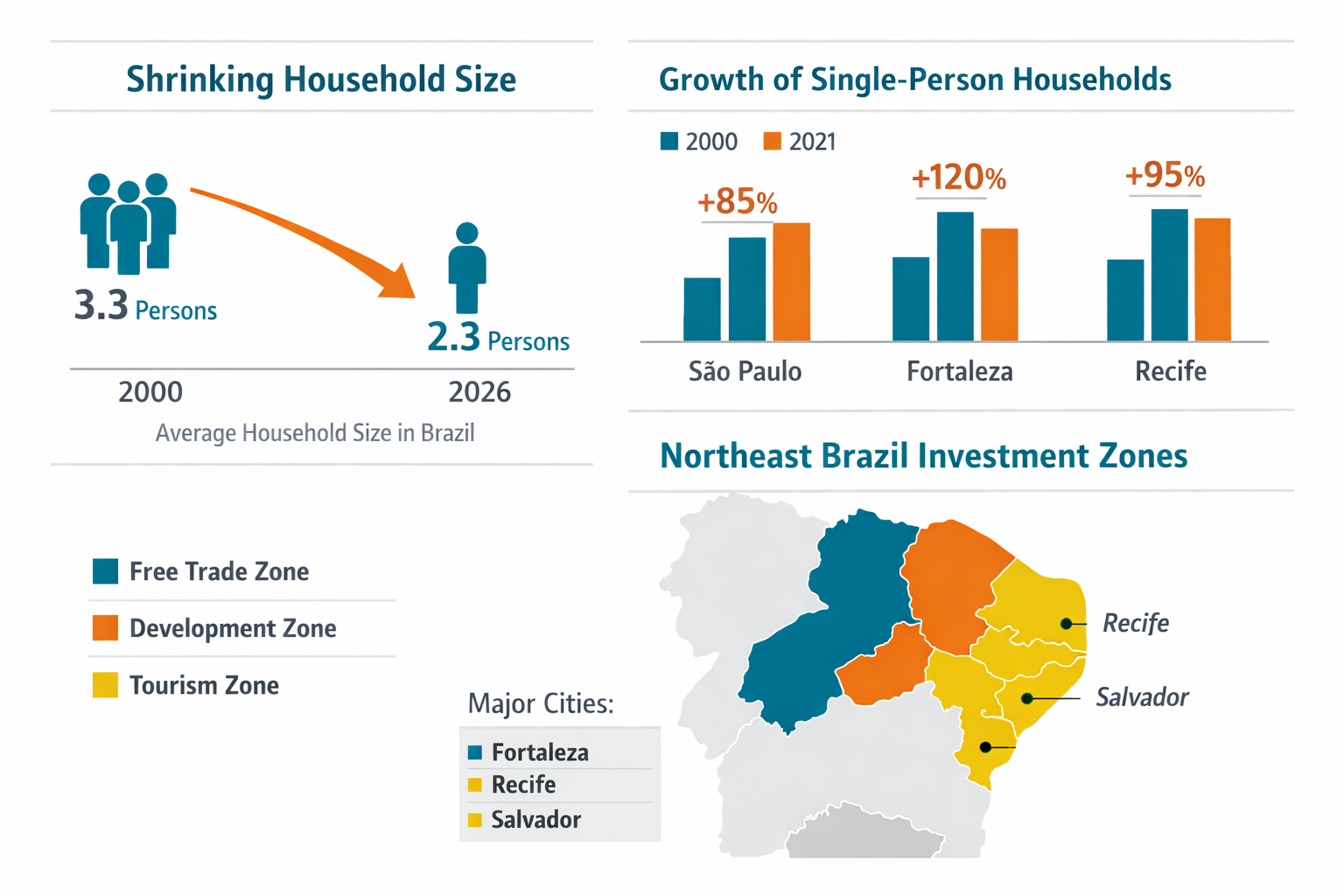
Smart Design Tactics for 40–60 sqm Micro-Units
🔧 Spatial Efficiency Strategies:
- Convertible furniture systems — Murphy beds, fold-out dining tables, and modular sofas that transform a studio into a functional multi-room space.
- Vertical storage walls — Floor-to-ceiling built-ins that eliminate the need for separate storage rooms.
- Open-plan kitchen-living integration — Removing the traditional Brazilian “sala separada” (separate living room) in favor of a unified social space.
- Juliet balconies or compact terraces — Even 4–6 sqm of outdoor space dramatically increases perceived value and rental pricing.
- Natural light maximization — High ceilings, large windows, and light-colored finishes make small spaces feel significantly larger.
🏊 Amenity Packages That Justify Premium Pricing:
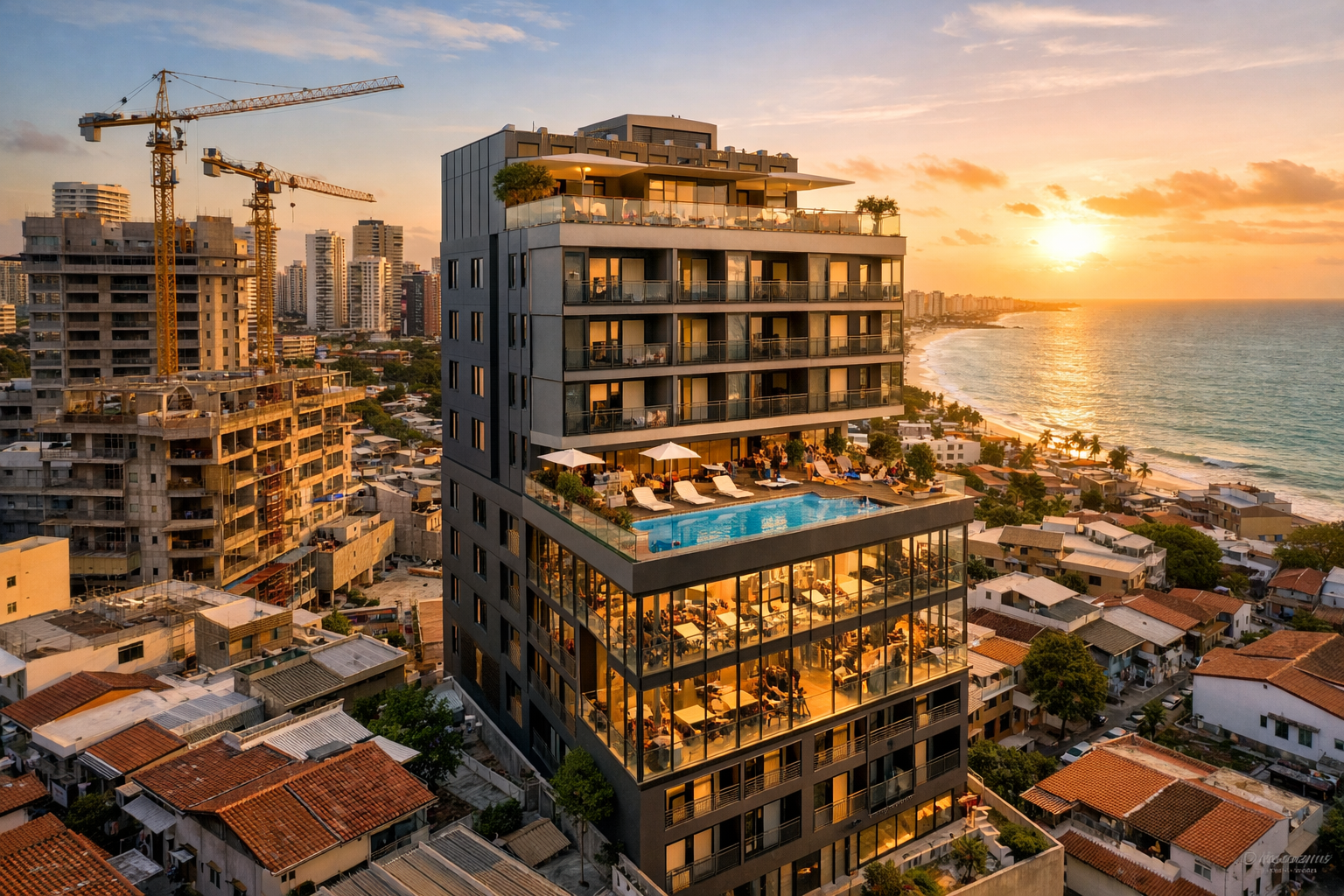
The most profitable micro-unit developments in 2026 are those that move private space into shared amenity floors. Instead of each unit having a home office, a gym, or a party room, buildings offer:
- Co-working lounges with high-speed fiber internet
- Rooftop pools and social decks
- Delivery lockers and concierge services
- Bicycle storage and repair stations
- Pet-friendly outdoor areas
This model — sometimes called “amenity-rich micro-living” — allows developers to sell or rent smaller units at higher per-sqm prices because residents effectively gain access to hundreds of additional square meters of curated shared space.
For developers looking at studio-format investments, the advantages of investing in studios in Florianópolis offer a compelling regional case study in how this model generates strong returns.
The 40–60 sqm Sweet Spot: Why This Range Works
Units smaller than 40 sqm face regulatory restrictions in many Brazilian municipalities and can feel genuinely cramped without exceptional design. Units larger than 65 sqm start competing with traditional 2-bedroom apartments, which serve a different (and currently shrinking) demographic.
The 40–60 sqm range hits the optimal balance:
- ✅ Affordable enough for solo buyers and young couples
- ✅ Large enough to feel comfortable with smart design
- ✅ Small enough to keep per-unit construction costs low
- ✅ Eligible for Minha Casa Minha Vida financing in many configurations
- ✅ High enough density per land parcel to maximize developer margins
Where Shrinking Family Profiles Are Driving Compact Housing Designs 2026: The Top Investment Zones
Not all Brazilian cities offer equal opportunity for micro-unit developers. The most profitable markets share specific characteristics: strong internal migration, a growing services/tech economy, constrained land supply in prime areas, and a large young adult demographic.
São Paulo Peripheries: Volume and Velocity
São Paulo remains Brazil’s largest urban economy, but the city center is increasingly unaffordable for the very demographic driving micro-unit demand. The opportunity has shifted to the extended metropolitan periphery:
- Guarulhos — Brazil’s second-largest city by population, with a booming logistics and industrial economy attracting young workers.
- Osasco — A financial services hub with strong public transport links to central São Paulo.
- Santo André and São Bernardo do Campo — The ABC region is undergoing a tech and services transition that is attracting younger, smaller households.
In these zones, land costs are 40–60% lower than in central São Paulo, allowing developers to build micro-unit projects with stronger gross margins while still pricing units accessibly for the target demographic.
Northeast Brazil: The High-Growth Frontier
The Northeast is arguably the most exciting compact housing market in Brazil for 2026. Cities like Fortaleza and Recife are experiencing:
- Rapid tech sector growth — Both cities have established startup ecosystems and are attracting remote workers and digital nomads.
- Internal migration from smaller cities — Young people from the interior are moving to coastal metros for education and employment.
- Relatively low land costs — Compared to São Paulo, land in Fortaleza and Recife offers exceptional value, improving developer ROI.
- Tourism-driven short-term rental demand — Micro-units in well-located neighborhoods can generate strong Airbnb-style income.
For context, the real estate market in Greater Florianópolis demonstrates how coastal Brazilian cities with strong lifestyle appeal can sustain premium pricing even for compact units — a model directly applicable to Fortaleza and Recife.
Developer ROI: The Numbers That Matter
Why micro-units outperform traditional apartments on a per-sqm basis:
| Metric | Traditional 80 sqm 2BR | Micro-Unit 45 sqm |
|---|---|---|
| Units per 1,000 sqm of buildable area | ~10 | ~18 |
| Revenue per land parcel (indexed) | 100 | ~140–160 |
| Target demographic size (2026) | Shrinking | Growing |
| Average rental yield (São Paulo periphery) | 5–6% | 7–9% |
| Vacancy rate sensitivity | Higher | Lower (high demand) |
The math is compelling. By fitting more units onto the same land parcel, developers reduce the per-unit land cost — often the largest single variable in Brazilian residential development. When combined with amenity-rich shared spaces that justify premium per-sqm pricing, the micro-unit model consistently outperforms traditional formats in the current demographic environment.
Investors interested in understanding how pre-sale purchasing strategies amplify these returns should explore why buying off-plan can maximize investment gains, a strategy particularly powerful in high-demand compact housing markets.
Regulatory and Financing Considerations for Compact Housing Developers
Brazil’s regulatory environment for compact housing has evolved significantly, though it remains complex and varies by municipality.
Key regulatory factors to monitor in 2026:
- Minimum unit size rules — Many municipalities enforce minimum habitable area requirements (often 28–35 sqm for studios). Developers must verify local codes before committing to a design.
- Minha Casa Minha Vida (MCMV) eligibility — Federal housing finance programs can dramatically expand the buyer pool for compact units priced within program limits.
- Zoning and density allowances — Urban zones with higher floor-area ratios (coeficiente de aproveitamento) are ideal for micro-unit towers. Proximity to public transit often unlocks higher density bonuses.
- Environmental licensing — Sustainable design features (solar panels, rainwater harvesting, green roofs) are increasingly required or incentivized in major metros.
Financing innovations are also reshaping the compact housing landscape. The intersection of cryptocurrency and real estate development is opening new capital channels for developers, particularly for projects targeting younger, tech-savvy buyers who may prefer tokenized fractional ownership structures.
Architectural Excellence as a Competitive Moat
In a market where supply of compact units is growing, design quality becomes the primary differentiator. Brazilian architecture has a globally recognized tradition of integrating indoor-outdoor living, natural materials, and cultural identity into residential projects [4][5].
The most successful micro-unit developments in 2026 are those that treat design not as a cost center but as a revenue multiplier. Award-winning compact homes documented across Brazilian architectural media consistently demonstrate that thoughtful spatial sequencing, quality material selection, and connection to local context can command 15–25% premiums over generic compact units in the same neighborhood [1][6].
Developers partnering with talented local architects — rather than defaulting to generic floor plans — are building projects that:
- Generate stronger word-of-mouth and social media visibility
- Attract higher-quality tenants and buyers
- Achieve faster sell-through rates during pre-sale phases
- Build brand equity for future projects
Projects like those developed by Quadragon Empreendimentos demonstrate how design-led compact development can achieve strong market positioning in competitive urban environments. The Tramonto development is a concrete example of how thoughtful design and strategic location selection combine to create compelling investment opportunities in the compact housing segment.
Conclusion: Actionable Next Steps for Developers and Investors
Shrinking family profiles driving compact housing designs in 2026 represent one of the clearest, most data-supported investment opportunities in Brazilian real estate. The demographic tailwinds are structural, not cyclical. The design solutions are proven. The financial case — more units per parcel, lower vacancy, higher per-sqm yields — is compelling.
Here are the actionable next steps for different stakeholders:
For Developers:
- 🗺️ Conduct a micro-market analysis in São Paulo periphery zones and Northeast metros before committing to land acquisition.
- 🏗️ Engage architects with proven compact design expertise early in the project cycle — design quality directly impacts pricing power.
- 📊 Model scenarios at 40, 50, and 60 sqm to find the regulatory and financial sweet spot for each specific municipality.
- 🤝 Explore Minha Casa Minha Vida eligibility to maximize the addressable buyer pool.
For Investors:
- 🔍 Prioritize projects in cities with strong internal migration, growing tech/services sectors, and constrained land supply.
- 📅 Consider off-plan (na planta) purchases in high-demand compact projects to capture appreciation during construction.
- 🏠 Evaluate short-term rental potential in tourist-adjacent neighborhoods in Fortaleza, Recife, and Florianópolis.
- 📰 Stay current with market developments through reliable sources covering the latest real estate news and trends.
The Brazilian housing market in 2026 is not waiting for developers and investors to catch up to demographic reality. The households have already shrunk. The demand is already there. The question is simply who builds the right product, in the right location, with the right design — and who benefits from the returns.
References
[1] News 5 Tiny Brazilian Houses Under 100 Square Meter – https://www.thedesignstory.com/blog/architecture/news-5-tiny-brazilian-houses-under-100-square-meter
[2] Casa Tupin Bloco Arquitetos Brazil House – https://www.dezeen.com/2026/04/01/casa-tupin-bloco-arquitetos-brazil-house/
[3] Grama House Studio Arthur Casas – https://www.dezeen.com/2026/03/11/grama-house-studio-arthur-casas/
[4] Brazilian Houses – https://www.e-architect.com/brazil/brazilian-houses
[5] 21 Small Brazilian Homes – https://my.archdaily.com/us/@olin-r-blankenship/folders/21-small-brazilian-homes
[6] Check Out These 8 Beautiful Brazilian Homes – https://bluprint-onemega.com/architecture/residential/check-out-these-8-beautiful-brazilian-homes/