
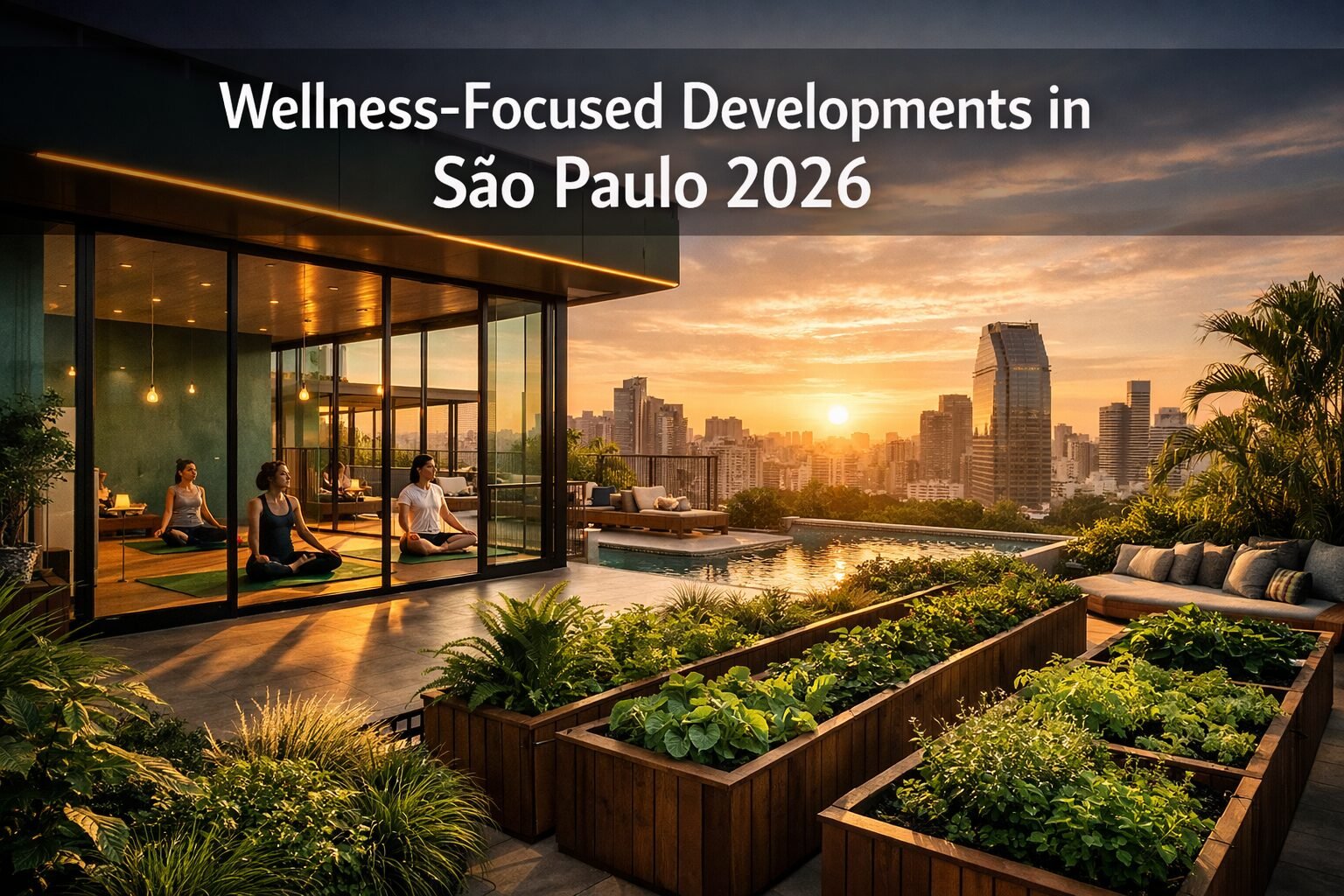
São Paulo’s real estate market is undergoing a quiet revolution: mid-tier condominium developers who added integrated wellness amenities to their projects are now commanding 10 to 15% higher sale prices compared to comparable buildings without those features. That gap is not a coincidence — it is the direct result of a post-pandemic shift in what urban professionals are willing to pay for when choosing where to live.
Wellness-Focused Developments in São Paulo 2026: Gyms, Yoga Spaces, and Healthy Amenities Driving Premium Pricing has become one of the most discussed topics among real estate investors, developers, and buyers across Brazil’s largest city. The convergence of rising health consciousness, a booming wellness industry, and a generation of buyers who treat their home as a lifestyle platform is reshaping how buildings are designed, marketed, and priced.
Brazil’s wellness sector is accelerating fast. The country currently hosts 45 active wellness venture capital funds [2], and consumer demand for health-oriented products and environments is climbing steadily, driven in part by new labeling legislation and heightened awareness of preventive health [3]. São Paulo, as Brazil’s economic engine, is where these macro trends hit the ground hardest — and fastest.
Key Takeaways 🏆
- Wellness amenities such as gyms, yoga studios, and proximity to organic markets are driving 10–15% price premiums in São Paulo condominiums in 2026.
- Post-pandemic urban professionals are prioritizing health infrastructure inside their buildings, not just nearby.
- Mid-tier developers who integrate wellness features early in the design phase see the strongest return on investment.
- Brazil’s booming wellness investment landscape [2] signals that this trend has long-term staying power, not just short-term buzz.
- Buyers and investors who understand this shift can make smarter acquisition decisions in São Paulo’s competitive property market.
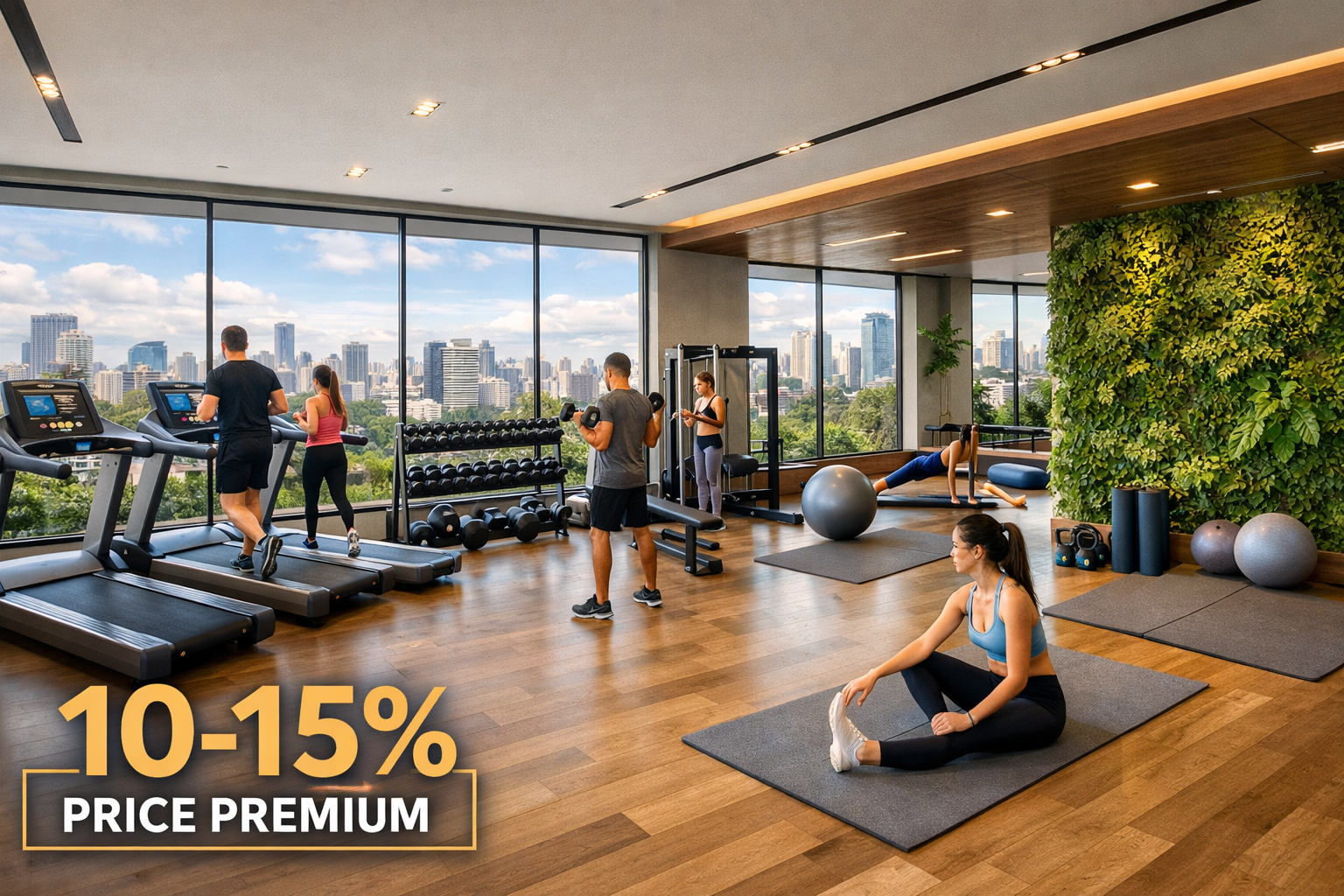
The Post-Pandemic Shift: Why Wellness Amenities Now Define Value in São Paulo
The pandemic fundamentally changed how São Paulo residents think about their homes. When offices closed and gyms shuttered, the apartment became the gym, the yoga studio, the meditation room, and the workspace all at once. For millions of urban residents, that experience exposed a critical gap: most buildings simply were not designed for whole-life living.
By 2026, that gap has become a market opportunity. Developers who recognized this shift early began embedding health-first infrastructure directly into their projects — not as luxury add-ons, but as core selling points.
What Urban Professionals Actually Want
Research into Brazilian consumer behavior shows a clear pattern: health and wellness are no longer aspirational concepts reserved for the wealthy. They are baseline expectations for a growing middle-upper segment of São Paulo’s urban workforce [3]. This group — typically aged 28 to 45, working in tech, finance, or creative industries — is making housing decisions based on:
- 🏋️ On-site fitness facilities (full gyms, not just a treadmill room)
- 🧘 Dedicated yoga and pilates spaces with proper flooring and natural light
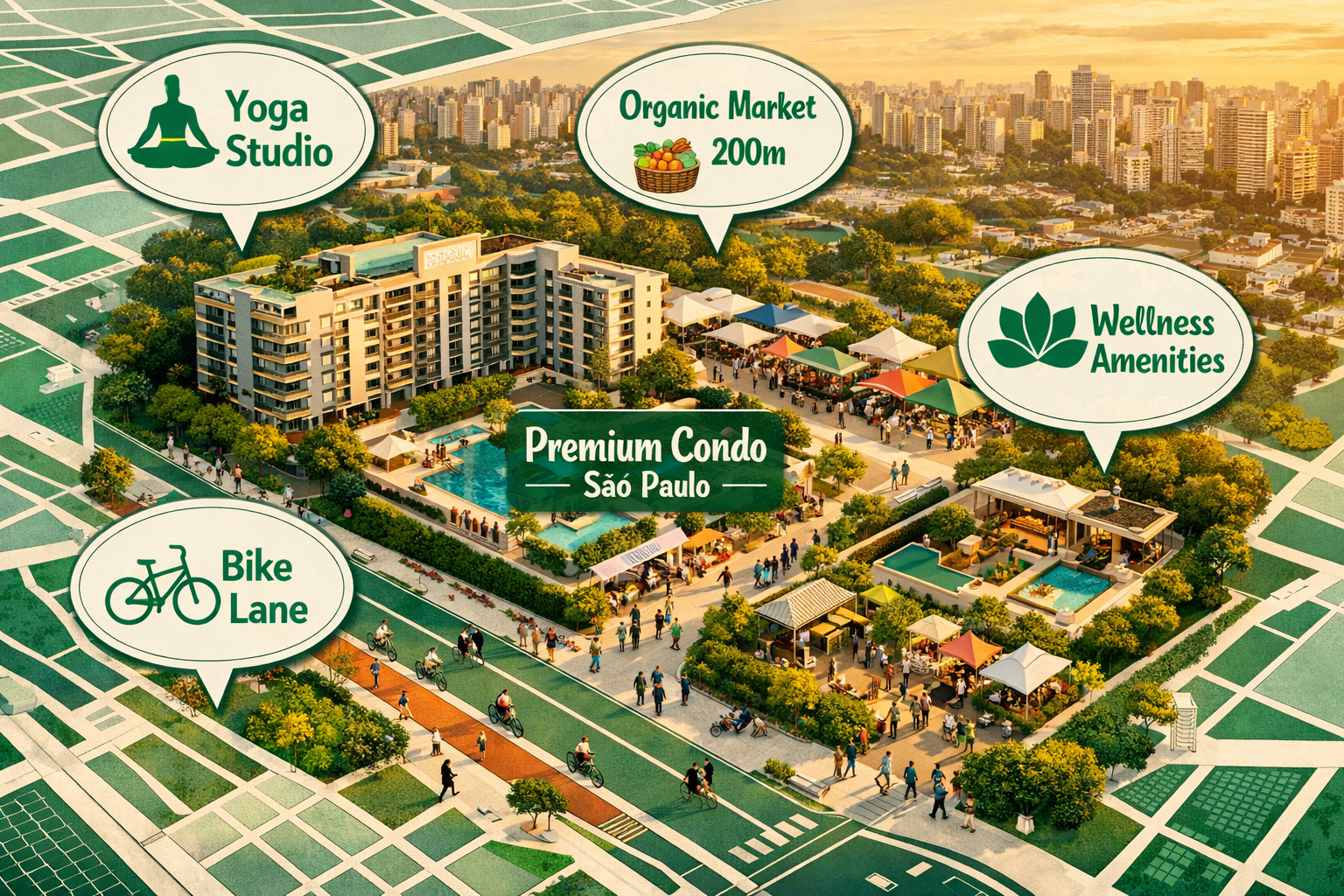
- 🥗 Proximity to organic markets and healthy food options
- 🚴 Cycling infrastructure including secure bike storage and repair stations
- 🌿 Green spaces such as rooftop gardens, community herb plots, and biophilic design elements
- 💧 Spa and recovery zones including saunas, cold plunge pools, and stretching areas
These are not vanity features. They represent a fundamental shift in how buyers calculate the value of a home. A building that saves a resident 45 minutes of commute time to a gym — and replaces that commute with a 90-second elevator ride — is offering something genuinely valuable.
The Wellness Economy as a Market Driver
The Global Wellness Summit has identified several macro trends for 2026 that directly support what São Paulo developers are experiencing on the ground [4]. Among these: the rise of “wellness real estate” as a distinct asset class, where health-focused design commands measurable price premiums in urban markets worldwide.
São Paulo is not following this global trend — it is leading it in Latin America. The city’s scale (over 12 million residents), economic diversity, and concentration of high-income urban professionals make it the ideal proving ground for wellness-integrated residential development.
For investors exploring the best places to invest in Brazilian property, São Paulo’s wellness-driven segment represents a compelling case study in value creation through design and amenity strategy. Explore top Brazilian property investment locations to understand how this trend compares across the country.
Wellness-Focused Developments in São Paulo 2026: What the Market Looks Like Right Now
The São Paulo residential market in 2026 is not monolithic. There is a clear and growing divide between standard condominium projects and wellness-integrated developments, and that divide is showing up directly in pricing data.
The Premium Pricing Gap: A Breakdown
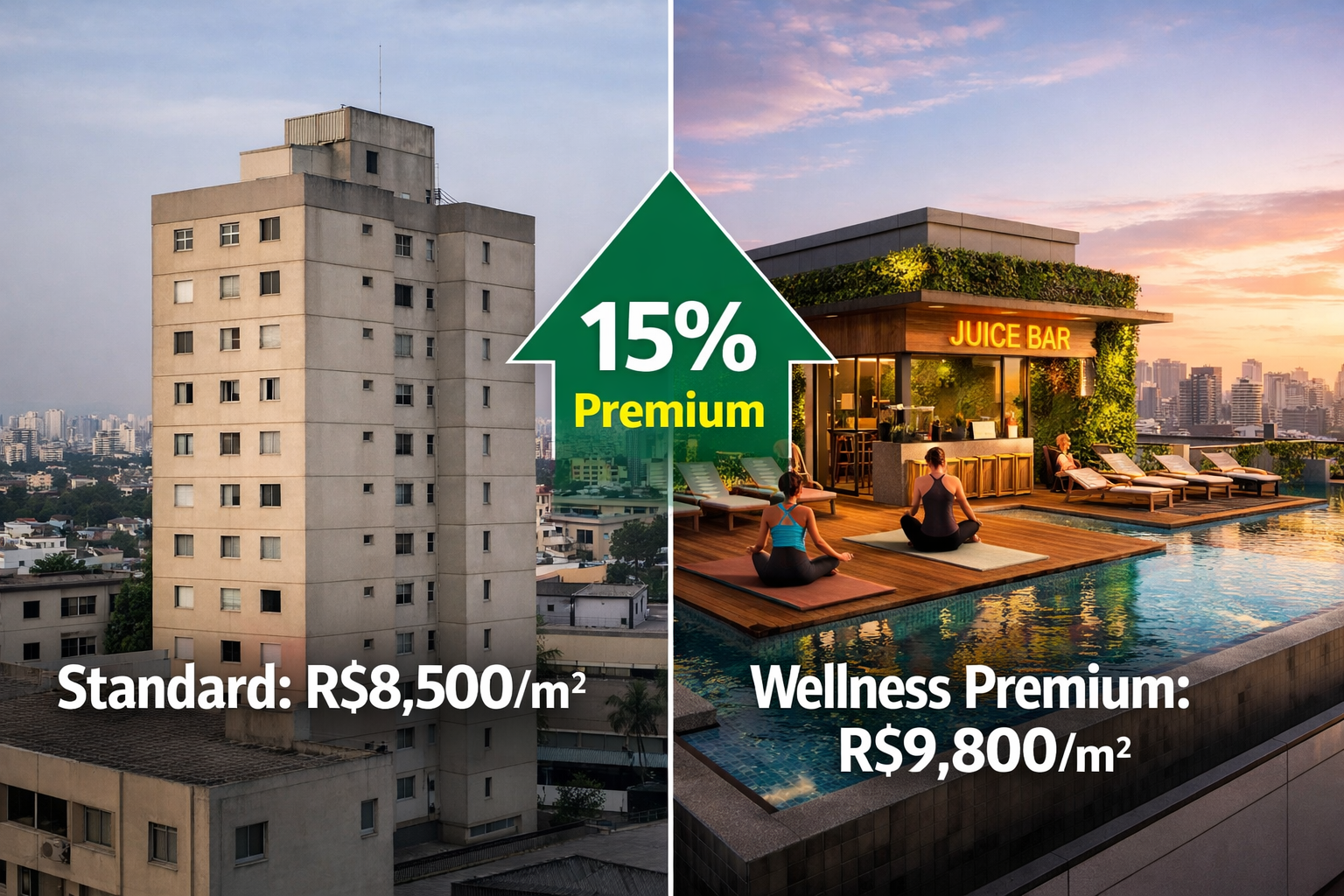
| Feature | Standard Condo | Wellness-Integrated Condo |
|---|---|---|
| Average price per m² (Zona Sul) | R$ 8,400 | R$ 9,500–R$ 9,800 |
| Gym quality | Basic equipment room | Full multi-zone fitness center |
| Yoga/mindfulness space | None | Dedicated studio with sound insulation |
| Outdoor wellness areas | Small courtyard | Rooftop garden, walking track |
| Organic food access | Nearby supermarket | On-site market or partner delivery |
| Price premium over standard | — | 10–15% |
💬 “The amenity package is no longer a differentiator — it is a qualifier. If a building does not have a proper gym and a yoga space, it does not even make the shortlist for a significant portion of our buyers.” — São Paulo real estate broker, 2026
This premium is not limited to luxury-tier projects. The most interesting development in 2026 is that mid-tier developers — those targeting the R$ 700,000 to R$ 1.2 million unit price range — are successfully capturing wellness premiums by being strategic about which amenities they include.
Which Amenities Deliver the Strongest ROI for Developers?
Not all wellness features are created equal from a return-on-investment perspective. Based on market analysis and buyer preference data, the highest-impact amenities for mid-tier São Paulo developments in 2026 are:
- Full-service gym (minimum 80m², professional equipment, air conditioning) — adds approximately 6–8% to perceived value
- Yoga/pilates studio (dedicated space, natural light, acoustic treatment) — adds 3–5%
- Rooftop garden or green terrace — adds 4–6%, with strong emotional resonance
- Sauna or recovery spa — adds 2–4%, particularly valued by the 35–50 age bracket
- Organic market partnership or on-site food kiosk — adds 2–3%, growing rapidly in importance
The combination of a quality gym, a yoga space, and at least one outdoor wellness area appears to be the minimum viable wellness package for capturing meaningful price premiums in the current market.
Geographic Hotspots Within São Paulo
Certain neighborhoods are seeing the highest concentration of wellness-focused development activity in 2026:
- Vila Madalena / Pinheiros: High density of health-conscious professionals, proximity to organic markets and cycling routes
- Itaim Bibi / Vila Olímpia: Corporate hub with high-income residents who prioritize fitness infrastructure
- Brooklin / Moema: Family-oriented professionals seeking green space and wellness community
- Perdizes / Pompeia: Emerging wellness corridor with strong demand from creative professionals
Wellness-Focused Developments in São Paulo 2026: How Developers Are Capturing the Premium
Understanding the demand is one thing. Capturing the premium requires a deliberate development strategy — and not every developer is getting it right.
Design Principles That Drive Premium Pricing
The most successful wellness-integrated projects in São Paulo share several design principles that go beyond simply adding a gym to the amenity list:
1. Wellness as Architecture, Not Afterthought Top-performing projects integrate wellness into the building’s core design from day one. This means natural light in fitness spaces, acoustic separation for yoga studios, and direct connections between indoor and outdoor wellness areas. Buildings where the gym is tucked into a basement with no windows consistently underperform on wellness premiums.
2. Biophilic Design Elements Green walls, natural materials, water features, and abundant plant life throughout common areas signal wellness to buyers at an emotional level. These elements are relatively low-cost to implement but have outsized impact on buyer perception and willingness to pay.
3. Community Programming The physical space alone is not enough. Developments that offer scheduled wellness programming — yoga classes, nutrition workshops, meditation sessions — create a community identity around health that justifies and sustains premium pricing over time.
4. Healthy Food Access Proximity to or partnership with organic markets and healthy food providers is increasingly a purchase driver. Some São Paulo developers are negotiating anchor tenant agreements with organic grocery brands or meal-prep services to include ground-floor retail that directly supports residents’ wellness goals. Brazil’s growing consumer awareness around healthy and natural products [3] makes this a particularly powerful signal to target buyers.
The Role of Industry Events in Shaping Trends
São Paulo’s position as Brazil’s wellness industry hub is reinforced by major trade events. The Expolazer 2026 trade fair, scheduled for August 11–14 at Distrito Anhembi, brings together leaders from the swimming pool, spa, leisure, and wellness sectors [1]. Events like this accelerate the flow of new wellness technology and design concepts into the residential development pipeline — meaning the amenity standards buyers expect in 2026 will be even higher by 2027 and 2028.
Developers who attend and engage with these industry ecosystems gain a meaningful competitive advantage in understanding what wellness features will resonate with buyers 18–24 months ahead of project delivery.
Financing and Investment Considerations
The wellness premium is not just good news for developers — it is a compelling argument for investors. A 10–15% price premium on a R$ 900,000 unit represents R$ 90,000–R$ 135,000 in additional value. When that premium is achieved through amenity investments that cost R$ 20,000–R$ 40,000 per unit to implement at scale, the return on wellness investment becomes very attractive.
For investors considering off-plan purchases, wellness-integrated projects offer an additional layer of value appreciation. Understanding how off-plan property purchases can maximize investment gains is essential context for anyone evaluating São Paulo wellness developments today.
Brazil’s active wellness venture capital ecosystem — with 45 dedicated funds as of early 2026 [2] — also signals that institutional capital is flowing into health-oriented businesses, including those that support residential wellness infrastructure. This creates a favorable environment for developers seeking partnerships with wellness brands, fitness operators, and health food retailers.
Lessons from Other Brazilian Markets
São Paulo does not exist in isolation. Comparable wellness-driven real estate trends are visible in other Brazilian cities, offering useful benchmarks.
Florianópolis, for example, has seen significant real estate appreciation driven by quality-of-life factors, including wellness infrastructure and access to nature. The growth of premium residential areas in Florianópolis demonstrates how health and lifestyle positioning can drive sustained property value increases — a model that São Paulo developers are actively studying and adapting for an urban context.
The Florianópolis real estate market outlook also highlights how wellness-oriented positioning has helped certain developments outperform the broader market during periods of economic uncertainty — a resilience factor that is increasingly relevant to São Paulo investors.
What Buyers and Investors Should Do Right Now
The window for capturing the best value in São Paulo’s wellness real estate segment is open — but it will not stay open indefinitely. As wellness amenities become standard rather than premium, the price gap will compress. The investors and buyers who act in 2026 are positioning themselves ahead of that normalization.
Actionable Steps for Buyers 🏠
- Audit the amenity package carefully. Not all “wellness” claims are equal. Visit the gym, check the yoga studio dimensions, ask about programming. A 40m² gym with three treadmills is not a wellness amenity — it is a checkbox.
- Evaluate the neighborhood wellness ecosystem. The building’s internal amenities are only part of the picture. Proximity to parks, cycling infrastructure, organic markets, and health-food restaurants adds compounding lifestyle value.
- Ask about wellness programming. Buildings that offer scheduled classes and community health events sustain their wellness identity — and their premium — over time.
- Consider off-plan opportunities. Wellness-integrated projects purchased during the pre-launch or construction phase offer the highest potential for appreciation by delivery. Explore current development projects to identify opportunities that align with this strategy.
Actionable Steps for Developers and Investors 🏗️
- Integrate wellness into the design brief from day one. Retrofitting wellness features is expensive and rarely achieves the same buyer impact as purpose-built spaces.
- Target the mid-tier segment. The luxury wellness market is saturated. The R$ 700K–R$ 1.2M segment in São Paulo has the most room for wellness-driven differentiation and premium capture.
- Build brand partnerships. Aligning with recognized wellness brands — fitness equipment providers, organic food retailers, yoga instructors — adds credibility and marketing power to the wellness positioning.
- Track industry trends actively. Events like Expolazer 2026 and global wellness summits [4] provide early signals on which amenities will drive buyer demand 12–24 months ahead.
For a broader view of how sales performance is transforming the São Paulo and broader Brazilian property market, understanding current real estate sales dynamics provides valuable strategic context.
Conclusion: Wellness Is the New Location
In São Paulo’s real estate market, the old mantra of “location, location, location” has not disappeared — but it has gained a powerful co-pilot. Wellness infrastructure is now a primary value driver, capable of adding 10–15% to a property’s price in a market where every percentage point matters.
The data is clear, the consumer demand is real, and the investment case is compelling. Wellness-Focused Developments in São Paulo 2026: Gyms, Yoga Spaces, and Healthy Amenities Driving Premium Pricing is not a niche trend — it is the new baseline for competitive residential development in Brazil’s largest city.
For buyers, the message is simple: prioritize buildings that treat wellness as architecture, not afterthought. For developers and investors, the opportunity is equally clear: the mid-tier wellness segment is underserved, the premiums are measurable, and the window for first-mover advantage is closing.
The healthiest investment decision a São Paulo property buyer or developer can make in 2026 might just be the one that starts with a yoga mat and a well-lit gym.
References
[1] Expolazer 2026 – https://www.tradeindia.com/tradeshows/148542/expolazer-2026.html
[2] Wellness VC Funds Brazil – https://shizune.co/investors/wellness-vc-funds-brazil
[3] Health and Wellness in Brazil: Insights and Trends – https://www.studocu.com/pe/document/universidad-de-lima/estrategias-de-marketing/health-and-wellness-in-brazil-insights-and-trends-for-2026/153671256
[4] Global Wellness Summit Outlines Wellness Trends For 2026 – https://www.traveldailynews.com/special-interest-travel/spa-health/global-wellness-summit-outlines-wellness-trends-for-2026/