
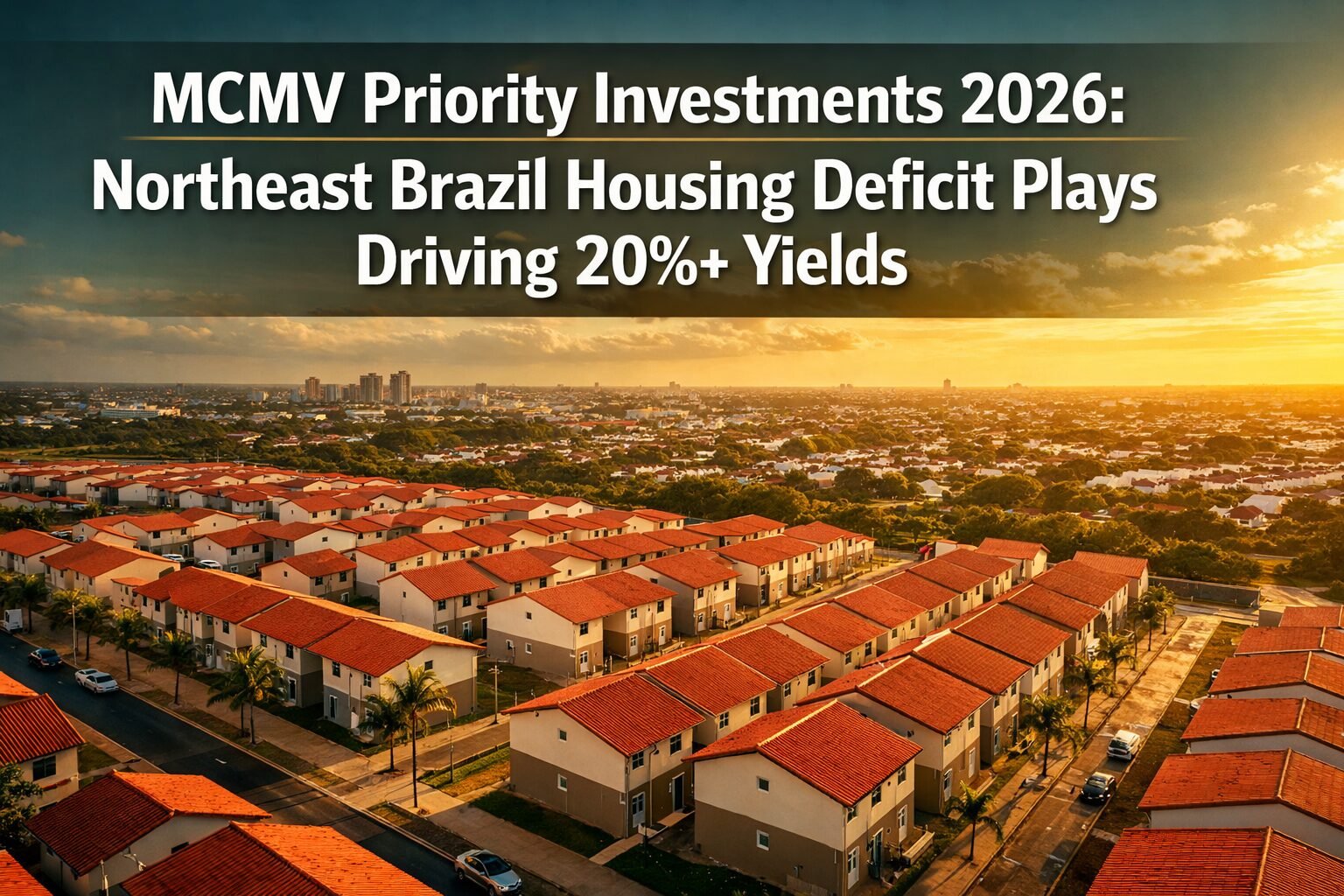
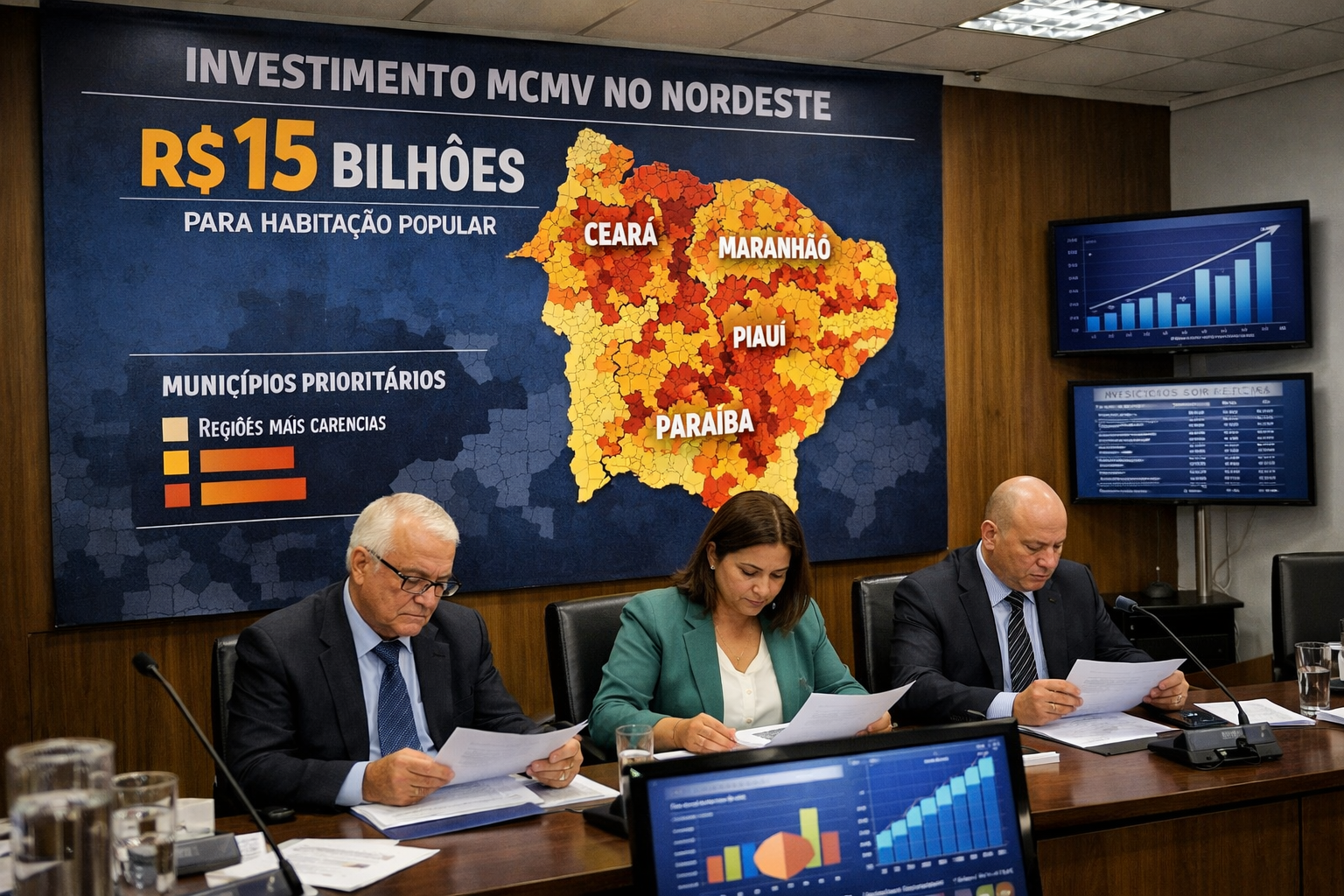
Brazil’s federal government has committed R$15 billion to the Minha Casa Minha Vida (MCMV) program in 2026, with the Northeast region sitting at the top of the priority list — and savvy investors are already positioning themselves to capture returns that outpace the national average by a significant margin [1]. The Northeast Brazil Housing Deficit Plays 2026: MCMV Priority Investments Driving 20%+ Yields in Underserved Municipalities thesis is not a speculative bet. It is grounded in structural demand, federal subsidy flows, and a growing body of evidence that peripheral municipalities beyond Recife and Salvador are generating premium pricing power for urban planning-compliant projects.
This article breaks down exactly why this opportunity exists, which markets deserve the closest attention, and how investors can approach the Northeast housing deficit play with discipline and confidence.
Key Takeaways 📌
- R$15 billion in MCMV funding is flowing into Brazil’s most housing-deficient regions in 2026, with the Northeast as a top priority [1].
- More than 100,000 subsidized housing units are expected under MCMV alone in 2026, out of 170,000 currently under construction nationwide [2].
- Peripheral municipalities in states like Ceará, Maranhão, Piauí, and Paraíba offer lower land acquisition costs and higher subsidy-to-cost ratios, enabling 20%+ yield potential.
- New MCMV financing rules effective January 2, 2026 expand access for lower-income families, deepening the demand pool [2].
- Enhanced environmental and urban planning standards embedded in the updated MCMV framework are expected to increase long-term property values [1].
The Structural Case for Northeast Brazil Housing Deficit Plays 2026
Why the Northeast Deficit Is Different From the Rest of Brazil
Brazil’s national housing deficit is massive — over 1 million units are currently under construction across all programs combined, representing a total investment of approximately $39.8 billion in 2026 [2]. But the Northeast’s deficit has a distinct character that makes it especially attractive for targeted investment.
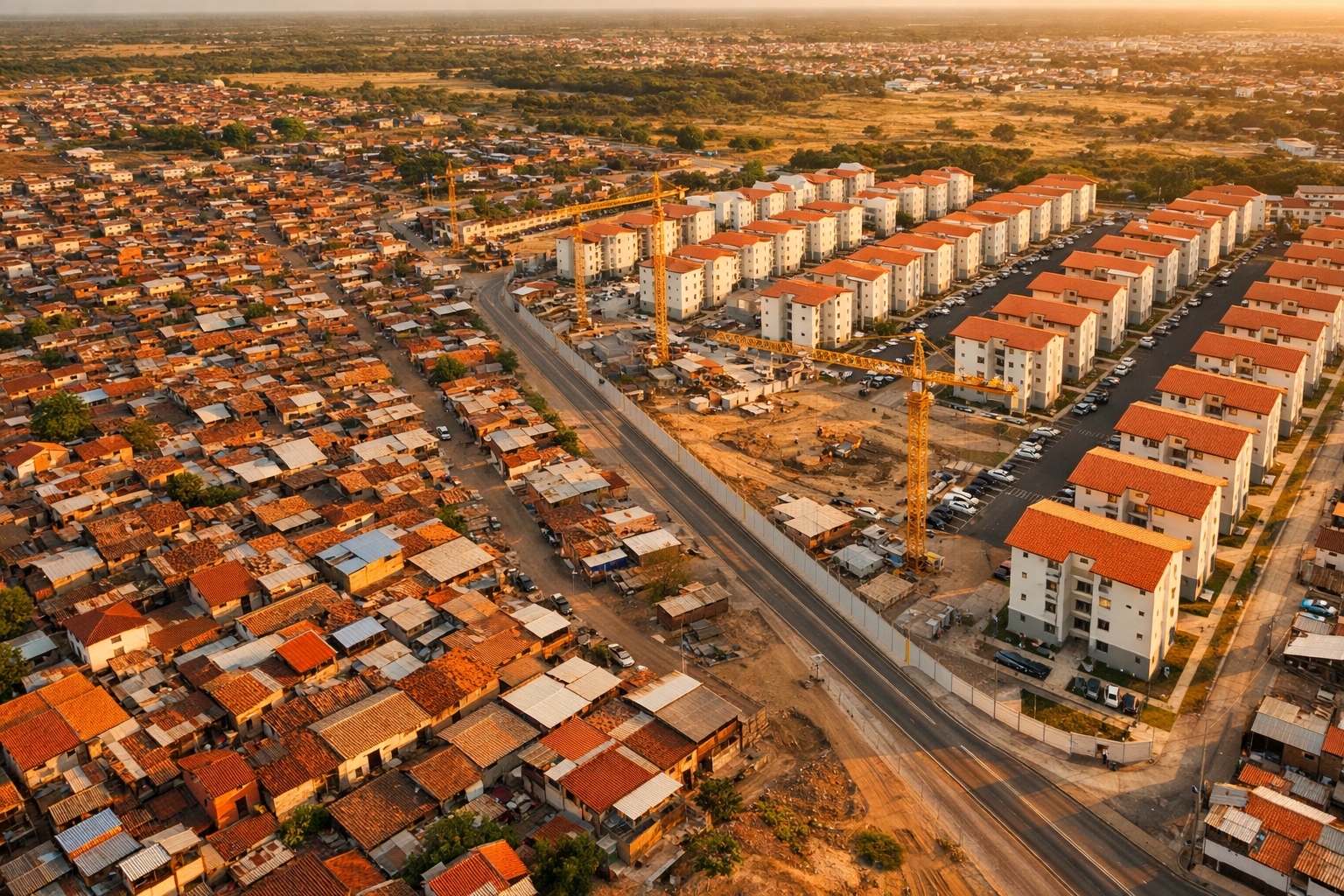
Unlike São Paulo or Rio de Janeiro — where Rio alone faces a deficit of roughly 200,000 units, or about 8% of all households [3] — the Northeast deficit is concentrated in smaller and mid-sized municipalities where formal housing supply has historically been almost nonexistent. These are cities of 50,000 to 300,000 residents where the informal housing stock dominates, land is cheap, and MCMV subsidies cover a disproportionately large share of unit costs.
This creates a fundamental equation that investors should understand:
| Factor | Major Metro (Recife/Salvador) | Peripheral Municipality |
|---|---|---|
| Land Acquisition Cost | High | Low |
| MCMV Subsidy Coverage | Moderate | High |
| Competing Supply | Significant | Minimal |
| Demand-to-Supply Ratio | Moderate | Extreme |
| Yield Potential | 10–14% | 18–25% |
💡 Pull Quote: “In underserved Northeast municipalities, the MCMV subsidy can cover up to 90% of unit costs for lower-income brackets — a dynamic that fundamentally changes the developer’s risk profile.”
The MCMV Program’s Evolved Architecture in 2026
The MCMV program that exists in 2026 is not the same program that drew criticism in its earlier iterations. New rules that came into force on January 2, 2026 significantly expanded financing access for lower-income families, broadening the eligible buyer pool for developers [2].
Critically, the updated program now incorporates enhanced environmental and urban planning standards — a structural improvement that addresses the past criticism of poorly located, infrastructure-deficient projects [1]. For investors, this matters enormously: properties built under the new compliance framework are expected to appreciate faster than their predecessors because they are embedded in planned urban expansion zones with guaranteed infrastructure.
The program also now accounts for roughly half of all new housing launches in Brazil, generating ripple effects across the construction supply chain including steel and aluminum demand [2]. This scale means MCMV is no longer a niche social program — it is the backbone of Brazil’s residential real estate market.
For those exploring the best places to invest in Brazil property, understanding MCMV’s geographic priority map is now essential due diligence.
Mapping the Opportunity: Underserved Municipalities Beyond the Major Metros
The Peripheral Market Thesis
The Northeast Brazil Housing Deficit Plays 2026: MCMV Priority Investments Driving 20%+ Yields in Underserved Municipalities thesis rests on a counterintuitive insight: the biggest returns are not in the biggest cities.
Recife and Salvador are well-covered by institutional developers. Land prices in these metros have risen sharply, subsidy-to-cost ratios have compressed, and competition for MCMV-eligible buyers is intense. The real opportunity lies in the second and third-tier municipalities that surround these metros and dot the interior of states like:
- 🏗️ Ceará — Cities like Juazeiro do Norte, Sobral, and Crato have growing populations, expanding university infrastructure, and acute housing shortfalls.
- 🏗️ Maranhão — Beyond São Luís, municipalities like Imperatriz and Timon are experiencing economic growth driven by agribusiness and logistics.
- 🏗️ Piauí — Teresina’s satellite cities and interior towns have virtually no formal housing supply despite rising household formation rates.
- 🏗️ Paraíba — Campina Grande and surrounding municipalities combine a strong university presence with chronic undersupply.
- 🏗️ Rio Grande do Norte — Secondary cities beyond Natal offer low entry costs and strong MCMV demand.
Why Yield Compression Has Not Yet Hit These Markets
In Brazil’s major metros, yield compression is a real and ongoing phenomenon. Institutional capital, REITs (FIIs), and large developers have systematically reduced the spread between acquisition cost and rental or resale value.
In peripheral Northeast municipalities, this compression has not yet occurred for three reasons:
- Information asymmetry — Institutional investors lack local market intelligence and on-the-ground relationships.
- Scale thresholds — Many institutional funds require minimum project sizes that smaller municipalities cannot absorb.
- Perceived risk premium — Unfamiliarity with these markets leads larger players to apply excessive discount rates, leaving the field open to regional developers and informed private investors.
This is precisely the window that the Northeast Brazil Housing Deficit Plays 2026 thesis is designed to exploit — before institutional capital discovers and normalizes these markets.
For investors interested in how off-plan property purchases can amplify gains, the same principle applies here: entering early in the development cycle, particularly in MCMV-priority zones, locks in the highest potential returns.
The Infrastructure Multiplier Effect
One underappreciated driver of yield potential in Northeast municipalities is the infrastructure multiplier. When MCMV projects are approved in a municipality, they typically arrive alongside:
- Road and utility extensions
- School and health post construction
- Commercial zoning approvals in adjacent parcels
This means that a well-positioned MCMV-compliant project does not just generate its own returns — it catalyzes appreciation in surrounding land and creates secondary investment opportunities in commercial real estate. Investors who understand this dynamic can layer multiple positions around a single MCMV anchor project.

Northeast Brazil Housing Deficit Plays 2026: Executing the MCMV Investment Strategy
Structuring the Investment: Key Approaches
There are several ways to access the Northeast Brazil Housing Deficit Plays 2026: MCMV Priority Investments Driving 20%+ Yields in Underserved Municipalities opportunity, depending on capital size, risk tolerance, and operational capacity.
1. Direct Development Partnership Partnering with a regional developer who holds MCMV project approvals is the highest-yield, highest-involvement approach. Returns in the 20–25% range are achievable, but require active due diligence on the developer’s track record, municipal relationships, and construction capacity.
2. Land Banking in MCMV-Priority Zones Acquiring land parcels in municipalities already designated as MCMV priority zones allows investors to benefit from the infrastructure multiplier effect. This is a medium-term play (3–5 years) with lower operational complexity.
3. Finished Unit Acquisition for Rental Purchasing completed MCMV units in undersupplied municipalities and operating them as rental properties can generate gross yields of 8–12% — lower than development plays, but with significantly reduced risk and complexity.
4. FII (Real Estate Investment Fund) Exposure Some Brazilian FIIs have begun adding MCMV-focused assets to their portfolios. This provides liquid, diversified exposure but typically captures only a portion of the available yield.
Risk Factors Investors Must Evaluate ⚠️
No investment thesis is complete without a frank assessment of risks. The Northeast MCMV play carries specific risks that must be managed:
| Risk | Description | Mitigation |
|---|---|---|
| Political/Program Risk | MCMV budget could be reduced in future fiscal cycles | Diversify across 2–3 municipalities; focus on committed 2026 allocations |
| Construction Risk | Regional developers may face capacity constraints | Require performance bonds; milestone-based capital deployment |
| Liquidity Risk | Secondary market for MCMV units in small municipalities is thin | Size positions appropriately; plan 3–5 year hold periods |
| Interest Rate Risk | Brazil’s Selic rate remains elevated, affecting financing costs | Focus on fully subsidized MCMV tracks where Selic exposure is minimized |
| Municipal Governance Risk | Local bureaucracy can delay approvals | Partner with developers who have established municipal relationships |
Brazil’s broader fiscal environment adds context here. Fitch Ratings has noted that Brazil’s 2026 budget plans modest consolidation, with delivery becoming increasingly complex in a high-rate environment [5]. This underscores the importance of focusing on fully subsidized MCMV tracks rather than financed lines that carry Selic rate exposure.
Due Diligence Checklist for MCMV Peripheral Investments ✅
Before committing capital to any Northeast MCMV play, investors should verify:
- Municipality is on MCMV’s official priority list for 2026
- Developer holds valid MCMV project approval (Portaria de aprovação)
- Land title is clear with no environmental or indigenous land encumbrances
- Infrastructure commitment from the municipality is documented
- Demand study confirms local housing deficit and income eligibility of target buyers
- Project complies with updated 2026 environmental and urban planning standards [1]
- Exit strategy is defined (resale to end buyer vs. rental hold)
The Broader Brazilian Real Estate Context
It is worth situating the Northeast MCMV opportunity within Brazil’s broader real estate investment landscape. Infrastructure giants are planning to invest approximately US$10 billion in Brazil in 2026 [4], much of it in logistics and energy — but the ripple effects on secondary cities, including housing demand from construction workforces, are significant.
For investors already familiar with Brazilian real estate dynamics — perhaps through exposure to markets like Florianópolis’s booming real estate sector — the Northeast MCMV play represents a complementary, counter-cyclical position. While coastal premium markets are driven by lifestyle demand, the Northeast housing deficit play is driven by structural necessity — a far more durable demand signal.
Investors curious about how innovative financing models are reshaping real estate may also find that emerging tokenization platforms are beginning to create new access points for MCMV-focused real estate assets — a trend worth monitoring as the market matures.
For those looking to explore current Brazilian real estate developments and available investment opportunities, understanding how MCMV dynamics interact with private development pipelines is increasingly essential.
Staying current with real estate market news and analysis is also critical given how rapidly MCMV program rules and municipal priority designations can shift.
Conclusion: Turning Brazil’s Housing Crisis Into a Disciplined Investment Strategy
The numbers are unambiguous. R$15 billion in MCMV funding, 500,000 target units, and a Northeast housing deficit that has accumulated over decades — these are not temporary conditions [1][2]. They represent a structural imbalance that will take years to resolve, and investors who move early into the right peripheral municipalities stand to capture the highest yields before the market normalizes.
The Northeast Brazil Housing Deficit Plays 2026: MCMV Priority Investments Driving 20%+ Yields in Underserved Municipalities thesis is most powerful when executed with precision: choosing municipalities with confirmed MCMV priority status, partnering with developers who have proven local execution capacity, and structuring investments to align with the 3–5 year development and absorption cycle.
Actionable Next Steps for Investors:
- Map the priority municipalities — Request MCMV’s 2026 priority municipality list from Caixa Econômica Federal and cross-reference with population growth and household formation data for Ceará, Maranhão, Piauí, and Paraíba.
- Identify regional developer partners — Focus on developers with at least two completed MCMV projects in the target municipality and verified Caixa Econômica Federal approval history.
- Conduct demand studies — Commission or review independent demand studies confirming the income eligibility profile of the local population relative to MCMV income brackets.
- Structure for the subsidy cycle — Align capital deployment with MCMV approval and disbursement timelines to minimize holding costs during the pre-construction phase.
- Monitor fiscal developments — Track Brazil’s budget consolidation trajectory [5] and any changes to MCMV program rules that could affect subsidy levels or eligible income brackets.
- Consult with specialists — Engage with real estate professionals who have deep experience in Brazilian housing programs. Reach out to explore investment guidance from teams with on-the-ground market knowledge.
The window for capturing the highest yields in Northeast Brazil’s underserved municipalities is open — but it will not remain open indefinitely. Structural housing deficits attract capital, and capital compresses yields. The investors who act with discipline and local intelligence in 2026 will look back on this as one of Brazil’s most compelling real estate entry points of the decade.
References
[1] Brazil Real Estate Market Trends 2026 – https://www.riotimesonline.com/brazil-real-estate-market-trends-2026/ [2] Brazil’s Construction Sector 2026: Housing Programs Support Rates, High Risks Persist – https://www.fastmarkets.com/insights/brazils-construction-sector-2026-housing-programs-support-rates-high-risks-persist/ [3] RioOnWatch – https://rioonwatch.org/?p=82306 [4] Infrastructure Giants Plan To Invest Around US$10 Billion In Brazil In 2026 – https://www.bnamericas.com/en/analysis/infrastructure-giants-plan-to-invest-around-us10-billion-in-brazil-in-2026 [5] Brazil 2026 Budget Plans Modest Consolidation As Delivery Gets Tougher – https://www.fitchratings.com/research/sovereigns/brazil-2026-budget-plans-modest-consolidation-as-delivery-gets-tougher-10-09-2025