
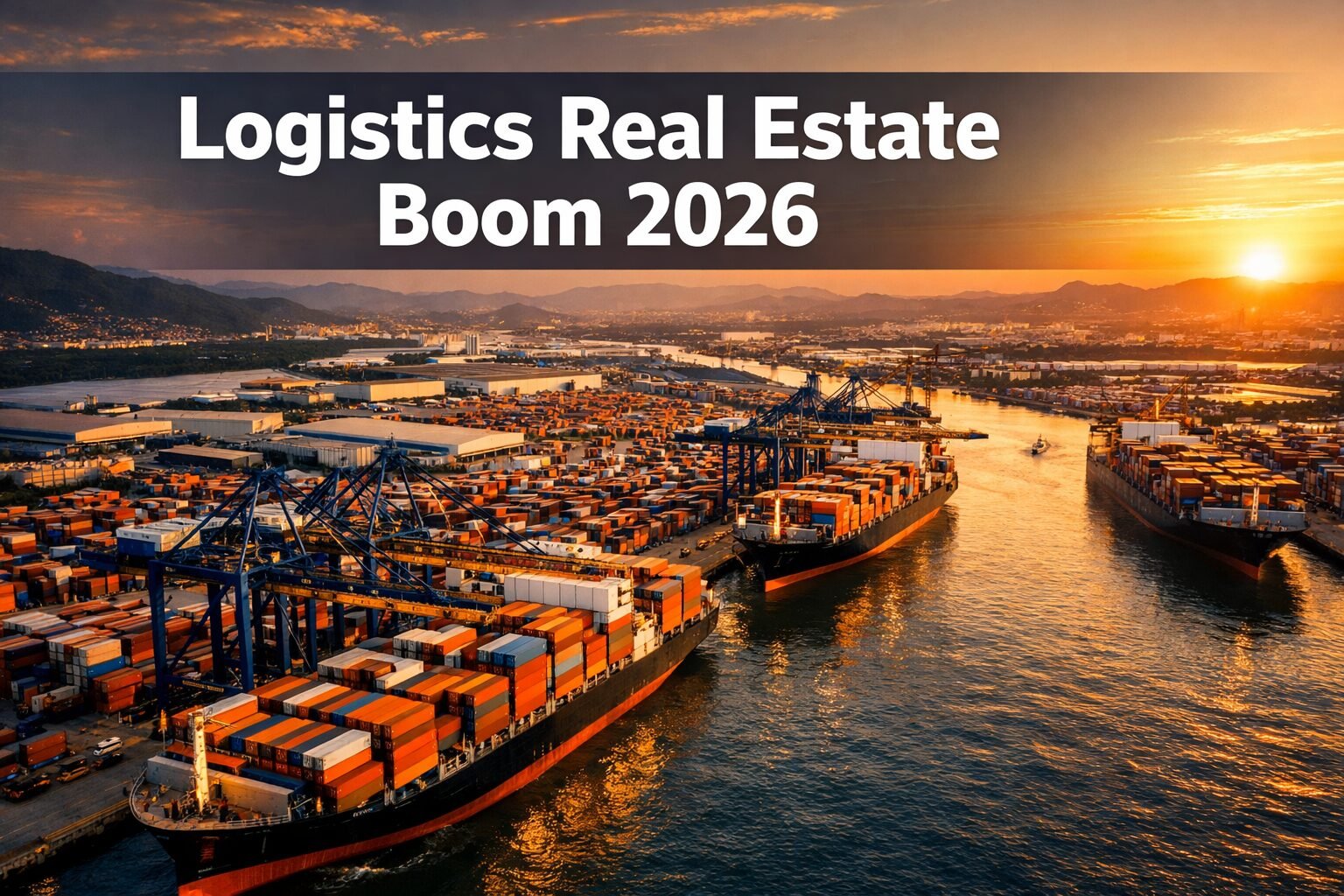
Brazil’s construction sector is growing at 1.7–3.3% in 2026, yet the sharpest returns are not coming from residential towers or office parks — they are being forged inside massive logistics warehouses clustered along the highways and port approaches of Greater São Paulo. The Logistics Real Estate Boom 2026: ABC Region and Port of Santos Developments Capturing Industrial Supply Chain Premiums is reshaping how institutional investors think about Brazilian real estate, pulling capital away from residential volatility and toward government-backed, infrastructure-anchored industrial assets.
Industrial warehouse vacancy in São Paulo’s metropolitan area has already fallen to a historic low of 4.7%, while rental prices have climbed 12% year-over-year [1]. These are not speculative numbers — they reflect a structural shift driven by e-commerce acceleration, Mercosur trade integration, and a pipeline of port concessions that is redefining Brazil’s supply chain geography.
Key Takeaways 📌
- 🏭 São Paulo industrial vacancy hit 4.7%, with rents rising 12% YoY — signaling a landlord’s market in logistics real estate [1].
- 📦 Brazil’s warehouse stock is set to expand by ~4.9 million sqm in 2026, fueled by e-commerce and supply chain modernization [7].
- 🚢 The Port of Santos and ABC Region are the epicenter of institutional investor interest, supported by new legislation, mega-contract pipelines, and retroport expansion [3][6].
- 💼 DP World’s five-year deal with Suzano (February 2026) signals growing corporate confidence in Brazil’s contract logistics sector [2].
- 📈 Stable rental yields and capital appreciation make logistics real estate a resilient alternative to residential market swings [1].
Why the ABC Region Is Ground Zero for Industrial Supply Chain Premiums
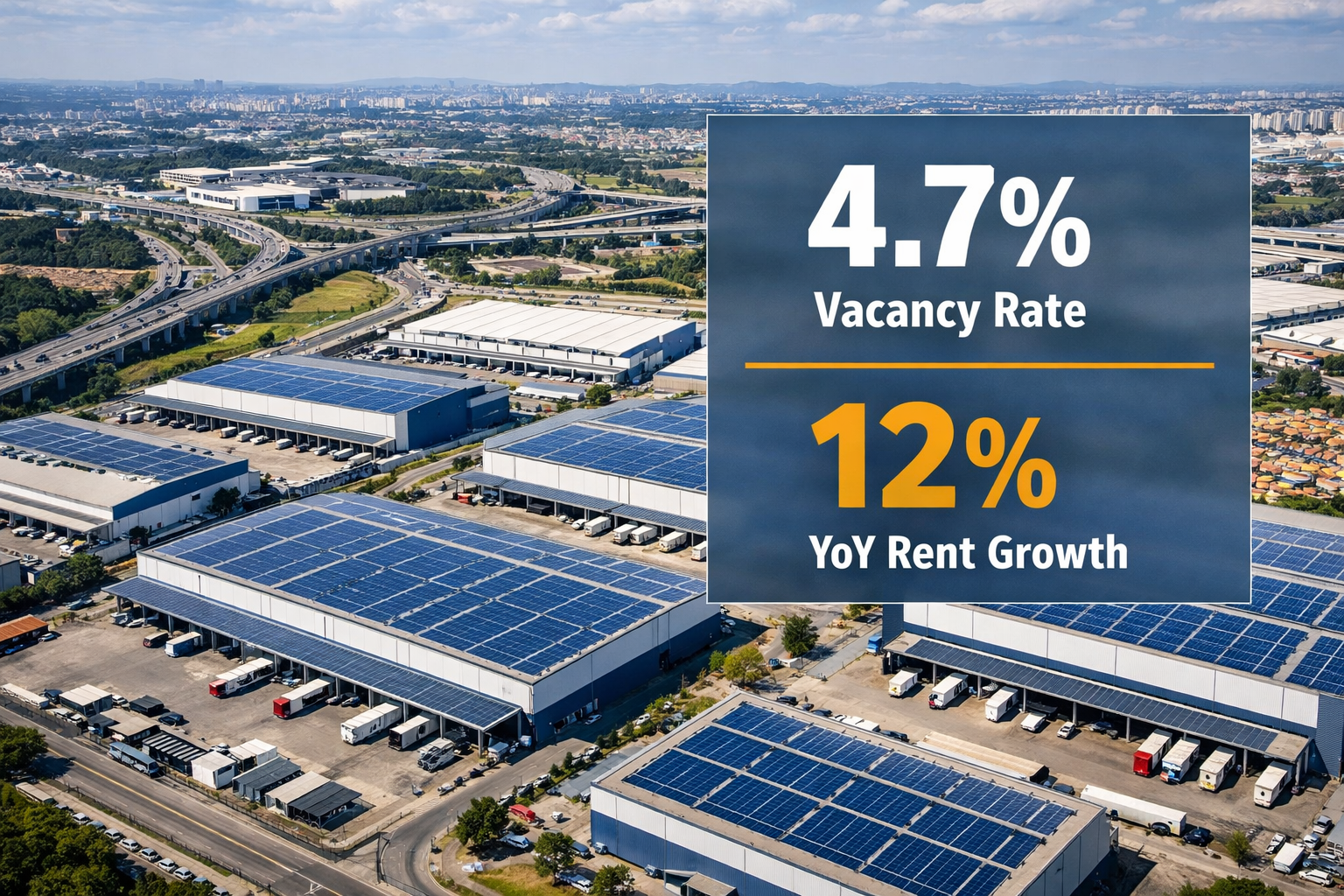
The ABC Region — comprising Santo André, São Bernardo do Campo, and São Caetano do Sul — sits at the intersection of Brazil’s most critical logistics arteries. Highways connecting São Paulo to the Port of Santos run directly through this corridor, making it one of the most strategically valuable industrial zones in Latin America.
The Vacancy Crisis Driving Rent Premiums
When vacancy rates fall below 5%, landlords gain pricing power. That is exactly what is happening. At 4.7% vacancy across São Paulo’s metro industrial market, available Class A warehouse space has become scarce enough to command 12% annual rent increases [1]. For investors, this creates a compounding dynamic: rising rents boost net operating income while low vacancy reduces credit risk.
💬 “Investors are increasingly targeting logistics hubs near major highways and ports, specifically the ABC region and the vicinity of the Port of Santos, Brazil’s busiest maritime gateway.” [1]
What Institutional Investors Are Buying
The profile of capital flowing into the ABC Region has shifted dramatically. Pension funds, REITs (FIIs in Brazil), and global logistics operators are prioritizing:
| Asset Type | Key Driver | Typical Lease Term |
|---|---|---|
| Cross-docking facilities | Last-mile e-commerce | 3–5 years |
| High-bay distribution centers | Retail and 3PL demand | 5–10 years |
| Cold chain warehouses | Food and pharma growth | 7–12 years |
| Built-to-suit logistics parks | Corporate anchor tenants | 10–15 years |
Built-to-suit developments, in particular, are attracting institutional capital because they come pre-leased to creditworthy tenants — reducing speculative risk while locking in long-term income streams.
E-Commerce as the Structural Demand Engine
The rise of e-commerce and demand for efficient supply chains have fundamentally boosted the logistics real estate market [1]. Brazilian e-commerce revenues have grown consistently, and the fulfillment infrastructure required to support same-day and next-day delivery is enormous. Each percentage point of e-commerce penetration translates directly into hundreds of thousands of square meters of new warehouse demand.
Brazil’s industrial warehouse stock is expected to expand by approximately 4.9 million square meters in 2026 to meet this demand [7]. That figure represents one of the largest single-year expansions in the country’s history — and the ABC Region is positioned to absorb a disproportionate share of it.
For investors exploring Brazil’s broader real estate opportunity set, understanding the best places to invest in Brazil property provides essential context on how logistics corridors compare to residential and mixed-use markets across different regions.
Port of Santos Developments: The Mega-Contract Pipeline Reshaping Coastal Logistics
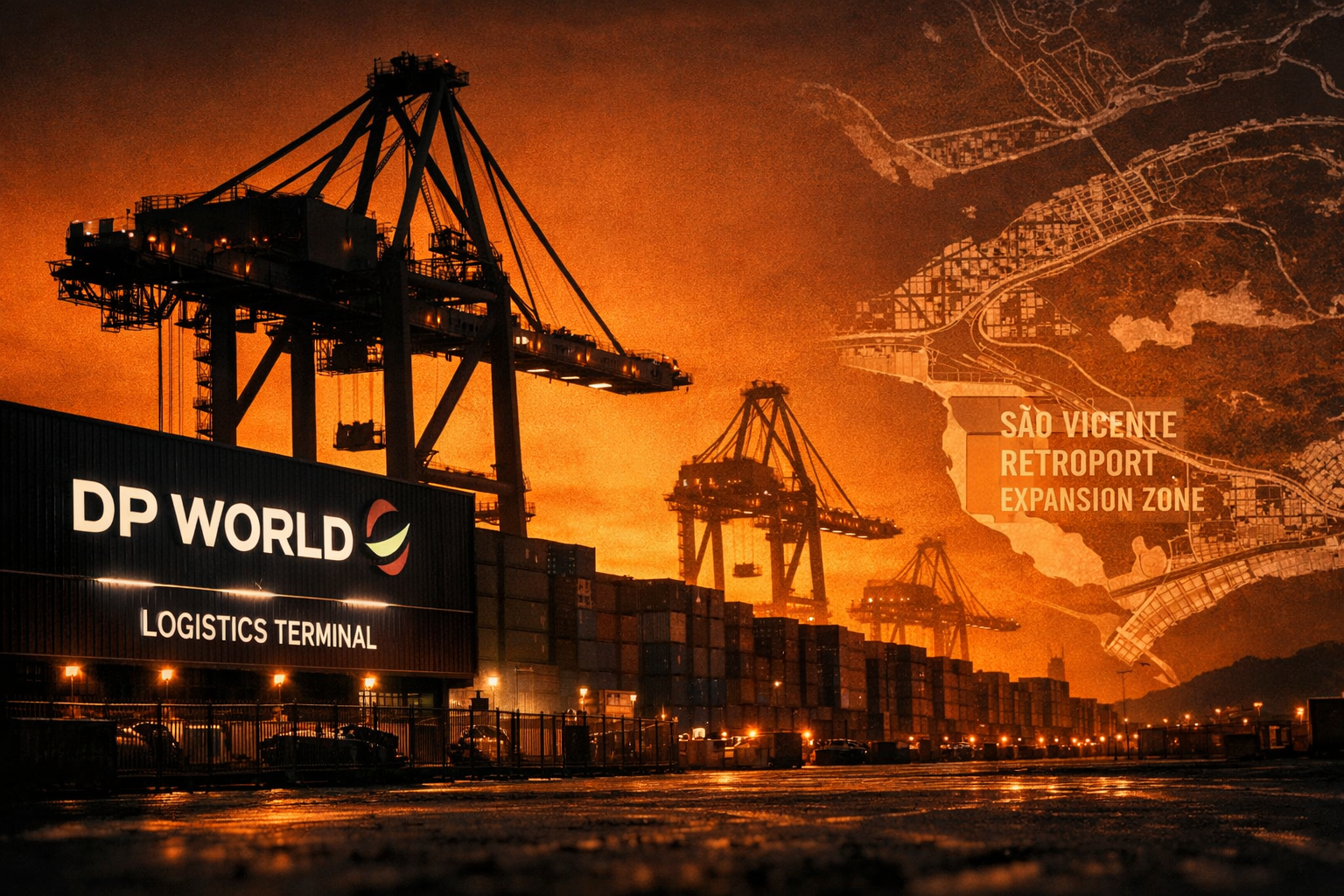
No discussion of the Logistics Real Estate Boom 2026: ABC Region and Port of Santos Developments Capturing Industrial Supply Chain Premiums is complete without examining what is happening at the Port of Santos itself. Brazil’s busiest maritime gateway is undergoing its most significant transformation in decades, driven by legislative action, private sector deals, and a federal mega-contract pipeline.
São Vicente’s Retroport Transformation
On March 16, 2026, São Vicente’s municipal government enacted Complementary Law 1,234/2026, legally reclassifying areas on the right bank of the Port of Santos for industrial and logistics expansion. The legislation transforms São Vicente into a formal “retroport logistics hub” — a designation that extends regularization deadlines and unlocks previously restricted land for warehouse development [3].
This is not a minor zoning adjustment. It represents a deliberate municipal strategy to capture the value created by port traffic, positioning São Vicente as the primary land-side logistics complement to Santos’ maritime operations. Developers and investors who moved early into this zone are already seeing land valuations adjust upward.
The Mega Container Terminal Auction
The auction for a mega container terminal at the Port of Santos — one of the most anticipated infrastructure events in Brazil’s logistics sector — is expected to be finalized in 2026 following delays tied to the complexity of the concession process and pending approval from the Federal Court of Accounts (TCU) [4]. Companies have not waited passively; multiple global terminal operators have been positioning their bids and forming consortia in anticipation.
Brazil is preparing multiple mega-contracts for ports and airports in 2026, as confirmed by Ports and Airports Minister Tomé França [6]. This federal commitment signals that Santos is not an isolated case — it is part of a coordinated national infrastructure strategy designed to modernize Brazil’s export capacity and reduce logistics costs that have historically made Brazilian goods less competitive globally.
DP World and the Suzano Deal: A Bellwether Transaction
On February 24, 2026, DP World expanded its contract logistics footprint in Brazil by securing a five-year warehouse and production line supply operations agreement with Suzano, one of the world’s largest pulp and paper producers [2]. The deal is significant for several reasons:
- ✅ It demonstrates that global logistics operators are committing long-term capital to Brazilian infrastructure
- ✅ It validates the contract logistics model as viable for major industrial clients
- ✅ It creates a replicable template for other multinational companies evaluating Brazil’s logistics real estate market
- ✅ It anchors stable, long-duration cash flows — exactly what institutional investors seek
DP World’s move is a bellwether. When a company of that scale signs a five-year deal in a market, it signals confidence in the regulatory environment, the labor market, and the underlying demand fundamentals.
Mercosur Integration as a Long-Term Tailwind
The strategic focus on Santos and the ABC Region reflects broader regional integration efforts within Mercosur and Brazil’s export-oriented economy [1]. As trade flows between Brazil, Argentina, Uruguay, and Paraguay deepen — and as Brazil pursues new trade agreements with the European Union — the Port of Santos becomes an increasingly critical node in continental supply chains. Logistics real estate near Santos is not just a local play; it is a bet on Brazil’s role in global trade.
Investment Dynamics: Yields, Risk, and the Case for Industrial Over Residential
Stable Returns in an Unstable Macro Environment
Brazil’s macroeconomic environment in 2026 presents a familiar paradox: high interest rates coexist with strong sectoral growth. In this context, logistics real estate offers a compelling proposition — stable rental yields and capital appreciation prospects supported by structural demand drivers rather than speculative sentiment [1].
Unlike residential real estate, where price cycles are heavily influenced by consumer credit conditions and demographic shifts, industrial logistics assets are driven by trade volumes, e-commerce penetration, and infrastructure investment — forces that are more predictable and less sensitive to short-term interest rate movements.
Key Return Drivers at a Glance
| Return Driver | Mechanism | Strength in 2026 |
|---|---|---|
| Rental income growth | 12% YoY rent increases, low vacancy | ⭐⭐⭐⭐⭐ |
| Capital appreciation | Land scarcity near ports and highways | ⭐⭐⭐⭐ |
| Lease security | Long-term built-to-suit contracts | ⭐⭐⭐⭐⭐ |
| Inflation protection | Rents indexed to IGPM/IPCA | ⭐⭐⭐⭐ |
| Government support | Mega-contract pipeline, zoning reform | ⭐⭐⭐⭐⭐ |
The FII (Real Estate Investment Trust) Channel
Brazilian FIIs focused on logistics (FIIs de Logística) have become one of the most actively traded categories on B3. They offer retail and institutional investors exposure to the same warehouse assets that global operators are acquiring, with the added benefit of liquidity and dividend distributions. The combination of rising rents, low vacancy, and expanding warehouse stock creates a favorable environment for FII net asset value growth throughout 2026.
For investors who want to understand how pre-construction and development-stage assets can amplify returns, the concept of real estate development and off-plan investment gains is directly applicable — the same principles of buying into a market before full price discovery applies to logistics park development.
Comparing Logistics to Other Brazilian Real Estate Segments
The Porto Maravilha district in Rio de Janeiro continues to attract corporate tenants through urban regeneration [1], and developers across Brazil are renovating office buildings with coworking spaces, advanced connectivity, and wellness areas [1]. These are positive signals for the broader market — but they do not match the supply-demand fundamentals of logistics real estate near Santos.
Residential markets in high-growth cities like Florianópolis are also performing strongly, as detailed in analysis of the real estate market in Greater Florianópolis. However, the structural drivers underpinning logistics real estate — port expansion, e-commerce growth, Mercosur integration — create a different risk-return profile that is particularly attractive to institutional capital seeking government-backed, infrastructure-anchored returns.
The Supply Chain Premium: How Location Creates Durable Value
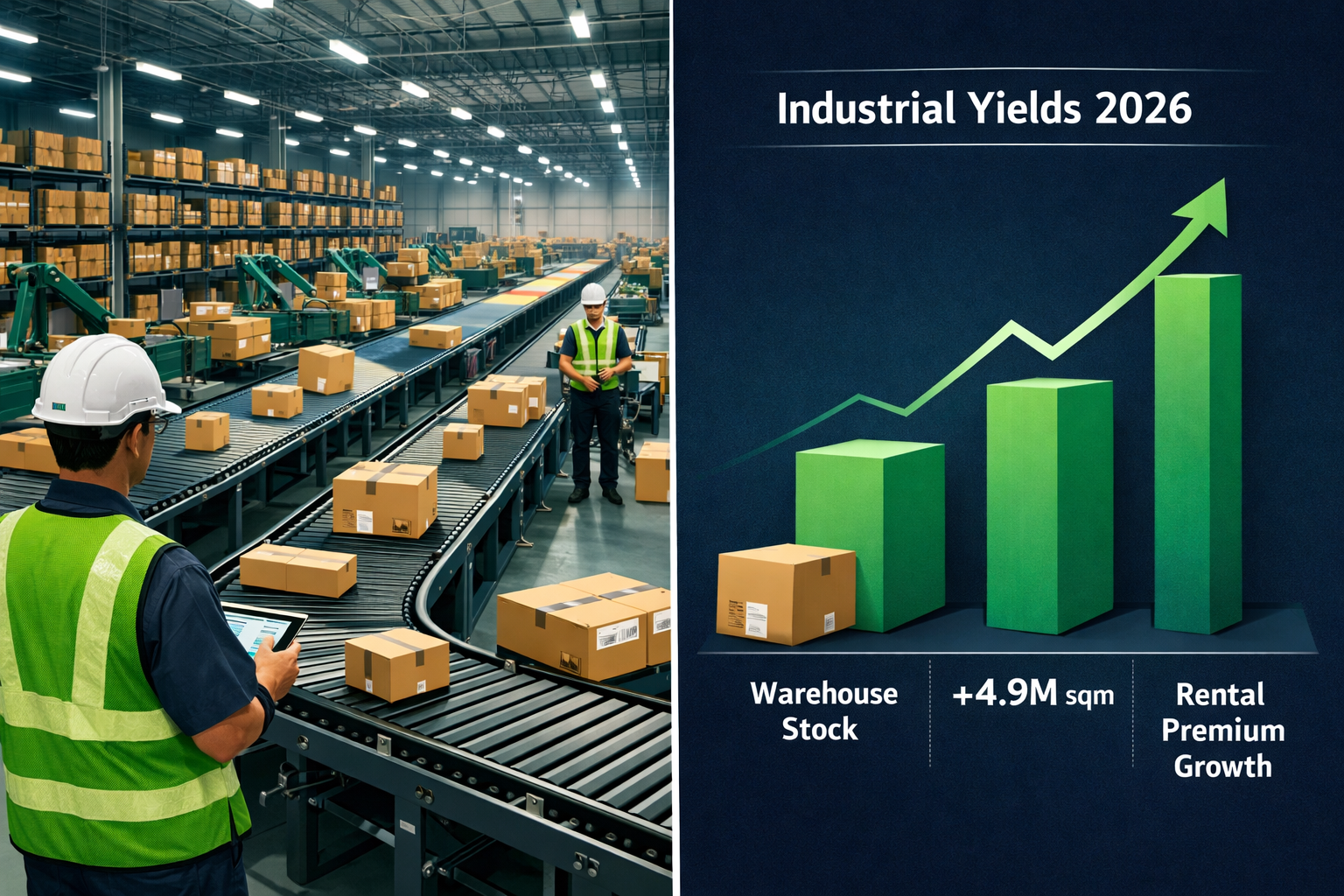
The phrase “supply chain premium” refers to the additional value that accrues to real estate assets positioned within critical logistics networks. Not all warehouses are equal — a distribution center located 5 kilometers from a port entrance commands fundamentally different economics than one located 50 kilometers away.
What Creates a Supply Chain Premium?
- 🛣️ Highway access: Direct connections to Anchieta and Imigrantes highways (linking São Paulo to Santos) reduce transport costs and delivery times
- 🚢 Port proximity: Shorter drayage distances to Santos reduce per-container costs for importers and exporters
- ⚡ Power and connectivity infrastructure: Modern logistics parks require reliable three-phase power and fiber connectivity for automation systems
- 👷 Labor market depth: The ABC Region’s industrial workforce is among the most skilled and experienced in Brazil
- 📋 Regulatory clarity: São Vicente’s new retroport legislation provides the legal certainty that institutional investors require before committing capital
The Automation Factor
Modern logistics facilities are increasingly designed around automation. Automated storage and retrieval systems (AS/RS), conveyor networks, and AI-driven inventory management require buildings with specific clear heights (typically 12 meters or more), floor load capacities, and column spacing. These specifications narrow the pool of suitable buildings, further tightening effective supply and supporting rent premiums for Class A assets.
Developers who understand these technical requirements — and who are building to institutional specifications — are capturing the highest rents and attracting the most creditworthy tenants.
Emerging Opportunities for Investors and Developers
The Logistics Real Estate Boom 2026: ABC Region and Port of Santos Developments Capturing Industrial Supply Chain Premiums is creating specific entry points for different investor profiles:
For Institutional Investors
- Sale-leaseback transactions with industrial companies seeking to unlock capital from owned real estate
- Development-stage logistics parks in São Vicente’s newly reclassified retroport zone
- FII co-investment alongside established Brazilian logistics REIT managers
For Corporate Occupiers
- Built-to-suit negotiations while land costs remain below post-auction levels
- Long-term lease commitments to lock in current rental rates before further increases
- Strategic site selection that anticipates the mega container terminal’s operational impact on traffic patterns
For Regional Developers
- Infill development on underutilized industrial land within the ABC corridor
- Adaptive reuse of legacy manufacturing facilities into modern logistics specifications
- Mixed-use logistics parks combining warehousing with light manufacturing and office components
Investors interested in how innovation is reshaping real estate financing and deal structures may also find value in exploring cryptocurrencies and real estate development as a new investment frontier, as tokenized real estate assets are beginning to appear in the logistics segment.
For those tracking broader real estate market developments across Brazil, the latest real estate news and market updates provide ongoing intelligence on how these trends are evolving.
Conclusion: Actionable Steps in Brazil’s Logistics Real Estate Boom
The convergence of historic low vacancy, rising rents, port expansion legislation, and a federal mega-contract pipeline makes 2026 a pivotal year for logistics real estate in the ABC Region and around the Port of Santos. The Logistics Real Estate Boom 2026: ABC Region and Port of Santos Developments Capturing Industrial Supply Chain Premiums is not a temporary cycle — it reflects structural changes in how Brazil trades, manufactures, and distributes goods.
Actionable Next Steps 🎯
- Conduct a site analysis of logistics assets within 20 kilometers of the Port of Santos, prioritizing São Vicente’s newly legislated retroport zone.
- Monitor the mega container terminal auction — the concession award will trigger immediate land value adjustments in surrounding areas [4][6].
- Evaluate FII exposure to Brazilian logistics real estate as a liquid, dividend-generating entry point before direct asset acquisition.
- Engage legal counsel familiar with Complementary Law 1,234/2026 to understand regularization timelines and development rights in São Vicente [3].
- Model built-to-suit opportunities using current 12% rent growth as a conservative baseline for underwriting [1].
- Track DP World and similar operators for additional contract logistics deals that signal anchor tenant demand in specific submarkets [2].
Brazil’s logistics real estate market is rewarding investors who move with data, not sentiment. The data in 2026 is unambiguous: the ABC Region and Port of Santos corridor is where supply chain premiums are being created — and captured.
References
[1] Brazil Real Estate Market Trends 2026 – https://www.riotimesonline.com/brazil-real-estate-market-trends-2026/
[2] 24022026 Dp World Grows Brazil Contract Logistics Footprint With Suzano Warehouse Deal – https://www.dpworld.com/en/news/brazil/24022026-dp-world-grows-brazil-contract-logistics-footprint-with-suzano-warehouse-deal
[3] Sao Vicente Seeks To Expand Logistics Activities On The Right Bank Of The Port Of Santos In Sao Paulos Coastal Region – https://datamarnews.com/noticias/sao-vicente-seeks-to-expand-logistics-activities-on-the-right-bank-of-the-port-of-santos-in-sao-paulos-coastal-region/
[4] Auction For Mega Terminal In Santos May Be Postponed Until 2026 And Companies Are Taking Action – https://www.portolivrebrasil.com.br/en/news/Auction-for-mega-terminal-in-Santos-may-be-postponed-until-2026–and-companies-are-taking-action./
[6] Brasil Prepares Mega Contracts For Ports And Airports For 2026 – https://www.bnamericas.com/en/features/brasil-prepares-mega-contracts-for-ports-and-airports-for-2026
[7] Brazil Industrial Warehouse Stock Could Expand 4 Million Sqm 2026 – https://siila.com.br/news/brazil-industrial-warehouse-stock-could-expand-4-million-sqm-2026/7660/lang/en