
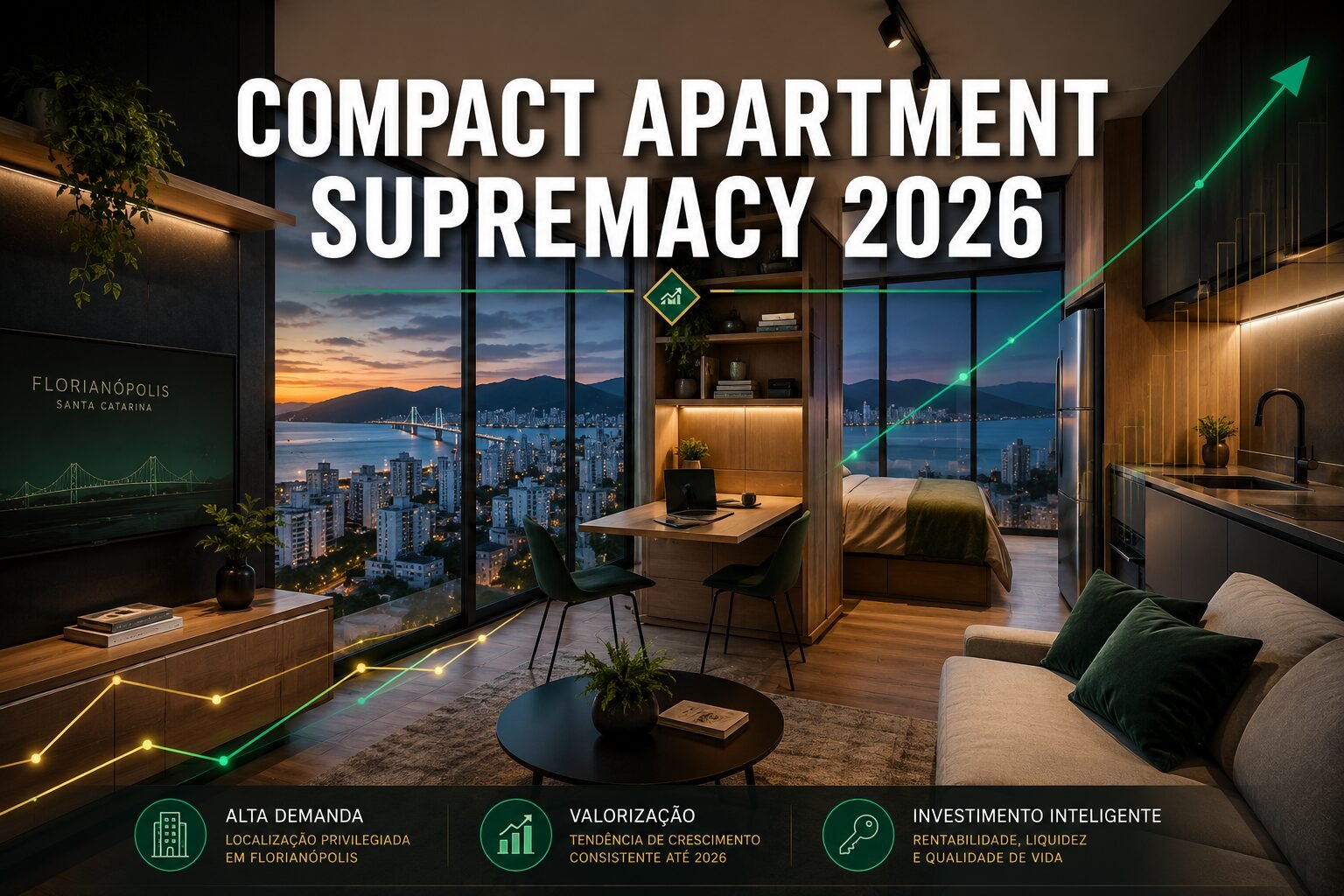
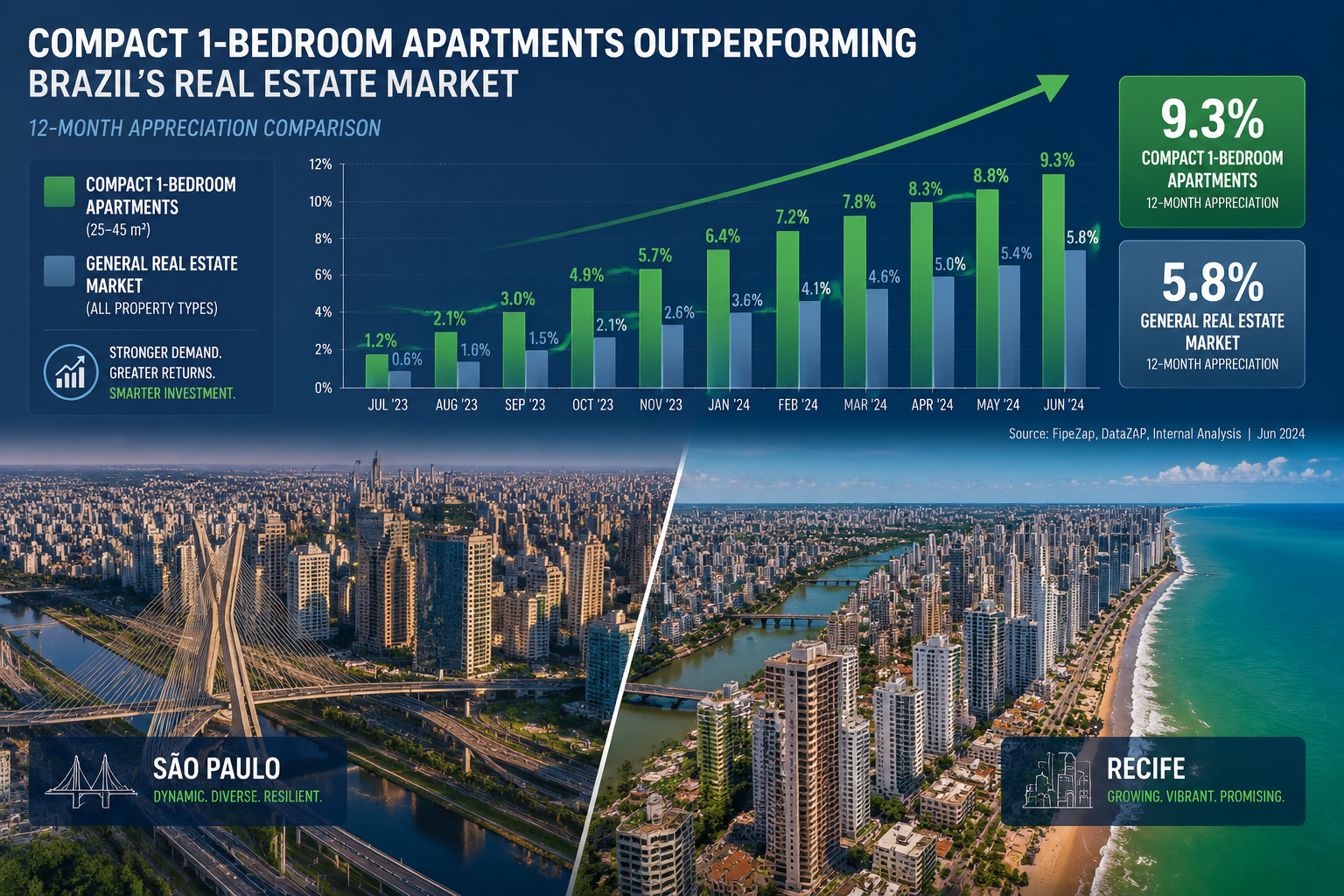
One-bedroom apartments in Brazil posted a 7.35% average price increase in the 12 months leading up to May 2026 — outpacing the general inflation rate of 4.77% over the same period [1]. That gap is not a coincidence. It reflects a structural shift in how Brazilians live, invest, and build wealth through real estate. The phenomenon of Compact Apartment Supremacy 2026: 8-10% Appreciation Forecasts and Design Innovations for Studios in Brazil is reshaping the country’s property market from the ground up, driven by affordability pressures, demographic change, and a new generation of design thinking that makes small spaces perform like large ones.
With the Selic rate holding near 15%, large-format properties have become harder to finance and slower to sell. Compact studios and one-bedrooms, by contrast, carry lower ticket prices, attract strong rental demand, and are generating projected appreciation of 8-10% through the remainder of 2026. For developers, investors, and buyers alike, understanding this trend is no longer optional — it is essential.
Key Takeaways
- One-bedroom apartments in Brazil appreciated 7.35% in the 12 months to May 2026, beating inflation by nearly 3 percentage points [1].
- In Recife, the average price per square meter for compact units reached R$ 15,648 — well above the city-wide average of R$ 11,215 [2].
- High Selic rates near 15% are pushing buyers toward lower-ticket compact units, intensifying demand and supporting 8-10% appreciation forecasts.
- Design innovations including glass partitions, multifunctional furniture, Muxarabi latticework, and peninsula kitchens are making studios more livable and marketable [3][4][5].
- Compact apartments in prime Brazilian markets are delivering investor yields approaching 9%, making them competitive with fixed-income alternatives.
Why Compact Apartments Are Outperforming Brazil’s Broader Market in 2026
The Brazilian real estate market has always been segmented, but 2026 has sharpened that segmentation into something more decisive. While large three- and four-bedroom units struggle under the weight of high financing costs, compact apartments — typically defined as studios up to 45 m² and one-bedrooms up to 55 m² — are capturing a disproportionate share of both buyer and renter attention.
The Selic Rate Effect on Buyer Behavior
A Selic rate near 15% does two things simultaneously. First, it raises the monthly cost of financing larger properties to levels that price out middle-income buyers. Second, it makes cash-yielding rental assets more attractive to investors who are comparing real estate returns against fixed-income benchmarks. Compact apartments thread this needle precisely: their lower acquisition cost makes financing manageable, while their rental yields — approaching 9% annually in well-located markets — remain competitive.
This dynamic is particularly visible in cities like Florianopolis, where studio investment advantages are well documented. The combination of tourism-driven short-term rental demand and a growing tech-sector workforce creates a dual income stream that larger units simply cannot replicate at the same price point.
Recife: A Case Study in Compact Supremacy
The data from Recife is among the most compelling available. The average price per square meter for one-bedroom apartments in the city reached R$ 15,648 in 2026 — a figure that is 39% higher than the city-wide average of R$ 11,215 [2]. This premium reflects genuine market preference, not speculative inflation. Buyers and renters in Recife are actively choosing compact units for their location, efficiency, and lower total cost of ownership.
| Segment | Avg. Price/m² (Recife, 2026) |
|---|---|
| One-bedroom apartments | R$ 15,648 |
| City-wide average (all types) | R$ 11,215 |
| Premium for compact units | +39% |
This pattern is repeating across other Brazilian metros. For investors seeking high-return locations, the best places to invest in Brazilian property consistently feature cities where compact unit demand outstrips supply.
Demographic Drivers
Three demographic forces are converging to sustain this demand:
- Urbanization and solo living: More Brazilians are living alone or as couples without children, reducing the functional need for large floor plans.
- Young professional migration: Remote work and tech sector growth are drawing 25-35 year-olds to coastal and mid-sized cities where compact units dominate new supply.
- Investor diversification: High-net-worth individuals are allocating portions of their portfolios to compact rental units as a hedge against Selic volatility, sometimes using innovative structures such as cryptocurrency-linked real estate investment vehicles.
“The compact apartment is no longer a compromise — it is a deliberate choice made by buyers who understand value, location, and lifestyle efficiency.”
Design Innovations Driving the Compact Apartment Supremacy 2026 Movement
The financial case for compact apartments is strong, but it would not hold without a parallel revolution in how these spaces are designed. The Compact Apartment Supremacy 2026: 8-10% Appreciation Forecasts and Design Innovations for Studios in Brazil story is as much about architecture and interior design as it is about economics. Developers who master both dimensions are capturing the largest share of price appreciation.
Glass Partitions and Multifunctional Zoning
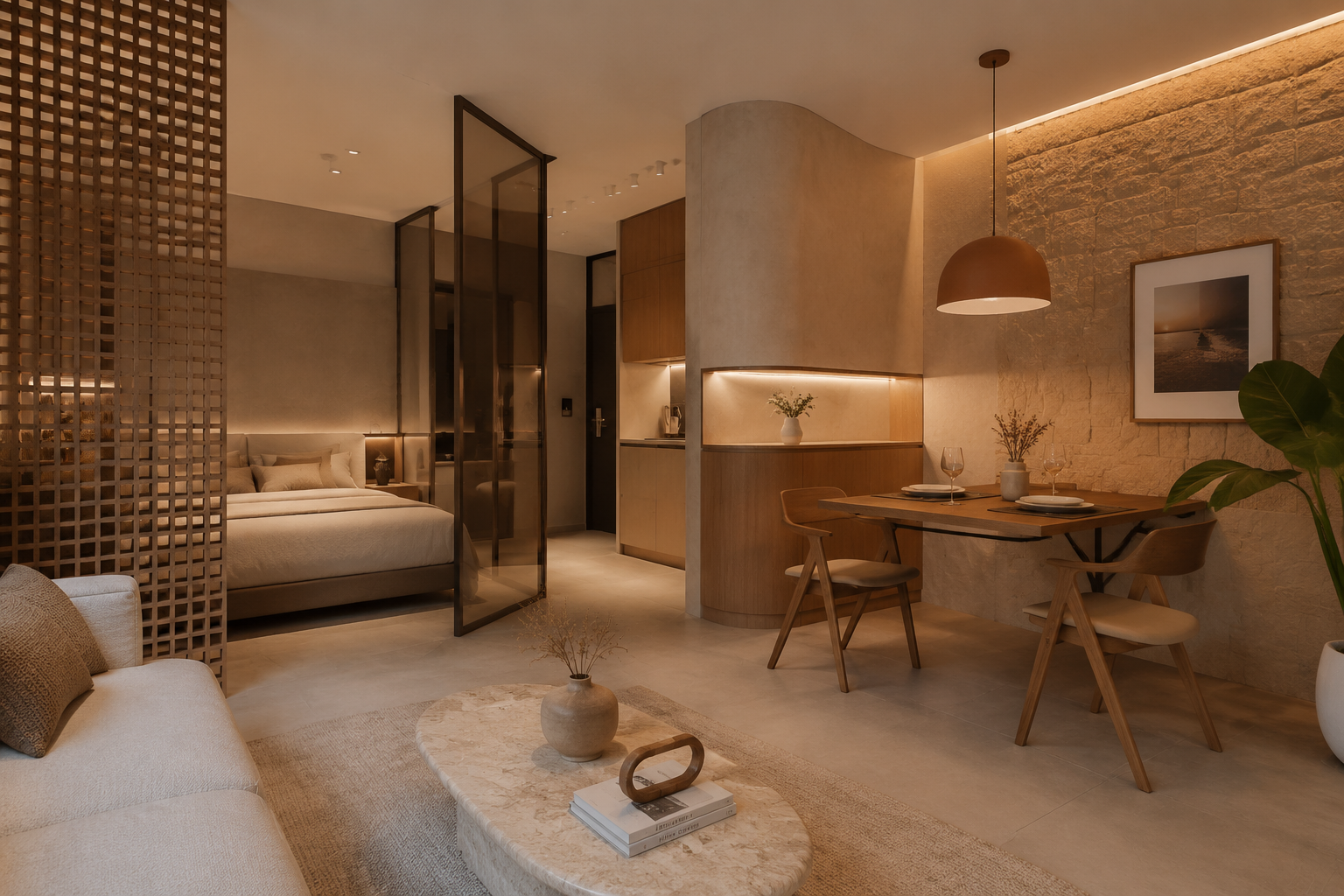
The MT Apartment project in São Paulo — a 43 m² studio — demonstrates what is possible when designers treat constraints as creative opportunities [3]. Glass partitions replace solid walls, allowing natural light to travel through the entire floor plan while maintaining acoustic and visual privacy between zones. The result is a space that reads as larger than its actual footprint.
Multifunctional areas serve double or triple duty: a home office converts to a guest sleeping area; a dining nook doubles as a work surface. This approach is not merely aesthetic — it directly affects resale value by expanding the perceived utility of the unit.
The Muxarabi Revival and Organic Forms
The “Formas da Vida 2026” collection by Italinea introduces design vocabulary that is both culturally rooted and spatially intelligent [4]. Muxarabi — traditional wooden latticework derived from Moorish-influenced Brazilian architecture — is being reinterpreted as a room divider, headboard element, and decorative screen. Its open structure filters light without blocking it, making it ideal for compact spaces where solid partitions would feel oppressive.
Curved corners and organic panels are replacing sharp-edged furniture and cabinetry. These softer forms reduce the visual “busyness” of a small room, creating a calmer, more expansive atmosphere.
Peninsula Kitchens Replace Islands
One of the most practical design shifts of 2026 is the move from kitchen islands to peninsulas [5]. In a compact apartment, a freestanding island consumes floor space from all four sides. A peninsula, anchored to one wall, reclaims that circulation space while still providing counter area, seating, and storage. This single change can add 4-6 usable square meters to a studio’s effective living zone — a significant gain in a 35-45 m² unit.
Monochromatic Palettes and Natural Materials
Two complementary trends are reshaping the visual language of compact interiors:
Monochromatic design: Using varying shades of a single color — warm whites, stone grays, or earthy terracottas — creates depth without visual clutter [6]. In a small space, color contrast between walls, furniture, and floors can fragment the eye’s movement and make the room feel smaller. A tonal approach does the opposite.
Natural materials: Wood, stone, and organic textiles are dominant in 2026 interiors [7]. Beyond aesthetics, these materials age gracefully and photograph well — an important consideration for units that will be listed on short-term rental platforms where visual appeal drives booking rates.
Personalized, Lived-In Interiors
The minimalist aesthetic that dominated compact apartment design for much of the 2010s is giving way to something warmer and more personal [8]. Buyers in 2026 want spaces that feel inhabited rather than staged. This means incorporating personal artifacts, layered textures, and curated collections of objects. For developers and interior designers, the practical implication is that show units should feel like homes, not hotel rooms.
Sensory finishes — textured wall coverings, tactile cabinet fronts, and artisan tile work — are becoming standard in premium compact developments [9]. These elements engage multiple senses and create emotional connection, which translates directly into faster sales and stronger pricing power.
Balancing Function and Aesthetics
The overarching design principle for compact apartments in 2026 is the balance between functionality and visual appeal [10]. Strategic lighting — combining ambient, task, and accent sources — is as important as floor plan efficiency. A well-lit 38 m² apartment will consistently outperform a poorly lit 50 m² unit in both rental yield and resale value.
Key design elements that developers and buyers should prioritize:
- Multifunctional furniture (sofa beds, extendable dining tables, murphy beds)
- Integrated storage built into walls, stairs, and under-bed spaces
- Vertical visual lines using tall cabinetry and floor-to-ceiling curtains to suggest height
- Smart home integration for lighting, climate, and security — increasingly expected by young buyers
Investment Strategy and Market Outlook for Compact Apartment Supremacy 2026
Understanding the financial mechanics behind Compact Apartment Supremacy 2026: 8-10% Appreciation Forecasts and Design Innovations for Studios in Brazil is essential for anyone making capital allocation decisions this year.
Appreciation Forecasts: The 8-10% Case
The 7.35% appreciation already recorded for one-bedroom apartments in the 12 months to May 2026 [1] provides a strong baseline. Several factors support the projection that this rate will reach or exceed 8-10% through the full year:
- Supply constraints: New compact unit launches in prime urban areas are being absorbed faster than they are delivered, sustaining upward price pressure.
- Financing dynamics: As larger units become harder to sell due to high Selic rates, developers are redirecting launches toward compact formats, but construction timelines mean supply cannot respond immediately.
- Off-plan appreciation: Buyers who purchase units during the pre-launch or construction phase consistently capture above-market gains. The mechanics of off-plan appreciation in Brazilian real estate make compact studios particularly attractive for this strategy.
Rental Yield Dynamics
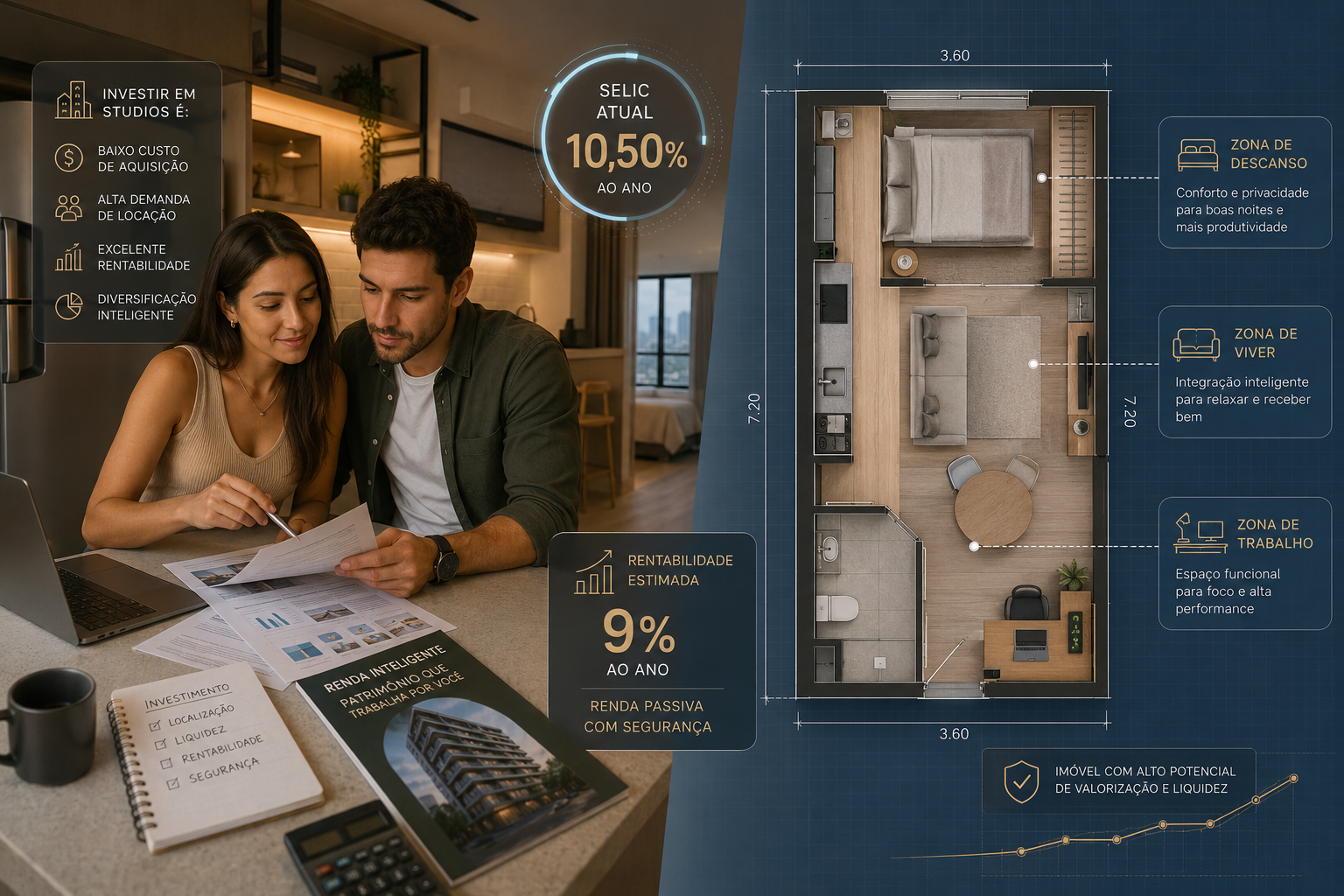
A compact apartment generating 9% annual yield in a market where the Selic rate is 15% may appear less attractive at first glance. However, this comparison ignores several factors:
- Real estate yields are net of inflation in a way that nominal Selic returns are not, once taxes and fund fees are accounted for.
- Short-term rental platforms (Airbnb, Booking.com) allow well-located compact units in tourist cities to achieve effective yields of 10-14% when occupancy rates are managed actively.
- Capital appreciation adds to total return — a 9% yield plus 8% appreciation equals a 17% total return, which compares favorably against most fixed-income alternatives after tax.
Florianopolis: A Market Worth Watching
Florianopolis deserves particular attention within this analysis. The city’s Ingleses region growth trajectory illustrates how infrastructure investment, quality of life improvements, and tourism demand combine to accelerate compact apartment appreciation. Projects like Tramonto and Solis represent the type of well-located, design-forward compact developments that are capturing the strongest appreciation in the current cycle.
For a broader view of the Florianopolis market trajectory, the 2025 Grande Florianopolis real estate market analysis provides useful context on the demand drivers that continue to shape pricing in 2026.
Developer Optimization Strategies
Developers seeking to maximize returns in the compact segment should consider the following priorities:
| Strategy | Impact on Value |
|---|---|
| Glass partitions and open zoning | Increases perceived size, speeds absorption |
| Peninsula kitchen design | Adds effective living area without structural cost |
| Natural material finishes | Supports premium pricing and rental photography |
| Smart home integration | Attracts tech-sector buyers, supports higher asking price |
| Off-plan sales strategy | Captures early appreciation, improves project financing |
The most successful compact developments in 2026 are those that treat design not as a cost center but as a value-creation tool. A R$ 15,000 investment in upgraded finishes on a 40 m² unit can support a R$ 50,000-80,000 increase in asking price in a competitive market.
Conclusion
The data, the demographics, and the design trends all point in the same direction: compact apartments are not a secondary segment of Brazil’s real estate market — they are its leading edge in 2026. The combination of 8-10% projected appreciation, strong rental yields approaching 9%, and a wave of design innovation that makes small spaces genuinely desirable creates a convergence that investors and developers cannot afford to ignore.
Actionable next steps for different audiences:
- Investors: Prioritize compact one-bedroom and studio units in Florianopolis, Recife, and other high-demand coastal cities. Target off-plan purchases to maximize appreciation capture. Evaluate short-term rental potential alongside long-term yield.
- Developers: Integrate 2026 design innovations — glass partitions, peninsula kitchens, Muxarabi elements, monochromatic palettes — into project specifications from the earliest planning stage. These features are not optional upgrades; they are competitive requirements.
- Buyers: Recognize that a well-designed 40 m² studio in a prime location will outperform a poorly located 70 m² apartment on every financial metric that matters: appreciation, yield, liquidity, and financing cost.
- Design professionals: The compact apartment brief is the most demanding and most rewarding challenge in Brazilian residential design right now. Mastery of multifunctional zoning, natural materials, and sensory finishes will define the practices that lead the market through the rest of the decade.
The supremacy of compact apartments in Brazil’s 2026 real estate market is not a temporary anomaly. It is the product of structural forces — demographic, economic, and cultural — that are only growing stronger. Those who act on this understanding now will be best positioned when the next cycle of appreciation data confirms what the current numbers already suggest.
References
[1] Imoveis Sobem 559 Em 12 Meses Superam Inflacao Fipezap – https://www.spacemoney.com.br/investimentos/imoveis-sobem-559-em-12-meses-superam-inflacao-fipezap/?utm_source=openai
[2] Imoveis Compactos Studios Recife Maior Valorizacao 2026 – https://www.rodrigomontenegro.com.br/blog/imoveis-compactos-studios-recife-maior-valorizacao-2026?utm_source=openai
[3] Mt Apartment – https://www.archilovers.com/projects/346961/mt-apartment.html?utm_source=openai
[4] Formas Da Vida 2026 As Tendencias E Lancamentos Italinea Para Moveis Planejados – https://studioaitalinea.com.br/blog/2026/06/09/formas-da-vida-2026-as-tendencias-e-lancamentos-italinea-para-moveis-planejados/?utm_source=openai
[5] Adeus Ilha Na Cozinha A Tendencia Mais Barata E Adaptavel As Casas Brasileiras E Que Esta Dominando Os Projetos Em 2026 0426 – https://www.correio24horas.com.br/em-alta/adeus-ilha-na-cozinha-a-tendencia-mais-barata-e-adaptavel-as-casas-brasileiras-e-que-esta-dominando-os-projetos-em-2026-0426?utm_source=openai
[6] Tendencia De Decoracao – https://elle.com.br/lifestyle/tendencia-de-decoracao?utm_source=openai
[7] Tendencias De Interiores Para 2026 – https://www.urben.com.br/tendencias-de-interiores-para-2026/?utm_source=openai
[8] Tendencias De Decoracao Para 2026 Apostam Em Casas Vividas E Naturais – https://www.uol.com.br/nossa/noticias/redacao/2026/01/31/tendencias-de-decoracao-para-2026-apostam-em-casas-vividas-e-naturais.htm?utm_source=openai
[9] Tendencias De Revestimentos 2026 Sensorialidade E Design Autoral – https://www.folhavitoria.com.br/cotidiano/tendencias-de-revestimentos-2026-sensorialidade-e-design-autoral?utm_source=openai
[10] imoveisnavila.com.br – https://www.imoveisnavila.com.br/conteudo/tendencias-que-estao-moldando-o-design-de-interiores-em-2026/144?utm_source=openai