
{“cover”:”Professional landscape format (1536×1024) hero image with bold text overlay: ‘Brazil Coastal Development 2026: Second Homes, Short-Stay Rentals & Lifestyle Buyers’, extra large 72pt white bold sans-serif font with dark semi-transparent overlay box, centered upper-third composition. Background shows a stunning aerial view of a pristine Brazilian coastline at golden hour — turquoise Atlantic waters, white sand beaches, luxury villas with terracotta roofs nestled among lush Atlantic Forest, a modern low-rise resort development visible mid-ground. Color palette: deep ocean blue, warm gold, crisp white. Magazine cover aesthetic, editorial quality, high contrast, cinematic lighting.”,”content”:[“Aerial drone perspective (1536×1024) looking down at Trancoso, Bahia’s iconic Quadrado village square surrounded by colorful colonial houses, with a split-screen visual effect showing luxury boutique hotel pools and second-home villas on one side and a digital demand heatmap overlay on the other. Warm tropical light, lush green vegetation, red earth pathways, Atlantic Ocean visible in background. Infographic callout boxes showing tourism growth statistics and real estate price appreciation percentages. Editorial documentary style, vibrant colors.”,”Wide-angle architectural photography (1536×1024) of a modern Brazilian coastal development project under construction — concrete foundations, steel framing, workers in safety gear, architectural blueprints overlaid as a semi-transparent layer. Foreground shows a scale model of a mixed-use resort community with labeled zones: ‘Short-Stay Rental Units’, ‘Second Home Villas’, ‘Lifestyle Amenities’. Background features the real coastline with palm trees and ocean. Clean infographic style with color-coded zoning diagram, professional construction site aesthetic, bright daylight.”,”Street-level perspective (1536×1024) of a vibrant Brazilian coastal lifestyle scene — a beautifully designed open-air condominium common area with a pool, hammocks, and tropical landscaping. Diverse group of people — Brazilian families, foreign couples, digital nomads with laptops — enjoying the space. Foreground features a property investment comparison table as a floating infographic showing rental yield percentages, occupancy rates, and buyer profile icons. Warm afternoon light, lush greenery, contemporary architecture. Aspirational lifestyle photography meets financial data visualization.”]
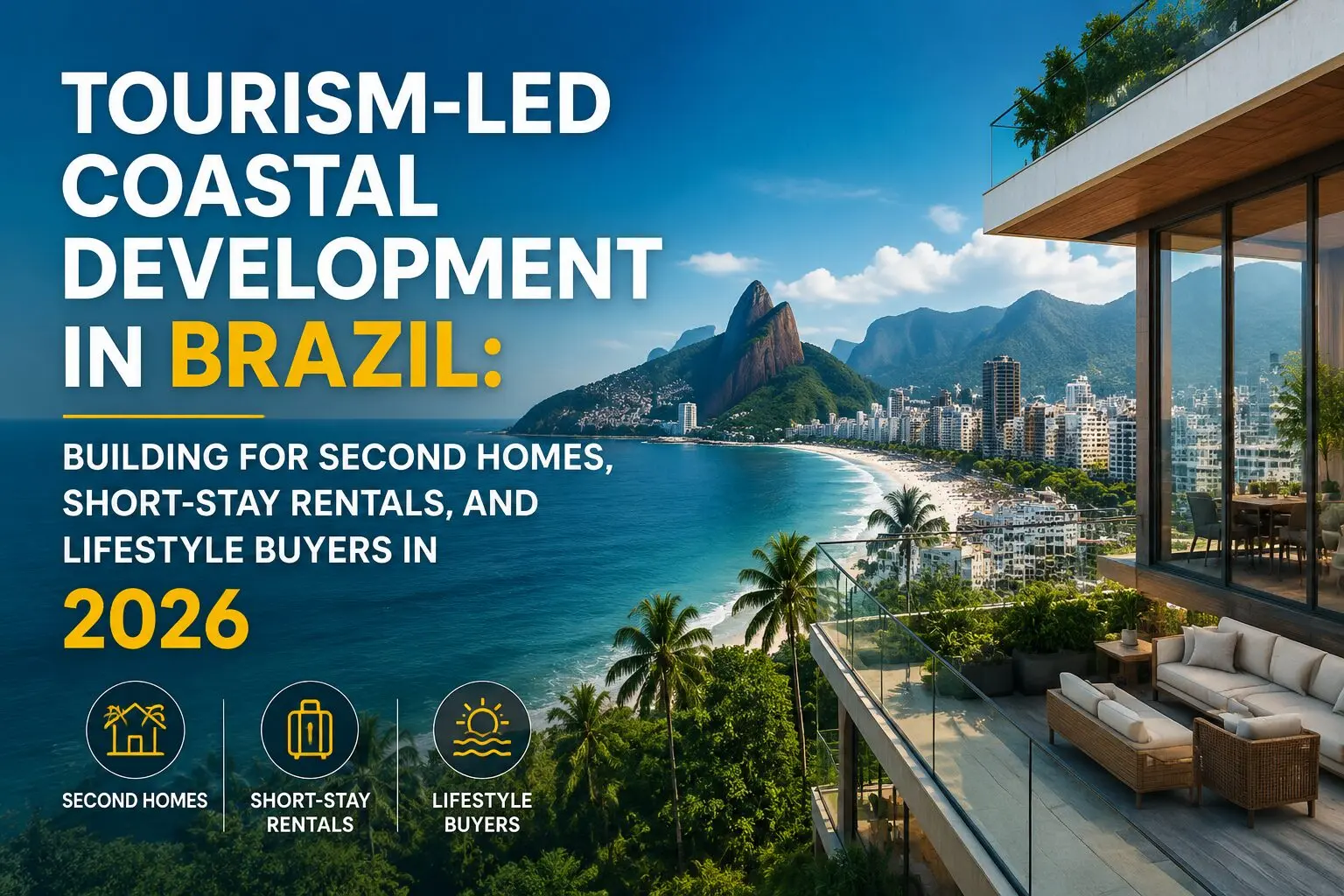
Brazil welcomed more than 2 million international travelers in the first months of 2026 alone — a figure that signals not just a tourism boom, but a structural shift in how coastal real estate is being conceived, financed, and sold [5]. Tourism-Led Coastal Development in Brazil: Building for Second Homes, Short-Stay Rentals, and Lifestyle Buyers in 2026 is no longer a niche conversation among developers. It is the defining story of the country’s Atlantic coastline, from the bohemian luxury of Trancoso in Bahia to the surf-driven energy of Florianópolis in the south. As demand collides with limited supply in the most desirable beach corridors, developers who understand how to serve three distinct buyer profiles — Brazilian second-home owners, foreign lifestyle buyers, and yield-seeking short-term rental investors — are capturing outsized returns.
Key Takeaways 📌
- International tourism to Brazil is at record highs in 2026, creating urgent demand for high-quality coastal accommodation and second-home inventory.
- Destinations like Trancoso, Bahia illustrate both the opportunity and the risk: rapid real estate appreciation can strain local ecosystems and food supply chains.
- Successful coastal projects must be structured to serve three buyer types simultaneously — domestic second-home buyers, foreign lifestyle purchasers, and short-stay rental investors.
- Regulatory risk is real: zoning laws, environmental licensing, and short-term rental regulations vary widely by municipality and must be embedded in project design from day one.
- Brazil’s Blue Flag-certified beaches and growing global profile as a top 2026 travel destination are powerful marketing assets for developers who know how to leverage them.
The Trancoso Effect: What One Destination Teaches All Developers
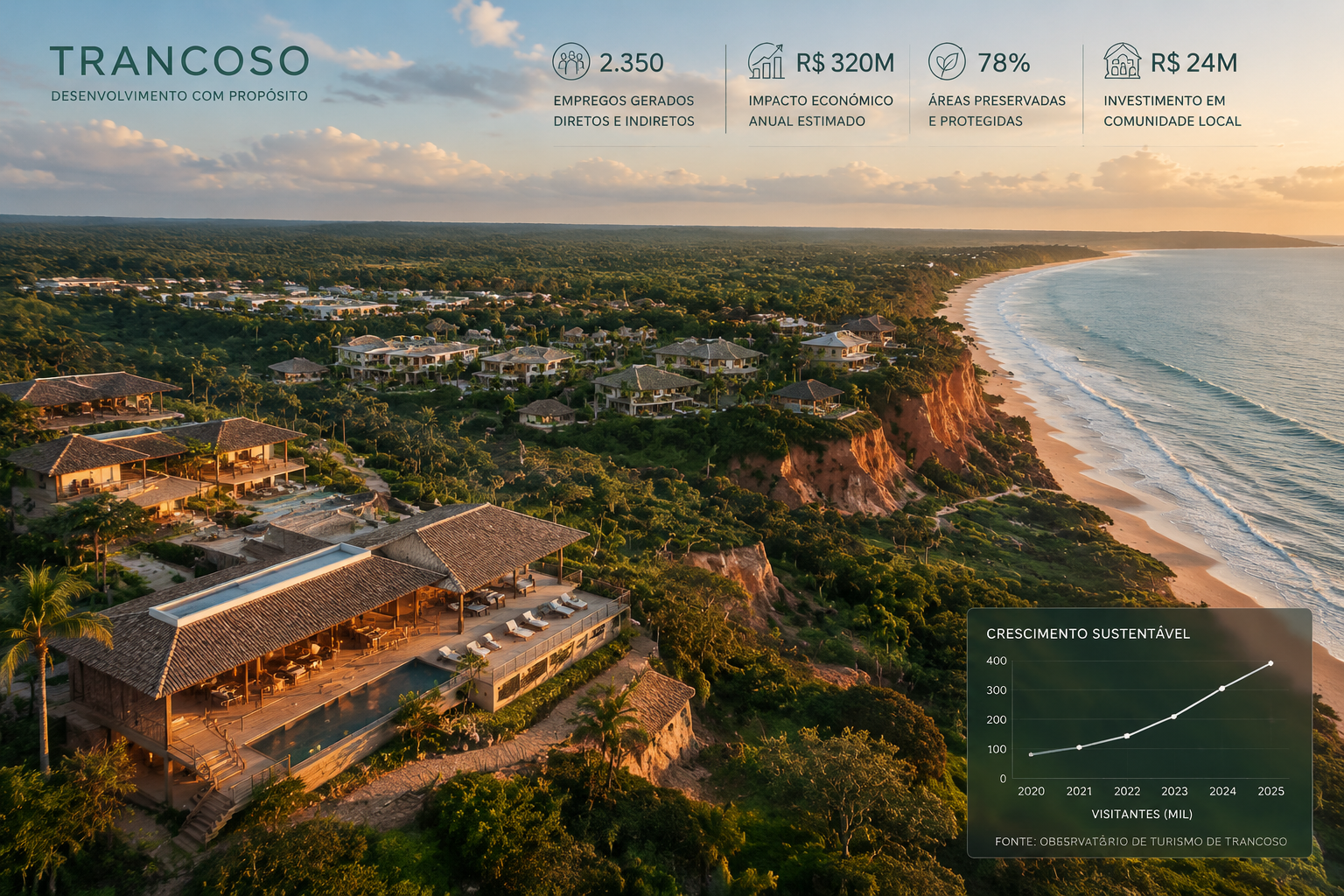
Trancoso, a small village on the southern coast of Bahia, has become the most instructive case study in Brazilian coastal development. Once a quiet fishing community, it now attracts international celebrities, Brazilian business elites, and a growing wave of foreign buyers willing to pay premium prices for a piece of its famous Quadrado — the grass-lined central square flanked by brightly painted colonial houses.
The Trancoso story is instructive precisely because it shows both the upside and the warning signs of tourism-led growth. On one hand, property values have surged dramatically. On the other, investigative reporting from 2026 has documented how high-end tourism and real estate speculation are straining local food supply chains and pricing out long-term residents [6]. This tension is not unique to Trancoso — it is playing out across Brazil’s most desirable coastal corridors.
“The destinations that will sustain long-term value are those where developers build not just units, but ecosystems — economic, social, and environmental.”
For developers, the Trancoso effect offers a clear framework:
- Early movers who entered before mass tourism arrived captured the greatest appreciation.
- Mid-cycle entrants (where most of Brazil’s coast sits today) can still achieve strong returns if projects are differentiated by design quality and amenity programming.
- Late entrants who ignore infrastructure constraints and community impact face regulatory backlash, reputational damage, and falling occupancy rates.
The smartest developers in 2026 are studying Trancoso not just to replicate its glamour, but to avoid its growing pains.
Why 2026 Is a Pivotal Year for Coastal Real Estate in Brazil
Brazil’s global tourism profile has never been stronger. The country has been named a top travel destination for 2026 by major international travel publications [10], and its coastal assets are a primary driver of that recognition. Two Brazilian beaches now rank among the 50 best in the world [8], and the country holds a record 60 Blue Flag certifications — an internationally recognized standard for beach cleanliness, safety, and environmental management [1].
South Brazil, in particular, is being positioned as a premier destination for nature and adventure tourism in 2026 [2], drawing visitors who spend more per trip and stay longer — exactly the profile that supports both short-term rental occupancy and second-home purchases.
The Numbers Behind the Opportunity
| Indicator | 2026 Data Point | Source |
|---|---|---|
| International arrivals (early 2026) | 2+ million | TravelPulse [5] |
| Blue Flag certified beaches | 60 (record high) | Travel & Tour World [1] |
| Brazilian beaches in global top 50 | 2 | Travel2LatAm [8] |
| Brazil’s global destination ranking | Top destination 2026 | Travel + Leisure [10] |
These are not abstract marketing statistics. They translate directly into rental occupancy rates, nightly pricing power, and resale value appreciation for well-positioned coastal properties.
For a deeper look at how specific Brazilian markets are performing, the real estate market outlook for Greater Florianópolis provides granular data on one of the country’s most active coastal investment corridors.
Structuring Projects for Three Buyer Profiles Without Overexposing to Risk
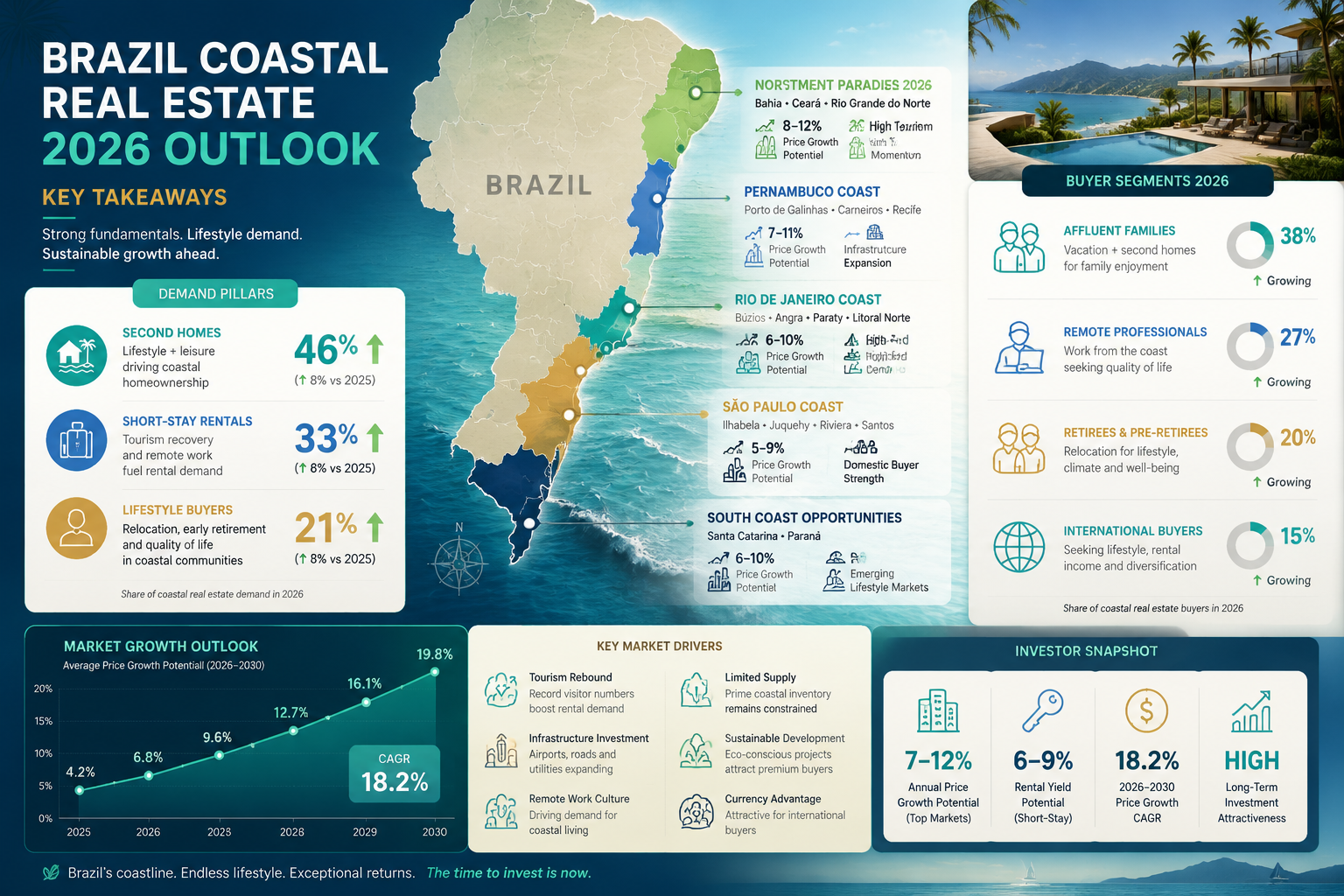
Tourism-Led Coastal Development in Brazil: Building for Second Homes, Short-Stay Rentals, and Lifestyle Buyers in 2026 demands a fundamentally different project structure than traditional residential development. The key insight is that these three buyer profiles are not competing — they are complementary when a project is designed with that intention from the outset.
Profile 1: The Brazilian Second-Home Buyer 🏡
This buyer is typically a high-income urban professional from São Paulo, Belo Horizonte, or Curitiba. They are purchasing a lifestyle asset — a place to escape during summer, Carnival, and long weekends. Key priorities:
- Security and condominium management (they are absent for most of the year)
- Proximity to quality beaches and established restaurant/retail infrastructure
- Potential for rental income during periods of non-use
- Payment flexibility, including installment plans tied to construction milestones
For developers, this buyer is often the anchor of pre-sales. Their purchase volume validates the project for financing purposes and creates the critical mass needed to attract the amenity programming that lifestyle buyers demand.
The advantages of investing in studio units in Florianópolis illustrates how even compact unit types can serve this buyer profile effectively when positioned correctly.
Profile 2: The Foreign Lifestyle Buyer 🌍
Foreign interest in Brazilian coastal property is accelerating in 2026, driven by favorable exchange rates, Brazil’s rising global profile, and a growing community of digital nomads and remote workers seeking long-stay destinations. These buyers are concentrated in:
- Bahia (Trancoso, Arraial d’Ajuda, Porto Seguro corridor)
- Santa Catarina (Florianópolis, Balneário Camboriú)
- Ceará (Jericoacoara, Cumbuco)
Foreign buyers typically prioritize legal clarity above all else. They need confidence that property titles are clean, that foreign ownership is unambiguous under Brazilian law, and that there is a professional management structure in place to handle their asset remotely. Developers who invest in bilingual legal documentation, international wire transfer infrastructure, and English/Spanish-language sales materials gain a significant competitive advantage.
It is also worth noting that some forward-thinking developers are exploring cryptocurrency payment options in real estate transactions — a feature that resonates strongly with tech-savvy international buyers.
Profile 3: The Short-Stay Rental Investor 📈
This buyer is purchasing primarily for yield. They may never sleep in the unit themselves. Their decision is driven by:
- Projected occupancy rates (typically 60–80% in top coastal destinations during peak season)
- Average daily rates benchmarked against Airbnb and Booking.com data
- Net operating income after management fees, maintenance, and taxes
- Exit liquidity — the ability to resell to another investor or an end-user
This profile is the most sensitive to regulatory risk. Brazil’s municipalities are at varying stages of implementing short-term rental regulations. Some, like Florianópolis, have established frameworks. Others are still developing them. Developers must conduct thorough due diligence on local ordinances before positioning a project as a rental-income vehicle.
Pro tip for developers: Build a rental management program into the project’s legal structure from day one — not as an afterthought. This protects the developer’s brand, ensures consistent guest experience, and gives investors the operational infrastructure they need to achieve projected returns.
Managing Regulatory Risk in Coastal Development
Brazil’s coastal development environment is governed by a complex web of federal, state, and municipal regulations. The Lei de Gerenciamento Costeiro (Coastal Management Law) establishes federal oversight of the coastal zone, while environmental licensing requirements — particularly in areas adjacent to Atlantic Forest or mangroves — can significantly extend project timelines.
In 2026, Brazil has also strengthened its coastal monitoring network, adding 18 new oceanographic monitoring stations [4]. While this is primarily an environmental initiative, it signals increasing government attention to coastal ecosystems — attention that will eventually translate into stricter development controls in sensitive areas.
Key Regulatory Checkpoints for Developers ✅
- Environmental Impact Assessment (EIA/RIMA) — required for most coastal projects above a certain scale
- Marinha do Brasil authorization — required for developments within the maritime frontier zone (terrenos de marinha)
- Municipal zoning compliance — land use classifications vary dramatically between municipalities
- Short-term rental registration — increasingly required at the municipal level
- Condominium registration (incorporação imobiliária) — governed by Lei 4.591/1964, which establishes buyer protections in off-plan sales
Developers who treat regulatory compliance as a competitive advantage — rather than a bureaucratic burden — build trust with buyers, reduce project risk, and position themselves for smoother licensing on future projects.
For insight into how one developer is managing construction timelines and delivery milestones in a regulated coastal environment, the construction progress update on the Tramonto development offers a transparent look at real-world project execution.
Location Selection: Where the Opportunity Is Strongest in 2026
Not all Brazilian coastline is created equal. The following destinations represent the strongest convergence of tourism demand, infrastructure quality, and investment fundamentals in 2026:
🌊 Florianópolis, Santa Catarina
Often called the “Magic Island,” Florianópolis combines urban infrastructure with world-class beaches. The growth of the Ingleses region in Florianópolis exemplifies how previously overlooked neighborhoods are experiencing rapid appreciation as the city expands. It is a primary market for both domestic second-home buyers and international lifestyle purchasers.
🌴 Trancoso & Southern Bahia
As discussed, this corridor is Brazil’s most internationally recognized luxury coastal destination. Land is scarce, prices are high, and the barrier to entry for developers is significant — but so are the margins for those who can execute at the required quality level.
🏄 Jericoacoara & Ceará Coast
The Ceará coast offers the strongest combination of wind sports tourism (kitesurfing, windsurfing) and low land acquisition costs relative to established markets. Jericoacoara’s international airport connectivity has improved significantly, making it increasingly accessible to foreign buyers.
🌆 Balneário Camboriú, Santa Catarina
Brazil’s answer to Monaco — a dense, vertical coastal city with some of the highest per-square-meter prices in the country. The market here is dominated by luxury towers targeting high-net-worth Brazilian buyers and a growing contingent of Argentine and Uruguayan purchasers.
For a broader view of where investment fundamentals are strongest across Brazil, the guide to best places to invest in Brazilian property for high returns provides a useful comparative framework.
Design and Amenity Programming for Multi-Profile Projects
The physical design of a coastal development is where the three buyer profiles must be reconciled. A project that serves all three cannot be designed as a generic condominium. It requires intentional programming:
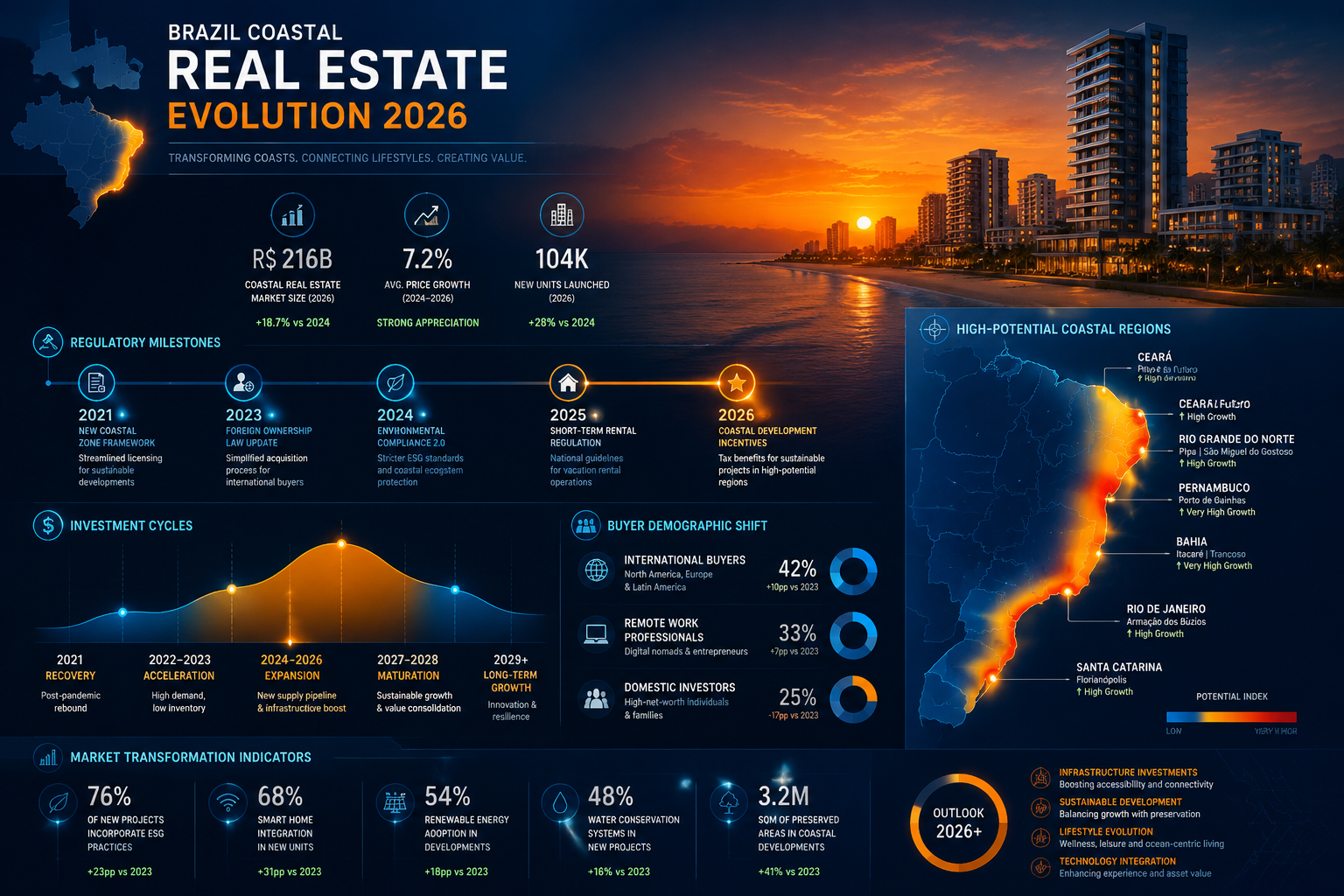
Unit Mix Strategy
| Unit Type | Primary Buyer Profile | Typical Size (m²) | Yield Potential |
|---|---|---|---|
| Studios / Lofts | Short-stay rental investor | 28–45 | High |
| 1–2 bedroom apartments | Mixed (rental + second home) | 55–90 | Medium-High |
| 3+ bedroom villas/penthouses | Lifestyle buyer + second home | 120–300+ | Medium |
Must-Have Amenities for 2026 Coastal Projects 🏊
- Resort-style pool areas with F&B service (drives nightly rate premiums on Airbnb)
- Co-working spaces (essential for digital nomad and remote worker buyers)
- Concierge and rental management desk (operational infrastructure for investor buyers)
- Sustainable design features — solar panels, rainwater harvesting, native landscaping (increasingly required for environmental licensing and valued by international buyers)
- Connectivity — high-speed fiber internet is now a baseline expectation, not a premium feature
The Solis development in Florianópolis exemplifies how thoughtful amenity programming can position a coastal project to serve multiple buyer profiles simultaneously.
The Pre-Sales Advantage: Locking In Value Before Completion
One of the most powerful tools available to buyers in the Brazilian coastal market is the off-plan purchase (compra na planta). Developers typically offer significant price discounts during the pre-sales phase — sometimes 20–35% below projected completion value — in exchange for early commitment.
For investors, this creates a built-in appreciation buffer that enhances overall returns even before rental income is considered. The mechanics of how off-plan purchases can amplify investment gains are particularly relevant in fast-appreciating coastal markets where land scarcity is a structural constraint on future supply.
Conclusion: Building Smart on Brazil’s Coast in 2026
Tourism-Led Coastal Development in Brazil: Building for Second Homes, Short-Stay Rentals, and Lifestyle Buyers in 2026 represents one of the most compelling real estate opportunities in the Americas — but it rewards those who approach it with strategic discipline, not speculative enthusiasm.
The destinations that will generate sustainable long-term value are those where developers:
- Design for multiple buyer profiles from the project’s inception — not as an afterthought
- Embed regulatory compliance into the project structure, particularly for environmental licensing and short-term rental frameworks
- Invest in amenity programming that justifies premium pricing and supports rental yield projections
- Engage with local communities to avoid the social and supply-chain strains that have emerged in places like Trancoso
- Leverage Brazil’s global tourism momentum — Blue Flag certifications, world-class beach rankings, and record international arrivals — as marketing assets in international buyer outreach
The window of opportunity on Brazil’s coast is open — but it will not stay open indefinitely. As infrastructure improves, land prices rise, and regulatory frameworks tighten, the premium for early, well-structured entry will only grow.
Actionable next steps:
- 🔍 Research specific municipalities’ short-term rental regulations before committing to a project site
- 📊 Model unit mix and pricing scenarios for all three buyer profiles before finalizing the development program
- 🤝 Partner with an experienced local developer or incorporadora with a track record of on-time delivery and regulatory compliance
- 🌿 Prioritize sustainable design from day one — it reduces licensing friction and commands premium pricing from international buyers
- 📱 Explore current active development projects to benchmark design standards and pricing in target markets
References
[1] Brazil’s Coastal Paradise Shines Bright: Record 60 Blue Flag Certifications Signal Soaring Sustainable Tourism Growth – travelandtourworld.com
[2] Why South Brazil Is The Ultimate 2026 Destination For Nature And Adventure Lovers – hotbot.com
[4] Brazil Strengthens Coastal Monitoring Network: 18 Stations 2026 – ioc.unesco.org
[5] Brazil Welcomed More Than 2 Million Travelers In Early 2026 – travelpulse.com
[6] High-End Tourism Fuels Real Estate Speculation, Straining Food Supply In A Coastal Brazilian Town – ojoioeotrigo.com.br
[8] Brazil Has Two Beaches Among The 50 Best In The World, Consolidating Its Leading Role In The Sun And Sea Tourism Sector – en.travel2latam.com
[10] Brazil: Destination Of The Year 2026 – travelandleisure.com