

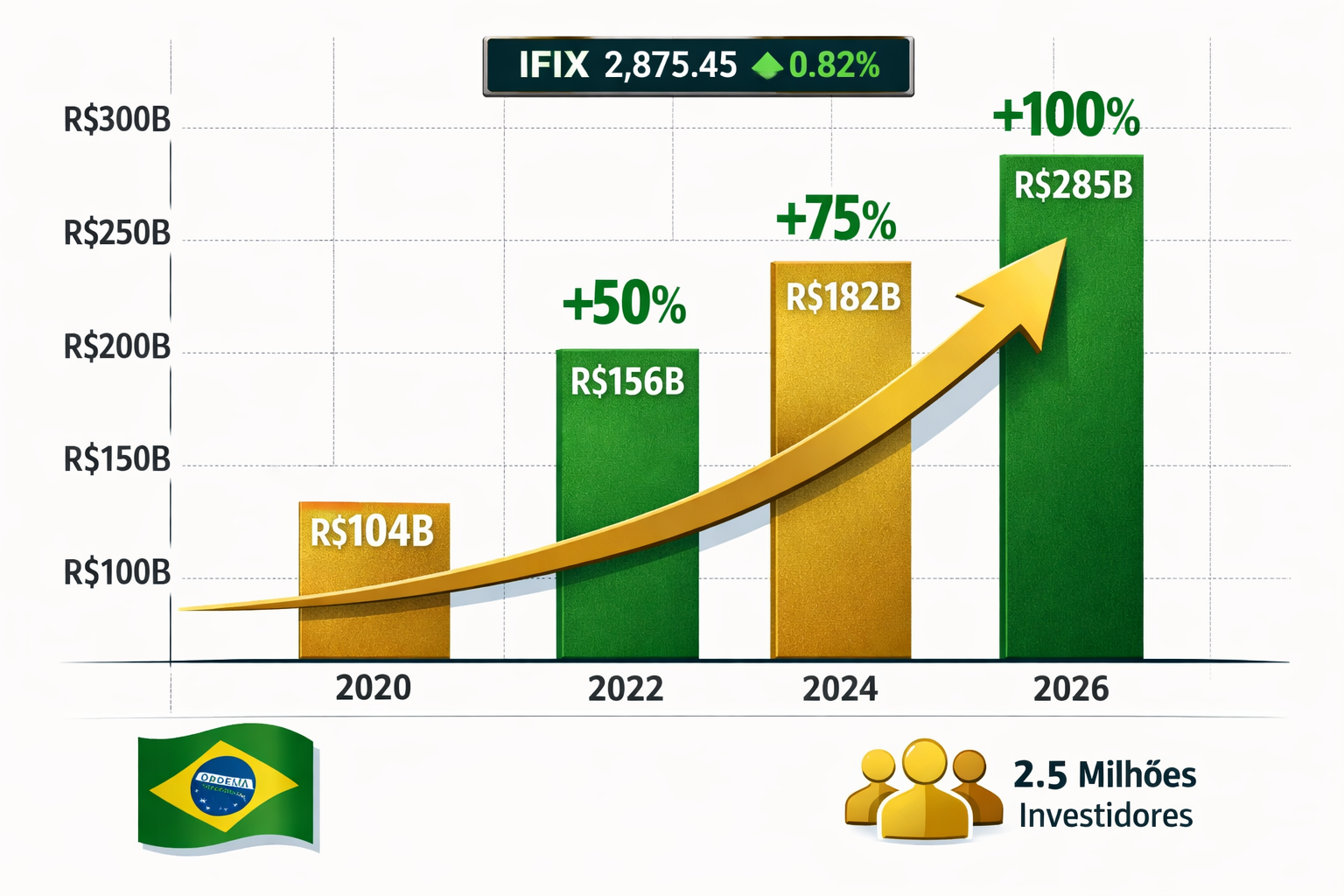
Brazil’s real estate investment fund market grew 174% in just six years — from R$ 104 billion in January 2020 to over R$ 285 billion by March 2026 [1]. That kind of trajectory does not happen by accident. It reflects structural reforms, a maturing investor base, and a regulatory environment that is finally catching up with global standards. For international developers watching emerging markets, the FII Market Expansion 2026: High-Yield Opportunities in Brazilian Property Funds for International Developers represents one of the most compelling entry points in the G20 real estate universe right now.
Expert forecasts remain cautiously optimistic. Industry analysts see 2026 as a year of genuine growth for Brazil’s FII sector — with important caveats around interest rate sensitivity and foreign ownership restrictions [5]. This article unpacks both the opportunity and the risk, giving developers a clear framework for action.
Key Takeaways 📌
- 🏗️ Brazil’s FII market surpassed R$ 285 billion in early 2026, making it one of the largest real estate fund markets among G20 nations.
- 📈 FII valuations rose ~12% in early 2026 as yield spreads became more attractive with SELIC trending toward 9.25%.
- 🌱 Green FIIs and Fiagro funds are two of the fastest-growing sub-sectors, offering inflation-hedged and ESG-aligned returns.
- ⚖️ CVM Resolution 175 has strengthened transparency and opened pathways for FIIs to hold international assets.
- 🌍 Foreign ownership rules remain a key compliance consideration — especially for rural and agricultural property exposure.
Understanding the FII Market Expansion 2026 Landscape
What Are FIIs and Why Do They Matter?
Fundos de Investimento Imobiliário (FIIs) are Brazil’s equivalent of Real Estate Investment Trusts (REITs). They allow investors — domestic and international — to gain exposure to income-generating real estate without directly owning property. FIIs trade on the B3 stock exchange, distribute monthly dividends, and offer liquidity that direct property ownership cannot match.
As of 2026, Brazil counts 2.5 million active FII investors, a figure that underscores the product’s mainstream appeal [1]. The IFIX index — which tracks listed FIIs — has become a benchmark for institutional and retail capital alike.
💬 “The Brazilian FII market is no longer a niche instrument. It is a mature, liquid, and increasingly internationalized asset class.” — Industry consensus reflected in 2026 market analyses [5]
The Macro Tailwind: SELIC Rate Trajectory
One of the most important drivers of FII performance in 2026 is Brazil’s benchmark interest rate, the SELIC. As the rate moves toward a projected 9.25% target in the first quarter of 2026, yield spreads on FIIs have become more attractive relative to fixed-income alternatives [1]. This dynamic triggered a 12% valuation uptick in early 2026 — a meaningful re-rating for income-focused investors.
However, analysts at SIILA caution that rate sensitivity cuts both ways [5]. Any reversal in monetary policy could compress FII valuations quickly. Developers and fund managers must build interest rate scenarios into their underwriting models.
Institutional Capital Is Flowing In
Between January and October 2025, Brazilian investment funds attracted net positive inflows of R$ 165.8 billion — a staggering 36% increase compared to all of 2024 [3]. This momentum has carried into 2026, with institutional allocators from Europe, the United States, and Asia increasing their Brazil exposure through FII vehicles.
For international developers exploring the best places to invest in Brazil property, this institutional appetite signals confidence in underlying real estate fundamentals across multiple asset classes.
FII Fund Types and High-Yield Opportunities for Developers
The Main FII Categories in 2026
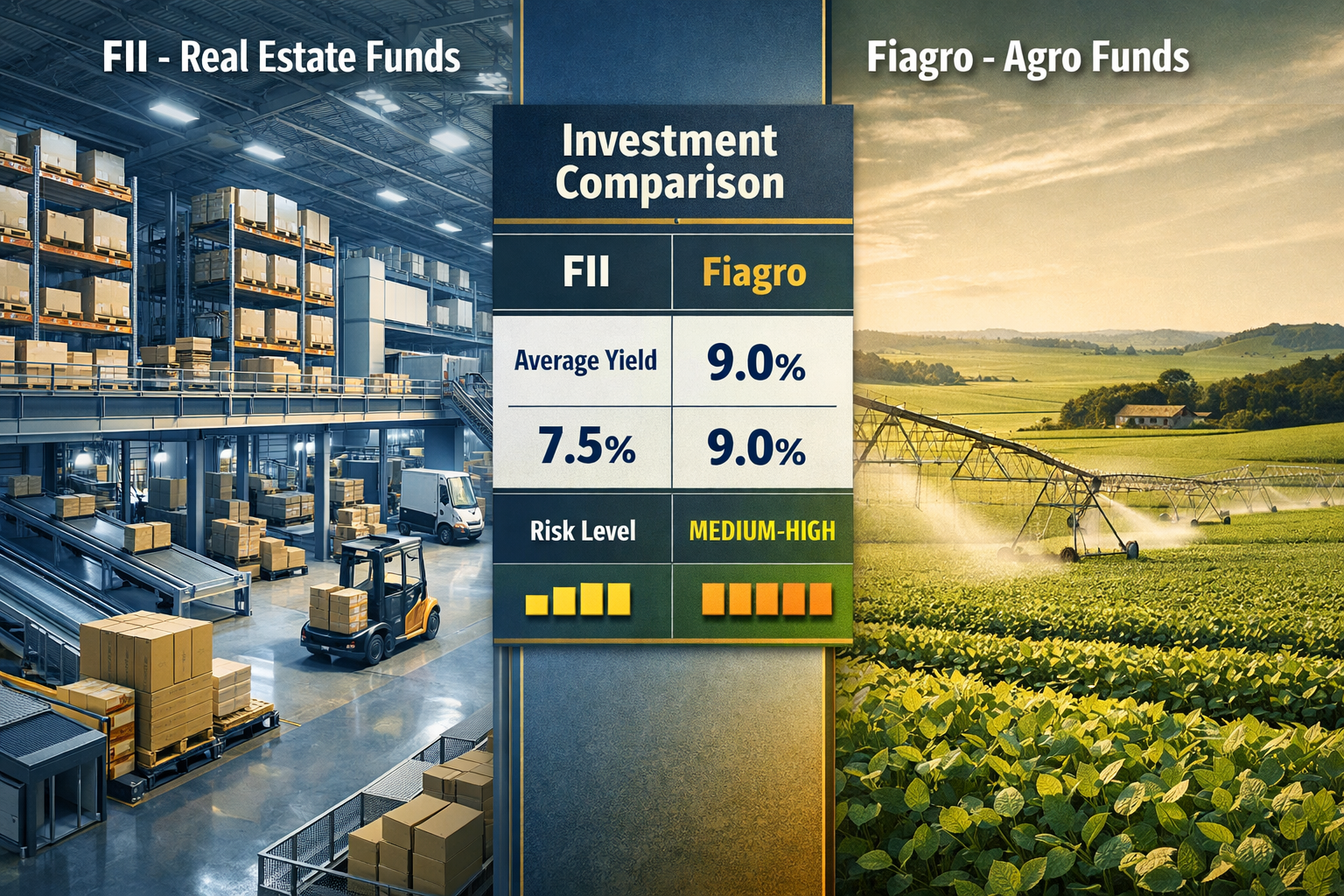
Understanding the fund landscape is essential before deploying capital. The table below summarizes the primary FII categories available to international developers in 2026:
| FII Type | Underlying Asset | Typical Yield Profile | Key Risk |
|---|---|---|---|
| Tijolo (Brick) FIIs | Physical real estate (offices, logistics, retail) | Moderate-High | Vacancy rates, cap rate compression |
| Paper FIIs (CRI-backed) | Real estate credit instruments | High | Credit quality of underlying CRIs |
| Hybrid FIIs | Mix of physical + credit assets | Moderate | Complexity, management risk |
| Fiagro | Agricultural real estate credit | High + inflation hedge | Commodity price exposure |
| Green/ESG FIIs | LEED-certified, sustainable assets | Moderate | Premium pricing, limited supply |
Fiagro: The Agricultural Powerhouse 🌾
The Fiagro sector is projected to reach R$ 45 billion in market capitalization by June 2026, representing a 20% increase from the prior year [1]. These agribusiness real estate funds allow investors to tap into Brazil’s agricultural sector, which accounts for nearly 25% of national GDP [1].
For international developers, Fiagro funds offer a compelling inflation hedge. Their credit-linked yields adjust more aggressively to price pressures than traditional Tijolo FIIs. The caveat: the Brazilian Supreme Court upheld restrictive rules for foreign capital acquisition of rural properties in April 2026 [4], meaning direct rural land ownership remains off-limits for foreign entities. Fiagro exposure through listed funds, however, provides indirect access within legal boundaries.
Green FIIs: ESG Capital Finds a Home 🌿
Approximately 15% of new FII listings in 2026 focus on sustainable infrastructure and LEED-certified corporate assets [1]. This trend reflects global capital’s growing preference for ESG-aligned investments. Green FIIs typically attract lower-cost capital from European institutional investors, which can compress yields slightly but improves long-term asset quality.
For developers building sustainable residential or commercial projects — such as those exploring studio apartment investment advantages in Florianópolis — aligning with green FII criteria from the design phase can unlock premium fund partnerships.
Paper FIIs and CVM Resolution 175
Paper FIIs invest in real estate credit instruments (CRIs — Certificados de Recebíveis Imobiliários). They have historically offered the highest yields in the FII universe but also carry the most credit risk. The implementation of CVM Resolution 175 in 2026 mandates stricter transparency regarding the underlying credit quality of these instruments [1]. This is a net positive for international developers: better disclosure means more informed capital allocation and reduced risk of unpleasant surprises.
Critically, CVM Resolution 175 is also paving the way for FIIs to hold international assets — up to 15% of portfolio value in U.S. or European logistics hubs by late 2026 [1]. This marks a historic shift: Brazilian FIIs are evolving from purely domestic income plays into sophisticated global diversification tools.
Strategic Entry Points for International Developers in 2026

Why Residential Development Markets Deserve Attention
Brazil’s residential property market is not monolithic. Coastal cities like Florianópolis have demonstrated exceptional resilience and appreciation, driven by lifestyle migration, infrastructure investment, and strong rental demand. The real estate market in Greater Florianópolis has consistently outperformed national averages, making it a logical anchor for FII-linked residential development strategies.
Developers who understand how sales performance is transforming Florianópolis real estate will recognize that pre-sale absorption rates in premium coastal submarkets remain strong — a fundamental that supports FII underwriting assumptions.
The Off-Plan Advantage 🏢
One underappreciated strategy for international developers entering Brazil through FII structures is the off-plan (na planta) acquisition model. Buying into developments at the pre-construction stage allows for significant capital appreciation before the asset is even delivered to a fund portfolio. The advantages of buying off-plan in Brazilian real estate are well-documented: developers can lock in lower entry prices and benefit from appreciation that occurs during the construction cycle.
This model aligns naturally with FII structures, where a developer builds an asset, stabilizes it with tenants or buyers, and then contributes it to a fund vehicle — capturing both development profit and ongoing management fees.
Key Considerations for Foreign Developers
Before committing capital, international developers must navigate several structural considerations:
✅ What Works in Your Favor:
- FII dividends are exempt from income tax for individual investors in Brazil, making fund structures tax-efficient
- The B3 exchange provides daily liquidity — unlike direct property ownership
- CVM Resolution 175 improves regulatory clarity and investor protection [1]
- Strong institutional co-investment appetite from domestic pension funds (EFPC)
⚠️ Watch Out For:
- Rural property restrictions: The Supreme Court ruling of April 2026 limits foreign capital in rural land acquisitions [4]
- Currency risk: BRL/USD volatility can erode returns for dollar-denominated investors
- SELIC sensitivity: FII valuations move inversely with rate expectations [5]
- Local partnership requirements: Many successful FII structures require a Brazilian co-developer or asset manager
Logistics and Infrastructure FIIs: The Institutional Sweet Spot
Among Tijolo FIIs, logistics and warehouse assets have emerged as the most institutionally favored sub-sector in 2026. The growth of e-commerce in Brazil — now reaching second and third-tier cities — is driving demand for last-mile distribution centers. Portfolio acquisitions by major FII managers are actively rallying the IFIX index [2], signaling that logistics remains a consensus overweight among professional allocators.
For international developers with experience in industrial or logistics real estate, this sub-sector offers the clearest path to FII partnership. The asset class is well-understood, yields are predictable, and institutional demand for new supply remains robust.
Cryptocurrency and Tokenized Real Estate: A Parallel Track 🔗
A growing number of Brazilian developers are exploring tokenized real estate as a complement to traditional FII structures. The intersection of cryptocurrency and real estate development is creating new pathways for fractional ownership and international capital participation — particularly for investors who face friction in accessing traditional FII vehicles from outside Brazil.
While tokenized structures are still evolving within Brazil’s regulatory framework, they represent an important parallel track that forward-thinking international developers should monitor closely.
Risk Mitigation Strategies for FII Investors in 2026
Managing SELIC Rate Exposure
The most direct risk to FII returns in 2026 is interest rate volatility. Practical mitigation strategies include:
- Diversify across FII types — Fiagro and Paper FIIs with floating-rate CRIs can outperform when rates rise
- Focus on long-lease assets — Logistics and corporate FIIs with 5-10 year leases provide income stability
- Monitor IPCA spreads — Many Brazilian leases are indexed to inflation (IPCA), providing a natural hedge
- Use options on B3 — Sophisticated investors can hedge IFIX exposure through listed derivatives
Due Diligence Checklist for International Developers 📋
| Due Diligence Area | Key Questions |
|---|---|
| Regulatory compliance | Is the FII structure CVM Resolution 175 compliant? |
| Asset quality | What is the vacancy rate and WALE (weighted average lease expiry)? |
| Manager track record | Does the asset manager have a verifiable performance history on B3? |
| Currency hedging | Is there a BRL/USD hedge in place for international distributions? |
| Rural property exposure | Does the fund hold any rural assets subject to foreign ownership restrictions? |
| ESG alignment | Does the asset qualify for green FII listing criteria? |
Conclusion: Turning Market Momentum Into Developer Action
The FII Market Expansion 2026: High-Yield Opportunities in Brazilian Property Funds for International Developers is not a theoretical proposition — it is a live market event backed by R$ 285 billion in assets, 2.5 million active investors, and a regulatory framework that is actively welcoming sophisticated international capital [1][3].
The opportunity is real. So are the risks. SELIC sensitivity, rural property restrictions, and currency volatility require disciplined underwriting and local expertise. But for developers who approach Brazil with the right partners and the right structures, the reward profile is exceptional.
Actionable Next Steps for International Developers:
- Engage a Brazilian CVM-registered asset manager to explore FII co-development structures
- Prioritize logistics, green, and hybrid FII sub-sectors for the most favorable risk-adjusted yields in 2026
- Explore coastal residential markets like Florianópolis, where active development projects demonstrate strong pre-sale absorption and appreciation fundamentals
- Structure currency hedging from day one — do not treat BRL exposure as an afterthought
- Monitor CVM Resolution 175 implementation for updates on international asset inclusion rules
- Consider off-plan acquisition strategies to maximize entry-point advantages before assets are contributed to fund vehicles
- Stay current with Brazilian real estate news and market developments through reliable local sources to track IFIX movements and regulatory changes
Brazil’s FII market has earned its place among the world’s most dynamic real estate investment ecosystems. For international developers willing to do the work, 2026 offers a rare combination of growth momentum, regulatory maturity, and yield opportunity that is difficult to find elsewhere in the G20.
References
[1] Brazilian Real Estate Funds – https://www.riotimesonline.com/brazilian-real-estate-funds/
[2] Patria Fiis Portfolio Acquisition Rally Ifix – https://www.brazilbusinessinsights.com/news/patria-fiis-portfolio-acquisition-rally-ifix
[3] Brazil – https://practiceguides.chambers.com/practice-guides/investment-funds-2026/brazil
[4] Brazilian Supreme Court Upholds The Restrictive Regime For The Acquisition Of Rural Properties By Foreign Capital – https://www.mayerbrown.com/en/insights/publications/2026/04/brazilian-supreme-court-upholds-the-restrictive-regime-for-the-acquisition-of-rural-properties-by-foreign-capital
[5] Rainho Sees 2026 as Year of Growth for Brazil’s FII Market, With Caveats – https://siila.com.br/news/rainho-sees-2026-as-year-of-growth-for-brazils-fii-market-with-caveats/8103/lang/en